Storytelling

My reading in Don Quixote is zipping along; I’m nearly up to p. 300 and enjoying it immensely. I’m now in the middle of the first of what I understand will be several long interpolated stories; I remember people saying they get a bit dull and make one long for Don Quixote and Sancho Panza to return, and I will probably feel that way eventually, but for now I’m enjoying the story of Anselmo and Lotario from “The Man Who Was Recklessly Curious.” Isn’t that a great story title?

These interpolated stories are nice reminders of just how interested Cervantes is in storytelling, and I like how he includes one just after the chapter in which the characters — Don Quixote excluded — discuss the value of those chivalric romances DQ is so obsessed with. We get discussions about the value of stories and then we get the stories themselves, so we can think about them theoretically — maybe that’s too strong a word, but we can think about what their purpose is and what makes them work along with the other characters — and then we can experience them directly. I haven’t gotten to the end of “The Man Who Was Recklessly Curious” yet, but I’ll bet when it’s finished, the characters will have a discussion of the story’s merits and perhaps of the quality of the reading (the priest reads the story out loud). I love the way Cervantes includes all these layers of story and response — and I’m only talking about the interpolated stories here, when they are only a small part of all the self-reflexivity going on.

I really got a kick out of reading Chapter 32, the one mentioned above about the merits of chivalric romances; when the priest tells the story of how these romances turned DQ’s brain, the innkeeper launches into a defense of them:

The truth is, to my mind, there’s no better reading in the world; I have two or three of them, along with some other papers, and they really have put life into me, and not only me but other people, too. Because during the harvest, many of the harvesters gather here during their time off, and there’s always a few who know how to read, and one of them takes down one of those books, and more than thirty of us sit around him and listen to him read with so much pleasure that it saves us a thousand gray hairs; at least, as far as I’m concerned, I can tell you that when I hear about those furious, terrible blows struck by the knights, it makes me want to do the same, and I’d be happy to keep hearing about them for days and nights on end.

Cervantes is clearly having a laugh at these people and the simplicity of their enjoyment and their response (they sound like modern-day boys going to see thrillers at the movies because they like the violence and the special effects), but there’s also something charming about this story of the harvesters gathering around and listening to the stories of chivalry. Their pleasure in them is infectious.

After the innkeeper speaks, several other characters give their assessment; the innkeeper’s wife, speaking to her husband, says she likes chivalric tales “because I never have any peace in my house except when you’re listening to somebody read; you get so caught up that you forget about arguing with me.” Maritornes likes the love stories, and the innkeeper’s daughter enjoys feeling sorry for the knights who are mourning the absence of their ladies. These are all unsophisticated ways of reading, and I think Cervantes wants the readers of his novels to read in more complicated ways than these characters do, but I also think Cervantes hopes his readers get some simple pleasure out of his novel too; he knows just how much fun it is to sit around and listen to stories with others or to read them in privacy, so just as much as he’s making fun of the inkeeper and his family, he’d like to be able to entertain them too.

The priest and the innkeeper then to go on to debate the truthfulness of the chivalric tales; the priest tells the innkeeper that some of the books are full of lies, while others tell stories that are based on historic events. He seems to be trying to keep fact and fiction separate and therefore to be a much more sophisticated reader than the innkeeper, who believes, much like Don Quixote does, that many of the obviously fictional tales are real. But even the priest has trouble telling what’s what; of the adventures of Diego Garcia de Paredes, one of the real-life heroes of literature, he says:

he [Diego Garcia] recounts them and writes about them himself, with the modesty of a gentleman writing his own chronicle, but if another were to write about those feats freely and dispassionately, they would relegate all the deeds of Hector, Achilles, and Roland to oblivion.

Even the priest, trying hard to teach the innkeeper how to be a more sophisticated reader, ends up mixing fact and fiction, real life and literature himself.

So when the priest tries to lecture the innkeeper on the uses of chivalric literature (they are “intended to amuse our minds in moments of idleness”) and claims that “I would have something to say about the characteristics that books of chivalry ought to have in order to be good books,” I don’t think we’re meant to take him seriously.

What we have are the priest and the innkeeper with conflicting views of what’s valuable and what’s true, and neither of them is particularly persuasive. The innkeeper is enthusiastically gullible, and the priest is more sophisticated but patronizing and lecturing and lacking in self-awareness.

I see this a challenge to the readers of Don Quixote — can we be better readers than the innkeeper and the priest? We have plenty of models of bad reading in this novel (Don Quixote himself as chief among these) — can we do any better?

8 Comments

Filed under Books, Fiction

Library Sale!

Hobgoblin and I just returned from a library sale — not a bad way to spend a Friday evening, is it? One of the best parts of the trip was seeing local blogger Hepzibah and getting to chat about books a bit. She works at the library and graciously showed us around and had set aside two Edith Wharton novels for us (thank you!). And here is what I bought (for $22 — not bad):

  • The Diary of a Nobody, by George and Weedon Grossmith (origin of the character Charles Pooter and the term “pooterish”)
  • Between the Acts, Virginia Woolf (her last novel)
  • How Proust Can Change Your Life, Alain de Botton (essential Proust reading; most likely I’ll get to it when I’ve finished Proust)
  • The Accidental, Ali Smith (I’ve been meaning to read this one for quite a while, having heard so many good things)
  • Dinner at the Homesick Restaurant, Ann Tyler (I believe I’ve heard this is one of her best)
  • PopCo, Scarlett Thomas (I know little about this, actually, but have heard good things about her latest, The End of Mr. Y)
  • The Last of her Kind, Sigrid Nunez (Another recommendation from bloggers)
  • Paris Stories, Mavis Gallant (A NYRB Classic — how could I resist?)
  • Wild Decembers, Edna O’Brien (I didn’t recognize the title but recognized the name)

I love library sales!

11 Comments

Filed under Books

Favorite novel?

Kate S. quotes a Sven Birkerts essay in which he discusses his favorite novel, Humboldt’s Gift, defining “favorite” as:

[the novel] I visit most often in my thoughts, know most intimately, down to the structure of its cadences, and which fills me with the greatest covetousness and inspires me to emulation.

Kate then asks readers to cite their own favorite, according to Birkerts’ definition. Now, as I’m not a fiction writer and don’t aspire to be one, I can’t answer the question fully, but if I leave out the last criteria — the novel that inspires me to emulation — then I’d have to answer Pride and Prejudice by Jane Austen. I wish I had a more original answer. Big surprise, right? But that’s the one that comes to mind first. It’s surely the novel, setting aside children’s books, that I’ve read most often; I don’t know how many times. It’s the novel I know best, one I re-read when I want something comforting and familiar but one that always seems new and newly interesting.

If I were a writer, my answer might be different, because I’m not sure I would want to try to emulate her, or that my style would be at all like hers — I mean, even remotely like hers, because, of course, it wouldn’t really be like hers, as she’s in a category of her own, I think.

Anyone else have an answer?

16 Comments

Filed under Books

Anita Brookner’s Leaving Home

A friend recommended Anita Brookner’s novel Leaving Home; this was a book she’d loved and was intrigued by, partly because of Brookner’s writing style, which breaks the “show don’t tell” rule all over the place. This style is one my friend is drawn to because it’s similar to her own — this is the friend whose novel I’ve been reading and giving feedback on. Both Brookner and my friend write about consciousness, what it’s like to live in one’s mind, and do so in an analytical way — although there’s lots of emotion in the writing too — that involves a lot of explanation and summary. This style appeals to me greatly; while I like plot, what I’m really drawn to (and I know I’ve written about this at length already) is character and idea, and there’s something appealing in a writer breaking a commonly-known rule (show don’t tell) and writing something great while doing so.

Although I enjoyed reading Leaving Home, I have to say that as far as analytical, idea-driven, consciousness-exploring novels go, I’ve been having more fun reading my friend’s book than Brookner’s. I don’t think this is fair to Brookner, though; maybe reading two novels in this style at once is a little much, and at another time I would have been more absorbed in Brookner’s book. I liked it, definitely; I just was willing to set it aside a little too frequently.

The story is about 26-year-old Emma who decides to leave her quiet life with her mother in London and move to Paris to study landscape gardening. She longs for a life that is fuller and more exciting than what she’s known, but she also knows herself quite well and knows that she is most comfortable in the order and solitude she has left behind. She leaves home and then begins to wonder what “home” is and whether she will ever feel at home again. Although she learns to be independent and meets new people in Paris — Michael, with whom she takes very chaste walks, and Francoise, who lives the kind of exciting life she sometimes wishes for — she soon enough finds herself returning to London — and then traveling back and forth between the two cities — as she tries to figure out just what she can have and what she wants out of life.

The fundamental question she faces is whether she should push herself to change the kind of person she has been in order to live a more vibrant life, or whether she should accept the quietness, the isolation, the melancholy, as simply who she is, make peace with it, and go on. The landscape gardening she studies becomes a metaphor for this conflict — the careful control of nature she sees in the gardens mirrors her own self-controlled, orderly life, and as she feels ambivalently about her life, so she feels ambivalently about those gardens, wanting, at times, nothing more than to devote her life to studying them and, at others, rejecting the whole enterprise.

The writing is very calm and matter-of-fact, expressing Emma’s personality by both hiding and revealing the emotional turmoil underlying the surface quiet. The sentences themselves are generally simple and straight-forward, almost emotionless; for example, she says of her mother:

We passed the slow day together, reading. I was beginning to mirror her habits, her reclusion. When we embraced it was wordlessly, as if we understood each other perfectly. Away from her it seemed as if there were no end to leaving home.

But the emotion is there, after all, and maybe more present because it is so seldom acknowledged. In this sense, Brookner does show instead of tell — she leaves the reader to intuit the level of turmoil her narrator experiences. The narrator tells us much about her thoughts and feelings — in long analytical passages of summary — but there are also depths she hides.

I will certainly read more Brookner novels in the future; this is my second one (after Hotel du Lac), and I’ve liked both of them enough to be interested in reading them again, as well as picking up more of her numerous other novels.

8 Comments

Filed under Books, Fiction

Choosing a book and other things

First of all, my race report: same as last week, basically. Yay! We rode 24 miles and finished in about 55 minutes; I stayed with the pack the entire time and finished somewhere in the middle. I do have things I want to work on (like staying closer to the front of the pack), but that’s the kind of finish I’m very happy with these days.

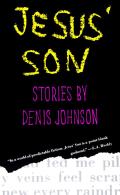
But I entitled this post “choosing a book” because I’ve been thinking about how much I enjoyed Denis Johnson’s story collection Jesus’ Son and how surprising that might seem because it’s so different from what I usually read. I picked it up because of a friend’s recommendation, but this isn’t a friend I always agree with when it comes to books, and I got the recommendation a long time ago, and I’m not sure why it stuck with me. And I had no idea why this friend recommended it and what the book was about when I bought it. So these weren’t the most auspicious circumstances.

But it makes me think I should choose books in this almost random kind of way a little more often — to take more risks. It’s so easy to make judgments about what a book will be like and whether I will like it or not, based on criteria like what the book looks like, what I’ve heard about it through the media, things I know about the author. But it’s such a pleasure to be surprised, isn’t it? To find out that the book is nothing like what we thought? Or that if it is like what we thought, that we’re surprised by how much we like it?

Here are some of my recent choices, some typical of what I usually read, some not: I finished Anita Brookner’s Leaving Home recently, and I hope to post on it soon — this is fairly typical of what I turn to frequently — contemporary fiction, thoughtful, character-driven, about ideas. I just began Eileen Chang’s Love in a Fallen City, which is a bit of a departure, although not a huge one — mainly it’s a departure because it’s not British or American, and it’s made up of novellas and stories, when I usually choose novels. I also received A.J.A. Symons The Quest for Corvo: An Experiment in Biography in the mail today through Bookmooch; this is even more of a departure because I have no idea who A.J.A. Symons is, no idea who Corvo is, and little idea what is meant by “an experiment in biography.” But I read about it in a Michael Dirda book and was intrigued, and, although I have little idea when I’ll actually pick it up, I’m excited about it.

I suppose there’s no sure-fire way to make surprises like Jesus’ Son happen more frequently, except to stay open to suggestions from unusual places and to try to develop courage as a reader.

Oh, and one more thing: if you’re a participant in the Slaves of Golconda book group (or want to be one — new readers are always welcome!), check out Imani’s choices for the next book and vote on what you’d like to read.  She’s got some great possibilities.

12 Comments

Filed under Books

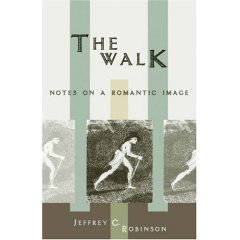
More on The Walk

Every time I pick up Jeffrey Robinson’s book The Walk it makes me happy, and what more can one ask from a book? The Walk also makes me open up my computer almost immediately to see if the books it mentions are available. Yesterday I came across a reference to The Lore of the Wander: An Open-Air Anthology by George Goodchild (Amazon doesn’t have it, although I found it elsewhere), and E.V. Lucas’s collection of essays Turning Things Over, which contains an essay entitled “A Journey Round a Room” which Robinson praises highly, and which is inspired by Xavier de Maistre’s A Journey Around my Room (published by Hesperus), which I read and loved a few years ago. You see why this is fun?

This book isn’t perfect; I was disappointed by the third chapter, entitled “Throwing off the Burden: Walking and the Self,” which sounds so promising but didn’t quite deliver. Robinson seemed most interested in talking about walking and the self to make a point about Wordsworth, when I would have preferred him to talk about Wordsworth to make a point about walking and the self. This book is quite short — 140 pages — and I’m discovering that it makes no attempt to dive deeply into ideas, but instead covers a lot of ground (so to speak), and so is more suggestive than thorough. I’d like it to be more thorough, but I’m also coming to think that its suggestiveness is part of what makes me so happy; it leaves lots of room for me to read and think some more.

But even that disappointing chapter has this utterly charming pair of quotations to offer; first, this is Hazlitt from his wonderful walking essay “On Going a Journey”:

Give me the clear blue sky over my head, and the green turf beneath my feet, a winding road before me, and a three hours’ march to dinner — and then to thinking! It is hard if I cannot start some game on these lone heaths. I laugh, I run, I leap, I sing for joy. From the point of yonder rolling cloud, I plunge into my past being, and revel there, as the sun-burnt Indian plunges headlong into the wave that wafts him to his native shore. Then long-forgotten things, like ‘sunken wrack and sumless treasuries,’ burst upon my eager sight, and I begin to feel, think, and be myself again.

I think that’s wonderful, but I’m also sympathetic with Robert Louis Stevenson who has this to say about Hazlitt (from “Walking Tours”) — and those of you who are feeling overwhelmed by all that laughing, running, leaping, and singing might like it too:

I do not approve of that leaping and running. Both of these hurry the respiration, they both shake up the brain out of its glorious open-air confusion, and they both break the pace. Uneven walking is not so agreeable to the body and it distracts and irritates the mind. Whereas, when once you have fallen into an equable stride, it requires no conscious thought from you to keep it up, and yet it prevents you from thinking earnestly of anything else. Like knitting, like the work of a copying clerk, it gradually neutralises and sets to sleep the serious activity of the mind.

Although I admire Hazlitt’s energy and joy in his walking, I’m more on the side of Stevenson; I prefer to let walking soothe and calm my mind, almost to put it to sleep, and to walk in a regular pattern that invites a kind of quiet meditation. I don’t need to walk to think; I need to walk to keep from thinking.

And a couple more quotations from the introductory chapter (I haven’t even touched on the chapter on the walking essay, which I’ll have to save for another post):

The walker observes things from a distance, and if the power of the object is in some way too compelling, he by definition detaches himself from it by walking on. Yet the walker is in experience, feels and thinks in his movement through time and space, and is reaching out (or can) to the world in time. To deny either side of the walk is to deny half of experience.

……

When I walk, my mind does not flow like a stream. More literary than that, it works in mixed genres: at times autobiography, polemic, natural description, dialogue, essay, even treatise, story. Sometimes it seems a genre that keep resisting genre. Sometimes internal pressures or laxities break the integrity of genre. Other times the break comes from the squirrel that will not get off the path, the sprinkler’s spray that I must circle around, the old man trudging past in a heavy great coat on this warm day, the vague green lines of algae on lake water.

Robinson constantly points to the ways writing and reading and walking are all similar; in fact, I don’t think you can write a book about walking without doing so to some degree. He slips back and forth between the experience of walking and the experience of reading as though they are the same thing: “walkers, who are almost always bona fide essayists, are urged from somewhere to ambulate on paper about ambulation.”

6 Comments

Filed under Books, Nonfiction

Jesus’ Son by Denis Johnson

imagedbcgi1.jpg I finished this book a few days ago and have been thinking about it since then. It’s a collection of linked short stories with the same first-person narrator in each one; it’s a powerful collection, moving and disturbing and beautifully written. This is very far from the usual sort of story I read — the narrator is a young man who is an alcoholic and drug addict who drifts through his life looking for more drugs, wandering here and there, meeting people, getting into trouble, getting high, and thinking about life.

He doesn’t tell us a whole lot of what he thinks about life, actually, as more often than not he seems to be trying not to think, but he comes out now and then with comments and judgments on the world around him that are all the more startling for being relatively rare. The narrator’s voice is haunting; he’s mostly matter-of-fact in the way he recounts his life, often using strings of short sentences or long sentences made up of strings of short phrases that seem not to reveal much until suddenly they reveal a whole lot. This is the way one story begins:

I was after a seventeen-year old belly dancer who was always in the company of a boy who claimed to be her brother, but he wasn’t her brother, he was just somebody who was in love with her, and she let him hang around because life can be that way.

This is a typical Denis Johnson sentence, I think, one that starts off a little bit shocking and becomes more complicated as you go on, and then ends with a phrase that takes you into another place entirely, some place larger and more thoughtful. Here’s how another story begins:

I’d been staying at the Holiday Inn with my girlfriend, honestly the most beautiful woman I’d even known, for three days under a phony name, shooting heroin. We made love in the bed, ate steaks at the restaurant, shot up in the john, puked, cried, accused one another, begged of one another, forgave, promised, and carried one another to heaven.

And you’ll find passages like this one, where the narrator starts off describing the events of a day and end up taking the measure of his life:

Georgie and I had a terrific time driving around. For a while the day was clear and peaceful. It was one of the moments you stay in, to hell with all the troubles of before and after. The sky is blue and the dead are coming back. Later in the afternoon, with sad resignation, the county fair bares its breasts. A champion of the drug LSD, a very famous guru of the love generation, is being interviewed amid a TV crew off to the left of the poultry cages. His eyeballs look like he bought them in a joke shop. It doesn’t occur to me, as I pity this extraterrestrial, that in my life I’ve taken as much as he has.

I’d like to keep giving you example after example of the writing, because it’s so beautiful and so stunning. You can see in the last quoted sentence that the narrator is looking back on his life, writing about it in some future time; occasionally he’ll make reference to how he has changed and what he has lost, sounding nostalgic at times for this youthful, free-wheeling life and culture. He mentions urban renewal a number of times, soon to become reality (the book is set in the early 70s), which will destroy the landscapes he knows, bleak ones, yes, but familiar ones too.

And yet he also is writing from the perspective of sober adulthood, knowing very well just what a harsh and difficult life he has led; the last story describes a narrator newly-sober and struggling to settle into a new life, offering the reader a hint of the narrator’s future trajectory. This last story is one of the best and most disturbing, I think; the narrator spends a lot of time spying on an unsuspecting couple in their home, longing to understand and maybe to imitate their normalcy. He can only gaze in on this conventionality from the outside, though, and the people he finds himself actually involved with are outcasts like himself. The story ends with this thought:

All these weirdos, and me getting a little better every day right in the midst of them. I had never known, never even imagined for a heartbeat, that there might be a place for people like us.

In spite of all the darkness, the collection ends with the possibility that the narrator will find his place after all, will figure out how to shape a life for himself.

From the collection’s title you will be able to guess that there are religious references throughout; these don’t occur all that often, but just enough so that you know the narrator has a spiritual awareness; he is aware of just how far he has strayed from God, perhaps, or maybe it’s that he feels that God has abandoned him and the world he sees around him. The title feels ironic at times — this guy is Jesus’ son? — and yet he also seems watched over, somehow, as though the older narrator knows that the younger version of himself will find a way out of the mess; if he won’t find salvation, exactly, he’ll find a new life:

There were many moments in the Vine like that one — where you might think today was yesterday, and yesterday was tomorrow, and so on. Because we all believed we were tragic, and we drank. We had that helpless, destined feeling. We would die with handcuffs on. We would be put a stop to, and it wouldn’t be our fault. So we imagined. And yet we were always being found innocent for ridiculous reasons.

To be found innocent for ridiculous reasons — that’s one version of salvation, I suppose.

10 Comments

Filed under Books, Short stories

The Walk

156478459201_aa240_sclzzzzzzz_v63860474_.jpgI’m wondering now why it has taken me so long to pick up this book, The Walk, by Jeffrey Robinson; I’ve had it on my shelves since December, and I’ve kept my eye on it as a possibility, but never quite got around to it. But when I picked it up yesterday on a whim, I realized very quickly that it is a book I’m going to enjoy a lot. First of all, and this isn’t even related to the book itself, I noticed that it’s published by Dalkey Archive Press, and it’s got a list of their books in the back, a list which looks quite wonderful, full of world literature titles, some of which I’ve heard of and many of which I haven’t. From what I can tell, they seem to be lesser-known works that tend toward the experimental and subversive. I’ve only recently begun to check out publishers’ websites and blogs, and now I’m wondering what took me so long with this too; I’ve enjoyed checking out the Hesperus Press blog and A Different Stripe, the New York Review of Books Classics blog.

But back to the book; after checking out the Dalkey Archive books, I looked through the “Bibliographic Essay” and the “Afterword,” both of which list books about walking. This sort of essay is a goldmine, isn’t it? Neither of them lists a whole lot of books, but the ones they do are intriguing. Here are a few of them:

  • The Walker’s Literary Companion, eds. Roger Gilbert, Jeffrey Robinson, and Anne Wallace
  • Walks in the World: Representation and Experience in Modern American Poetry, by Roger Gilbert
  • Rebecca Solnit’s Wanderlust (I’ve raved about this one on this blog before)
  • Joseph Amato’s On Foot: A History of Walking
  • Annie Dillard’s Pilgrim at Tinker Creek (I’ve read bits of this but never the whole thing)
  • Edward Hoagland’s Walking the Dead Diamond River
  • Gary Snyder’s book of poems The Back Country (I’ve never read Snyder, but think I will one day)
  • Eric Newby, A Traveller’s Life
  • Laurie Lee, As I Walked Out One Midsummer Morning
  • Aldous Huxley’s Along the Road: Notes and Essays of a Tourist
  • Authors who write about urban rather than rural walking, including Restif de la Bretonne, Baudelaire, Nerval, Andre Breton, Louis Aragon, Kafka, and Walter Benjamin. Also, Alfred Kazin (A Walker in the City), and poets Frank O’Hara and Charles Reznikoff.

And that’s not even all of it, and doesn’t include books mentioned in the main text itself. I’ve read the first two chapters of the main text, the first one an introductory chapter and the second on “The Foot and the Leg.” I love the idea of a chapter on the foot and the leg! I may post on quotations from the introductory chapter some other time, but for now, here are a couple of things from this second chapter:

People observe their feet or write about them with a unique detachment. The foot is not quite a part of the rest of the body, but not quite part of the mind and heart that direct actions and receive impressions. The foot is simply there, as the shoe that eventually may fit it is simply there.

Yet this does not mean that thoughts about the foot are simple or that people agree about its functions and, more provocatively, its character. Thoughts about the foot tend to exist in oppositions: the useful vs. the useless, the primitive or natural vs. the civilized, the animal vs. the spiritual, the physical vs. the mental, the heavy vs. the airy, the earthly vs. the spiritual, the ugly vs. the beautiful, the repulsive and disgusting vs. the sexually attractive and the adorable, the innocent vs. the seductive. The foot either responds to the body’s commands or works from an independent center. The foot is a thing or it is human.

And one more thing from later in the chapter:

Charles Lamb gushed over walking: “walked myself off my legs, dying walking!” This would be life as a pleasurable fulfillment, a leavening of the body into spirit, the rhythm of the legs dissolving the weight of the legs into energy. “To walk one’s legs off” does not indicate dismemberment. No violence hides beneath the swing of the legs. Along with the legs, one will have walked off self-consciousness, all heat. One may have arrived at what Rilke calls “The profound indifference of the heart.”

This is one of the reasons I love walking so much; I can walk off self-consciousness, and turn weight into energy.

11 Comments

Filed under Books, Nonfiction

Rilke in translation

I’m now halfway through Rilke’s Duino Elegies, and am loving the experience of reading it. In an effort to understand it better, I’ve begun to check out other translations online when I’ve finished a section from the book I own, translated by David Young. I haven’t decided whether I like or dislike Young’s translations, not really knowing enough to make a judgment, but I discovered that I could understand the poem much better when I looked at more than one translation. I have the original German too, which I’ve been reading after I read the English a few times, but my German’s not good enough for me to judge translation quality. And, yes, these elegies are complicated enough to require a number of readings (they are relatively short, and this doesn’t take long). I am finding them beautiful and rich and mysterious — they touch on death, love, consciousness, relationships, loneliness, isolation, the world of the mind — they are about everything important, it seems like.

But to show you what I mean about the translations, here’s a short section from the Fourth Elegy, as translated by David Young:

But we, when we’re fully intent on one thing,
can already feel the pull of another. Hatred is always close by.
Aren’t lovers always coming to sheer drop-offs inside each other
they who promised themselves open spaces, good hunting and a homeland?
As when for some quick sketch a contrasting background
is made with great care so we can see the drawing. No effort is spared.
We don’t know the contour of feeling, we only know what molds it
from without.

The meaning of the first part is clear to me, and I like the idea — that we have trouble focusing on one thing, on the present moment, and are always in pursuit of what’s next. The bit about the lovers is interesting — they expect infinite possibilities from each other and are disappointed. The next four lines have an image that took me a while to get, but once I got it, I liked it; the artist took pains with the background of the drawing to make the drawing itself clearer, although the drawing itself is only the work of a moment. Somehow, this is like the way we experience emotion; perhaps emotion is like the sketch, which remains fleeting and mysterious; all we can know about emotion is what shapes it — the thing that molds it, like the carefully-prepared background. What’s confusing about this passage is the way the fifth line (“As when …”) seems at first to relate to the image of the lovers, not the lines about emotion. It’s only by thinking through the images carefully, that I can figure out the image of the sketch and the ideas about emotion go together.

Here’s the same passage translated by Robert Hunter:

But we cannot focus on
a single object without
worrying about another.
Conflict is our essence.
Aren’t lovers always
crowding one another,
despite mutual longing
for wide open spaces,
homestead and plentiful hunting?
As when a canvas is carefully
stretched and primed to receive
a spontaneous sketch,
the better to offset it,
we do not observe the
background of emotion,
only what is splashed upon it.

The passages are similar — but not the same; the meaning of each one seems different. Isn’t “hatred is always close by” different from “conflict is our essence”? It’s the difference between something existing outside us but easily available and something that is in us and a part of us. And then there’s the difference between “Lovers always coming to sheer drop-offs inside each other” and “lovers always crowding one another.” These are two very different things, aren’t they? It’s the difference between finding something inside the other — some emotional or mental attribute — and bumping into the other’s body. And in the second translation the sketch is clearly connected to emotion, as it forms one sentence, instead of the three sentences of the first.

And here’s another, translated by John Waterfield:

We, though, where we intend one thing, and mean it,
are vexed by shimmering alternatives.
Enmity’s near to hand. Don’t lovers always
come upon fences in each other’s souls
where they expected hunting, home, and freedom?
Then briefly a design that’s based on contrast
comes into focus, carefully prepared
for us to see. (They take some pains with us.)
We do not know the contour of our feeling:
only the thing that moulds it from without.

Now the lovers are encountering fences in each other’s souls — the place of conflict, the soul, is a more clearly defined, and we have a fence instead of a drop-off. And in the parentheses, some mysterious “they” gets introduced; I notice now the other versions used passive voice (“a canvas is carefully stretched,” “a contrasting background is made”). Who is this “they”?

I guess I’m pointing out something that’s fairly obvious if you think about it, which is that every translation is an act of interpretation. Every translation introduces its own meanings and shades of meanings. I don’t think I’ve ever spent so much time puzzling out different translations, though, so I’m struck by this idea in a different kind of way, actually seeing the various interpretations in front of me at once.

10 Comments

Filed under Books, Poetry

Lionel Shriver’s The Post-Birthday World

12314620.gif It seems like it’s been a long time since I’ve written a substantive post on books; actually, it seems like it’s been a while since I’ve been truly absorbed in a book at all. I read a bit here and there, but mostly I’ve been busy doing this and that (retreats, visits with friends, errand-running), and I’ve been on a manic exercise kick that keeps me busy. For those of you who follow my races, last night’s race went very well; it was the longest, fastest race so far this season, and I stayed with the pack the whole time. I didn’t even work all that terribly hard to do it. Don’t get me wrong — I was definitely working — but it wasn’t kill-myself working. This weekend’s race got postponed, so the next race is Tuesday, which means I have some days available to do some long rides. I hope to begin tomorrow.

But, yeah, I’m going to write about books. I finished Lionel Shriver’s The Post-Birthday World last week and can report that I liked the experience very much; this is my first Shriver novel, but probably not my last (I need to read Double Fault next, if only because it’s got women athletes in it). It was a gripping novel, one I was happy reading for hours at a time, and, at over 500 pages, one that lasts a while too. It’s got three main characters, and we stay with them and only them for most of the novel; there are other minor characters here and there, but mostly it’s a lot of time with those three people. So, as you can probably guess, there’s lots and lots of character analysis, lots of relationship analysis, lots of scenes of agonized and agonizing dialogue and critique and confession. There are lots of fights and frustration and anger. It could feel claustrophic, all that time in a fairly narrow world, but it didn’t feel that way to me. Or maybe that’s just the way life is — a lot of time spent thinking about just a few relationships.

The main character, Irina, is practically married, although not quite, to Lawrence — they’ve been together many years but have never gotten around to the ceremony — and early in the novel (I won’t give anything much away) Irina is tempted to kiss Ramsay Acton, a snooker star, on his birthday. What happens is that two versions of the “post-birthday world” arise — one where she does kiss him, and one where she doesn’t. From that point on, the narrative splits into two strands, one following each world and each one narrated in alternating chapters. We get to see how things work out each way.

Shriver has a lot of fun (or it strikes me that it would have been fun) narrating the two worlds side-by-side; things are different in each world, obviously, but not as different as we might think. A lot of the same things happen in each version, but not always done by the same person or with the same meaning. Similar conversations take place, but the dialogue gets spoken by different people; Irina finds some successes and some failures in one world, and mirroring ones in the other; the roles of victim and victimizer, betrayer and betrayed shift around. It’s hard to say which world is better, and surely that’s part of the point — that the decisions we make can seem so very significant and life-changing, but from a larger perspective perhaps don’t make as much difference as we think.

I was struck throughout the novel at what jerks both Lawrence and Ramsay could be; although they are very different types of people, which is why Irina has such trouble making up her mind about them (she says at one point that they would be perfect combined into one man), they both tend to treat her badly, bossing her around, judging her, not letting her be herself. I’m not sure what to make of this — are we supposed to feel bad for Irina, that even though she loves both of these men, and they each make her happy in their own, very different ways, she doesn’t seem realize just what controlling bastards they can be? I wanted her to figure more of that out, to complain about it more, but she tends to accept their criticism and their pettiness and to blame herself, as though she’s constantly making mistakes, when she’s not.  I suppose this isn’t really a complaint about the novel, since the story is told from Irina’s point of view (third person, but following her consciousness), and it’s part of Irina’s character not to stick up for herself as much as she might, but it was painful to read about nonetheless.

At times I thought the writing was a bit sloppy; the point of view didn’t always seem consistent — it was told from Irina’s perspective, but sometimes a voice would intrude, saying things that Irina wouldn’t, in order to get across some information. But that’s a minor quibble. Mostly I was enthralled with this very close look at love and romance, at the varied types of love different relationships can offer, at the effects of time on any relationship.

It turns out that Charlotte has recently read this book too; make sure not to miss her post on it.

13 Comments

Filed under Books, Cycling, Fiction

I hate it when I’m predictable

Well, of the 61 Best Novels You’ve Never Read, I’ve read none of them. Shoot. I do, however, have two of them on my TBR list.  Does that count for anything?

24 Comments

Filed under Lists

Riding and Hiking

Now is the time when the crazy exercising begins — yay! It’s the time when Hobgoblin and I do day-long hikes and hours-long rides, sometimes for days in a row. I’ve ridden the last four days in a row, including a race today; tomorrow we’re going to hike 14 miles over three mountains (it’s Hobgoblin’s birthday tomorrow!); Tuesday I’m going to race again, and then I hope to ride at least four more times before the end of the week, ideally two of those rides lasting for over four hours. This will be fun.

The race today went pretty well. Hobgoblin and I drove up to Hartford to ride in their criterium; I’d watched races there before, but this is the first time I actually rode on the course. It was a women’s open race, which meant I was riding with women from all categories — which meant it was a fast race. I had no idea how I would do, as the last women’s open race I rode in was last year in my first race ever, which turned out to be a disaster (I got dropped after about two laps).

Mostly I hoped not to embarrass myself, which I most definitely did not; I finished the race with the pack. I got only 30th place out of 42 starters, but the point for me was to finish with the pack, not necessarily at the front of it. I felt pretty good throughout, but going through the corners in the last lap I didn’t have a whole lot of strength left to sprint with — and if you’re nowhere near the front of the pack, it really doesn’t make sense to sprint anyway, since you’d be sprinting for something like 30th place, which doesn’t mean much, and you put yourself in danger of crashing.

What I learned is that I need more practice riding fast through corners; I noticed that I slowed down too much at the corners and began to slip back farther in the pack, and then once I was through the corner, I had to speed up to catch up with everybody else. That takes too much energy. I just don’t have a whole lot of practice cornering; the criterium course in my town doesn’t have difficult corners, so they are new to me. I also need to be a bit more aggressive; I let other people jump in front of me too easily.

So, enjoy your holiday everyone!

5 Comments

Filed under Cycling, Life

Summer Reading

So I’ve committed to not doing a summer reading challenge, and I’m not going to, but I would like to muse a little bit about what I might read this summer. If I make a list of things I will read, I will feel constrained and will quickly get tired of all my choices. But I can think about some things I could possibly pick up, or, better yet, some categories of things I’d like to read, the exact titles to be chosen later. So this is not a very exact list, and it’s also not one I’m sticking to. It’s just some thoughts for the moment:

  • I am committed to reading Proust and Cervantes. I’d like to finish both of these before Labor Day, although that may not be possible. But I’ll try.
  • Back in the days when I was more likely to sign up for reading challenges, I decided to do Kate’s Reading Across Borders challenge, and it’s one I’m still excited about (probably because there are so many possibilities and I didn’t commit myself to any particular titles). So far this year I’ve read 2 books out of my goal of 5 (these include So Long a Letter and Aunt Julia and the Scriptwriter). This summer I’d like to read at least one more; possibilities include Mahfouz’s Palace Walk and Eileen Chang’s Love in a Fallen City. But other interesting ones may pop up.
  • I’d like to read some more travel writing. I haven’t read much contemporary examples, but the ones I have I’ve liked (Yoga for People Who Can’t Be Bothered To Do It; Eat, Pray, Love; The Places in Between). I’ve got Peter Matthieson’s The Snow Leopard on the shelves, and also Bruce Chatwin’s In Patagonia.
  • A literary biography might be fun too; I’ve got a short one of Proust and am also interested in reading biographies of Virginia Woolf and Jane Austen. I haven’t read that many biographies in my life — largely because they are so often long and I’m a slow reader — but I would like to know more about some of my favorite authors.
  • More poetry — I’m in the middle of Rilke’s Duino Elegies and enjoying it a lot, but I’m trying to decide what poet to read next. Part of me would like to read somebody from an earlier time period, like Keats, for example, and another part of me wants to return to contemporary writers. I’m not sure which side will win out.
  • There are a couple books I’ve been meaning to read because friends recommended them to me (as have other litbloggers); they include McCarthy’s The Road and Ann Patchett’s Bel Canto, and anything by Geraldine Brooks, although The Year of Wonders is what I have on my shelves.
  • I’d like to read something challenging. I’m not sure what this means; perhaps a long and difficult novel like The Recognitions which Ted recently sent me (thank you!) or something philosophical like the Martha Nussbaum book I’ve got on my shelves, or perhaps William James’s The Varieties of Religious Experience, which I’ve been wanting to read for a long time. That one wouldn’t be a difficult read, but it would be challenging in the sense of making me think a lot.
  • Perhaps I’ll finally, finally get around to reading the Bhagavad Gita?
  • I’d also like to read as many books as possible from my TBR shelves — not so much to clear them out as to create space for more new books. Here is where my vague plans start to shift into fantasy …

8 Comments

Filed under Books, Lists

A Sentimental Murder

I finished John Brewer’s A Sentimental Murder quite a while ago, but still want to write one last post on it (a previous post is here). It’s a wonderful book, in short. It tells the story of James Hackman’s murder of Martha Ray, mistress of the Earl of Sandwich, in 1779. But it does so much more than that — the first chapter tells what we know of the basic facts, and then subsequent chapters tell the story of how the story got told, how various versions developed, the “facts” changed, sympathies shifted.

There isn’t much we know of the facts, actually; Hackman had fallen in love with Martha Ray, but we don’t know for sure what her feelings were in return. On the night of the murder, he seemed more likely to commit suicide and leave Ray in safety, but something changed his mind, and he shot her just outside Covent Garden Theater. He tried to shoot himself, but failed.  He was tried for murder and hanged.

As the story gets shaped and retold through the end of the 18C and on into the 19C and 20C, the story focuses on different characters and different interpretations; at one point Hackman becomes a kind of sentimental hero — even though he is the murder — and at another, the focus is on Sandwich as an example of the corrupt aristocratic rake, and at another, on Martha, sometimes as an example of a fallen woman and sometimes as an exemplar of loyalty and devotion.

But the book does more than give varying interpretations of the story; it uses the story as a way to examine the culture surrounding it. Brewer includes a chapter on the 18C press, explaining how its openness and relatively amateur status meant that those in power could shape news stories as they saw fit (although those with competing versions of the story could do that too). He explains the late 18C culture of sensibility and how it fed into interpretations of the murder — this is a culture that valued emotional displays and loved to theorize about the political and social consequences of feeling. As he moves into the Victorian era, Brewer explains how writers took the murder as evidence of the decadence of late 18C life, compared, at least, to the moral uprightness of their own time.

One of my favorite parts of the book is the very end where Brewer backs up a bit to discuss theories of history and how his own story fits into them. He describes how, since the 1960s, the discipline of history has moved away from focusing solely on the public world of politics and economics and the big names — kings and presidents and prime ministers — and has moved toward telling the stories of everyday people. Writers of history also began to move away from using a detached and objective voice and wrote in a more subjective, personal, and engaged way. They began to look to new sources too — diaries and letters were sources of information, as well as the more traditional sources such as records of parliamentary debates.

Brewer explains how these changes in the discpline of history shaped his book:

The recent attempt to rethink the practice of historians, in other words, is a challenge not a threat. And it is in this spirit that I have written this book, partly as a certain kind of new history but also as an experiment, to see if it will work. I deliberately foreswore an approach that set out to recover the truth about events between 1775 and 1779, though I, as much as anyone, wonder about what lay behind the miasma of news, rumour, and information that circulated after Martha Ray’s death … I did not want to treat all subsequent accounts of the affair merely as sources of facts or evidence … I took what I considered a less invasive alternative. I tried to treat these accounts as stories or narratives with their own histories — not as databases of facts. The significance of each individual account — whether novel, anecdote, or essay — lay not in what it told us about James Hackman, Martha Ray, and the Earl of Sandwich, but in what it told us about the relationship between itself and the events of 1779, the connection between the past it was describing and its present.

If this book is an experiment in new forms of historical writing, I think it succeeds very well; he talks about history written from the bottom up, and this strikes me as a wonderful example — he gives us a picture of the late 18C century (and Victorian and 20C views of the late 18C) by focusing on one small story and following its development and implications. The story includes an aristocrat, but it’s a love story, not a political one — it’s a very personal story, and yet it tells us so much about the culture of the time. And the point is not so much what actually happened between Martha Ray and James Hackman — so much is unclear — but what the various versions of their story meant, what they reveal about the people telling the stories.

3 Comments

Filed under Books, Nonfiction

More on books soon …

Your Score: Pure Nerd

86 % Nerd, 4% Geek, 26% Dork

For The Record:

A Nerd is someone who is passionate about learning/being smart/academia.
A Geek is someone who is passionate about some particular area or subject, often an obscure or difficult one.
A Dork is someone who has difficulty with common social expectations/interactions.

You scored better than half in Nerd, earning you the title of: Pure Nerd.

The times, they are a-changing. It used to be that being exceptionally smart led to being unpopular, which would ultimately lead to picking up all of the traits and tendences associated with the “dork.” No-longer. Being smart isn’t as socially crippling as it once was, and even more so as you get older: eventually being a Pure Nerd will likely be replaced with the following label: Purely Successful.

Congratulations!

THE NERD? GEEK? OR DORK? TEST

Thanks Imani!

6 Comments

Filed under Life

I apologize profusely

I’m SO, SO sorry for linking to and commenting on this article about how much book blogs suck, but I simply can’t help myself. I’ve wanted to stop posting about these attacks on blogs because it gets boring after awhile, not to mention disheartening and repetitive. But then someone says something so utterly annoying I can’t keep quiet.

So, I’ll keep this short. The author of the article, Richard Schickel, starts off by quoting from a New York Times article that discusses shrinking space for book reviews and the possibility that book bloggers will pick up some of the slack; here’s Schickel’s claim:

“Some publishers and literary bloggers,” the article said, viewed this development contentedly, “as an inevitable transition toward a new, more democratic literary landscape where anyone can comment on books.”

Anyone? Did I read that right?

Let me put this bluntly, in language even a busy blogger can understand: Criticism — and its humble cousin, reviewing — is not a democratic activity.

I find it interesting the way Schickel moves seamlessly from the quotation that talks about commenting on books to a defense of reviewing and criticism. He’s assuming that all book bloggers attempt to produce professional reviews or criticism, which isn’t at all the case. What makes Schickel slip from commenting to reviewing all at once, thereby eliding a whole range of possible ways of writing about books? Why do people assume that if you write about books, your only purpose can be to become a professional reviewer?

Of course, there’s no reason a blogger can’t produce reviews or criticism that’s just as good as anything that appears in print (and on this issue you simply must see Dan Green’s wonderful response).

What’s wonderful to me about blogs is the range of writing you can find — everything from formal reviews and criticism, to informal commentary, to highly personal reading responses, to news of the book world and gossip about writers. Why do people who attack blogs assume that all bloggers are aiming at one thing — to produce writing that will “threaten” what appears in print?

Okay, I’m done. Now for an announcement: I’ll be gone for a few days on a work-related retreat (which probably sounds dreadful, although I don’t think it will be). I’ll be back on Friday or thereabouts.

11 Comments

Filed under Blogging

Race report

I’ve been sitting in my study for quite a while now, reading blogs and aimlessly surfing the internet, wondering if I feel up to posting or even up to pulling a book off the shelf. See, I’m sitting here once again with aching legs. I feel like I’ve complained about the aching legs an awful lot lately. Today’s race was tough, although I had fun and felt okay afterward. But it was a road race with a good-sized hill, which always spells trouble for me.

Hobgoblin and I drove almost two hours, out to the edge of Connecticut at the Rhode Island border, getting up at 5:00 (5:30 in my case) to do it. The race course was beautiful; it was Connecticut countryside at its best, with rolling hills and lots of open space. There was no women’s race, so I rode with the Category 5 men — I was one of only two women out there. The race had a long neutral start — meaning that we rode a section of the course slowly, following a pace car that made sure nobody was pushing the pace. I’m not entirely sure why they do this, actually, except that perhaps it’s safer and more orderly.  The neutral start took us all the way up the course’s main hill, 1 kilometer long, and the race itself started at the top.

I was so grateful for that long neutral start, because without it I would have been dropped immediately. I did fine on all the rest of the course for the first lap, but when we came around to that monster hill the second time — the first time actually racing it — I got dropped. Sigh. Thank God I fell in with a few other riders right away, so I didn’t have to ride the rest of the race by myself — that would have sucked, because there’s no point in driving all that way to ride by myself, when I can do that any time I want at home. But I found 4 or 5 riders riding at about my pace, and we stuck together until we climbed the monster hill for the last time up to the finish line, when I got dropped again.

This is about what I expected to happen, so I wasn’t disappointed, just grateful to have found other people going my speed. I’ve been trying to work on my hill climbing, but I don’t think I’m working hard enough. I climb hills all the time, but it’s too easy to let myself back off rather than making myself push hard. Ugh — I see more hill climbing practice in my future.

Anyway, I wasn’t DFL, as the cyclists say, dead fucking last. That always makes me happy.

4 Comments

Filed under Cycling

A rambling post

I have all kinds of posts I’d like to write at some point, several on A Sentimental Murder, one on Don Quixote, one on Rilke’s Duino Elegies, but I don’t feel like writing them now. Instead, I feel like rambling. So this will be a rambling post.

This morning, Hobgoblin, Muttboy, and I went on a walk in a local park (something like 1,000 acres in size with lots of forest) and found that our usual trail had been completely devastated by a storm that passed through here last Wednesday. I heard rumors of tornados, although I don’t know if any actually developed, but at the very least it was brief but incredibly powerful; I don’t usually get nervous when storms come through, but this time I was, and I was ready to head down to the basement at any moment. Our neighborhood was fine — we didn’t even lose power — but other neighborhoods near us weren’t so lucky; roads were closed everywhere, trees were down all over the place, and people lost power for days. A trip that usually takes Hobgoblin 30 minutes took him 1 hour 40 minutes because he couldn’t find roads that were open.

So, at the beginning of our walk, we noticed a few trees down, but it didn’t seem that bad until we got to a higher elevation, and there we saw that trees were down everywhere. Everywhere we looked, we saw fallen branches, tree trunks ripped apart, roots pulled up from the ground. We had to pick our way around fallen tree after fallen tree that blocked our path. The path gets used by mountainbikers a lot, but it won’t be rideable for a long time, until somebody spends hours with a chainsaw clearing things out, if it even gets cleared at all. I couldn’t help but wish I’d seen the storm come through — if I could somehow have known I would be safe, I would love to have been there, seeing and hearing what it was like. Walking through the forest was sad, with all those damaged trees, but it was dramatic and exhilarating too.

I attended graduation at my school on Thursday, so now my semester is officially over (although it’s never really over — I’m attending a work-related retreat next week …); I’ve been slipping into summer mode, which means there still is work to be done, but at a slower pace and with lots more time to read. I’ve been devouring Lionel Shriver’s The Post-Birthday World, and today I devoured the second section of my friend’s novel, the one I’m commenting on as she works on revising it. It’s such a pleasure to read without work hanging over my head! As much as I love teaching, I do get tired of always having work to do on the weekends, which means guilt is never far away — the feeling that I should be grading or reading for school or prepping for class. I tempted to make some goals for summer reading, but I’m trying not to, in favor of keeping things more spontaneous. I already have plans to continue with Proust and Cervantes, and probably that’s plan enough.

I’ll end with a question: do you ever have the experience where you decide to read an author and you turn to his or her best work, and you read it and love it, and want to read more, but all that’s left is the work that everybody says is not quite as good, and you’re a bit afraid to try it because it may disappoint you? I was reminded of that problem when I read Ted’s post on Nabokov’s Pnin, which didn’t quite live up to his expectations. I’ve experienced this with Nabokov myself — I adore Pale Fire and Lolita and Speak, Memory, and would happily read more, but, at least as far as what people generally say, I’ve read the best already. This is true for Virginia Woolf as well; after Mrs. Dalloway and To the Lighthouse, will I find The Voyage Out disappointing? Do I really want to spend time with a book that will disappoint me? With an author’s works of lesser reputation? I know reputation isn’t always a reliable way to decide if I will enjoy something or not, but I still feel a lingering hesitation about picking up the lesser-known things.

14 Comments

Filed under Books, Life, Reading

Reading like a Writer II

I thoroughly enjoyed reading Litlove’s and Stefanie’s posts on Francine Prose’s book Reading Like a Writer, and, if you haven’t read them yet, suggest that you go and read them first, and then return here.

I’ve now finished this book, and agree with Stefanie’s comment that the later chapters are better than the earlier ones. These later chapters cover things like character, dialogue, gesture, and detail, and perhaps these things are more complex and therefore more interesting than the topics of the earlier chapters, words, sentences, and paragraphs. At any rate, although my enjoyment of the book increased as I went on, I still have reservations about its quality.

To be fair, though, I’m not sure how I would have written such a book differently. Litlove confesses that she can be a quotation skipper at times, something I do as well, and much of this book is quotation (sometimes they go on for pages and pages). I got a little tired of quotation after quotation and felt that Prose’s analysis was sometimes a bit short and perfunctory. But how would one write this without the quotations? It’s good that the book was short or I would have found it tiresome; as it is, every time boredom threatened, I found I was near the end of a chapter and so contentedly moved on to another topic.

I’m also grateful the book was short (that sounds mean, although I don’t intend it to be) because what I found most valuable about it was the way it inspired me to pay more attention to the technical aspects of fiction, and that can be accomplished without reading something long. I loved Litlove’s point in her post that Prose is reading in a way that would make authors happy — she is pointing out their brilliance, calling attention to how they have carefully crafted their language — which is only one way of reading; another, perhaps deeper, way of reading is to read against the grain — to pay attention to the things an author may not have been so conscious of, to read subversively, as Litlove says. I’m trained to read in this latter way, and yet I’m intrigued by the former, by Prose’s attention to technical details. All this is to say that I’m grateful for Prose’s reminder of the pleasure to be found in enjoying a well-crafted sentence or bit of dialogue or a masterfully-chosen detail. Also I’m thinking about the technical aspects of writing more and more as I read my friend’s novel and talk with her about it and as I talk with Hobgoblin about his own writing process. All these things have added up to a fun glimpse into a writer’s life.

One more thing — my favorite chapter in Prose’s book is one near the end called “Learning from Chekhov”; here, Prose describes teaching a fiction writing class where her students notice the way she gives them advice about writing but then qualifies it and cites exceptions and backtracks, so much so that this turns into a class joke. She gives example after example of “rules” she has offered her students and then describes the almost eerie way she reads a Chekhov story after class that invariably breaks the rule. She tells a student that he needs to distinguish his two main characters more, and then reads a Chekhov story that has two main characters with the same name, for example, or she’ll tell a student to clarify a story’s point of view and then read a Chekhov story where the point of view similarly shifts.

I like this way of making a point that Prose has been developing throughout: that there really are no rules to fiction writing. It’s not that people sometimes break the rules; it’s that there are no rules. If I were a writer, I might find this idea a little bit terrifying (Prose’s students wanted some guidance, and I can understand why); as a reader, I find it completely freeing — I’m free to enjoy the infinite number of ways a story can be told.

5 Comments

Filed under Books, Nonfiction

8 things

I’ve been tagged to do the “eight things” meme — tagged twice in fact. Thank you Jenclair and Sylvia! I’m supposed to list eight random things about me — which strikes me as hard since most interesting things about me I’ve already posted about in other similar memes, but I’ll give it a try.

1.  I never eat cereal with milk. I always have it dry — I can’t stand sogginess in food.

2. I have a diamond-shaped birthmark on my thigh, about six inches directly above my knee.   It’s not quite a perfect diamond shape, but it’s very close.

3. I played on the volleyball team in High School, briefly.  It was a disaster.

4. I am committed to never playing a sport that requires coordination ever again.  Yeah, cycling requires a certain amount of coordination, but not the kind you need to catch, kick, throw, hit, etc.  So, no baseball, football, soccer, tennis, golf, volleyball, softball, or basketball for me.  I might consider miniature golf, but only as a joke.

5. I loathe and despise shopping.  I’ll wear the same clothes over and over again until they are almost worn out before I’ll go buy more (and that’s only if I can’t get Hobgoblin to buy something for me, which he often very graciously does).

6. I’m very bad at remembering the names of trees and flowers and other kinds of plants, but I greatly admire people who can remember them.  There is some essential function missing in my brain that would allow me to learn — I have a bad visual memory I guess.

7. Speaking of memory, I’m very good at remembering my students’ names — I pride myself on this — up until the end of the semester.  Once the semester ends, the names disappear from my brain.  If  class ends in December, by January, I’ll remember their faces but the names are gone.

8. I performed in musicals in junior high and high school — including The Wiz, 42nd Street, and Grease.  I was always just in the chorus though, never in a real part.  I was too shy, I can’t act, and I can’t sing well enough to try for a big part.

Okay, here I break the rules, because I can’t think of 8 people who haven’t done this already to tag.  But if there’s someone who hasn’t done this yet, please do!

17 Comments

Filed under Memes