Blogging house guests

I never expected when I started blogging that it would lead me not only to making new friends from all over the world but also to getting to meet some of them. And yes, it sounds odd to talk about making friends first and then meeting them later, but that’s exactly what happens, and I consider many bloggers friends even though I haven’t laid eyes on them. But this past weekend it happened again: I got to meet fellow-blogger Mandarine and his wife and six-month-old son, who are visiting the U.S. from France.

What a charming family they are. Can I just say that Baby Mandarine is so, so adorable I almost started wanting a baby of my own? And let me tell you, it takes a truly adorable baby to make me feel that way.

I should probably warn you that if you ever visit us, you should expect to walk until you’re in pain. We don’t mean to tire our guests out; it just sort of happens. Hobgoblin and I did it to his mother when she visited a few years ago, to my aunt when she visited last fall, and I’m sure we did it to others as well. This time the Mandarines wanted to do some hiking, and some hiking we certainly did. It just so happened that Hobgoblin was planning to take his class on a hike up Bear Mountain in northwest Connecticut, so we all set off together. I was so impressed at the way Baby Mandarine took it all in stride, so to speak, happily allowing himself to be carried up the mountain and sneaking in a nap on the way down. And I was impressed at the way Mandarine made carrying the baby up and down the mountain seem effortlessly easy. I’m not sure if our hike was what Mr. and Mrs. Mandarine expected, but I know I was left with some sore muscles the next day, and I’m so grateful they were good sports about the experience.

And I’m also grateful for the dinner they cooked for us. We spent a leisurely day on Sunday walking to town to stroll around some shops and then taking naps and visiting the local park to walk the dog (even after the epic hike, the walking continued! Consider yourself warned). And then we enjoyed a fabulous pasta dinner followed by a wonderful chocolate cake, Mrs. Mandarine’s specialty.

So once again I find myself very, very glad I began blogging and very appreciative of the great friends I’ve made this way. I’m also glad I live near New York City, which brings people into my area so I have the chance to meet them. Just remember, if you plan on visiting the city or our part of Connecticut and you want to have a blogger meet-up, that you’d better bringing some good walking shoes.

14 Comments

Filed under Blogging, Life

On being a student again

So the online course in how to teach online continues; I’ve completed almost six weeks worth of work and have another three weeks to go. For the most part the class is a lot of fun. I enjoy being a student — doing my readings and completing my assignments and getting rewarded with good grades. There’s something very satisfying about the whole process.

But I’ll admit that I did not really enjoy last week’s group project. Or perhaps I should say that while I enjoyed working with my fellow classmates and felt a sense of accomplishment at the project we completed, I found that the most memorable things I learned are bad things about myself. I don’t think that’s what the instructors intended.

I learned, for example, that I am a control freak, or, rather, I was reminded once again of my control freak tendencies, a lesson I’ve learned many times before. I don’t like letting anybody else participate in work I’m going to get graded on. If I’m going to get graded on something, shouldn’t I have the right to do everything myself? I was reminded of my perfectionism, and how hard it is to see ways I could improve on someone else’s work but at the same time to fear that making suggestions would be entirely too obnoxious. I felt I knew exactly how the project should be done, and I had to keep reminding myself that other people’s opinions have merit too (or at least I need to pretend they do).

I was reminded of how bossy I can be. I pretty much immediately took charge of the project, making lists of things we needed to accomplish and signing people up for duties. I got annoyed at the two members (out of six) who did very little work, although I did resist prodding them to do their part. Whenever anybody asked for suggestions or ideas, I posted some right away, politely saying that people could take them or leave them as they wished, but secretly thinking they would be better off taking them.

And I learned once again how obsessive I am. I logged on to our class website constantly to check what other people were doing and to see if there were any new messages on the discussion board. I couldn’t let the thing alone. I spent way more time than necessary on the stupid thing — time I don’t have much of right now.

The class involves discussion boards and reflection assignments that are designed to get us to think about how we will change our online teaching, and this week’s lesson was obviously encouraging us to consider using group projects in our classes. But I have to say I didn’t learn that lesson very well. I do want to do smaller peer review-type assignments, but I don’t think my future students need to worry about a big collaborative project. They are just too painful.

13 Comments

Filed under Teaching

Notes on various things

I began Anne Brontë’s novel The Tenant of Wildfell Hall a week or so ago, and so far it’s been great. I do love nineteenth-century novels, and I miss them if I go too long without reading one.  I love their length and the way the best authors can string a story out so it lasts a long time but never feels slow or dull. I’m having an experience with this book that I used to have all the time, which is that it’s the main book I’m reading (I dip into The Recognitions now and then, but mostly it’s Brontë), so I find myself absorbed in it at various points in the day and I feel like I’m immersed in its world. I like reading multiple books at once, but it does diffuse that feeling of absorption.

The story so far is good — it’s got all the typical elements of a 19C novel, a frame narrative, stories within stories, women of uncertain reputation, a marriage plot, intrigues about money. It also has an amusingly unreliable narrator, one who strikes me as silly and petty and foolish but who is absolutely convinced of his own rectitude and wisdom. And now I’m in a section with another narrator entirely, one who strikes me as much more reliable, but about whom I still have some doubts. I like unreliable narrators very much, if only because they offer a reader so much food for thought.

And yes, I’m still plugging away at The Recognitions, at least now and then. I have about 110 pages left to go, and yes, I’m counting. I admire the book and I’ve enjoyed reading at least parts of its, but at this point I have to admit I’m ready for it to be over. I might have fared better with it if I’d read it faster in order to stay immersed in its world, but I’ve put it aside now and then, which has meant I’ve forgotten some of the characters and plot events, and this really isn’t a book where things are easy to keep track of even in the best of circumstances. There’s even a website that offers a plot summary, and yet it’s still hard going. But I will persevere. There’s no way I’m quitting this 950-page book with only a little bit left to go!

And now for a cycling update. Things were going very well right up until about 1 1/2 weeks ago; up until that point, I was riding hard, doing fine in races, and having lots of fun. But then I caught a cold and missed a race because of it. I was hoping to recover quickly, but I spent a week feeling tired and achy. I’m back on the bike now, but I’m not sure how much fitness I’ve lost, and I still haven’t quite shaken the cold.

What interests me about this is how much my feelings shift over time. At the end of March I was completely and utterly enthralled with the riding I was doing. I was determined to find time for it no matter what the cost. After I got sick, that feeling evaporated, and I found myself grateful I couldn’t ride, so I had the chance to get a little more work done. I was grateful I could use the cold as an excuse to sleep in and spend more time lounging around. Now that I’m back on the bike, I’m enjoying riding, but also not quite feeling my former enthrallment. I expect, however, that the enthrallment will return soon enough. Isn’t it odd the way, over the course of a short week and a half, so much can change? I feel like I don’t recognize myself half the time.

9 Comments

Filed under Books, Fiction

Nothing to Be Frightened Of

I recently finished Julian Barnes’s book Nothing to Be Frightened Of, and I thought it was great, although I also couldn’t help but wonder what it was about an aging man’s musings about death that interested me so much. It’s not a subject I’m generally drawn to or a subject that particular intrigues me. It’s only very occasionally that I feel a mild dread at the thought of my own death, and I’m certainly not haunted by it. I’m pretty good at avoiding the whole subject, which I imagine is what most people do (or am I wrong about this? Do most people spend a lot of time fearfully contemplating their own death, and I’m the one who is stupidly oblivious?).

Either I’m terrified of death on an unconscious level and it’s my unconscious that led me to this book, or I read it for the reason my consciousness believes, which is that I’ve been fascinated by Barnes for a while and that I love essayistic nonfiction and so it made perfect sense to see what this book was all about. And I can report that it’s a great read, no matter what your feelings on the subject are.

The book rambles here and there and has no discernible organizational structure, but this matches Barnes’s subject and mood. He’s grappling with one of the biggest, scariest, most mysterious experiences any of us can grapple with, so it makes sense to me that he wouldn’t manage to be organized about it. It strikes me as perfectly appropriate to wander from topic to topic and to return again and again to the same pivotal experiences. I don’t want to imply that the book is repetitious; while Barnes circles around to the same topics again and again, each time he discusses them, they feel fresh.

These topics include his family history, his relationship with his brother, his process of learning what it means to die, his conversations with friends on the subject, what his favorite writers have written about death, and what the deaths of these writers were like. He weaves the biographical and autobiographical material together with passages that look at the subject from philosophical, religious, and artistic points of view, and the whole thing is charmingly and fascinatingly readable.

Barnes comes across as someone terrified of death but doing his best to stay calm, and turning to the thing he knows best to help him out: writing. The book itself comes to seem like a way of staving off death, a fact that Barnes himself acknowledges. It’s hard not to believe that as long as he keeps writing, surely he won’t die. And yet Barnes isn’t deluding himself — he’s well aware that he could die while in the middle of writing, which would leave an artefact entirely different from the one he wanted to leave behind. He also knows that being a famous writer will only buy him a little bit of time before he is forgotten entirely and loses even that shred of immortality — fame. He thinks about the person who will inevitably one day exist: his very last reader.  He is at first grateful to this reader for the attention he or she is paying him, but then he gets angry: if this is his last reader, then that person by definition has failed him by neglecting to convince anyone else to pick up one of his books.

Barnes looks around at the various sources of comfort in the face of death, searching for some reason to keep from despairing, and yet they all fail him. He’s agnostic, pretty well convinced that there is no God out there of the traditional sort, and yet not wanting to take the risk of deciding it for sure. But even if God does exist, he decides that wouldn’t be much comfort, and if God doesn’t exist that’s no comfort either, and who’s to say that if there is a God, that God isn’t cruel and doesn’t take pleasure in torturing us all? Philosophy brings no comfort either. His brother is a philosopher, but Barnes finds his way of thinking foreign to his own more artistic and less strictly logical sensibilities.

As I was reading the book I began to wonder if it would make me start fearing death in a way I hadn’t before. Barnes is pretty convincing after all. It hasn’t, though, which is good. I think it has made me more sympathetic to those who aren’t as oblivious as I am and who do fear death. I think fearing death is a perfectly logical and understandable response, and I’m lucky not to have felt the fear much myself, and I’ll probably fear it more as I get older, as most people probably do. But for now, I’ll just admire Barnes for doing his best to face the subject head on and trying make sense of the thing that is probably the hardest thing possible to make sense of.

14 Comments

Filed under Books, Nonfiction

And the winner is …

BooksPlease! Thanks to everyone who entered, and a special thanks to everyone for helping to create a wonderful reading community!

Now I’m very curious to see what BooksPlease will choose as the prize … just send me an email (ofbooksandbikes at yahoo dot com), and whatever book you choose is yours.

2 Comments

Filed under Books

Time for a meme

That post title is appropriate, because about all I have time for is a meme. My life is utterly crazy right now. I think it’s the online class I’m taking that is largely responsible for my busyness, along with cycling and the fact that I volunteered for a couple too many committees. I’m trying really hard not to long for May to get here, because I hate to wish away whole months of my life, but it’s hard. So here’s a blogging meme that I found at The Little Professor.

How did you come up with your blog title OR what does it mean?

I thought about my two biggest obsessions, saw that they both began with “b” and that was that. At one point I would have added backpacking to the list, but I’m not so obsessed with that anymore.

What are your general goals for blogging?

I started blogging as an experiment, just to see what it was like and what it would do to my reading and writing habits. I can’t say I have anything like formal goals for blogging, but over time I’ve come to value it for the friends I’ve made, the books I learn about, and the way blogging encourages me to think carefully about what I read and to record those thoughts.

Do people “in your real life” know that you blog and do they comment on your blog OR is it largely anonymous?

Many of the people in my real life know about my blog, although not everyone. For a while I told no one except Hobgoblin, and over the three years I’ve been blogging, I’ve slowly expanded the number of people who know. Those who don’t know include some family members (some know, some don’t, and I can’t really keep track of it any more) and most people at work.

How often do you post (x per week)?

Under normal circumstances I post every other day, although this has changed over time. I started off posting every day and maintained that schedule for quite a while, but these days I’m happy posting three or four times a week — except in extraordinary circumstances where I try to give myself permission to post as seldom as I need to.

How often do you read other blogs (x per week)?

It’s more like x times per day, but I don’t feel like analyzing how much time I spend reading blogs too closely. I use Google Reader, though, which means I only read blogs when the feedreader tells me there are new posts. So the real question is how many times I check Google Reader a day, which I’m not going to divulge.

How do you select blogs to read (do you prefer blogs that focus on certain topics or do you choose by tone or…?)

Most of the blogs I read are book blogs, and then there are some cycling blogs, some blogs about other topics written by friends and family members, a couple political blogs, a few academic blogs, and a couple that aren’t in any particular category, but I just happen to like the blogger. At first I found blogs by looking at other people’s blogrolls, but these days if I’m going to find a new blog, it’s because the blogger leaves a comment here regularly. Or if a friend recommends one highly, I’ll follow it up.

Do you have any plans to copy your blog entries in any other format, 0r do you think that one day, you’ll just delete it all?

I think I signed on to some site that archives blog posts, but I forget what it is, and I don’t have any other backup system. I’m not too worried about it, to be honest; I don’t feel particularly attached to what I write here. I would be sorry if it all unexpectedly vanished, and I certainly will never delete the site, but I don’t see myself going to great trouble to preserve all my posts.

What are the things you like best about blogging?

Things I mentioned above — friends, community, book groups, ever-expanding to-be-read lists, more careful reading, and a record of my thoughts.

What are the things you don’t like about blogging?

Sometimes it can feel like a bit of a job to maintain the site, but that pressure is well worth it for all the benefits I get.

How do you handle comments? Some bloggers never respond to commenters, others answer all commenters, and still others pick and choose. (1) As a blogger, which is your practice and why? (2) As a commenter, do you care/check back to see if the blogger has responded to you? (3) If you are a reader but never comment, why (this last question may not work since…um…you don’t comment, but maybe you could make an exception?)

I try to respond to all comments, and I usually do, with an exception now and then for super-busy times. As for comments I leave on other sites, I use the WordPress feature that allows me to track comments and responses on other WordPress sites. With Blogger sites, I’ve gotten in the habit of having follow-up comments emailed to me. As far as I can tell, Typepad doesn’t have that option, so I try to check back at the site if I think there may be a comment waiting for me.

Optional: add your own topic here: any burning thoughts to share on blog etiquette? desired blog features? blog addiction? blog vs. facebook?

I discovered something annoying recently with my book give-away post: apparently there are websites that keep track of sweepstakes and give-aways and link to them so that random people hoping to win random things can enter. One such site linked to my post and sent maybe a dozen or so people my way. Once I figured this out, I started deleting comments from people who had never been here before and who I didn’t recognize. I tried to differentiate between people who read here but don’t comment regularly (who are welcome to enter the contest) and people who don’t care a thing about the blog but just want a free book (who aren’t).

At first I felt a little funny about this, but the truth is, when it comes to comments I’m pretty dictatorial — if I don’t like you, you’re out of here, and if you complain, I don’t really care. That said, I like almost everybody, and am glad you stop by.

How do you feel about deleting comments?

9 Comments

Filed under Blogging, Memes

Book Give-Away

Today I received a lovely package in the mail today from the wonderful blogger Cipriano. It was (of course!) a book: Geraldine Brooks’s novel People of the Book, which I won in a contest he held a couple weeks ago. Thank you, Cipriano!

This made me think about just how wonderful the book blogging community is and how many books I’ve won in similar give-aways over the last couple years. I must have pretty good luck, because I find I win these things pretty often. So thanks to everyone out there who has sent me a book (or several)!

It’s definitely time to return the favor. I missed the obvious occasion for a book give-away because my three-year blogging anniversary was back in March (three years! how have I done it so long?). But who needs a special occasion to have a book give-away?

So here’s the deal: just leave a comment on this post saying you’d like to enter the contest. I’ll collect all the names and pick the winner in a week (on Thursday, April 9th).

And here’s what I’ll give away: I’ll follow Emily’s excellent idea and let the winner pick a book that’s listed in the Books Read section of the blog.  In other words, that person can pick anything I’ve reviewed since 2007. If you win, whatever from those lists your heart desires is yours.

Entries from people outside the U.S. are fine.

This is just a little thank you for making the book blogosphere so wonderful!

24 Comments

Filed under Books

The Post-Office Girl

What stands out most to me about Stefan Zweig’s novel from the 1930s, The Post-Office Girl, is rage. The novel starts off calmly and meticulously, however — extremely so, with careful and precise descriptions of the Austrian post office where the main character Christine has worked for many years. Every item has its proper place and every item, down to every pencil and every sheet of paper, has been accounted for. The governmental bureaucracy knows everything about this place and controls everything. Stuck in the post office for the foreseeable future, Christine feels like an old woman with nothing to look forward to in her life. The tragedy is that she is only 28.

Into this stultifying atmosphere comes a surprise telegram, and it is one that will transform Christine beyond all recognition. It is from her aunt who wants Christine to join her at a posh Swiss hotel for a two-week vacation. Christine is initially reluctant — what’s the point? she thinks — but she goes and what she sees there is a revelation. She has known she is poor — she has spent her life barely scraping by trying to support herself and her sick mother — but she realizes it now in a visceral way. She sees so much money so carelessly spent, and she realizes that just the tiniest fraction of the money swirling around her would have set herself and her mother up comfortably for the rest of their lives. Quickly, she’s caught up in the social whirl, enjoying the attention brought by her youth and beauty, augmented by the fashionable clothes her aunt buys her.

She has become a new being, and it now seems impossible to return to the old life. But, of course, she has to return, and it’s here that the anger starts to seep in. Why should Christine slave her life away? Why should some people have so much money and others so little, for no discernable reason except for luck? What’s the point of working so hard, day after day, for nothing but the chance to keep doing it until the day she dies?

It’s largely the war, World War I, that has caused Christine so much suffering. By the time we meet her in the novel, she has achieved a small amount of stability, but the path that led to this point was very rough. She has had to watch family members die as a direct result of war and has had to push herself to the breaking point just to survive. And now she looks around her and wonders just what the point of it all is.

The second half of the book takes us in new directions that I don’t need to describe here, but it follows the ideas the first half introduces to their logical — and chilling — conclusions. One of the things I admire about the book is the way Zweig takes Christine through some remarkable transformations, and yet they all feel plausible and right. I was willing to believe everything that happened, even the startling conclusion.

The book asks some difficult questions — about inequality, about struggle, and about whether the value we place on hard work and honesty really makes any sense in a world where those who deserve happiness often don’t get it and those who enjoy wealth and comfort often haven’t done anything to earn it. The book also describes the devastation war can bring to people who never wanted war in the first place and who had no say in the matter. There’s a lot of anger here, but every bit of it seems justified.

5 Comments

Filed under Books, Fiction

Winner of Sorrow review

I’m coming out of my blogging break momentarily to send you over to a review of Brian Lynch’s novel The Winner of Sorrow I published over at The Quarterly Conversation. I’ve written about the book here, but I wanted to do a more formal review and The Quarterly Conversation seemed like the perfect place. Check it out!

I hope to be back soon to write about Stefan Zweig’s The Post-Office Girl for the Slaves of Golconda group, but it’s been so busy around here, I may be a little late …

8 Comments

Filed under Books, Fiction

A brief break

I think I’m in need of a blog break. Litlove is taking one, and it sounds so nice, I think I need one too. I love blogging and all, but sometimes … I’m out of energy.

I do have a habit of announcing that I’m going to back off on posting and then immediately finding myself inspired to write, so who knows how long the break will be — possibly not long at all. But at the moment I feel a need for some more room in my life and blogging is the thing to go.

Before I go, though, I want to encourage everyone to go congratulate Hobgoblin on his good news.

12 Comments

Filed under Blogging

Saturday thoughts

  • I am resolutely ignoring the fact that I will be racing tomorrow, and, even worse, riding in two races. I find that denial is the best way to manage nerves. So — tomorrow will be a quiet day where I sleep in, spend lots of time reading, see some friends, and that’s it. Yes, it is.
  • I am the kind of dork who does homework on Saturday nights. I just spent a good bit of time reading through material for the online class I’m taking on how to teach online classes. It was interesting, although now my head is spinning with educational and technical jargon, including ugly words like “chunking,” which refers to the practice of breaking up text into manageable bits.  Apparently in an online class you are not supposed to simply upload your lecture notes for students to read, but instead are supposed to break the material up into separate shorter pages that are easier to process and then to intersperse activities and assignments and such to help students understand and remember everything. Makes sense to me.
  • I finished the book for my next mystery group meeting, Chester Himes’s The Real Cool Killers. I’ll post more on it later, but in the meantime, I’ll say that I liked it, although it’s very different from the sort of thing I usually like. It’s fast-paced and focused on the action, without a whole lot of character development or analysis. But the style fits the subject it covers — the dark, crime-ridden side of Harlem in the 1950s. What interests me about the book is the fact that Hobgoblin read a chapter or two and declared he couldn’t stand it and thought the writing was horrible. I picked it up thinking I’d probably agree and found I didn’t at all. So now I’m really looking forward to the discussion next week.
  • I couldn’t resist wandering over to the town library the other day and there I found a few nonfiction books I’ve been meaning to read, including Geoff Nicholson’s The Lost Art of Walking and Steven Nadler’s The Best of All Possible Worlds: A Story of Philosophers, God, and Evil. What I brought home, though, is Julian Barnes’s book Nothing to Be Frightened Of, which is sort of a memoir, sort of an extended essay on death. So far (I’ve read maybe 30 pages), it’s rambled around and touched on his family history, his relationship with his brother, his religious history, and his fear of dying. So far, so good — this is exactly the kind of book I like, and Barnes is such a great writer.
  • I’m looking forward to picking up Stefan Zweig’s The Post-Office Girl very soon for the Slaves of Golconda discussion beginning at the end of the month. As usual the group has chosen a book that sounds great and is one I’m happy to read although I probably wouldn’t have gotten to it soon on my own. That’s precisely why I’m so happy to be a part of that group — it gets me reading things I might not otherwise.
  • I’m going to try to finish the William Cowper biography I’ve been working on before I begin the Zweig, though — I don’t want to have too many books underway at once or I might start to feel overwhelmed.
  • And no, I’m not racing tomorrow … no, really …

6 Comments

Filed under Books, Cycling, Fiction, Nonfiction, Reading, Teaching

Elizabeth George’s A Great Deliverance

Well, this one didn’t work out as planned. Several people whose taste I respect recommended Elizabeth George to me, so I was happy to pick up the first installment of her Inspector Lynley series, A Great Deliverance. There are lots and lots of books in this series, and I thought it would be fun to have a series to read that I could turn to whenever the mood struck. I’m not in the habit of reading through a series of mystery novels in an orderly way, and I thought it would be fun to try.

So what am I missing? I’m willing to admit in other circumstances I may have liked this book more, but as it is, I just never got caught up in the story. Those of you in the know, does she get better as she goes along?

The main problem is that I just never really “bought” the characters. I didn’t feel as though I was given enough information to make them come alive. Inspector Lynley struck me as annoyingly perfect. (But really, “annoying” is a word I’ve been using a lot lately, so perhaps I’m not being fair, and I can see that in another mood I might not mind unrealistic perfection at all.) He’s the 8th Earl of Asherton, and not only is he an earl, but he’s smart and charming and handsome and understanding and a great detective, etc., etc. He has some experience of suffering, but rather than making me pity him, this makes him seem even worse — he seems even more annoyingly perfect because his less-than-perfect life means he’s capable of compassion and a deeper understanding of other people. I think if I’d had a chance to get to know him better, his charm might have worked on me, but the novel’s introduction to him seemed too rushed, so I was left feeling distanced and unimpressed.

Given all of this, I might have been drawn to the other main character, Detective Sergeant Barbara Havers, who resents Lynley’s perfections with a passion. She comes from a troubled family and a difficult past, and she is solidly working class. She is also very, very angry at the world, an anger she takes out on nearly everybody, but especially on Lynley. When she is assigned to work with him on a case, she is certain disaster is about to happen.

But I wasn’t particularly taken with Barbara either. Again, I didn’t have enough information about her to be able to care all that much about her pain. Instead, her self-sabotaging behavior just got irritating and her anger seemed excessive. Her psychological problems seemed overly obvious and contrived.

The story seemed fine, but the truth is, I never care all that much about the story; I look, instead, for some interesting people and ideas to think about. I’ll admit, things did start to get interesting right at the very end with the resolution of the mystery, but that’s much too late. The interesting ending makes me wonder if her later books take off in good directions — it seems there’s some potential there — but I’m not sure I want to take the time to find out.

I wonder if this is a matter of a new writer not having everything figured out yet, or perhaps the problem of getting a series underway — surely, if you envision a series based on your characters, it’s not easy to write a book that is complete on its own but also paves the way for future books.

Oh, well — if Elizabeth George isn’t for me, that’s okay! There are surely other mystery series that I will find more satisfying.

15 Comments

Filed under Books, Fiction

On biography

I decided to take Zhiv’s advice and continue reading David Cecil’s The Stricken Deer, a biography of William Cowper (I also wrote about the book here). I am maybe a third of the way through it at this point. It’s been interesting to read so shortly after finishing Claire Tomalin’s biography of Jane Austen because it’s allowed me to compare biographical styles from the 1930s and the 1990s, and they turn out, no surprise, to be very, very different.

Cecil, for example, is much more likely to make blanket statements about what humans are like than Tomalin is.  Tomalin does a little of this too, but Cecil is strikingly willing to tell us just how people in general behave, with a confidence that I don’t think many writers today share or at least would be willing to express. It seems we’ve become (to make my own blanket statement) much more hesitant about our assertions. Cecil says things like this:

Youth can not take a consistently pessimistic view of its lot, for it thinks of its mode of existence, not as real life, but as the preparation for it. So that, however much it may deplore the present, it is hopeful about the future, which must be different, and will probably be pleasanter. But with maturity hope begins to flag. One has grown up and settled to a profession and made one’s friends, and the course one’s life will wend is clear before one. If one is still weighed down the the burdens of youth, it seems likely that one will carry them to the grave.

Now this seems like a very reasonable observation to make, and yet I can’t imagine many modern biographers going on about what happens to “one” quite so long. And there are lots of passages like this, passages that project a calmness and a confidence powerful enough that it makes one wish things really were that simple and obvious.

Cecil also never bothers to tell the reader where he got his information from or to express doubts about whether his interpretation is correct or to acknowledge other possible interpretations or conflicting views out there. This is another manifestation of the confidence that can pronounce on “how things are”; the style implies there’s no need for justification or explanation. Cecil doesn’t include notes or a bibliography either, although he explains in a short preface that he didn’t intend this to be a “definitive and documented” biography, so that exclusion makes some sense. But even so, I would guess that a modern biographer doing something similar to Cecil would mention what sources information came from and would make a point of discussing uncertainties of interpretation, as Tomalin does regularly. Instead what we get is a smooth and uninterrupted narrative, one written as though it were a novel or autobiography where the author had no need to offer verifying background information.

Generally this highly self-confident style would annoy me, but here I like it. It’s fun to listen to a voice of authority now and then, rather than having to grapple with questions and uncertainties all the time. And when the voice of authority is as charming and beguiling as Cecil’s is, that makes it even more enjoyable. In the back of my mind I know, of course, that what Cecil is telling me about Cowper might very well be open to debate, and I do wonder how much is speculation and how much comes from reliable sources, but still, I don’t mind a little simplicity and straightforwardness now and then.

Another difference between Cecil and modern biographers is how they handle issues of sexuality; in fact, I’d like to find a more modern biography of Cowper to see just how that biographer deals with Cowper’s possible impotence. Here is what Cecil says on the subject:

… obscure hints reach us of a more somber cause for Cowper’s youthful sufferings. It is alleged that he suffered from an intimate deformity, and from early years the thought of it preyed on his mind. The whole subject is mysterious. In later life his emotional experience was normal and developed perfectly spontaneously. On the other hand, he never was a passionate man; and there are certain facts in his later life for which such a deformity would offer a convincing explanation. If he was deformed there is no doubt that he must have learned about it early, possibly from the deriding lips of his tormentors. The effect on him must inevitably have been disastrous. Boys dislike above all things to be different from other people; nor was Cowper of an age to estimate coolly the relative importance of his abnormality.

The next paragraph begins, “at any rate,” and continues on with the narrative. Cecil refers to this subject a couple times in later passages, but always obliquely, and as though he’d prefer not to.  Can you imagine a modern biographer discussing impotence without ever using the word itself and without getting precisely anatomical, not to mention psychoanalytic?

I have to rush through the rest of this book to get it back to the library, but the truth is, it’s an enjoyable, quick read, and I’m learning a lot — about Cowper and also about biography itself.

11 Comments

Filed under Books, Nonfiction

Race report: two races, 53 miles, lots of fun

I did something today I’ve never done before — I rode in two races. I see other people doing this all the time, but usually I feel so beat-up after just one race that I can’t contemplate doing another. But my racing buddy said last week that doing two races would be a good challenge, and I thought, well, if she’s up for it, then why can’t I be too? Unfortunately she couldn’t race today, but I thought I’d give it a try on my own.

The first race is the women’s race, and it went well, although not quite as well as last week — I stayed with the pack the entire time, but didn’t get a top-20 finish. They only list the top 20 finishers, so I don’t know how I placed. Most of the pack stayed together the entire time, so the finish was a pack sprint, and I’m not terribly good at those, not having much of a sprint, and not liking to fight my way to the front of the pack. I’m just not aggressive enough to be a really good criterium racer. But still, it was a good race, and I worked hard, but not so hard I was in serious pain.

The second race was right after the first, with maybe a 20-minute break. It was a master’s race, which means in this case it’s for men 40 and older, but women are allowed to ride in these races and they can race ten years older than their real age, so my 35 years qualified me to ride. You might think that a race for older people would be easier, but that’s not true at all. In bike racing, years of race experience make you a much stronger rider — many people gain more from years of experience than they lose from getting older. Plus, people from any category can ride in the master’s races, so you’ll find category 1 riders (near pro) as well as category 4. Master’s riders are fast, and they know what they’re doing.

My initial plan was to ride 20-30 minutes, just to get a little extra workout and a few more miles. I rode 20 minutes and thought okay, I’m doing all right, no reason I can’t ride 30; once I reached 30 minutes I realized that the race was only going to last maybe 15 minutes more, so I thought, why not finish? It sounds so much better to say I finished than I rode for 2/3 of the race. So I hung on until the end.

I spent much of that race in a fog — I was watching what was happening, to stay safe and make sure I didn’t do anything stupid, but I got in this zone where I wasn’t really thinking about anything, where I was just hanging on, not even feeling any pain or much fatigue, just hanging on and watching the laps fly by. It’s an odd feeling. I expected to struggle, and instead I just settled in and rode.

Interestingly, while the master’s race was significantly faster than the women’s — 25 mph vs. 22 mph — it didn’t feel harder. What happens is that the bigger pack in the master’s race makes going faster a lot easier — there are more people to draft on, and I have more protection from the wind and more momentum going up the hill.

The 53 miles comes from the two races plus all the miles I rode warming up and cooling down. 37 of those miles were from the races. There’s a good reason I’m feeling so exhausted right now! But it’s a good kind of exhaustion.

Update: Here’s Hobgoblin’s account — we rode the master’s race together.

10 Comments

Filed under Cycling

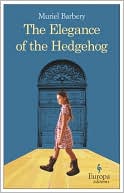
The Elegance of the Hedgehog

33092233 Muriel Barbery’s novel The Elegance of the Hedgehog has me thinking about the ways plausibility and realism aren’t necessarily that important in fiction.  Sometimes, with certain kinds of books, yes, they are important, as some books set up an expectation that the events they describe could possibly happen and the characters in them are ones you could possibly meet. But sometimes all that is just beside the point, and I think that’s true in Barbery’s book.  As I read the first few pages I felt some resistance because the voices were unfamiliar and the feelings the characters described struck me as odd and unbelievable. But as I read on I began to change my mind, and by the time I reached the middle I was entirely won over and stayed won over all the way through.

There are two narrators in this novel, and the book moves back and forth between them. We start with Renée, a woman in her 50s who works as a concierge for a building populated by wealthy families. She looks and behaves exactly as people seem to expect a concierge will look and behave — dumpy, unattractive, slow, uneducated — but secretly she spends her free time reading literature and philosophy and watching art films. She is remarkably intelligent and knowledgeable, but is determined no one will ever find that out. She is lonely, with only one friend who visits her regularly, but she prefers to be lonely than to risk the kind of meaningful interaction with other people that terrifies her. So she puts on a blank face and mangles grammar whenever any of the building’s residents are nearby and labors her way through Edmund Husserl and phenomenology when she is alone.

The other narrator is one of the building’s residents; she is 12 year-old Paloma, also utterly brilliant, who hates her family, hates her prospects in life, and plans to kill herself on her thirteenth birthday. She has thought this through carefully and sees nothing else for it but suicide. She is a much-smarter version of Holden Caulfield — she sees the phoniness of the world around her and loathes the phony adults in her life, most particularly her mother and sister, and refuses to join in. Her narrative sections take two forms; one is made up of her “profound thoughts,” in which she records her best thinking so she can do something valuable with her life before it’s over, and the other is called “The Journal of the Movement of the World,” in which she makes a point of focusing on the body so as not to get too caught up in the mind. Here, she records moments of physical beauty.

Until fairly late in the book, these two characters know of each other only in the vaguest way, and they could hardly be more different in their place in life and their age and appearance, but they turn out to have similar preoccupations and ways of thinking. And here is where we get to the book’s real charm — the ideas these two characters explore and the meaning they try to make out of life. This is really a philosophical novel about the quest to understand how best to live, how to make meaning and find beauty, and how to reconcile the coexistence of beauty and suffering. What makes these ideas so interesting is that you come to care about the people thinking them — over the course of the novel their struggles move from abstract philosophical problems to vital personal ones that you feel you yourself have a stake in solving.

I loved the fact that this novel isn’t afraid to be a novel of ideas — it’s unabashedly philosophical. One of the things that makes it so interesting, I think, is that it combines passages of abstract thought with a focus on the physical world and sections that capture the comedy of bodily life. It never gets so abstract it leaves its real people with their real bodies behind. Renée is particularly amusing in this way; as long as she is caught up in her thoughts, she is comfortable, but as soon as anyone reminds her of her physical being, she is flustered and lost and messes everything up. Both narrators are exquisitely aware of the physical world around them, even if they aren’t always comfortable in it, so the book manages to be both cerebral and down-to-earth at once.

And the book is beautifully-written as well. The only criticism I’ve heard of this book that made me pay any attention at all is that its characters aren’t realistic, but given all the wonderful things to be found in this book, I don’t think that matters one bit.

20 Comments

Filed under Books, Fiction

The 25 influential writers meme

I saw this over at Reassigned Time and thought it would be fun to do here. The instructions are to “name 25 writers who have influenced you. These are not necessarily your favorite writers or those you most admire, but writers who have influenced you. Then you tag 25 people.” I won’t be tagging 25 people, so if you want to do this, please do! I’m going to list names roughly chronologically (following my life).

  1. Authors of the Bible
  2. Laura Ingalls Wilder
  3. Maud Hart Lovelace
  4. Lucy Maud Montgomery
  5. Louisa May Alcott
  6. Jane Austen
  7. Charles Dickens
  8. George Eliot
  9. Virginia Woolf
  10. Mary Shelley
  11. Flannery O’Connor
  12. Michel de Montaigne
  13. Fyodor Dostoyevky
  14. Mary McCarthy
  15. Samuel Richardson
  16. Laurence Sterne
  17. Henry Fielding
  18. Sarah Fielding
  19. Mary Wollstonecraft
  20. Olaudah Equiano
  21. Dorothy Wordsworth
  22. Nicholson Baker
  23. David Foster Wallace
  24. Jenny Diski
  25. Janet Malcolm

#1-5 are about my childhood, pretty clearly, and then I read a lot of #6-8 in high school, which formed my taste for the Victorian novel (and the novel itself — this list is very novel-heavy).  #9-14 were college discoveries, and you can see the turn to the eighteenth-century I took in grad school in #15-21.  I could easily have added more authors here, including Boswell and Johnson. After that, I tried to think of authors I’ve been most excited about over the last few years; these ones I could possibly change up a bit, depending on my mood. The last few reflect my increasing enjoyment of nonfiction, which is why I like their presence there. I could also put Philip Lopate on the list, not because his writing has influenced me, but because the book he edited, The Art of the Personal Essay, has been so important.

It’s a pretty canonical list, isn’t it? But I suppose at heart I’m a pretty canonical kind of reader. Maybe it’s also true that people’s reading is often from the canon when they’re younger (at least English major types) and branches out afterward.  I haven’t read all of the canon, by any means, but I’ve read enough to feel that I’m ready to branch out more.

Anyone else want to try this?

13 Comments

Filed under Books, Lists, Memes, Reading

The Stricken Deer

Because of my recent interest in William Cowper, an interest inspired by Brian Lynch’s novel about his life, The Winner of Sorrow (which I wrote about here), I requested from my library a copy of David Cecil’s 1930 biography of Cowper, The Stricken Deer. I thought I might just skim through it and see if I found anything interesting, but I took a look at Cecil’s prologue and quickly became entranced by the writing. Apparently they wrote biographies in the 1930s much differently than they do today — which is not to say there aren’t some well-written ones today, but they aren’t quite like Cecil’s.

The prologue isn’t actually about Cowper for the most part; he comes in only at the end of the 15-page essay as a transition into the biography itself.  What it is, instead, is a meditation on eighteenth-century society and on the various preconceptions and misconceptions people in the early 20th century held about that time. Even so, he takes a while to get around to the eighteenth century itself. I always tell my students that if they want to open their essays with general statements and then move to more specific ones, they had better be careful not to start too generally (no “since the beginning of time” please), but Cecil shows how to start off very generally and how to do it beautifully:

Past periods, like foreign countries, become the fashion. Just as people like one sort of hat because it suits the type of beauty they admire, so people are attracted to a particular place or period because it suits their prevailing mood. Mankind, in its restless search for some ideal and fairy country which satisfies a fancy, dissatisfied with that in which it lives, will identify it with the civilization of some other time or people which appears to possess the qualities it most values, and to lack those which it most dislikes.

From there he goes on to consider various time periods and when they were fashionable, and only after four long paragraphs devoted to contemplating this phenomenon (including a leisurely discussion of objects we associate with various times and places) does he get around to the eighteenth century itself.

When he gets there, he argues that our conceptions of the era are entirely wrong and that we generalize about it too much and don’t understand its complexity. He sets about correcting our mistake by setting up a little library scene:

For a happy moment let us shut the door on the modern world and retire in fancy to some Augustan library. The curtains are drawn, the fire is lit; outside the silence is broken only the faint crackling whispers of the winter frost. How the firelight gleams and flickers on the fluted moldings of the bookcases, on the faded calf and tarnished gold of the serried rows of books: the slim duodecimo poems and plays; the decent two-volumed octavo novels; the portly quarto sermons, six volumes, eight volumes, ten volumes; the unity of brown, broken now and again by a large tome of correspondence, green or plum or crimson, only given to the public in our own time. The whole eighteenth century is packed into these white or yellowing pages; all its mutifarious aspects, its types, its moods, its morals, self-revealed; the indefinable, unforgettable perfume of the period breathing from every line of print. For the shortest, dullest letter really written in a past age can bring its atmosphere home to you as the most vivid historian of a later time can never do.

Can’t you picture yourself there? He goes on to take a short survey of important eighteenth-century writers in a similarly imaginative style, capturing the essence of respectable Whig aristocracy and nobility, the somewhat less-respectable middle classes, the travelers and adventurers, the fashionable men and women of sensibility, and the literary intelligentsia.

And then we get to Cowper himself. Much of his writing, Cecil says (rather surprisingly), is dull and lifeless. But then —

… suddenly one’s attention is caught by a chance word; the page stirs to life; a bit of the English countryside appears before one’s mental eye as vividly and exactly as though one really saw it; or an ephemeral trifle, a copy of verses addressed to Miss M. or Mr. D., laughs out of the page with the pleasant colloquial intimacy of a voice heard over the teacups in the next room. And now and again, as if from the strings of a tarnished, disused harp stumbled against in one’s rambles around the library, there rises from the old book a strain of music, simple, plangent, and of a piercing pathos, that fairly clutches at the heart.

He briefly discusses Cowper’s life, focusing on the thing that’s most memorable about it — his artistic creativity combined with his mental suffering.  Here’s how the prologue ends:

But he was under a curse. From his earliest years there loomed over him, born in disease, nurtured in fanaticism, the frightful specter of religious madness. And his life resolved itself into a struggle, fought to the death, between the daylit serenity of his natural circumstances and the powers of darkness hidden in his heart. For a time it seemed that they would be defeated. Yet even when the light shone most brightly on his face, the shadow lurked behind his back; around the sunny, grassy meadows crouched the black armies of horror and despair. At a moment’s weakness they would advance; inch by inch they gained ground; till, with a last scream of anguish, his tortured spirit sank, overwhelmed.

Okay, in that last bit he goes a little overboard, but tell me, do you see writing like this in modern-day biographies? I found this prologue utterly charming, and I was tempted to read the entire book, although now I’m not sure I will, as time is short and my interest in Cowper does have its limits. But this book does make me a little sad that contemporary nonfiction prose can be so … prosaic.

13 Comments

Filed under Books, Nonfiction

First race of the season

My first race of the season was today and it didn’t suck! Yay!

Actually, I did the best I’ve ever done for the first race of the season, which is to say that I finished with the pack. My usual experience is that I’ll fall behind the pack around half way through the first race (which means my race is over, since there’s no way to catch up when I’m out there by myself and can’t draft on anyone), and then steadily improve with each race so that I can finish a race eventually. Last year, my best year so far, I managed to finish the second race of the season. So I’m happy to have improved.

I got 17th place out of maybe 35 women or so, which puts me right in the middle of the pack. What happened, though, is that the pack basically split in two somewhere in the middle of the race, and I managed to stay with the front group, which eventually lapped the group that fell behind (the course is about .8 of a mile, so a faster group can lap a slower one sooner or later). When it came to the final sprint, I was at the back of the fast group, but placed in the middle overall because of all the lapped riders.

And, just to clarify, I’m particularly pleased about this result because I’m riding in a women’s open field, which means that there are championship racers out there and people who have a whole long history of winning races, as well as women who are new to the sport.  Women’s open fields are hard because you never know who you’re going to race against. In men’s races, you generally race against people of roughly your ability, but there aren’t enough women to justify multiple racing categories, so we all get lumped together.

I’m also pleased because just a month or so ago I thought I wouldn’t race at all because I wouldn’t be ready.  Silly me. What I’ve learned, besides the fact that experience helps, is that I don’t need tons and tons of miles before I’m ready to race. I didn’t do a whole lot of riding in December and January, which I thought would hurt me. But I did fine by starting training right at the end of January, riding solidly through February, and adding in a few sprint workouts in the few weeks before the first race. That’s good to know, especially when I’m faced with tough winters that don’t allow me to do a lot of outside riding.

8 Comments

Filed under Cycling

Updates

I’m taking an online course! I’m weirdly excited about this. It’s an online course in how to teach courses online — and yes, I’m doing this backwards because I’ve already taught courses online. Two, in fact. And it’s only now that I’m taking the course to learn how to do it. But that’s the way things generally work when it comes to college teaching — you get thrown into it with only the tiniest bit of training or maybe none at all and you figure things out on your own. You learn things from colleagues and maybe pick up some training here and there and you do the best you can. The course I’m in will run for nine weeks and I’ll get a certificate at the end of it if I complete at least 80% of the work.

I guess I’m just a nerd who likes learning new things. The fact that I’m looking forward to the class tells me that while teaching is fun, being a student is much more so (especially since I won’t be getting A, B, C-type grades).  Maybe I should take classes more often.

……

I really loved the recent New Yorker article on David Foster Wallace. It gives an overview of his life and, most interestingly, talks about his unfinished novel and what it was he was trying to do with his fiction. It sounds like the unfinished novel — which will be published some time next year — is fascinating and majorly ambitious, so much so that Wallace had a lot of trouble making progress. Part of the trouble is that its subject isn’t well suited for fiction — it’s about boredom and tells the story of IRS workers dealing with the dullness of their jobs, so the issue is how to make boredom interesting. He took on a difficult subject, but he also was trying to write in a new style:

Wallace was trying to write differently, but the path was not evident to him. “I think he didn’t want to do the old tricks people expected of him,” Karen Green, his wife, says. “But he had no idea what the new tricks would be.” The problem went beyond technique. The central issue for Wallace remained … how to give “CPR to those elements of what’s human and magical that still live and glow despite the times’ darkness.” He added, “Really good fiction could have as dark a worldview as it wished, but it’d find a way both to depict this world and to illuminate the possibilities for being alive and human in it.”

This is such an interesting combination to me — acknowledging the darkness of life but not succumbing to despair and managing to write about “the possibilities for being alive and human” without being trite or cheaply sentimental. I’m also intrigued by the way he is influenced by postmodernism — its irony and self-consciousness and playfulness with language — but also cared about writing fiction with a moral interest and with real emotional weight to it, things that the postmodernists sometimes ignored.

Apparently his last novel was only about one third finished, but it still sounds well worth reading.

…….

My cycling is coming along pretty well, with the exception of a few days last week when I couldn’t ride because of a snow storm. I was supposed to ride in my first race last Sunday, but it was canceled because of snow, so now my first race of the season will be this coming Sunday.  It may rain that day, but it’s supposed to be in the upper 50s, so I doubt we will be in danger of snow.

This week was bitterly cold, but it’s finally warming up a bit, and I am more than ready for the change. I really should have gotten on the trainer on those cold days, but I just couldn’t. I don’t like the trainer ever, but it’s particularly bad when it’s March and spring is on the way. Riding on the trainer in January is tolerable, barely, but riding on it in March is just impossible. I’d prefer to sit around and do nothing, even if my I lose some fitness and my mood plummets. That’s silly, probably, but oh, well.

…….

And now I want to go read some more of The Elegance of the Hedgehog, a book I’m greatly enjoying.

8 Comments

Filed under Books, Cycling, Life, Reading, Teaching

Disagreements

I came across a really great talk by Elizabeth Gilbert (via Chekhov’s Mistress), which you can find here.  She talks about what it’s like to have written a best seller and then to feel paralyzed because she may never write anything as successful ever again.  And then she goes on to talk about creativity and genius and how to keep doing your creative work without driving yourself mad. She turns out to be a really great speaker — she’s funny and fluent and has great examples, and I found myself tearing up at the end. I really do like Elizabeth Gilbert; I realize her writing style can sometimes be a bit glib and that the very fact she’s been so successful might turn people off, and maybe Eat, Pray, Love is a little self-absorbed (I don’t think this, actually, but some people do — I don’t mind if writers are self-absorbed as long as they are interesting), and maybe her interest in spirituality isn’t everybody’s cup of tea, but she’s just one of those people I’m ready to admire no matter what and I have a hard time understanding you if you don’t agree with me.

This isn’t the first time I’ve thought this about an author.  There are some writers I feel absolutely loyal to, and I know this feeling isn’t a rational or a logical one — because even the best writers write bad things now and then, and why should I feel such loyalty and even affection for writers I’ve never met and who in some cases are long dead? And why should I care if someone happens to disagree with me?  After all, disagreements keep things interesting, right?  We don’t want to have all the same opinions.

And if you disagree with me about Henry James, I won’t take it personally.  I happen to love Henry James, but I can see why people might find him insufferable and boring. And this is true for most authors — if you don’t like George Eliot, fine; if you don’t like Laurence Sterne, well, you’re missing out on some great fun but that’s your problem; if you don’t like Flannery O’Connor, then something may be wrong with your sense of humor, but I won’t hold that against you.

But there are some authors I can’t be quite as open-minded about. If you don’t like at least some of Virginia Woolf’s work, I’m sorry, but I have grave doubts about you (even if it’s just the essays — how can anyone not like this?) If you were to read Jenny Diski and not be at least a little charmed by her orneriness, I’m not sure we’ll ever really understand each other. If you aren’t awe-struck by David Foster Wallace’s essay on dictionaries, or thrilled by Nicholason Baker’s The Mezzanine, then I can’t help but suspect our friendship will always have its limits.

I don’t know. In theory, at least, I like the idea of civilized conversations about books where we can discuss the merits of this or that author and agree to disagree, but there are times when my patience runs out and I get tired of being open-minded and tolerant.

I recognize, of course, that you are entitled to have grave doubts about me because of books I like or don’t like. So — are there books or authors you are completely loyal to and don’t understand how anyone could possible disagree?

16 Comments

Filed under Books, Reading