The Magician’s Book

Laura Miller’s Magician’s Book, about C.S. Lewis’s Chronicles of Narnia, was a hugely enjoyable read, and I say that not being the biggest Chronicles of Narnia reader. I read at least some of the books when I was a kid, but I’m not quite sure how many. I reread some of them as a young adult, although again, I’m not sure how many. I liked them fine, but I didn’t fall in love. Miller talks about those who fall in love with Narnia and/or Tolkien’s Middle Earth and those who fall in love with realistic novels like Little House on the Prairie and Little Women, and I definitely fall in the latter camp. But that didn’t matter much in terms of how I felt about The Magician’s Book; it was a great meditation on childhood reading, as well as on the meaning and context of Lewis’s work.

I particularly admired how much Miller pulled together into one book and how she kept all her material orderly and coherent. She writes about her obsession with Narnia, how it happened and how it influenced the rest of her reading life. She writes about children’s literature in general and the ways people value it, or don’t. She writes about Lewis’s life, his literary friendships, his scholarship, and his religious beliefs. She also writes about the meaning of the Chronicles themselves. Oh, and there are discussions of things like allegory, myth, and romance, of medieval literature and the medieval mindset, of the different ways Lewis and Tolkien thought about Englishness.

It’s a lot of material, but Miller makes it work, partly by using short-ish chapters that each focus on one aspect of the series or its context, and also by using a loose overarching structure that keeps it all feeling coherent. The larger story of her book is one of first falling in love with the Chronicles, then becoming angry with Lewis and rejecting the books after discovering their Christian content, and finally rediscovering the series as an adult and accounting for the fact that she still loves the books even if she rejects their religious argument. Miller had no idea as a child that the Chronicles were meant as a retelling of sorts of the gospel story — that Aslan was supposed to be Christ, for example. When she found this out, basically by accident, she felt betrayed, a feeling made all the stronger because of how much she had loved the books in the first place. She had already decided she had no use for Christianity, so Lewis’s piousness and his attempts to proselytize through fiction did not go over well.

So, with this structure in place, a story that forms the book’s three main sections, Miller first discusses the value of children’s fiction and tells her own reading history, as well as what it was about the Chronicles she loved so much. The second section on rejecting Lewis includes chapters on his various failings, for example, his (arguable) misogyny and racism. The last section is partly about how it’s possible to value the Chronicles even if you reject the Christianity in them, and also how the Chronicles sprang out of Lewis’s love of allegory, myths, and fairy tales and about Lewis’s friendship with Tolkien and their different approaches to writing fantasy.

Miller is a companionable guide through all this. I like the balance she struck between her personal narrative and the more critical material; the personal element gives the book drive and interest as well as a sense of why the project matters, and the critical material provides a fabulous background to understanding the Chronicles and thinking about children’s literature, fantasy in particular. My one quibble is that I sometimes felt she portrayed Christianity in a way that’s a little too simple; she conflates evangelicalism and fundamentalism, for example, and doesn’t really acknowledge the many other, particularly more liberal, forms of Christianity that are out there. But otherwise, her command of the material is impressive. I didn’t find that my unfamiliarity with most of the Narnia books was a problem; her descriptions of the books provide enough detail that I could follow along. If I hadn’t ever read any of the Chronicles, I probably would have found the book less compelling, but you don’t have to be a Lewis fan to appreciate what Miller has done.
13 Comments

Filed under Books, Nonfiction

Power’s Back!

Actually, it’s been back since Wednesday evening. It may have been on for hours before we noticed, since we were reading contentedly in the living room with our head lamps on and all the light switches off. But finally I saw the glowing lights on the wireless whatchamacallit and figured it out. What a relief! But really, we spent only four days without power, and some people are still out and looking at the middle of next week until they are back, so I won’t complain. As far as power outages go, we were living in the lap of luxury, with our hot running water and coffee shop with wireless within easy walking distance. And now we have a full refrigerator again and the ability to charge our phones at home. Yay!

This has been an odd week for lots of reasons — the power outage, of course, but also school started on Wednesday, so I had to try to get in the right mindset for that, when really I could only think about power outages. And then today I got word from my doctor that I am now hypothyroid and need to take a thyroid supplement. This is actually good news, of sorts, as crazy as that sounds. I knew I was heading toward hypothyroidism eventually, so it’s a relief to finally get here, and now I can start taking my medicine and be done with the waiting. I’ll be taking thyroid supplements for the rest of my life (barring an apocalypse that makes them no longer available, which does worry me sometimes), so I might as well get on with it. In the meantime, I’m feeling a little tired and draggy and unmotivated, but I’m still functional and should soon have my normal energy back.

The thing that interests me about all this thyroid stuff is that my bike has been a reliable indicator of thyroid health, or lack of it, from the very beginning. I’m much more in tune with my body and what I am feeling physically on my bike than off it, partly because I wear a heart rate monitor when I ride and I know pretty much what my heart rate should be at any particular time. When my heart rate skyrocketed on bike rides back in the summer of 2007 when I first got sick, I knew something was wrong, and I’ve picked up on changes in my thyroid levels from riding several times since then. Over the last couple weeks, my heart rate has been consistently low, which I thought meant hypothyroidism, and it turns out I was right. I would have eventually figured it out without the riding, but it would have taken me much longer. Thank goodness for cycling!

Fortunately through all this, I’ve had plenty of time to read. I’m nearing the end of the Little House on the Prairie series and may finish the ninth and last book tonight. I’ll be sad to see it end. I also finished up Laura Miller’s The Magician’s Book, which was great, and raced through Lauren Slater’s wonderful and very odd memoir Lying. I’ve also gone to two different library sales and come home with something like eight new books. Yippee! I think I’ll close this post with a list of my new books:

  1. Sarah Caudwell’s The Sybil in Her Grave (the fourth in this series),
  2. Anita Brookner’s Falling Slowly,
  3. Edith Wharton’s Old New York (a collection of novellas),
  4. Murial Spark’s Memento Mori,
  5. Lorrie Moore’s A Gate at the Stairs,
  6. Hilary Mantel’s Wolf Hall,
  7. Wilkie Collins’s The Law and the Lady,
  8. Colm Toibin’s Brooklyn.

I am hoping to come around and visit my usual blog haunts soon. In the meantime, have a great weekend!

9 Comments

Filed under Books

Hurricane!

I didn’t intend to take a blogging break, but then Hurricane Irene happened. Hobgoblin, Muttboy, and I are totally fine, but we are without power and have no idea when we will get it back. It might possibly be as late as the end of the week or on into the weekend. But all is well: we have running water and we are within easy walking distance of town with lots of shops, restaurants, etc., all of which have power. We can go to the coffee shop  and the library to charge our phones and get internet access. It’s a little annoying not to have a refrigerator, but, then again, it’s not so bad either.

So I’ll be away for a while longer. Fortunately, I’ve had plenty of reading time, and so will have a lot to write about when I get back. In the meantime, be well!

10 Comments

Filed under Books

Quarrel and Quandary

Quarrel and Quandary, a collection of essays, is the first book by Cynthia Ozick that I’ve read, and I finished it feeling impressed. Perhaps what stands out most strongly to me is her serious, firm, no-nonsense, occasionally devastating argumentation style. I would not ever want to be the subject of Ozick’s critique; she can be frighteningly effective when goes on the attack.

The essays cover a range of material. Many of them are literary in nature, including essays on Kafka, Dostoevsky, Sebald, Henry James, and others. Other essays explore broader literary phenomena such as the various adaptations of The Diary of Anne Frank and the treatment of the Holocaust in fiction. These last two are good examples of what I mean by her devastating argumentation style; she is angry at theatrical adaptations of the diary that downplay the horror of Anne’s fate in order to focus on the diary’s hopeful messages. In the essay on Holocaust fiction, she critiques Sophie’s Choice and Bernard Schlink’s The Reader for covering over some of the worst aspects of Holocaust history by focusing on exceptions and rare cases in the stories they tell. That essay (which you can read here) is a nuanced discussion of the tension between the right of authors to write about whatever they want and their responsibility to be ethical human beings.

Not all the essays are literary, though; there are some personal essays on, for example, Ozick’s first office job and her childhood spent in and around her family’s drugstore in the Bronx. One of my favorite essays, though, is one of the literary ones, an essay on essays called “She: Portrait of the Essay as a Warm Body.” Those of you who know my reading tastes will not be surprised that I was particularly drawn to this one (although I found the gender dynamics of the essay kind of weird — why should an essay be figured as a woman? But Ozick is impatient with talk of gender: “Essays are written by men. Essays are written by women. That is the long and short of it.” Well, yes. But perhaps there’s more to the story?) I particularly liked her description of how essays work persuasively:

The essay is not meant for the barricades; it is a stroll through someone’s mazy mind. Yet this is not to say that there has never been an essayist morally intent on making an argument, however obliquely — George Orwell is a case in point. At the end of the day, the essay turns out to be a force for agreement. It co-opts agreement; it courts agreement; it seduces agreement. For the brief hour we give to it, we are sure to fall into surrender and conviction. And this will occur even if we are intrinsically roused to resistance.

Even if we disagree with an essayist, for the time we are reading his or her essay, we are won over. I feel this when I read my favorite essays; it’s not that I give up all of my own thoughts and criticisms, but that I come to enjoy following another person’s mind so much that I’m willing to follow them anywhere. That is, I’m willing to follow them while I’m reading them. Afterward is the time for critique. She goes on to contrast essays to other prose forms such as magazine articles, polemics, and tracts, all of which are clearly looking at us, focusing on us and trying to change our minds. She writes:

The genuine essay, in contrast, never thinks of us; the genuine essay may be the most self-centered (the politer word would be subjective) arena for human thought ever devised.

Or else, though still not having you and me in mind (unless as an exemplum of common folly), it is not self-centered at all.

Instead of being self-centered, the essay is sometimes focused on the world around the essayist; it’s a way for the writer to make sense of the materials of everyday life and how they connect with one another:

The mind meanders, slipping from one impression to another, from reality to memory to dreamscape and back again.

Rather than going directly after the reader trying to make a polemical point, the genuine essay simply goes on a journey the reader will find irresistible, whether it’s a journey through the self or through the world (or both). We can’t help but follow along and end up where the writer ends, convinced, at least for a time.

I found Ozick convincing, in most cases long after the essay’s spell wore off. My favorite essay style is actually looser, more hesitant and exploring than Ozick’s, but I couldn’t help but admire her sharp mind at work.

10 Comments

Filed under Books, Essays, Nonfiction

The Little House books

I mentioned earlier that Hobgoblin bought me a set of the Little House on the Prairie books, and I have now read through the first four of the nine novels. It’s been fun to reread the books (who knows how many times I’ve read each one — it’s many), and especially to do it shortly after I read Wendy McClure’s book on rereading the series as an adult, and also at the same time that I’m reading Laura Miller’s book on C.S. Lewis’s Chronicles of Narnia. All this thinking about children’s books and what it’s like to reread them! I’m also sort of in the middle of rereading the Anne of Green Gables books, although it’s been a while since I picked one of those up.

A friend asked me if rereading the Little House books reminds me of what I felt about them as a child, which it has, and also whether it reminded me of where I was when I first read them, which it hasn’t. I read the books too many times to remember where I was when I first read them; all the subsequent rereadings have erased my first memories. But I do remember how much I loved reading all the details of the characters’ lives, although right now I’m feeling surprised and a little overwhelmed by exactly how much detail there is, especially in Little House in the Big Woods and Farmer Boy, which, I learned from Wendy McClure, were the first two books written and were meant as companion books — Laura as a child and then her husband Almanzo as a child.

Not much actually happens in these volumes except everyday life. We learn about what Laura and Mary did on Sundays, what they played with during the week, how they helped their mother, how they waited for their father to return from hunting trips and journeys into town. Farmer Boy is even more detail-laden; it takes the reader through a year on the farm and describes all their tasks: plowing, planting, weeding, and harvesting; breaking in colts and calves; repairing the house and barns; fishing and berrying; chopping ice into blocks and packing it in sawdust; and most of all, cooking and eating. The book is overflowing with food and descriptions of eating. There are many passages like this one:

Almanzo ate the sweet, mellow baked beans. He ate the bit of salt pork that melted like cream in his mouth. He ate mealy boiled potatoes, with brown ham-gravy. He ate the ham. He bit deep into velvety bread spread with sleek butter, and he ate the crisp golden crust. He demolished a tall heap of pale mashed turnips, and a hill of stewed yellow pumpkin. Then he sighed, and tucked his napkin deeper into the neckband of his red waist. And he ate plum preserves and strawberry jam, and grape jelly, and spiced watermelon-rind pickles. He felt very comfortable inside. Slowly he ate a large piece of pumpkin pie.

As McClure points out, Laura Ingalls Wilder wrote this book during the depression when food was scarce and after having gone through years of poverty and deprivation. It’s no wonder she focuses on the food so much.

Almanzo loves working on the farm with his father and longs for the day when he can have a colt of his very own to train. Wilder describes his joy in the farm animals and farm work so infectiously that it makes me want to live on a farm, even though I most definitely know better. I would not like all that hard work and uncertainty one bit. But Almanzo thrives on it, and Wilder makes the abundance of the farm and the reliable rhythms of yearly agricultural cycles so appealing. I knew as a child that living on a farm is not quite like it’s described in Farmer Boy, but I found the fantasy version of farm life comforting then and I do now as well.

Little House on the Prairie and On the Banks of Plum Creek have slightly more going on in terms of plot, although they, too, have lots of descriptions of how things get done, especially how houses and barns get built. These two novels tell the stories of how the Ingalls family packed up and headed into new territory, first the Indian territory in Kansas, and second to farm land in Minnesota. The plot, such as it is, centers around the struggle to settle themselves in a new place and the question of whether they will make it there. In Kansas there are the Indians (whose land they have taken), prairie fires, and blizzards, while in Minnesota there are blizzards and grasshoppers swarms. In Minnesota there is also school and Nellie Oleson to deal with. On the Banks of Plum Creek was the most engaging, partly because there is more story involved and also because Laura is getting older and her challenges are more interesting (to me): she is now having to find her way through the social world and make more decisions for herself.

What I don’t remember caring about much as a child but what I thought a lot about this time around was the isolation the family lived in, especially in Little House on the Prairie. As a child I took it as natural, I guess, to want to head off into unknown territory and settle it, and as my life was spent mostly with my family, I didn’t question their reliance on no one but themselves. But now I’m amazed at their willingness to live almost entirely without neighbors and extended family. In Kansas they have a few people they see occasionally and who play crucial roles in keeping them alive and well, but for the vast majority of the time, they are completely alone. Town is 40 miles away. They have only themselves to talk to and get entertainment from (Pa’s fiddle helps a lot with this). Unless I’m forgetting something, there are no references to books until we get to On the Banks of Plum Creek, and then there’s only one novel and a newspaper mentioned. I understand the desire for independence and the longing to create their own life on their own land, but would that life really be satisfactory and fulfilling with only themselves in it? I think my child-self would be surprised at how important being surrounded by lots of people has become to me, but that’s a significant way I’ve changed as I’ve gotten older.

18 Comments

Filed under Books, Fiction, Reading

In the Bleak Midwinter and other thoughts

I don’t feel like I need to write an entire post on Julia Spencer-Fleming’s detective novel In the Bleak Midwinter, but I did want to say that I liked it quite a bit and am eager to read further into the series. In fact, I made sure to find a copy of the second in the series while I was out book shopping last weekend. As is usual for me, it wasn’t the plot that made me like it so much, although I found the plot perfectly satisfactory. It was the dynamic between the main characters that held my interest. There’s Clare Fergusson, the Episcopal priest who gets drawn into the mystery when she finds an abandoned baby on the church steps, and there’s Russ Van Alstyne, the police chief in charge of the investigation. It’s probably a little unrealistic the way Clare kept accompanying Russ on his police work — would she really have been able to do that? — but the dynamic between the two of them is so interesting that I was willing to overlook this.

I also liked the setting, which is in upstate New York, near the Adirondack mountains. It’s pretty far from my home town in western New York State, but the territory is still somewhat familiar, especially the small town culture and the dark, snowy winters. I thought as I read about when the best time to read a book with a title like In the Bleak Midwinter is. Do you really want to read about bleak midwinters in the summer? Or while you’re in the middle of winter? Or in the fall when you dread winter’s arrival, or the spring when you can’t wait for it to warm up? IS there a good time? But that comes from someone who is no fan of winter, and I know some people feel differently. And I liked the book enough to be willing to read it no matter the season.

I did wish Spencer-Fleming had given more information on Clare’s religious faith; I wanted to know how she went from being in the military to being a priest (there is an explanation hinted at in the story of a family tragedy, but it’s not developed) and what her faith means to her now. But perhaps these things are developed in later books.

My weekend with my parents was very good; western New York can be miserable in the bleak midwinter, but it’s beautiful in the summer with temperatures that are more moderate than home and rolling green fields and orchards. I was able to ride my bike along Lake Ontario twice, which was great, and I went book shopping twice with my dad, which was also great. We found two used bookstores that we hadn’t visited before, and discovered a couple more that we didn’t make it to this time but can explore later. In addition to the next Spencer-Fleming novel, I bought a copy of Rilke’s novel The Notebooks of Malte Laurids Brigge. Sadly, I probably won’t get to the book this summer to participate in Litlove’s reading of it, but at least I now have it on hand. And I also got Pierre Bayard’s book Sherlock Holmes Was Wrong: Reopening the Case of the Hound of the Baskervilles. I love the title and premise of the book — can he really be right about Holmes? — but I’ll have to read The Hound of the Baskervilles before I pick this one up. That will be something to look forward to.

I also brought home my mom’s copy of Little House, Long Shadow: Laura Ingalls Wilder’s Impact on American Culture. It happens to be the copy I gave her for Christmas last year. But no, I did not buy her the book in hopes she would let me borrow it later. Not really. At least not consciously…. I’ve been flying my way through the Little House series and have made it through three books and am in the middle of the fourth. They read very, very fast, and it’s been great fun to remember all the details and rediscover their charm. But more on that later.

12 Comments

Filed under Books, Fiction

Away for the weekend

I’m spending this weekend at my parents’ house outside of Rochester, New York, which so far has involved… well, reading, riding, and visiting bookstores. So pretty much what I do at home, just now with my parents. It’s been fun and relaxing, and I read most of Little House on the Prairie this afternoon. Now we are listening to the thunder and hoping we don’t lose power so we can watch Miss Pettigrew Lives For a Day a little later.

I hope you are enjoying your weekend too! I’ll be back early next week to talk about books again.

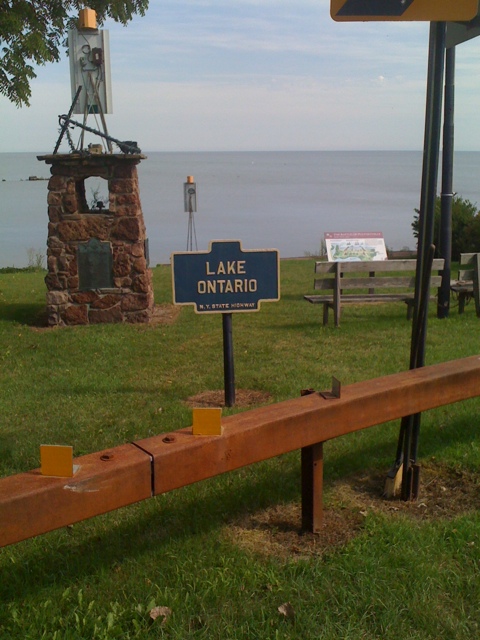
Here’s a picture from today’s ride. (This is my first time blogging from my phone, and I hope the picture uploads.)

20110813-082534.jpg

8 Comments

Filed under Books

Brief thoughts

I’m in the middle of a four-day training session in Blackboard, the educational technology that most educators I know hate. I use it to teach online and hybrid (half online) courses, and I like teaching online, but the software we use is … not perfect. We are moving to a new version of Blackboard that’s very different from the old one, and some of what I’m learning is useful, but much is not. A lot of today’s session focused on creating and grading tests, and I don’t give tests in my online classes (relying on papers and other projects instead). So much for that. Now that I’ve been a teacher for a while, I’ve gotten much more impatient when I have to be a student, but particularly so when it comes to learning technology. I want to learn it on my own time in my own way, and I don’t want to listen to someone lecturing about it. I got through the day by complaining on Twitter, checking the stock market, and reading blogs. When technology instruction is boring, technology itself was there to save me!

But on to some good news. I’m extremely happy for a very good fiction writer friend of mine, Elizabeth Gentry, who just won the Madeleine P. Plonsker Emerging Writers Residency Prize! It’s at Lake Forest College outside Chicago, and I’m looking forward to visiting her there in February or March when she’s in residency. I’ve been reading Elizabeth’s novel manuscripts for a while now, and they are very, very good, exactly the kinds of novels I like to read. One of the best things about this prize is that, pending completion and editorial approval, her winning manuscript will get published by &NOW Books, which is part of Lake Forest College Press. That’s very exciting; I can’t wait to see her book in print. So, yay!

One final thought. As I was reading Wendy McClure’s The Wilder Life, I kept talking about how fun it would be to reread the Little House on the Prairie series, but I don’t own the the books anymore. I’m not sure what happened to the ones I read as a kid. So, since it was our anniversary last weekend, Hobgoblin surprised me with the complete set! Now I’m all set to read them whenever I get the urge, which may be soon.

11 Comments

Filed under Books

The Wilder Life

I very much enjoyed Wendy McClure’s book The Wilder Life, which tells the story of McClure’s return to her childhood obsession with the Laura Ingalls Wilder books, the Little House on the Prairie series. I have no idea what someone who wasn’t obsessed with the series would think of the book, but I was obsessed as a child, and so her story sounded very familiar to me. I read and reread all the books, imagining what it would have been like to be Laura and live in her time and also what it would be like to introduce Laura to late twentieth-century life. I don’t remember when I started reading these books and when I stopped (I haven’t reread them as an adult), but I know I reread them over the course of many years. I watched the television series too, but it was always clear to me that it was only very loosely based on the novels. There was no danger I was going to get them mixed up, as many people do.

My experiences were similar to McClure’s — she read and reread the books and thought of Laura as a friend. Now, as an adult, she comes across her childhood copies of the novels and becomes fascinated by them all over again. The fascination quickly turns to obsession as she decides she wants to try some of the things described in the novels, such as churning butter, folding hay into sticks to burn, and making candy out of molasses and snow. She also decides she wants to visit the Ingalls and Wilder homesteads, which, since she lives in Chicago, isn’t too, too hard to do.

So she sets forth on numerous trips to Wisconsin, Kansas, Iowa, Minnesota, Missouri, and South Dakota. She even makes it to the town in upstate New York where Almanzo, Laura’s husband, grew up. In between all these trips, she researches Laura’s life and the culture that’s grown up around the books, and she contemplates what her personal and the larger cultural obsession with Little House on the Prairie means.

So the book is part travel narrative, part biography, part memoir, part cultural criticism, and probably some other things as well. I was fascinated to read about the ways that the novels do not reflect what actually happened in Laura’s life; for example, Laura was too young to remember the events in Kansas in Little House on the Prairie, so that book was fictionalized and based on family anecdotes. The stories from Little House in the Big Woods took place after the ones in Little House on the Prairie, after the family had retreated from Kansas back to Wisconsin, even though it’s first in the series. And there are other shifts and omissions that are surprising for someone who took the novels as faithful to real life. McClure is good at discussing the significance of all this.

She is also very good at describing what the home sites are like. She times a couple of her visits to see Laura Ingalls Wilder pageants and festivals, which involve look-alike contests and stagings of the family story. She is decidedly spooked by fundamentalist, survivalist, end-times people who have latched onto Laura’s story and to pioneer ideals generally as a way to deal with the coming apocalypse. She also meets many people whose religious views aren’t quite so extreme, but who admire the Ingalls family for the simple, self-sufficient, godly life they led. Which I think is hogwash. Not that their lives weren’t simple and self-sufficient, and even godly, but this admiration comes from nostalgia for a simplicity that never really existed and rests on a misunderstanding of what the Ingalls’s lives were really like. I suspect at least some of the Ingalls family wouldn’t have minded trading some simplicity of living for greater comfort and security, or at least that’s true for Ma Ingalls.

McClure has an informal, breezy style, and I’m not really a fan of informal, breezy writing, but her voice never gets irritating or over-the-top cute, and she pulls it off pretty well. She comes across as warm and interesting, and a great guide to what she thinks of as “Laura World.” I was certainly very happy to return to the world of the books in her company.

14 Comments

Filed under Books, Fiction

Thoughts for a Friday

First of all, thoughts about my dog. He went through surgery today and just came home a couple hours ago. He is fine, thank God. The procedure was to remove a benign growth on his side that was getting too big for comfort and was steadily growing. So now he just has to take it easy for a week or two unless he’s all healed up. It’s no fun putting your pet through surgery. It’s no fun for anyone to have to go through it, of course, but it’s a different kind of difficulty when you can’t explain to your pen what’s going on. Poor thing. He has no idea what hit him. Luckily for us, he doesn’t get angry or hold grudges.

And now on to books. I recently finished my first Sybille Bedford novel, The Legacy, and I’m thinking it’s going to be my last. I wanted to like it, I kept reading it because I was hoping to get into it, but that never happened. It tells the stories of two very different families in Germany and how they become connected by marriage. It also tells of one of the families’ sons, Johannes, who is sent off to a horrible military school, which makes him completely lose his wits. His family hushes the whole thing up with results that come back to haunt them. I think to really appreciate this book, you need to have more of a feel for the culture of the time (pre-World War I) and place than I do. And you have to appreciate satire more than I do. Unless I’m really familiar with what’s being satirized (such as in academic novels), I have a hard time appreciating it. The writing had an exterior focus, which also doesn’t work so well for me; I didn’t develop a sense of the characters’ personalities in the way I wanted to. I just wasn’t engaged. But perhaps some of my readers have read and enjoyed Bedford?

But I finished it and am now on to other things. Yesterday I began Julia Spencer-Fleming’s detective novel In the Bleak Midwinter, and it’s going along very well. Her protagonist is an ex-Army woman who has become an Episcopal priest and is serving in a small town outside the Adirondacks in New York State. That might sound a little contrived and gimmicky — let’s see how unusual I can make my character! — but Spencer-Fleming has so far pulled it off. Clare’s counterpart is Police Chief Russ Van Alstyne, and the sexual tension between them is slowly ratcheting up. But, alas, Russ is married. We’ll see where that goes.

I am also reading a collection of essays by Cynthia Ozick, Quarrel and Quandary. I’ve read just a handful so far, but they are good. So far they have all been literary — on Dostoevsky, Kafka, and Job, but I believe there are some personal ones in the collection as well. Her writing is good — serious and meaty, and very, very smart.

To close, I’ll tell you about some new books I’ve acquired. Last weekend Hobgoblin and I went book shopping with our book shopping friends (here and here) out at the Book Barn in Niantic, Connecticut. The Book Barn is truly one of the best used bookshops I’ve ever been in, although it’s really more like three bookshops, since it has three different locations around Niantic. We had already acquired a large stack of books before we even made it to the main store, which is really a series of buildings, carts, and structures of an uncertain type, all chock full of books.

From that trip, I brought home the Julia Spencer-Fleming book, as well as Sarah Waters’s The Little Stranger, Anita Brookner’s Look at Me, Sarah Caudwell’s The Sirens Sang of Murder, and Hermione Lee’s huge biography of Virginia Woolf (in a pristine paperback edition for $5). Also this week a friend sent me a copy of Laura Miller’s The Magician’s Book, which I am excited about and eager to dive into.

So, happy Friday everyone, and enjoy the weekend!

14 Comments

Filed under Books, Life

Among Others

Jo Walton’s novel Among Others was a lot of fun. I also felt it had a number of kind of obvious flaws, but, still, it was absorbing and enjoyable. It has a fabulous book club in it and a teenage girl who is obsessed with books, and it also has magic and fairies, and it takes place partly in Wales. Those are all very good things.

Morwenna, otherwise known as Mori, is the protagonist, a teenage girl who just lost her twin sister in a car accident. Mori herself suffered a hip injury that has left her with a limp and in need of a cane. It was more than just a car accident, though, as it happened when the twin sisters were battling their mother for reasons that are mysterious through much of the book but involve magic used for evil purposes. Mori has run away from her home in Wales to escape her mother and has found refuge with her father in England, whom she has never really known. Her father lives with his sisters who decide Mori should be packed off to boarding school as soon as possible. So she goes, and is (not surprisingly at all) miserable there. She not only has a limp and can’t participate in sports with the other sports-obsessed girls, but she is Welsh and doesn’t come from money.

Her only consolation is that she gets to spend the hours normally devoted to athletics reading in the library. She is an avid science fiction and fantasy reader, and this forms the one connection she has with her father, who has the same reading tastes and sends her books frequently. She also discovers the joy of interlibrary loan, and keeps both the school and the town librarians busy recommending and ordering books. The best moment, though, is when she finds out about the science fiction book group run through the town library. Here she finds her community: a group of people equally obsessed with books as she is.

But there is another sense in which she is an outsider: she sees fairies and knows how to do magic. The fairies were in much greater abundance in Wales, but she finds them in England as well and tries, with mixed success, to communicate with them. She also, with equally mixed success, explores her ability to do magic. In desperation one day, she casts a spell in order to find some friends to help her cope with her loneliness and unhappiness. This leads to a lot of uncertainty, though, because when she finds those friends in the form of the book group, she’s not sure if they are genuine or there just because of the spell she cast. Magic, she knows, is complicated and dangerous, with unknown consequences. Not least, of course, when used with malicious intent by one’s own mother.

All this is a lot of fun. The flaws I mentioned earlier have to do with the meandering pace of the plot, in part; while I enjoyed reading about all the book group meetings, the details of how she gets there, how she gets home, how she gets to the bookstore, how she gets home, etc. take up an awful lot of space. There is a lot of action at the novel’s end, but it’s all bunched up in a way that feels rushed and unsatisfying. And then there’s Mori’s love interest, Wim, whom I was not terribly fond of. I found their relationship unconvincing.

That said, this is still a book I read quickly and contentedly. I haven’t read much science fiction in my life, and Walton made me want to read more. That’s a pretty good recommendation for a book, I think.

7 Comments

Filed under Books, Fiction

Spurious

To give you a sense of what Lars Iyer’s novel Spurious is like, here is the opening paragraph:

I’m a terrible influence on W., everyone says that. Why does he hang out with me? What’s in it for him? The great and the good are shaking their heads. Sometimes W. goes back to the high table and explains himself. I am something to explain, W. says. He has to account for me to everyone. Why is that?

Even though the novel opens with a statement of what “everyone says,” it’s quickly obvious that this is really what W. alone says and that it’s W. speaking from the start. The novel is a story of a friendship of sorts between W. and the narrator, Lars, a very odd friendship where W. insults the narrator but seems to like hanging around him anyway, and the narrator simply reports the insults and doesn’t seem to mind them. Insulting the narrator seems to be mostly a way to fill the time, something to do when life isn’t very interesting.

The entire novel (which, I have to say, is about right at 175 pages — any longer and it would get dull) continues on much like the opening paragraph: the narrator describes his not-very-exciting doings but mostly reports what W. says to him. They are philosophy professors in England, and they travel around together to conferences when they can and struggle along with their work when they can’t. They are desperately searching for an idea to make their names as thinkers, but it’s pretty clear that’s not going to happen. W. is forever reading a book he can’t understand and the narrator spends too much of his time on administrative work. As nasty as W. can be to the narrator, he’s equally hard on himself:

‘When did you know you were a failure?’ W. repeatedly asks me. ‘When was it you knew you’d never have a single thought of your own — not one?’

He asks me these questions, W. says, because he’s constantly posing them to himself. Why is he still so amazed at his lack of ability? He’s not sure. But he is amazed, and he will never get over it, and this will have been his life, this amazement and his inability to get over it.

The narrator moves seamlessly back and forth between quoting W. and taking on W.’s voice to report what he says (as in the first paragraph above), and pretty soon it comes to seem like they are actually the same person. It takes a while to catch on to what the pronouns mean, but soon enough you get it straightened out, and then it’s like living in both the characters’ minds at once.

Which is kind of a scary thing. They are obsessed with apocalypse, convinced the world is falling apart around them. They also talk a lot about messianism, their crazy hope that something will save them, although this seems highly unlikely. Much more concrete and believable is the apocalypse that is coming soon to the narrator’s apartment: it has the worst infestation of damp and mold you can imagine, and it gets worse as the book progresses. The narrator has carpenters and plumbers and everyone he can think of come and try to figure out the source of the damp, but they can’t. So he lives with crumbling plaster and mold spores and tries not to get too sick from it. All the attempts to work, the conferences, the trips and conversations with W. are a distraction from the mold, a symbol, of course, of everything going wrong with the world.

This is a strange book, but it’s fun: the conversations are entertaining, even as they are kind of sad. It reminds me of a Beckett play where two warped characters have warped conversations in order to distract themselves from their painful lives. And what’s not to like about that?

Spurious began as a blog, which Iyer adapted into the novel. I haven’t read many of the blog posts, so I’m not sure about the differences between the blog and the novel, but I like the idea of using a blog to develop ideas to turn into a book. The blog says there’s another novel coming out in 2012, Dogma, so I’ll be keeping an eye out for it.

7 Comments

Filed under Books, Fiction

The Ballad of Dorothy Wordsworth

The Ballad of Dorothy Wordsworth by Frances Wilson is not exactly a traditional biography. It does tell Dorothy’s life story, but it doesn’t try to include all the details or treat all the times in her life equally. Instead, it moves through her early years quickly, rushes through the last five decades at breakneck speed, and spends most of its time on the years of the Grasmere Journals, four journals she kept from 1800 to the very beginning of 1803. In this section, she spends a lot of time discussing the journals themselves, reading them closely for insights into Dorothy’s life at this time, and also using details from Dorothy’s life to illuminate the journals. It was the most exciting, most famous time in her long life: the time when she and William Wordsworth collaborated on their writing and tramped all over the Lake District, with Coleridge as their frequent companion.

The picture Wilson creates of Dorothy is different than the one I had in mind and the one painted by her letters (which I wrote about here). I had always thought of her as an avid walker, which she was, and also a dreamy, melancholy type, a person who thought and felt deeply, moody and brooding, a woman of sensibility, full of Romantic longing. The letters portray her as a quiet family woman, a person devoted to her brothers, nieces, and nephews and concerned above all else for their welfare. She was at least some of those things, but in Wilson’s biography, she is also very charismatic and full of energy and life:

Those who knew Dorothy in her hot youth describe her as possessing all the wildness of the BrontĂ« heroines she helped to inspire. It was the quality of her gaze they noticed first. For John Thelwall, the radical, she was “the maid of ardent eye”; Wordsworth, in “Tintern Abbey,” famously praised “the shooting lights” of her “wild eyes,” which were a clear and light gray-blue, and Coleridge, taking his cue, wrote of “the wild lights in her eyes.” De Quincey described her eyes as “wild and startling” and Dorothy as “all fire, and … ardour,” the “very wildest (in the sense of the most natural) person I have ever known.” She had something of the “gipsy” to her, De Quincey said…

It’s this wildness that’s intriguing, and also her anxieties and what Wilson calls her neurotic personality. At the center of Wilson’s biography is a very strange scene from Dorothy journal, which takes place on Williams’s wedding day. She is devastated by the wedding, completely undone, although she has known it would happen for many months and sees William’s wife Mary as a close friend whom she is very fond of. But she had had William all to herself for several years and now, although she will continue to live with him, she will have to share him. Here is the scene from Dorothy’s journal:

On Monday 4th October 1802, my Brother William was married to Mary Hutchinson …William had parted from me upstairs. I gave him the wedding ring — with how deep a blessing! I took it from my forefinger where I had worn it the whole of the night before — he slipped it again onto my finger & blessed me fervently. When they were absent my dear little Sara [Mary’s sister] prepared the breakfast. I kept myself as quiet as I could, but when I saw the two men running up the walk, coming to tell us it was over, I could stand it no longer & threw myself on the bed where I lay in stillness, neither hearing or seeing anything, till Sara came upstairs to me & said “They are coming.” This forced me from the bed where I lay & I moved I knew not how straight forward, faster than my strength could carry me till I met my beloved William & fell upon his bosom….

This is a bizarre scene for a lot of reasons — the exchange of the wedding ring that mimics a wedding ceremony, her loss of consciousness when she realizes the wedding is over, her propulsion into William’s bosom at the end. Her relationship with William was the defining factor of her life, and readers have long speculated on its nature. Could it have been incestuous? Or haunted by unfulfilled sexual longing? Or of a more ethereal, spiritual nature?

Wilson handles all these questions well and other tricky ones such as the nature of Dorothy’s mental illness in her later years (a very sad story). She weaves Dorothy’s words into her text, using italics for language from the journals, with no quotation marks. This could come across as presumptuous, perhaps, implying that Wilson’s mind has somehow melded with Dorothy’s, but instead it comes across as intensely devoted and sympathetic while at the same time, somehow, not losing a feeling of objectivity.

Another aspect of Wilson’s biography that surprised me is her description of Dorothy as not given to self-reflection or self-awareness. She is a creature of surfaces, not at all, as Wilson says, like Mary Shelley who wrote in her diary, “Let me fearlessly descend into the remotest caverns of my own mind, carry the torch of self-knowledge into its dimmest recesses.” Dorothy prefers to stay on the outside, observing the natural world or writing accounts of actions rather than thoughts. It’s true that self-revealing moments in the journals are rare and Dorothy rarely tells us what she is thinking, but I wonder whether it’s right to move from the evidence of the journals to making a claim about what goes on in Dorothy’s mind. Her record of her life is very incomplete, after all. But it’s fascinating to think of this woman surrounded by Romantic poets, living out what seems to be an intensely Romantic life, and not being terribly interested in exploring the movements of her own mind.

As I said in my previous post, Wilson’s biography made me want to pick up the journals again, which I have, and I’m now reading through them very slowly. It’s easy to skim over her entries and feel like you’ve gotten the gist, but Wilson’s book makes a case for taking one’s time with them and treating them more like poetry than prose, so that’s what I’m trying to do.

6 Comments

Filed under Books, Nonfiction

A list!

It’s been a while since I’ve done a listy, meme-type thing, and maybe the depths of July when I’m lazy and tired are good for that. I found this at Musings from the Sofa and My Porch (the sofa and the porch — perfect!). It’s the Sunday Times list of “The 50 Greatest British Writers Since 1945.” Let’s see how I do.

1. Philip Larkin – read him in college, not since.
2. George Orwell – his most famous novels, plus some essays. The essays are best and I want to get back to them.
3. William Golding – in high school, I’m pretty sure.
4. Ted Hughes – yes, he’s awesome.
5. Doris Lessing – no. Need to get to my copy of The Golden Notebook.
6. J. R. R. Tolkien  – read The Hobbit as a kid, but never got farther. This is probably a shame.
7. V. S. Naipaul – not yet.
8. Muriel Spark – three novels so far.
9. Kingsley Amis – yes, Lucky Jim.
10. Angela Carter – read in grad school. Don’t remember much.
11. C. S. Lewis – Narnia, plus some of his nonfiction.  Have probably had enough for one lifetime. Used to like him, don’t anymore.
12. Iris Murdoch – read in college and read another novel later. Don’t think I’ll go back, though.
13. Salman Rushdie – Haroun and the Sea of Stories in college and Midnight’s Children in grad school. Plus I’ve seen him give talks at least twice now.
14. Ian Fleming – no, not really my thing.
15. Jan Morris – who?
16. Roald Dahl – read as a kid.
17. Anthony Burgess – nope.
18. Mervyn Peake – who?
19. Martin Amis – read London Fields in grad school, Time’s Arrow later, probably enough for me.
20. Anthony Powell – not yet, not terribly high on the list.
21. Alan Sillitoe – who?
22. John Le Carré – read recently for book group and liked it, although it’s not quite my thing.
23. Penelope Fitzgerald – read The Bookshop and didn’t take to it, but will try again at some point.
24. Philippa Pearce – who?
25. Barbara Pym – read and like very much. I have several of her books on hand I haven’t read yet.
26. Beryl Bainbridge – read one book and didn’t really take to it.
27. J. G. Ballard – nope.
28. Alan Garner – read one book for The Slaves of Golconda book group; pretty good.
29. Alasdair Gray – who?
30. John Fowles – read The French Lieutenant’s Woman in grad school.
31. Derek Walcott – don’t think so, except maybe a random poem here or there.
32. Kazuo Ishiguro – he’s awesome.
33. Anita Brookner – she’s awesome.
34. A. S. Byatt – she’s occasionally awesome.
35. Ian McEwan – he’s occasionally awesome.
36. Geoffrey Hill – nope.
37. Hanif Kureishi – read a screenplay in grad school.
38. Iain Banks – nope.
39. George Mackay Brown – who?
40. A. J. P. Taylor – who?
41. Isaiah Berlin – nope.
42. J. K. Rowling – she’s on this list really? Read only the first Harry Potter, and it was okay.
43. Philip Pullman – love him.
44. Julian Barnes – love him.
45. Colin Thubron – who?
46. Bruce Chatwin – the one book I’ve read, In Patagonia, bored me.
47. Alice Oswald – who?
48. Benjamin Zephaniah – who?
49. Rosemary Sutcliff – who?
50. Michael Moorcock – who?

I’m fading by the end of this, I see. Well, there are some names to explore here, if I decide I want to.

13 Comments

Filed under Books, Memes

New books!

It’s library sale season here in Connecticut, and today Hobgoblin and I checked out one of the local ones. There are many more that we could go to, if we wanted to, as every library in the area seems to have a sale, but we will probably hit only a couple at most. No need to go crazy. We have run into a bit of a problem with bookshelf space, after all. We were very fortunate to be able to get some new bookcases from Becky — yay! — but of the four she had available, only one would fit up our narrow stairs (old house) and we have space downstairs for only one more. So, believe it or not, we had to leave two bookcases behind. As of now, we have some empty shelves available, but that won’t last long, of course.

So, here’s what I got:

  • Robert Graves’s Goodbye to All That. An autobiography of the first few decades of his life, including his experiences in World War I.
  • The Elementary Particles by Michel Houellebecq. Michelle’s posts on Houellebecq got me interested in giving him a try. Perhaps once I read this, I will remember how to spell his name!
  • Little Boy Lost by Marghanita Laski. I know nothing about this book, but it’s a Persephone, and they always look so nice.
  • Shirley Hazzard’s The Great Fire. After reading The Transit of Venus with the Slaves of Golconda last winter, I decided I wanted to read more by her.
  • Kate Atkinson, Behind the Scenes at the Museum. I didn’t love Case Histories as much as most people I know did, but I want to give her another try. This one sounds intriguing.

I could have gotten so many more! Hobgoblin came home with a couple Ross Macdonalds, a Sebastian Barry, a few other things I’m forgetting, plus a complete set, a dozen or so books, of mystery stories. The set was published in 1929. I haven’t looked through the volumes yet, but he said there are lots of authors included that he’d never heard of before. It should be fun to explore.

And then there are the books I brought home from the library recently, including Jo Walton’s Among Others, which I’m reading right now and enjoying very much, and The Wilder Life by Wendy McClure. I might start that one tonight. Lots of good books around here!

10 Comments

Filed under Books, Lists

Dorothy Wordsworth

I happened to pick up a copy of Dorothy Wordsworth’s selected letters while in London — I have her journals and a biography, so it seemed appropriate to get some letters as well — and on a whim I began reading them while flying back to the U.S. The letters were interesting; I enjoyed the glimpse into Dorothy’s life they gave, and it’s always fun to read about that group of great writers who spent so much time together, Dorothy, William Wordsworth, and Coleridge, with appearances now and then by Thomas De Quincey and Charles and Mary Lamb. The letters are also fairly tame and quiet since Dorothy is being her best social self, although it was fun to see her putting an aunt firmly in her place by insisting that there is nothing improper in going on a long walking tour with her brother:

I cannot pass unnoticed that part of your letter in which you speak of my “rambling about the country on foot.” So far from considering this as a matter of condemnation, I rather thought it would have given my friends pleasure to hear that I had courage to make use of the strength with which nature has endowed me, when it not only procured me infinitely more pleasure than I should have received from sitting in a post-chaise — but was also the means of saving me at least thirty shillings.

As Dorothy is penniless at this point, saving thirty shillings is significant. I love the fact that she is basically running away from home here. She’s not sneaking off exactly, but she has left the aunt and uncle who have taken care of her since her mother died, and her relatives are not particularly pleased with her. This was unconventional behavior. She and William walk for the next two days, the first day to Grasmere, which is where they will live five years later during that famous time William Wordsworth and Coleridge wrote their Lyrical Ballads and she wrote her Grasmere journals, and the second day to Keswick, where they stayed with friends.

This is, perhaps, the point at which she finally grows up. She is 23 at the time, having spent most of her life up to this point separated from her four brothers. Her mother died when she was six, the event that shook up the family and sent her off to live with her aunt and uncle. Her father died when she was 12, but even then, she didn’t see her family. Finally, now that she is in her 20s, she is reunited with her long-lost brothers, and at this point, she is making her dramatic move — leaving her guardians and clinging to William, with whom she will live for decades to come.

She is also establishing her reputation as a serious walker. She will walk miles and miles, most famously in the area around Grasmere. She and William, accompanied sometimes by neighbors and friends, will cover the same ground again and again, getting to know their area intimately, and their walks will inspire the poetry and poetic prose to come. It’s fitting that part of her striking out on her own with William involves a defense of the value of walking: it’s healthy and pleasurable, and it’s using the great gift given to herby nature — her strength.

After reading the letters, I thought I would pick up a recent biography of Dorothy, Frances Wilson’s book The Ballad of Dorothy Wordsworth. I’m nearing the end of it now. I quickly decided that reading the biography meant I needed to reread the Grasmere journals as well, so I’m in the middle of those too. The biography and the journals paint quite a different picture of Dorothy than the letters do. But more on that later.

12 Comments

Filed under Books, Nonfiction

Our Tragic Universe, continued

So, what is Our Tragic Universe about? (By the way, I first wrote about this book here.) It tells the story of Meg, a thirty-something writer living in a small English town in Devonshire. She makes a living, or sort of makes a living, writing reviews and formulaic young adult science fiction novels. Based on some early successes, she got an advance a long time ago to write a literary novel, but she hasn’t been able to produce it. She writes and then she deletes, writes and deletes, and gets nowhere. Her boyfriend is looking for a job, although he is extremely picky and not actually looking all that hard. He is so wrapped up in his unhappiness that he has no time to think much about Meg and hers. They live in a damp cottage that makes it difficult for Meg to breathe, but her boyfriend never notices.

What gets the action going is Meg accidentally reviewing the wrong book; it’s a silly mix-up, but it leads in interesting directions: the wrong book turns out to be the kooky science (or “science”)  book I mentioned in my last post, which leads Meg, once she submits her review of the wrong book, to an assignment reviewing a whole bunch of kooky science, health, and self-help books, which gives her interesting fodder for a whole series of conversations with friends. And that accounts for much of what takes place in the book: there are a lot of scenes where people are sitting around having interesting conversations about all sorts of things: end-of-the-world theories, how placebos work, local legends of dangerous but elusive monsters, how to write novels, how and whether to get out of bad relationships, and the relationship of stories to real life. There’s action in the book, too, but it’s pretty desultory and not really the point.

The best part for me, and the aspect of the book that most made me like it (in addition to liking Meg very much), was the conversations about stories and the debates about genre vs. literary fiction, debates that are so serious they almost cost Meg a friendship. Meg’s friend Vi is an anthropologist who has been developing a theory of the “storyless story,” a narrative that resists the typical form of stories: a beginning, middle, and end that add up to some kind of coherent meaning. Storyless stories don’t add up to anything; they might possibly just wander on, going no place in particular, or they might have an ending that seems to come out of nowhere. Zen stories are examples of storyless stories, as Vi explains; they are:

… are constructed to help you break away from drama, and hope and desire. Some of them are funny. All of them are unpredictable. They’re not tragedies, comedies or epics. they’re not even Modernist anti-hero stories, or experimental narratives or metafiction. I lost count of the times someone would say, “I’ll tell you a story,” and then recite something like an absurdist poem with no conflict and no resolution. One of these “stories” was about a Zen monk who, on the day he was going to die, sent postcards saying, “I am departing from this world. This is my last announcement.” Then he died.

Meg feels ambivalently about Vi’s theory, since it threatens the work she does, writing those young adult sci-fi books:

I didn’t pay too much attention to this stuff any longer, considering that my entire existence now depended on me being able to take a good but unhappy character from bad fortune to good fortune in a credible way, and give them a bottle of oil — if that was what they wanted — as a prize at the end. I wanted to make my ‘real’ novel less formulaic and more literary, of course, but if I listened to Vi’s theories, then my only narrative strategy would be ‘shit happens’.

In a way, this forms the fundamental tension of the novel: how will Meg reconcile her success at genre fiction with her desire to write something “less formulaic”? What is at stake when pursuing one form of writing versus the other? What would it be like to have as one’s only narrative strategy, “shit happens”? When Meg and Vi get into a dispute over the value of Meg’s writing, it’s not just an argument; it’s an attack on Meg’s livelihood. She teaches classes in writing genre fiction, after all, covering the “rules” for good narrative arcs and the most fundamental types of plots: the hero overcoming an obstacle, the quest narrative, etc. It takes her much of the book to work through exactly what she thinks of Vi’s ideas about narrative, and this isn’t just a cerebral exercise because her thinking about narrative involves thinking about the relationship between stories and life, her life specifically, and the difficult choices she needs to make.

I still think this is a deeply flawed book — too much going on in it, too much awkwardness as I wrote about last time — but it turned out to be a very enjoyable flawed book, and I’m pretty sure I’m going to read more of her work.

8 Comments

Filed under Books, Fiction

Our Tragic Universe

I don’t know what to make of Scarlett Thomas’s writing. I liked, but also felt ambivalent about, but at the same time have fond memories of, her novel PopCo. Our Tragic Universe is evoking much the same response, although I had more doubts as I was reading it than I had while reading her earlier book. I often found myself shaking my head over the awkwardness of the writing and the structure, and I seriously considered putting the book down at around page 50. I’m glad I kept reading (this is why I hesitate to put books down — because I do sometimes change my mind!), but I have to conclude that either Thomas is an awful stylist or she doesn’t care about style and is going for something else. I think the latter is true, but the awkward moments do get painful.

For the first 100 pages or so I got annoyed at the way she would move into lengthy passages of back story without giving you enough of a reason to think the back story matters. I found myself wanting to skim these sections. I don’t know how writers do it, exactly, but somehow it seems that if you want to leave the main narrative to move back in time or to tell someone else’s story or explain something or whatever, you need to make the reader see why it’s important and make the reader willing to go there. Instead I thought, okay, when are we getting back to the main story?! I’m bored, and I don’t get what’s going on here! Starting on page five, which is actually the third page of the book, we get a two-page description of a bizarre science book the main character is reading, and it’s unclear why that description is there. It turns out that the book is important to Thomas’s story, but there’s no way to know that at the time, and when I read it, I had no idea why some kooky author’s bizarre theories about the end of the world mattered to the plot. I know getting information across to the reader in a natural, graceful way is difficult, but surely an established literary novelist could do better than this?

And yet I did end up enjoying the book. I became fond of the main character, and I loved the long conversations the characters have where they talk about crazy scientific ideas or the end of the world or how stories work. I love the fact that the main character is a writer who is struggling to figure out how to make the switch from writing genre fiction, which she can do easily, to writing literary fiction, at which she is stalled. She spends a lot of time thinking about differences between the two and why those differences matter and those ideas are great.

But, my god, the dialogue is so awkward! The characters lecture to each other, going on for pages sometimes in a completely unrealistic way. And I was unsure of Thomas’s use of first person. The main character, Meg, tells the story, and is self-aware to a certain extent, or at least her voice is calm and thoughtful, but the boyfriend with whom she is living is clearly depressed and his behavior toward her is emotionally abusive. I found it frustrating and hard to believe that she hadn’t left him a long time ago. She is depressed herself, but I couldn’t quite reconcile her actions with the intelligence and insight of her voice.

I’ve spent most of this post telling you the problems I saw with the book, but the truth is that it won me over, and once it did, I became interested in the question of why I liked it when it’s obviously so flawed. I guess I’m intrigued by the idea that Thomas isn’t interested in trying to follow what we might think of as the rules of good fiction (realistic dialogue, coherent structure, convincing characters). She’s most interested in the ideas the book explores, and since the book explores the question of what fiction is and what its effects are, it’s fitting that she gets a little experimental.

I’ve hardly told you what the book is about, I see. Perhaps I’ll do that in another post.

11 Comments

Filed under Books, Fiction

Stephanie Staal’s Reading Women

I picked up Stephanie Staal’s book Reading Women: How the Great Books of Feminism Changed My Life on a whim at the library and read it relatively quickly over the July 4th weekend. It was a good book, an enjoyable and interesting read, although I found it more interesting for the personal stories told than for the discussions of feminist texts. Perhaps it was because I was already familiar with many of the books she discussed and her summaries of their main arguments didn’t go beyond the basics, but I was always a little relieved when she returned to her personal story.

The book begins with Staal’s frustration with her situation in life — unexpectedly finding herself a dissatisfied wife and mother who was struggling to keep a career going. She decided to look for books by women who addressed the frustrations she was feeling, and she found herself looking through the Women’s Studies section of her local bookstore searching for wisdom. Eventually she hits on the idea of retaking the “Fem. Texts” course she took at Barnard as an undergrad. She will read or reread the great works of feminism to see what she can learn from them the second time around, and also to see how she has changed and how the students taking the class have changed from her undergrad days. (The premise of the book is in essence the same as David Denby’s Great Books where he goes back to Columbia to retake their “Great Books” curriculum, and she doesn’t mention this. I kind of thought she should have.)

The book takes us through her year of reading, beginning with Genesis and the Garden of Eden story, and hitting many of the great feminist writers, including Mary Wollstonecraft, Charlotte Perkins Gilman, Virginia Woolf, Simone de Beauvoir, Betty Friedan, Helene Cixous, and many others. Staal intersperses discussions of these writers and descriptions of classroom dynamics with stories about her life. She writes about raising her daughter while trying to keep a freelance career going, about moving to Maryland from New York City and trying to fit into the very different culture there, about her sometimes troubled marriage and her struggles getting her husband to understand what she was feeling and to help out more around the house. She’s dismayed at the distance she has traveled from her undergrad self, from the person who would not have believed that she would one day find herself feeling trapped in the house taking care of a child. She found she identified much too closely with the audience of dissatisfied 1950s housewives Betty Friedan addressed in The Feminine Mystique.

Not surprisingly, taking the Fem. Texts course leads Staal to more questions than answers, but she does take comfort in reading how other women grappled with the those same questions. There was less comfort to be found from observing her young classmates. She admires their self-confidence, but also feels that feminism has taken a wrong turn somewhere. She is disturbed by certain aspects of third-wave feminism, especially the easy comfort the students feel with pornography and our highly-sexualized culture. She worries about what her daughter will face as she grows older.

This book would be worth reading for anyone who wants an introduction to feminist texts (it comes complete with reading lists), and for anyone who wants to read about one woman’s struggles to stay true to her feminist values. I enjoyed it most for the latter, but it does both well.

11 Comments

Filed under Books, Nonfiction

Updates

I spent last weekend in Vermont visiting some friends; they have a house in the mountains near Manchester, and we’ve visited them a few times in the last couple years. I love staying with them because we lead such quiet lives when we’re there: we eat, read, nap, and take walks; we play with the dogs, we sometimes visit local shops and markets, and we always visit Northshire bookstore, a great independent bookshop. It’s wonderful top relax at home, but even better to relax in someone else’s home. In between our reading/eating/napping, my friends talk about the novels they are in the middle of writing and we all talk about the books we are reading. Oh, and we drink martinis and lots of wine. Yum.

While I was there, I finished up Stephanie Staal’s book on feminism, Reading Women: How the Great Books of Feminism Changed My Life (review most likely to come soon) and I made my way through much of Scarlett Thomas’s novel This Tragic Universe. I don’t know what to make of Scarlett Thomas. She’s one of the most awkward writers I know, especially in this book compared to the other Thomas novel I’ve read, PopCo. I almost put the book down. And yet after a while I began to like it more and more, and now the main character is growing on me. I like Thomas for the ideas she works with, and while it took me a while to get into the ideas in Our Tragic Universe, now everything is coming together a little more. It’s still awkward, but likeably so.

I bought a couple books at Northshire, of course — I have to support independent bookstores! I got Tove Jansson’s True Deceiver after liking The Summer Book so much, and from the used books I got a biography of Mary McCarthy, Seeing Mary Plain, by Francis Kiernan. It’s a satisfyingly hefty book.

Since I wrote about my thyroid issues recently, I thought an update might be in order. After my radioactive iodine treatment two weeks ago, I’m doing mostly okay. Surprisingly normal, in fact. I feel, say, 80-90% normal most of the time. I’m a little tired and a little easily winded, and the lower part of my throat where my thyroid is is sore. I did have one bad episode last week, though: I woke up one morning and was so dizzy I could barely walk. It turns out a side effect of the medication my doctor gave me to stop heart palpitations is dizziness. It also turns out that my heart palpitations weren’t nearly as bad as I thought they would be. So I stopped taking that medication, and the world stopped spinning. I’m continuing to ride my bike, just slowly and for short rides. So … I keep waiting. If I continue feeling 80-90% normal until we get my thyroid medication sorted out, I think I will have gotten off easy.

And that’s kind of my life right now: monitoring my health, plus gearing up to teach a summer class online. My students are supposedly doing their reading and posting on the discussion board this evening, and I’ll be reading their posts over the next couple days. Hopefully, they will be brilliant!

7 Comments

Filed under Books, Life