
Category Archives: Books
The Death of the Heart, by Elizabeth Bowen
 I thought I might fall in love with this book, and it turns out I didn’t, but I don’t want to hold that against it. It is a very good novel; I’m glad I read it, and I’d like to read more Bowen. There’s something cold about the book, though, that made me admire more than love it. Its subject matter is rather depressing, and although I generally like depressing books, this one … well, it left me sad and didn’t dazzle me in a way that would make me feel better. But, really, I do admire it, and I believe I don’t need to fall in love with a book to recognize that it’s quite good.
It’s a story of lost innocence; Portia, a 16-year-old girl who is newly-orphaned comes to live with her much older half-brother Thomas and his wife Anna, and while she is there she learns some harsh lessons about the world. Her new family doesn’t really want here there; they took her in because it was Portia’s dying father’s request and because it seemed like the right thing to do. But Anna particularly resents having Portia in her home — the opening scene reveals that Anna has secretly read Portia’s diary and found that Portia has written some unflattering things about her and her friends. It’s as though Anna feels like she is competing with Portia; we learn that Anna had a love affair when she was much younger that ended disappointingly and it’s implied that Anna has never really recovered — now she sees Portia with her youth and beauty and attractiveness and resents the life she has ahead of her.
Portia meets a young friend of Anna’s named Eddie and the plot gets more complicated from there. The two quickly begin a relationship, but this relationship means something quite different for each of them. Portia in all her innocence believes she has fallen in love, but it’s clear that Eddie is merely interested in having some fun.
Poor Portia. She doesn’t fit in anywhere, and she clings to Eddie as the one she feels she can trust the most. She attends what sounds like a dreadful school and makes one friend there, but this friend doesn’t really satisfy, and she only gets in trouble while trying to make it through the school day. In the book’s second section, Anna and Thomas head off to France and leave Portia behind at the house of Anna’s old governess. Here, too, Portia feels like an outsider, and when she invites Eddie to visit her there, events head in a direction she never anticipated.
It’s Portia’s innocence that causes so much trouble, or, rather, it’s the world around her that causes the trouble, not knowing what to do with her innocence. Portia isn’t trained to deal with proper London society or with boys who make rash promises or with the isolation she endures. Anna and Thomas live dull, sterile lives; they have carefully cordoned themselves off from any real interaction with other people or even with each other:
Callers were unheard of at Windsor Terrace. They had been eliminated; they simply did not occur. The Quaynes’ [Thomas and Anna’s] home life was as much their private life as though their marriage had been illicit. Their privacy was surrounded by an electric fence — friends who did not first telephone did not come.
In this atmosphere Portia dries up; it’s no wonder she turns to other people, even harmful people, to try to find some liveliness and love.
Bowen is very much interested in psychological states. The back cover describes her style as Jamesian, and I think that claim holds true; Bowen describes her characters’ inner lives in depth, capturing the ebb and flow of their feelings and responses. It’s a thoughtful book, one that moves slowly — although not in a way that might bore — and tells its story with pleasing thoroughness. If you like books with emotional and psychological insight — ones that capture the complexity of character, then you may like this book.
On another note entirely, I began James Hogg’s Confessions of a Justified Sinner last night and am enjoying it so far — the first 20 pages at least. I may begin another novel soon — The Road, most likely. I am also enjoying Mavis Gallant’s Paris Stories. So it looks like my indecisive period may be over — which is a relief.
Cross-posted here.
Indecision
I feel completely incapable of making a decision about what novel to read next. I’ve thought about it ever since I finished Elizabeth Bowen’s The Death of the Heart two days ago, but have come to no conclusions. It’s rare for me not to be in the middle of a novel, and usually I have one lined up to go the minute I finish the previous one. It’s the variety of possibilities that’s paralyzed me. Should I read a classic? If so, from what century? Something obvious like Balzac’s Cousin Bette or a little less so like James Hogg’s The Private Memoirs and Confessions of a Justified Sinner? Or should I read Virginia Woolf? Or something contemporary? If something contemporary, should it be challenging or comfortingly familiar? By a man or a woman? American or British? Something written in English or translated?
One thing is certain — it’s good that I’ve finished Geoff Dyer’s book Out of Sheer Rage, because as much as I liked the book, his chronic indecision is rubbing off on me, I’m afraid.
Novels and notes
I was never terribly won over by the novels of D.H. Lawrence, and Out of Sheer Rage is not making me change my mind about that, but it is interesting me in Lawrence’s other works, his letters and criticism.
(I was trying to trick you with my post title into believing that I’d finally moved on to something besides Out of Sheer Rage, but I haven’t — sorry! I will post about something else soon — the Elizabeth Bowen novel I just finished, for example.)
Geoff Dyer himself feels ambivalently about Lawrence’s novels; he knows he should re-read them for his book, but he really can’t bear to, and so he doesn’t. It’s not that he disliked them that much; it’s just that he has no desire to re-read them. Instead, he’d rather read more in the other material — the notes to the great works rather than the great works themselves:
As time goes by we drift away from the great texts, the finished works on which an author’s reputation is built, towards the journals, diaries, letters, manuscripts, jottings. This is not simply because, as an author’s stature grows posthumously, the fund of published texts becomes exhausted and we have to make do not only with previously unpublished or unfinished material but, increasingly, with matter that was never intended for publication. It is also because we want to get nearer to the man or woman who wrote these books, to his or her being …. A curious reversal takes place. The finished works serve as prologue to the jottings; the published book becomes a stage to be passed through — a draft — en route to the definitive pleasure of the notes, the fleeting impressions, the sketches, in which it had its origin.
I have not experienced this myself, or perhaps I haven’t yet reached that stage, except possibly in the case of Virginia Woolf, but I do find what he has to say about Lawrence’s notes and letters intriguing. He quotes from Lawrence’s wife Frieda to explain his attraction to these more ephemeral forms of writing:
“Since Lawrence died, all these donkeys years already, he has grown and grown for me … To me his relationship, his bond with everything in creation was so amazing, no preconceived ideas, just a meeting between him and a creature, a tree, a cloud, anything. I called it love, but it was something else — Bejahung in German, ‘saying yes’.”
Dyer goes on to write that he finds this “saying yes” most clearly in Lawrence’s letters — it exists in the novels but comes through most excitingly elsewhere. There’s something about Lawrence’s writing that makes a reader wish to have known him, in a way no one, he says, really wishes to have known E.M. Forster.
Dyer then connects these ideas about Lawrence’s notes and letters to his own writing:
If this book aspires to the condition of notes that is because, for me, Lawrence’s prose is at its best when it comes closest to notes.
I do like this reversal of the traditional genre hierarchies, the “rules” that say that novels are more important and literary than letters and certainly more so than notes. I love the idea of aspiring to the condition of notes and would say that Out of Sheer Rage does have a note or letter-like quality; the ideas are developed, yes, but there is a rambling nature to the book, a spontaneity that you don’t often find in nonfiction.
Dyer gives Lawrence’s book Sea and Sardinia as an example of fine Lawrentian prose; Lawrence took no notes while visiting Sardinia, and wrote his book a few weeks afterwards based on memories:
The lack of notes, in other words, accounts for the book’s note-like immediacy. Notes taken at the time, on the move, and referred to later … would have come between the experience and the writing. As it is, everything is written — rather than noted and then written — as experienced. The experience is created in the writing rather than re-created from notes. Reading it, you are drenched in a spray of ideas that never lets up. Impressions are experienced as ideas, ideas are glimpsed like fields through a train window, one after another. Opinions erupt into ideas, argument is conveyed as sensation, sensations are felt as argument.
I wonder about this, actually — couldn’t it be the case that writing that seems the most spontaneous and impressionistic might be the writing the author most labored over? Wouldn’t spontaneity more likely be an illusion than a reality? I wonder if Lawrence really wrote the book in the way Dyer describes, and if, in fact, Dyer really wrote his book the way these passages imply he might have — carelessly, lazily, on-the-fly. Perhaps he labored over every transition, every seemingly-spontaneous and emotion-filled fragment and exclamation point.
At any rate, Dyer closes this particular section with an intriguing paragraph:
“A book which is not a copy of other books has its own construction,” warned Lawrence and the kind of novels I like are ones which bear no traces of being novels. Which is why the novelists I like best are, with the exception of the last-named, not novelists at all: Nietzsche, the Goncourt brothers, Barthes, Fernando Pessoa, Ryszard Kapuscindki, Thomas Bernhard …
A future reading list perhaps?
Filed under Books, Nonfiction
Out of Sheer Rage, continued
In a comment on my previous post about Geoff Dyer’s Out of Sheer Rage, Smithereens, drawing attention to the book’s title, asked, “Is there anywhere in the book a raging moment or is it pure second degree?” Actually, there’s not a whole lot of rage in the book, at least not of the obvious, overt sort. For the most part, what rage there is lies under the surface, smoldering beneath Dyer’s melancholy, laziness, indecision, and contrariness.
The book’s title comes from a D.H. Lawrence quotation:
Out of sheer rage I’ve begun my book on Thomas Hardy. It will be about anything but Thomas Hardy, I am afraid — queer stuff — but not bad.
This is a perfect epigraph for the book — Dyer’s own book is ostensibly about D.H. Lawrence, but really is not about Lawrence at all. Or perhaps it’s more accurate to say it’s about much more than Lawrence. It’s also “queer stuff — but not bad.” Not bad at all.
There is one section I’ve come to with more overt rage, however, and it’s the only section I’ve felt ambivalently about, the only one where Dyer began to irritate me. In this section he talks about a book a friend had given him, a collection of critical essays on Lawrence, the sort with titles like “Lawrence, Foucault and the Language of Sexuality” and “Alternatives to Logocentrism in D.H. Lawrence.” Merely reading the book sends him into a rage:
Oh it was too much, it was too stupid. I threw the book across the room and then I tried to tear it up but it was too resilient. By now I was blazing mad. I thought about getting [the editor’s] phone number and making threatening calls. Then I looked around for the means to destroy his vile, filthy book. In the end it took a whole box of matches and some risk of personal injury before I succeeded in deconstructing it.
I burned it in self-defence. It was the book or me because writing like that kills everything it touches.
Yes, Dyer throws a temper tantrum because he can’t stand academic criticism. He goes on about how much he can’t stand academics either:
Walk around a university campus and there is an almost palpable smell of death about the place because hundreds of academics are busy killing everything they touch.
I’m very tired of this clichéd idea that academics secretly hate the thing they study and that they can’t write and that everything they say is inscrutable and pointless. Yes, sometimes this is the case, but obviously not always, maybe not even often.
But Dyer knows this too. First he starts talking about literary criticism he does like, the criticism written by other writers:
If you want to see how literature lives then you turn to writers, and see what they’ve said about each other, either in essays, reviews, in letters or journals — and in the works themselves. ‘The best readings of art are art,’ said George Steiner (an academic!); the great books add up to a tacit ‘syllabus of enacted criticism’.
He claims that writerly criticism is different from academic criticism because writers throw their lives into it:
Brodsky has gone through certain poems of Auden’s with the finest of combs; Nabokov has subjected Pushkin to forensic scrunity. The difference is that these works of Pushkin’s and Auden’s were not just studied: they were lived through in a way that is anathema to the academic …
And then, with that closing ellipsis — Dyer’s, not mine — he saves himself, in my opinion, by finally coming to some sense. The next paragraph reads:
Except this is nonsense of course. Scholars live their work too. Leon Edel — to take one example from hundreds — embraced Henry James’s life and work as perilously intimately as any writer ever has. I withdraw that claim, it’s ludicrous, it won’t stand up to any kind of scrutiny. I withdraw it unconditionally — but I also want to let it stand, conditionally.
And now he gets all angry again —
Scholarly work on the texts, on preparing lovely editions of Lawrence’s letters is one thing but those critical studies that we read at university … Research! Research! The very work is like a bell, tolling the death and the imminent turning to dust of whichever poor sod is being researched. Spare me. Spare me the drudgery of systematic examinations and give me the lightning flashes of those wild books in which there is no attempt to cover the ground thoroughly or reasonably.
Well. As much as I’d like to stay irritated with Dyer, I relent a little bit, because that closing sentence was wonderful, and so is this passage, just a little after the above:
That’s why Lawrence is so exciting: he took the imaginative line in all his criticism, in the Study of Thomas Hardy or the Studies in Classic American Literature, or the ‘Introduction to his Paintings’. Each of them is an electrical storm of ideas! Hit and miss, illuminating even when hopelessly wide of the mark (‘the judgment may be all wrong: but this was the impression I got’). Bang! Crash! Lightning flash after lightning flash, searing, unpredictable, dangerous.
Yes, I too love criticism that takes the imaginative line, which Dyer’s book certainly does, and which any kind of critic is capable of doing, writer or not — a fact Dyer does recognize, if grudgingly. This makes me long to read the Study of Thomas Hardy and Studies in Classic American Literature. And, although I’m still mildly irritated with Dyer, I’m more than willing to read on in his book …
Filed under Books, Nonfiction
Out of Sheer Rage
 I’m reading Geoff Dyer’s book Out of Sheer Rage and am liking it at least as much as his later book Yoga for People Who Can’t Be Bothered to Do It. (Interestingly the cover of my edition is similar to the one pictured here, except that Dyer has no beard and his head is shaven. I have an ARC, which would explain things; I guess he grew some hair out before the hard cover edition.) It’s a book about not writing a book about D.H. Lawrence. It’s a little about his obsession with Lawrence (and here it occasionally reminds me of one of my favorite books ever, Nicholson Baker’s U and I), but mostly it’s about his attempts to write and his failure, and all the things he does to work around this problem. He’s got a very dry sense of humor, which I find immensely appealing and which makes me laugh, when I hardly ever laugh at books. He’s also got a contrarian view of the world, which I also find appealing and funny.
I thought I’d give you a few excerpts today. There’s really so much to enjoy in this book, it’s one I could write multiple blog posts about, although I’m reading it too fast to make that work. Here’s a passage where he talks about his writing process:
From the start I’d known that I had to write my book as I went along. There are people who like to complete all the reading, all the research and then, when they read everything that there is to read, when they have attained complete mastery of the material, then and only then do they sit down and write it up. Not me. Once I know enough about a subject to begin writing about it I lose interest in it immediately. In the case of Lawrence I knew I’d have to make sure that I finished writing my book at exactly the moment that I had satisfied my curiosity, and to do this the writing had to lag fractionally behind the reading.
The book he’d originally intended to write about Lawrence will never get written, although this one got written in its place, but there are times I wish the original idea had worked out, although exactly what the original idea was I’m not entirely sure. But here’s one vision of what the original idea might have been; this passage comes after a discussion of Dyer’s collection of photos of Lawrence:
What I might do, it occurred to me in Rome, was prepare an album of these pictures, arrange them in a fashion that pleased me — interspersing them, when appropriate, with pictures of my family and myself — provide captions (lengthy ones, quite often) and then, late in the day, remove the pictures so that only the captions and the ghosts of photos remained. And not to stop there: to rearrange these captions so that they referred only occasionally to the photographs for which they had been intended, so that they existed, instead, in relation to each other, — that, I thought to myself, might not only enable me to get started on my study but even prevent my falling into idleness and depression for a while.
In a way he has done this, as much of the book discusses photos of Lawrence. He also has interesting passages on language and emotion — how language doesn’t really capture what we feel — or don’t feel:
The sea: you watch it for a while, lose interest, and then, because there is nothing else to look at, go back to watching it. It fills you with great thoughts which, leading nowhere and having nothing to focus on except the unfocused mass of the sea, dissolve into a vacancy which in turn, for want of any other defining characteristic, you feel content to term ‘awe.’
And then there’s this:
We drank our beer on the balcony of the deserted cafe, looking across the deserted road at the deserted station, engulfed, periodically, by the thunder of hooves and the whine of ricochets from the television. For the third or fourth time that day a strange floaty indifference to everything came over me. Since this sensation was utterly unfamiliar and not at all unpleasant I decided that, if experienced again, I would refer to it as contentment.
Dyer’s persona is often like this: detached, melancholic if not depressed, analytical, isolated, and often surprising. As he’s obsessed with getting and not getting writing done (mostly not), he returns often to the figure of the writer and the space within which a writer works:
… did it matter so much where you lived? The important thing, surely, was to find some little niche where you could work; to settle into a groove and get your work done. Logically, yes, but once, in north London, I had found myself walking along the road where Julian Barnes lived. I didn’t see him but I knew that in one of these large, comfortable houses Julian Barnes was sitting at his desk, working, as he did every day. It seemed an intolerable waste of a life, of a writer’s life especially, to sit at a desk in this nice, dull street in north London. It seemed, curiously, a betrayal of the idea of the writer. It made me think of a picture of Lawrence, sitting by a tree in the blazing afternoon, surrounded by the sizzle of cicadas, notebook on his knees, writing: an image of the ideal condition of the writer.
Or so it had appeared in memory. When I actually dug it out it turned out that there was no notebook on his knees. Lawrence is not writing, he is just sitting there: which is why, presumably, it is such an idyllic image of the writer.
This, I suppose, accounts for some of Dyer’s “failure” as a writer (although obviously he’s not, really): his image of the writer doesn’t actually involve the writer doing any writing. This book is about wanting to be a writer, but not wanting to do the work. Which would be highly annoying, if Dyer weren’t, in reality, such a good writer …
Filed under Books, Nonfiction
A brief post on new books
I had a gift card to use at Barnes and Noble and needed some other things as well, so last Saturday, Hobgoblin and I used this as an excuse to head to Manhattan to go on a shopping spree (which included getting me a new pair of running shoes, so now I consider myself officially a runner). I really, really will stop accumulating books, very soon, I promise, but in addition to the Barnes and Noble trip, I did order a couple other books online that I can’t do without and I mooched one that looked irresistible. So here’s the last “new books” post I’m going to do for a while (seriously!):
- Javier Marias’s All Souls. Marias looks like an interesting new (new to me) author, and Litlove’s intriguing review made me pick this one up. There’s also this article from the NYRB if you’d like to know more.
- Rosamund Lehmann’s The Echoing Grove. I loved Lehmann’s A Note in Music, which I read last year, and I wanted to find The Echoing Grove in particular as a follow-up because it inspired the Jonathan Coe novel I’ve got, The House of Sleep, so perhaps I’ll read the two back to back.
- Elaine Scarry’s Dreaming by the Book. I loved Scarry’s book On Beauty and Being Just, and this one looks fabulous too. One of the Amazon reviews says that Scarry “wonders how the best writing enables us to produce images and scenes in our minds that carry something of the force of reality. She deftly unfolds an answer by identifying and explicating several general principles and five formal practices by which authors invisibly command us to manipulate the objects of our imagination.”
- Margaret Laurence’s The Stone Angel is on its way to my house right now; it’s the next Slaves of Golconda book, the discussion of which will be held at the end of February.
- Plutarch’s Selected Essays on Love, the Family, and the Good Life. Phillip Lopate’s The Art of the Personal Essay recommends this one as follow-up reading for Plutarch.
- Gabriel Josipovici’s Moo Pak. This one is coming to me from Book Mooch. I know very little about it, but I’m sure it’s going to be good!
- Amanda Vickery’s The Gentleman’s Daughter: Women’s Lives in Georgian England. I love reading about this time period!
New Year’s Non-Resolutions
As several of you know, because I’ve left comments on your blogs saying as much, I’m feeling anti-planning and anti-resolutions right now. Which does not mean I’ll be making no plans — at the same time as I’m feeling anti-planning, I’m also rather envious of everyone else’s plans — rather, it means I’m going to try to make them as vague as possible and as realistic as possible. I just looked back at my New Year’s resolutions post from last year, and it began with a similar hesitancy about planning, but I went on to list all kinds of specific goals, most of which I did not meet. I’ll try another method this time around.
So how badly did I do meeting last year’s resolutions? I planned to read 13 classics and got to only 7 of the ones I’d listed, although I did read a number of classics not on the list. But now that I’m looking at it more closely, I see that the rest of my record isn’t so bad. I wanted to read more books of poetry than the previous year, which I did (4); to read more plays than the previous year, which I did (1); to read more short stories, which I did (3 collections); to read more books in translation, which I did (15); and to read one science book, which I did not.
I also did not complete Kate’s Reading Across Borders challenge, although I came close. I committed to reading 5 books in translation from outside Europe, and I read 4 (Eileen Chang’s Love in a Fallen City, Mario Vargas Llosa’s Aunt Julia and the Scriptwriter, Naguib Mahfouz’s Palace Walk, and Mariama Ba’s So Long a Letter). I did read 11 books in translation from Europe, so I think I did fairly well in the translation category, even if I didn’t meant my particular challenge.
I’m doing okay with the Outmoded Authors challenge and this one goes on until the end of February, which gives me plenty of time. I committed to reading Walter Scott and a few other authors from the list, and so far I’ve read Scott, plus Djuna Barnes’s Nightwood, and now I’m reading Elizabeth Bowen, which means I need only one other author after Bowen, assuming “a few” means three or more.
So — what’s for next year? First of all, I would like to change some attitudes of mine. I don’t like the way I get down on myself if I don’t read what I set out to read. So any resolutions I make and challenges I sign up for are only suggestions to myself, not requirements. If I don’t meet them, it’s not a big deal. I would like to emulate Kate’s attitude about challenges:
I’ve never regretted signing up for one even when I didn’t finish it, so great is the pleasure of embarking on a reading journey in the company of congenial fellows, and so great the rewards of the encounters with new authors and books thereby provoked.
Next, I’m going to do my best not to worry about the total number of books I read. I do like keeping track of the number, but I don’t like how I notice the number of books I read each month and wonder what the yearly total will be based on the monthly number, and wonder whether this year’s number will be higher or lower than last year’s. I would like to follow Stefanie’s resolution to value quality over quantity.
I’d like to keep reading lots of books from earlier centuries. I won’t name a specific number, but I will try to read regularly from pre-20thC times throughout the year. Last year I read 12 books from earlier centuries, which wasn’t so bad.
I’d also like to join Kate’s Short Story Challenge — keeping in mind my new attitude toward challenges, of course. I do want to keep reading in the genre, so joining the challenge only makes sense. As I prefer to read collections rather than single stories, I’m going to choose Option #3, which entails reading 5 to 10 collections from any author. I’m drawn to Option #4, which involves the same number of books but by authors I haven’t encountered before, but I can think of a few authors such as Raymond Carver whose work I’ve read but would like to read more of, or Flannery O’Connor whom I might want to re-read, so it makes more sense to stick with Option #3.
Finally, I’d like to keep going with my essay project, which involves using a couple essay anthologies I’ve got as guides to a broader survey of the genre. I made some progress on this project today by reading Plutarch’s “Consolation to his Wife” and liking it enough to order a collection of his essays.
And that’s it. I’m hoping to make this coming year a calmer, less goal-oriented reading year.
Gabriel Josipovici’s Goldberg: Variations
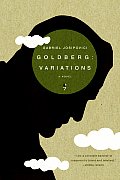 Many thanks to Imani for writing so well about Gabriel Josipovici’s novel Goldberg: Variations and inspiring me to read it. I mentioned in an earlier post that I finished this book and then immediately read it again; this re-reading worked better than the time I re-read Nightwood immediately after finishing it: this time I was able to understand more of the book the second time around and I enjoyed staying in the world of the novel for a little while longer. I wouldn’t, in fact, mind reading it again; I won’t do it, but if someone asked me to for some reason, I wouldn’t object. There’s something soothing about reading the novel, which doesn’t sound like an appropriate way to describe a serious work of fiction, but that’s how I felt. In spite of the fact that the identity of the narrator/authorial presence is uncertain throughout much of the book, I felt like I was in the hands of someone I could trust.
The novel’s initial premise is that Samuel Goldberg, a writer, has been hired by Tobias Westfield, a wealthy English gentleman, to read to him until he falls asleep. Westfield suffers from terrible insomnia and is desperately searching for a cure. Goldberg begins to read to him, but Westfield engages him in conversation, and eventually asks him if he would write an original piece to read the next night. Goldberg agrees, but the next day he finds himself suffering from writer’s block. The only solution he can find is to write the story of coming to Westfield’s house, being asked to write an original composition, and failing. In other words, he will try to turn the failure itself into a success. And thus ends the first chapter.
What follows are 29 more chapters, each one a “variation,” each one telling some story about Goldberg and his family or Westfield and his family, or describing some local historical event, or narrating the conversations Goldberg and his friend Hammond have as Hammond drives him to the Westfield manor, or telling some other story that relates in some way to the others. Part of the fun of the book is figuring out how all these pieces fit together. In one chapter, Goldberg’s wife writes him a letter (this was one of my favorite chapters — her voice is beautiful); in another, we learn what happened to Westfield’s first wife; in another, we learn how he came to marry his second; in another, the narrator tells the story of Goldberg’s friend Isaac Sinclair, the poet who went mad.
Many of the chapters record conversations characters have about literature or philosophy, for example, the conversation Hammond and Goldberg have about the differences between Achilles and Odysseus as heroes, or the chapter where Goldberg gets summoned by the King (did I mention this takes place in the 18C?) and is asked to improvise a speech on this topic: “A man who had enough wanted everything … as a result he was left with nothing. Treat this not as a morality but as a tragedy.” Whereupon Goldberg pauses for a moment and then launches into a detailed explication of a John Donne poem illustrating the topic. When he arrives home afterwards, he decides he is unhappy with his response and sends the King something more pleasing — a series of stories illustrating the idea.
All these disquisitions are included in the novel, so that it has a patchwork feel — we are given narratives, descriptions, literary criticism, philosophical explorations, conversations, letters, fantastical stories, historical events, all of them ultimately fitting together in one way or another. In later chapters, new characters and new narrators are introduced, which puts the earlier material in a new light and broadens the scope of the novel. As you work your way through it, the novel comes to seem like a puzzle, the reader left wondering how each new piece, each new chapter, fits with the rest.
Many of the stories are about failure and loss, particularly the failure of artistic inspiration. Goldberg, upon his failure to compose a story that might put Westfield to sleep, contemplates the changes that have occurred in the circumstances of artistic production over the centuries; in an imaginary conversation with Westfield he says:
It may be the case, sir, that in the time of Greece and Rome, and even in the time of our glorious Shakespeare, a man of letters might have fulfilled your commission. The writers of those times might in a day have produced for you a dazzling series of variations on any theme of your choice. You would have had but to speak, but to outline, however briefly, the subject about which you wished them to discourse, and in an hour or two, or perhaps even less, they would have regaled you with the most delightful fancies and stirring sequences based upon your subject. But, alas, our own age is grown altogether less inventive and more melancholic, and few can now find it in their hearts ‘to take a point at pleasure and wrest and turn it as he list, making either much or little of it, according as shall seem best in his own conceit’, as an ancient writer on these matters puts it. For what we list has grown obscure and difficult to define.
Situated in the 18C, Goldberg is living in the transition time between the artist as craftsperson and the artist as Romantic genius, and his ability to improvise before the King and also his inability to write at Westfield’s command illustrates this tension. He is torn between these two definitions of the artist, longing to be a craftsman but recognizing that the artist-as-craftsman figure is disappearing:
The truth of the matter is that something deep within me yearns to be the kind of craftsman he believes me to be, but something else, equally deep, rejects the formulation. But if that is so, why do I still yearn for that other version of myself, why do I still hold up to myself as an ideal the image of the maker, skilled and inventive, capable of coping with every challenge?
He met the challenge of the King, yes, but he couldn’t resist writing another response later, one he could compose at leisure, when inspiration struck. He is subject to doubts, no longer able simply to create and enjoy what he created.
The novel is about artistic failure, but also about success: in her letter to Goldberg, Mrs. Goldberg writes beautifully about what writing can accomplish:
I had never thought of any of this till I sat down half an hour ago filled with the need to write about you. That is what writing is like. The sheet of paper before one and the pen in one’s hand seem to allow those things to emerge which one knew but didn’t know one knew. It may not be very interesting or very profound, but it brings relief. Like hugging you. But why is it not sufficient to sit in my chair and imagine myself hugging you? After all, when I write here in my notebook you are no more present than if I closed my eyes and thought of you. Indeed, less so perhaps, since if I close my eyes then I can see you, whereas when I write I certainly do not. But then when I hug you I do not see you, I feel you. And that is what seems to happen with writing. But why should that be so? To feel you, you have to be present and close to me, and now you are neither. Yet I am sure this is the truth, that when I close my eyes I see you but when I write I feel you.
Beautiful, yes? Do you see why I loved this book? Really, if this book sounds at all appealing to you, read it.
Reading, 2007, continued
So now I’ll post some of my favorite books of the year. First, considering the stats I posted yesterday, I was surprised that I’d read books by men and women in almost equal numbers, 33 and 34 respectively. I didn’t plan it that way! This ratio is much more even than the previous year’s, which was 24 and 32 in favor of women. I couldn’t tell you why this changed because I rarely think about gender when I pick up a book. Then, to get completely dorky for a moment, 83% of the books I read were from the 20th or 21st century in 2007, a number I wish were a little lower. The number is similar to that of 2006, which is 80%. I wish I had numbers from previous years because doing this kind of analysis is fun! It satisfies the math geek in me.
Oooh, and another interesting fact: the amount of fiction I read stayed the same from 2006 to 2007, at about 66% of the whole. Most of the rest was nonfiction with a small percentage of poetry thrown in there. Also, Stefanie correctly noted that the number of books I read went up from last year to this one — I went from 56 books to 70. There’s a good reason for that: I didn’t start blogging until March of 2006, at which point my reading rate started to increase. It took me a while to get the momentum going, though, hence the lower number for 2006. You see how blogging has changed my life?
Okay, now to my book list. I’m a little uncertain how to handle the big books I read: In Search of Lost Time, Don Quixote, and Boswell’s Life of Johnson. Obviously, those are wonderful books, they were very important ones for me to read, and they deserve a spot on my list of top books of the year. How could they not belong there? But they are also fairly boring, obvious choices. So I think I’ll just acknowledge that they are wonderful, and then choose my best books from among the other ones I read. Maybe I can limit my list of favorites to seven, which would be the top 10%.
- Kazuo Ishiguro’s Never Let Me Go. Ishiguro is wonderful, and I should read everything he’s written. It’s hard to believe that someone could write so movingly about clones. This book was powerful, at least as much for its psychological insights as for its exploration of a scientific dystopia. I made several people read this book, I liked it so much (they liked it too).
- Elizabeth Gilbert’s Eat, Pray, Love. Apparently everyone else loves this book too — my posts on it get more hits than anything else, by a long shot. Gilbert’s courage comes through clearly — her courage to take risks, travel, and explore new ways of living and being, and also her courage to write about what she experienced. I started off slightly irritated by her writing voice, but quickly gave in and fell in love with the book.
- W.G. Sebald’s The Rings of Saturn. I’m never sure whether to call this fiction or nonfiction; I counted it as fiction for my year-end stats, but it could as easily have gone the other way. This was beautiful and moving, an example of a new favorite genre of mine: the walking book. Sebald covers so much ground, so to speak, telling stories about the places his narrator walks through, connecting geography and history and evoking a somber, thoughtful mood as he contemplates the traces of past events on the landscape.
- Naguib Mahfouz’s Palace Walk. This was a long and satisfying novel, one that slowly accumulates detail about its characters and its place so that you feel you are living in its world. It leaves you with a sense of loss when you are finished. It draws you into a familial story in the beginning, and then slowly turns its attention to politics, so that you begin to see how large and small events converge and how the domestic and the political affect one another.
- Frances Willard’s A Wheel Within a Wheel. I loved this book so much I gave a copy to a non-cycling friend of mine, who I hope will appreciate the author’s unique voice as much as I did. The book isn’t interesting solely for the cycling, anyway; it’s the author’s personality that holds your attention, her funny turns of phrase, her willingness to entertain ideas others might find shocking, and the odd combination of old-fashioned, moralistic radicalism.
- Ursula LeGuin’s The Left Hand of Darkness. Perhaps I should read more science fiction. I loved the way the characters developed over the course of the novel. I found the ending tremendously exciting, and I thought the way LeGuin explored gender roles was fascinating. The book started off a bit slowly, but soon enough I was hooked and didn’t want to put it down.
- Gabriel Josipovici’s Goldberg: Variations. I haven’t posted on this one yet, as I just finished it a couple days ago. But I should clarify that I finished a second reading a couple days ago; as soon as I finished, I started over again, to try to understand it better and to ensure that the rather odd experience of reading it didn’t end so soon. I’m still gathering my thoughts about it, but I can say that I loved the way Josipovici gathered together different stories and threads of thought and turned them into something lovely and wise.
A few others I loved: Richard Holmes’s Footsteps, Geoff Dyer’s Yoga for People Who Can’t Be Bothered to Do It, Rosamund Lehmann’s A Note in Music, Barbara Pym’s Excellent Women, and Thomas DeQuincey’s Confessions of an English Opium-Eater. I’m noticing how much nonfiction I liked; I’m not sure if this means I should read more of it, or if it’s something I need to read at a fairly slow pace. Nonfiction tends to stand out more than the novels I read, but that doesn’t necessarily mean I should read significantly more of them.
Reading, 2007
Last year I had fun putting together some statistics about my reading year, so I thought I’d do it again. I won’t be finishing any books in the next few days, so the numbers won’t change.
- Books read: 70
- Fiction (of any length): 46
- Short story collections: 3
- Poetry collections: 4
- Nonfiction: 20
- Nonfiction books about books or reading: 9
- Books written by men: 33
- Books written by women: 34
- Books with multiple authors, male and female: 3
- Books in translation: 15
- Books in translation from Europe: 11
- Books by British authors: 26
- Books by American authors: 23
- Books from the first century AD: 1 (Seneca’s Letters)
- From the 17th century: 1 (Don Quixote)
- From the 18th century: 3
- From the 19th century: 7
- From the 20th century: 34 (first half: 12; second half: 22)
- From the 21st century: 24
- From the 20th or 21st century but about an earlier century: 7
- Books re-read: arguably 1 (I’d already read many of the poems in my collection of Keats’s poetry)
- Different books from authors I’d already read: 14
The Christians and the Pagans
Hobgoblin and I returned home a day early to avoid the snow that’s supposed to come tomorrow, and now we’re safe in our respective studies, back at our computers, and all is well. We had a good time at my parents’ place, although Muttboy suffered some because my oldest brother’s dog is more energetic than he is, and whenever she was around, he couldn’t get a moment’s peace. He would stare intently at us, as if to say “get me out of here, please! She won’t stop pacing back and forth and I can’t handle it anymore!” Hobgoblin had to take him outside practically every hour to give him a break.
But otherwise, all went well; the 13 of us hung out and talked, played board games and Texas 42 (a domino game my mother brought from her home state), watched some movies, and read books together. I managed to keep from reverting to my 13-year-old irritable self, the one who can’t handle anything my mother says or does and who glares at people for no reason and picks fights for fun. Having so many people around I didn’t grow up with helped me behave myself — in addition to my six siblings, we also had three spouses and one girlfriend staying in the house, plus two friends/significant others dropping by now and then, and one visit from the local youth pastor. I almost couldn’t help but behave myself.
And yes, the theme song of this Christmas was Dar Williams’s “The Christians and the Pagans”; in fact, my middle brother’s girlfriend had a copy of the song and played it for Hobgoblin and me on Christmas day. It was the four of us, the pagans of the family, plus one sister of whose religious status I’m uncertain, hanging out at home on Sunday morning while everyone else was at church, and again on Monday evening while everyone else was at the Christmas Eve service. We talked about atheism and pantheism and panentheism, our problems with the idea of a transcendent God, and about our experiences with church youth groups, and we looked forward with trepidation to the youth pastor’s visit; I have nothing against youth pastors generally (although I can’t say I’ve met many I’ve liked), but this particular one cornered me last summer at my brother’s graduation party and asked me where I’m going to church these days — an awkward conversation followed, and I haven’t yet gotten over it. But his visit was fine — no awkward questions this time — and just as in the song, “hands were held and prayers were said, sending hope for peace on earth to all their gods and goddesses.”
And now I’ll tell you about the stack of books I came home with. Hobgoblin gave me two, both of which promise to be very informative: first, Franco Moretti’s The Novel, Volume I: History, Geography, and Culture, a book I’ve been longing for for a while but wasn’t ready to spend the money on. It’s a big, fat book with tons of essays on the novel; the back cover says that it “looks at the novel mostly from the outside, treating the transition from oral to written storytelling and the rise of narrative and fictionality, and covering the ancient Greek novel, the novel in premodern China, the early Spanish novel, and much else, including readings of novels from around the world.” Sounds great, right? He also gave me The Woman Triathlete, which I spent much of Christmas day reading through. It’ll give me useful ideas for training.
From other family members I received Charlotte Bronte’s novel Shirley, which I’m excited about as I’m trying to read some of the Brontes’s lesser-known works; Alan Lightman’s book on science A Sense of the Mysterious: Science and the Human Spirit; Elizabeth Bowen’s The Death of the Heart; Louise Glück’s book of essays on poetry, Proofs and Theories; and Marjorie Agosín’s book of poems Secrets in the Sand. This last book came from my sister who heard the author read at her college and got her to sign my copy.
Needless to say, I’m excited about all these books and eager to have some more reading time over the next couple weeks.
Happy Holidays!
Hobgoblin and I are driving out to Rochester, NY, tomorrow and are bound to get stuck in a snowstorm at one point or another, so wish us luck! We’ll be there for about five days. I’m looking forward to seeing my family, all the members of which will be there. This means we’ll have two parents, seven children, and four significant others (at least — others may unexpectedly show up). And I think we’re all staying at my parents’ house, which is not terribly large. I’ll enjoy myself, but I may also be ready to return home when the time comes …
I’m not entirely sure what books I’ll take with me, but I know I’ll include Gabriel Josipovici’s Goldberg: Variations. I’m also considering Heather Lewis’s House Rules, Braddon’s Lady Audley’s Secret, and Ann Patchett’s Bel Canto. I tend not to read all that much when at my parents’ place, however; there are too many people around to distract me, and the television is an almost irresistible lure — Hobgoblin and I don’t have a television and I’m quite happy not having one, but when I do get the chance to watch, I like to see a little of what I’ve been missing. Last year we watched many, many episodes of “The Office,” which I thought was great.
So — have a wonderful week everybody, and I’ll be back soon.
A Spot of Bother
I enjoyed listening to Mark Haddon’s novel A Spot of Bother; I don’t think it’s quite as good as his first novel The Curious Incident of the Dog in the Night-time, but it’s a good book nonetheless. The charm and interest of the first novel was in the narrative voice; the main character is autistic, and it was fascinating and sometimes funny, sometimes heart-breaking to see the world from his perspective. The tension between the way the narrator views the world and the way the reader can see the limits of his point of view keeps readers hooked.
A Spot of Bother is more traditional in its theme and style than the first one. It’s about a family that is falling apart, beginning with the father, George, who finds an ominous-looking spot on his hip and is convinced it is cancer. When he visits the doctor and hears it is excema, he does not believe it. He is convinced he is dying and falls into a depression that wreaks havoc on himself and his family. All the other members of his family are suffering too: his wife is having an affair and can’t decide what to do about it; his son, Jamie, is in danger of losing his lover; and his daughter, Katie, can’t decide if she wants to marry Ray, the man no one else in the family likes.
If all that sounds serious and heavy, it’s not — Haddon tells the story in a light, comic way. While you feel bad for George, you can’t help but laugh at his crazy leaps of logic and his dry sense of humor, and the interaction amongst all the characters reveals just how amusing family conflict can be — seen from the outside, of course.
The novel has a fairly traditional comedic structure: it’s about life falling apart and getting put back together again, and its plot revolves around weddings and marriages: will Katie and Ray get married? Will George and Jean stay together? Tragedy threatens — especially in the way George confronts the prospect of his inevitable death — but it never looms very large. It’s not terribly hard to figure out how the plot will resolve itself or what the novel’s climax will involve (even for me, who can never figure out plots), but the pleasure of this book is not in its plot twists, but in the dialogue and the records of the characters’ thoughts. The point of view shifts back and forth amongst the members of the family, revealing exactly what each person thinks of the other, a technique that lends itself well to comedy — no one knows exactly what the other characters know or what they think about everyone else, and the effort to guess or discover this truth leads to some amusing mistakes. It’s a story about the difficulty — and the urgency — of discovering the truth about the people one lives with and loves.
I can very easily see how this novel could be turned into a movie — in fact, if it’s not turned into a movie, I’ll be surprised. I feel ambivalently about this; on the one hand, it’s a movie I’d almost certainly enjoy, provided it were decently well-made. On the other hand, this characteristic reveals a certain predictability and formula-following that I usually shy away from. But I don’t want to look down my nose at an entertaining story that’s well told, so I won’t … instead I’ll recommend this book for a time when you need a laugh and some high-quality entertainment.
Tristram Shandy
Here’s a passage from Patricia Meyer Spacks’s discussion of Tristram Shandy in her book Novel Beginnings:
The narrator’s intense involvement with the workings of his own consciousness generates the novel’s unique enchantment. The leaps and sallies of his mind, the alternations of peevishness and jollity, the exuberance of wordplay, the excursions into bawdiness (with attendant rebukes to the reader for seeing it), the liveliness of imagination — such aspects of Tristram’s central subject create much of the intense enjoyment (and perhaps patches of irritation as well) that many readers experience with Tristram Shandy. Much of the enjoyment, but not quite all; some comes from the preposterous behavior of characters besides Tristram, as seen through his eyes. At the heart of the encounter with Sterne’s novel, though, lies the exploration of mind and sensibility, not by means of systematic introspection but by a precursor of stream of consciousness writing.
The passage makes me want to read Tristram Shandy again, although I’ve read it at least twice, maybe three times already. And I have to say, I never felt any “patches of irritation” that Spacks mentions. It was all pure pleasure. To give you a small taste of what it’s like, here’s the first chapter in its entirety, where Tristram complains about the circumstances of his conception and the scattering of the “animal spirits” that then took place, which, Tristram believes, is the cause of all his troubles in life:
I wish either my father or my mother, or indeed both of them, as they were in duty both equally bound to it, had minded what they were about when they begot me; had they duly consider’d how much depended upon what they were then doing; — that not only the production of a rational Being was concern’d in it, but that possibly the happy formation and temperature of his body, perhaps his genius and the very cast of his mind; — and, for aught they knew to the contrary, even the fortunes of his whole house might take their turn from the humours and dispositions which were then uppermost: — Had they duly weighed and considered all this, and proceeded accordingly, — I am verily persuaded I should have made a quite different figure in the world, from that, in which the reader is likely to see me. — Believe me, good folks, this is not so inconsiderable a thing as many of you may think it; — you have all, I dare say, heard of the animal spirits, and how they are transfused from father to son &c. &c. — and a great deal to that purpose: — Well, you may take my word, that nine parts in ten of a man’s sense or his nonsense, his successes and miscarriages in this world depend upon their motions and activity, and the different tracts and trains you put them into, so that when they are once set a-going, whether right or wrong, ’tis not a halfpenny matter, — away they go cluttering like hey-go-mad; and by treading the same steps over and over again, they presently make a road of it, as plain and as smooth as a garden-walk, which, when they are once used to, the Devil himself sometimes shall not be able to drive them out of it.
Pray, my dear, quoth my mother, have you not forgot to wind up the clock? —– Good G–! cried my father, making an exclamation, but taking care to moderate his voice at the same time, — Did ever woman, since the creation of the world, interrupt a man with such a silly question?
Pray, what was your father saying? — Nothing.
Filed under Books, Fiction, Nonfiction
Reading and riding update
I’ve kept up with my running, but still don’t run very far or for very long. But I can feel my body getting used to it. In a way, it’s fun to be new to a sport, because you improve really fast at the beginning and can see a lot of gains right away. After just a few runs, I noticed my calf muscles firming up, and I no longer get that weird quad muscle ache I got in the beginning. All this is hugely satisfying.
Unfortunately, the weather has kept me off the bike more than I’d like; I’ve managed maybe two rides a week for the last few weeks. But still that’s better than nothing, and it doesn’t matter a whole lot if I don’t ride much right now, as long as I’m getting exercise of some sort. I’ll need to ride more intensely in January and February, but for now, lots of cross-training is fine.
And, thanks to Mandarine, I now have something interesting to listen to as I run. I just figured out how to download books from LibriVox (it’s free!) to my iPod, and now I can listen to Jane Eyre. I picked that book pretty much at random, but it’s a good one, of course, and we’ll see how well it keeps me company.
As for reading, I’m very excited to have begun Gabriel Josipovici’s Goldberg: Variations. I’m not entirely sure where it’s going or what, exactly, Josipovici is up to, but I’m enjoying finding out. I’m going to be completely vague about it here and just say that it promises to be a very good read — in the sense that it’s very smart, very thought-provoking, experimental in a non-intimidating way, and very entertaining. More later.
I’m also considering whether or not to make any reading plans for next year. Right now I’m in a mood to make no plans whatsoever and I’d like to swear off all reading challenges. At the moment, I’m against any kind of looking ahead. I’m not sure what brought this mood on, although perhaps it’s the fact that I’ve recently looked back at all the books I wanted to read this past year and didn’t get to, and I’m feeling annoyed about it. I’m not the type of person who can be philosophical about not doing the things I set out to do. I’m the type of person to get annoyed at myself for not doing those things. So the logical thing to do is to make no plans whatsoever, right?
These feelings come and go, however, and in another month I may be signing up for three different challenges and planning my reading in detail for the next six months. Or I may look around over the next week or two and see all the cool plans other people have and get jealous and start to make my own. We’ll see.
Best American Essays?
I have finished the 2007 edition of the Best American Essays, and I’m a bit skeptical about whether they really are the best. Or maybe they are, I don’t know, I haven’t read enough essays to know if there were better ones, but I found myself wondering which ones might fit in a volume like Phillip Lopate’s The Art of the Personal Essay or the volume Joyce Carol Oates edited, The Best American Essays of the Century, and I don’t think there are many that would. Perhaps that’s too much to ask, though; how often do wonderfully great essays, ones that are good enough to last for centuries or millenia, get written?
Part of the problem, I think, is that I approached this volume immediately after reading Seneca’s Letters to a Stoic, which is, obviously, good enough to last for millenia. Seneca writes wise, philosophical essayistic letters that attempt to make sense of human nature and the world — their subjects and their tone seem significant and weighty and lasting. The essays in The Best American Essays are often weighty and serious, and they are occasionally philosophical, but they don’t seem lasting to me.
But there were a few that impressed me. I wrote about Marione Ingram’s essay “Operation Gomorrah” here; one other I think might possibly be great is Daniel Orozco’s “Shakers.” “Shakers” is about earthquakes in California, and I don’t think I can describe just how wonderful it is; it starts off scientifically, describing an earthquake’s P-waves and S-waves and L-waves, and then moves into a catalogue of how animals respond to these waves, before humans are aware of what is about to happen (I’m only giving you part of the passage):
Crows go mute. Squirrels play possum. Cats awaken from naps. Dogs guilty of nothing peer guiltily at their masters. Pigeons and starlings clatter fretfully on the eaves and cornices of buildings, then rise en masse and wheel away in spectacular rollercoaster swoops. Pet shop parakeets attempt the same maneuver in their cages. In the San Francisco Zoo, every single Adélie penguin dives and swims around and around their Plexiglas grotto, seeking the safety of what they believe to be open ocean. Big cats stop pacing, tortoises drop and tuck, elephants get antsy as pee-prone toddlers. The chimps on Monkey Island go ape-shit. Horses everywhere go mulish and nippy. Implacable cattle get skittish as deer. And a lone jogger on a fire trail on Mount Diablo gets lucky, for the starving cougar stalking her gets spooked by the subsonic pulse that rolls under its paw pads, and breaks off the hunt and heads for the hills, bounding silent and unseen up a hidden defile and leaving behind only a shudder of knotweed grass burnished amber by the waning light of an Indian-summer dusk.
Then the essay moves from scene to scene in places all across California describing people and animals as they feel the earthquake hit. It gives you little glimpses into a whole range of people and it does this dispassionately, describing minor events next to major ones without comment or transition. You read about a telephone repairman who falls off his ladder to his death; a woman stealing cigarettes, who, after the earthquake hits, carefully puts the box back; inmates in Folsom prison who “glare at one another as century-old mortar shakes off the ceiling and sifts down, dusting the tops of their heads like cannolis”; and a day hiker who falls into a ravine and breaks an ankle. He is left only three miles from his car, but he can’t move and has no water or warm clothing for the cold night.
This last story sets up the essay’s remarkable ending, which I’ll quote in full although it’s long:
And hours from now, after the sun has gone down, when he is shivering from the cold, when the cold is all he can think about, something remarkable will happen. A diamondback rattlesnake will hone in on his heat-trace and unwind itself from the mesh of a creosote bush and drop to the ground and seek the warmth of his body against the chill evening, slicing through the sand and sweeping imperiously between his legs and turning into itself until coiled tight against his groin and draped along his belly with the offhand intimacy of a lover’s arm. He will watch his dumpling-sized head in repose on his sternum go up and down with his breathing, its eyes open and indifferent and exquisitely wrought — tiny bronzed beads stippled black and verdigris. And his breaths will soon come slow and steady, and his despair will give way to something wholly unexpected. He is eyeball to eyeball with a rattlesnake in the powdery moonglow of Mojave Desert. He can hear birds calling back and forth — birdsong! — in the middle of nowhere. He can look up at a night sky that is like gaping into a chasm boiling with stars as if the celestial spigots were opened wide and jammed, and he can remember nothing of the life he’s lived up to now. And he will shake, not from cold or fear or from any movements of the earth, but from some vague and elemental conviction about wholeness or harmony or immortality. He will shake, resolute in a belief in the exaltation of this moment, yet careful not to disturb the lethal snake on his best. How cool is this! he will think. Wish you were here! he will think.
Also worth notice are Richard Rodriguez’s essay “Disappointment,” also about California, and Marilynne Robinson’s essay “Onward, Christian Liberals” about holiness and politics (really!). None of the essays are bad, exactly, they just aren’t all exactly great. But I suppose finding three or four great essays in a collection like this makes it worth while.
Devices and Desires, by P.D. James
Devices and Desires is the second P.D. James novel I’ve read or listened to in the last month. This novel is at least as good as the first one, The Murder Room; both novels are long with lots of well-developed characters, both are thoughtful and philosophically-minded, and both fit the description Stefanie gave in a comment to an earlier post: James’s novels aren’t so much mystery stories as stories with mysteries in them.
In fact, the novel itself makes this very point in a passage where a minor character, stuck in a difficult conversation, wants to get back to the detective novel he has been reading:
He wanted to get back to Inspector Ghote, Keating’s gentle Indian detective who, despite his uncertainties, would get there in the end, because this was fiction: problems could be solved, evil overcome, justice vindicated and death itself only a mystery which would be solved in the final chapter.
In a way James is writing this kind of novel, and in a way she is not. Yes, the mystery is solved in the end, truth is revealed, and things are set to rights. But an air of mystery still lingers over the story, not about who murdered whom, but about why people do what they do and about what it’s possible to know of the desires and the longings of others. While by the novel’s end the reader knows the full story — or the facts at least — the detectives involved don’t know everything and never will. There’s a gap between law and justice and the complexities of human interaction.
Devices and Desires is interesting structurally for two reasons; one is that Adam Dalgliesh, James’s protagonist, is only a small part of the book and isn’t the main investigator on the case. He’s on holiday in Norfolk and just happens to be a witness to events related to a murder case. He nearly crosses the line from police officer to suspect, as he is the first one on the scene after a murder, and he finds himself having to decide what to share with the other officers and what information to keep in confidence. He’s in a quiet competition with Inspector Rickards, the chief detective on the case, to see who can put the facts together most convincingly. This tension between Dalgliesh’s role as a regular citizen and his job in law enforcement allows James to consider just how effective — or ineffective — police work can be, just how much an investigation can miss or misconstrue. Dalgliesh himself learns how unpleasant it is to be interrogated and suspected.
The novel’s structure is interesting also because there are two murderers; the first one is found relatively quickly, and the focus of the novel then shifts to the second, who, it turns out, is the real source of the novel’s mystery. This means that the “mystery” part of the novel doesn’t appear until the book’s second half. This seems to be a “Jamesian” technique, or least I can say that the two novels I’ve read both take their time getting to the center of the action. She slowly establishes the book’s atmosphere and introduces the reader to her characters before the narrative tension tightens.
The setting is crucial to this novel (as it was also in The Murder Room); it takes place near the sea on a quiet, nearly-deserted headland where everyone knows everyone else and nobody’s habits or proclivities are secret. The beautiful setting is marred only by the presence of the Larsoken nuclear power station, a source of controversy amongst some of the area’s residence and a locus of both hope and fear; it provides much-needed jobs for the local population, but it is also a potential threat — the book takes place shortly after the Chernobyl disaster.
This is a book to savor; it offers many pleasures, from an absorbing story to a cast of memorable characters to meditations on death, justice, and human nature. Here, for example, are Dalgliesh’s thoughts as he watches over a dead body waiting for the police to arrive. It’s a passage that brings me back to my opening thought about the limits of detective work and of mystery stories:
He thought: In youth we take egregious risks because death has no reality for us. Youth goes caparisoned in immortality. It is only in middle age that we are shadowed by the awareness of the transitoriness of life. And the fear of death, however irrational, was surely natural, whether one thought of it as annihilation or as a rite of passage. Every cell in the body was programmed for life; all healthy creatures clung to life until their last breath. How hard to accept, and yet how comforting, was the gradual realization that the universal enemy might come at last as a friend. Perhaps this was part of the attraction of his job, that the process of detection dignified the individual death, even the death of the least attractive, the most unworthy, mirroring in its excessive interest in clues and motives man’s perennial fascination with the mystery of his mortality, providing, too, a comforting illusion of a moral universe in which innocence could be avenged, right vindicated, order restored. But nothing was restored, certainly not life, and the only justice vindicated was the uncertain justice of men.
Sentimental fiction and The Recess
It’s kind of annoying when I decide I don’t like a book, and then a critic comes along and makes a convincing argument about how wonderful it really is. Here’s what Patricia Meyer Spacks says about the meaning of history in Sophia Lee’s The Recess:
Sublimity in this novel finds realization in history, history conceived as a concatenation of irresistible but incomprehensible forces. Obscure, terrible, all-powerful, unmindful of individuals, it possesses all the qualifications of the sublime. To be sure, there is no “it” there: “history” is an abstraction, a retrospective generalization, an unpredictable produce of memory, myth, and desire. The reader, obviously, is in a different position from the characters in relation to history. Lee brilliantly exploits the difference by constantly reminding us that what we accept as truth depends on where we stand … We are all of course caught up in history; this novel insists on how little we can know what that means.
Now doesn’t that make The Recess sound fascinating? And in a way, the book was fascinating … and yet my experience of reading it was too often one of boredom. There is a category, I suppose, made up of books that are more interesting to talk about than to read, and to me, The Recess clearly belongs here.
One of the things I appreciate most about Spacks’s book is the way she thinks about pleasure in reading and how it changes over time. She says, for example, that certain elements of Henry Fielding’s Tom Jones — “the systematic construction of suspenseful situations, with purposefully delayed resolutions; the enormous cast of characters; the frequent interventions by the narrator” — helped teach readers to take new and different kinds of pleasure in reading. I like the idea that authors can help readers learn to read in new ways and to find new pleasures simply by writing the way they do, and it’s fascinating to think that readers might not automatically find suspense, delayed resolutions, and enormous casts of characters pleasurable.
She also explains the pleasure readers found in sentimental novels, novels that often seem bizarre and foreign to us today. She argues that readers today enjoy exercising emotions as they read just as they did in the eighteenth century, but it’s the ways of evoking emotional response that seem strange to us now. Sentimental novels of the time depended on two modes that we don’t see today: a “curious withholding of elucidating or corroborative detail” and a “massive accumulation of ostensibly heartrending episodes.” These novels tend to give little detail about the character’s emotional responses, telling us straightforwardly about them rather than showing us with evocative detail. And they tend to include — to be overwhelmed by — story after story of suffering and woe.
In response to the lack of detail, readers learned to fill in the missing details themselves. If an author doesn’t tell us exactly how a character felt but simply says that the character suffered, then we are free to imagine exactly what that suffering was like:
Although the system of extreme understatement allows all feeling to be clichéd, it also leaves room for other possibilities. Engaged readers are at liberty to invent, to imagine, or to perceive afresh … Readers can always or intermittently refuse the implicit invitation mentally to elaborate rendered feeling, but opportunities abound, in this fiction, for their imaginative participation.
The plethora of stories about suffering and woe serve a different purpose; their proliferation implies that life is little else than suffering; they rehearse again and again the sufferings readers themselves can expect to experience. But they also communicate a sense of defiance. Spacks compares the melancholy of these novels to the writing of Samuel Beckett, arguing that while the sense of depression in Beckett’s work is relieved by his “exuberant linguistic power,” the melancholy of sentimental novels is mitigated by “an exuberance of defiance.”
All this I certainly saw in The Recess. Lee uses detail sparingly, so that I never got a vivid sense of what each character looked like or thought about; the characters seemed clichéd to me. She also tells story after story of suffering; the two main characters absolutely cannot catch a break. Nothing goes right — every time something good happens to them, it gets taken away or something else goes wrong.
I did not find myself filling in the details of the characters’ emotional experience, as Spacks says the text was inviting me to do; rather, I resisted the emotional descriptions and found them overwrought and silly. But given the popularity of The Recess in the eighteenth century, people then would not have agreed with me. The introduction to my edition describes reports of readers who found the novel genuinely moving, and tells about a novel by Elizabeth Tomlins in which a character reads The Recess, and has this to say about the experience:
From the moment I first opened it, till the last sorrowful scene which closes the overwhelming narration of miseries, I quitted not the book. As I read, I felt all the pains of suspense at my heart, and I know not a term which can convey to you an idea how infinitely I felt myself interested through the whole: I was frequently affected even beyond the power of weeping, and scarcely could prevail on my aunt, with all my entreaties, to let me read the last volume; but persuading her that I should, perhaps, be less affected when alone, I had all the luxury of weeping over it myself.
I have a hard time imagining weeping over The Recess, and yes, it is a fictional character doing the weeping here, but this response to the novel isn’t meant ironically or satirically; it seems possible real people shed some tears over it too.
The endless tales of sorrow did create an atmosphere of melancholy and darkness, and there was a sense of resiliency and defiance at the same time; so many horrible things happened to the characters — attacks, attempted rapes, imprisonment, enslavement, kidnappings, poisonings and on and on — but they kept up their energy and spirit and their persistence in writing their story. The novel is a rehearsal of a range of horrible things that can happen to a person, but there’s something reassuring in seeing the characters fight their way through each episode. I can see how an eighteenth-century reader might take a perverse kind of pleasure in this aspect of the novel.
I’m not prepared to say The Recess is an enjoyable read, but as I think about it more, those eighteenth-century readers who liked it seem a little less strange to me.
Filed under Books, Fiction, Nonfiction
Sophia Lee’s The Recess
I found Sophia Lee’s 1783 novel The Recess a bit of a slog, unfortunately. I had high hopes for it, as descriptions I’d read made it sound like fun, but it was too overstuffed with plot events and too lacking in character development, which, if I had to choose, is exactly the opposite of what I’d want.
The novel does do a number of interesting things, however. It’s an early example of historical fiction, first of all. It’s set during the reign of Elizabeth I, and its two main characters are (fictional) twin daughters of Mary, Queen of Scots. It has many historical characters who sometimes behave in ways true to the history books and who sometimes don’t, depending on Lee’s need to make her plot work. The edition I read carefully footnoted all the diversions Lee makes from historical accuracy, so the reader doesn’t have to worry about getting wrong information. Interestingly, though, the editor’s introduction to the novel describes how some of Lee’s readers got confused about fact and fiction in the novel and thought that Mary really did have twins. At any rate, Walter Scott often gets the credit for “inventing” the historical novel, and wrongly so. He had many predecessors.
The novel is also an example of Gothic fiction and of the novel of sensibility. It doesn’t have any supernatural elements (or seemingly supernatural elements) like you might find in Radcliffe or Walpole, but its atmosphere is dark and gloomy and it’s got frightening castles, scary authority figures, damsels in distress, kidnappings, prisons, murders, and disguises. It’s also full of the extreme emotion characteristic of sentimental novels of the time — it has plenty of sighs, tears, and fainting spells, and it has long passages of overwrought feeling, as the characters respond to the horrors they suffer through. It’s hard for a modern reader to understand that 18C people loved all this; to us it can seem silly and contrived, but, based on the popularity of novels like this one and on what people wrote about their reading experiences, readers took this extreme sentimentality seriously and sometimes responded with their own tears.
One of the most interesting aspects of this novel is the structure. It’s an epistolary novel, although there aren’t actually a whole lot of letters. But still the whole novel is written by one of the characters to another person, usually in the form of what the editor calls “memoir-letters.” There are three characters who tell the story, each of the sisters and Lady Pembroke, a sympathetic mentor and caretaker to the twins. What is interesting about this form is that the sisters’ accounts contradict each other, specifically in their response to the other’s love interest. The sisters are both presented as sympathetic characters, which, in this type of novel at least, means that they are models of perfection or nearly so. There aren’t a whole lot of mixed or ambiguous characters in 18C novels of this type. And yet one of the sisters at least must be getting something wrong. The first sister, Matilda, tells her story for the first 100 pages or so, and we get one view of her lover firmly established in our minds, but then the other sister Ellinor begins to tell her story and offers a much more negative interpretation. Suddenly the ground shifts and the reader doesn’t know which sister to trust and what sense to make of their claims. It makes the reader deal with uncertainty in a way that’s unsettling, especially after having read such a long chunk of the novel already. Matilda then steps in and continues her story, this time casting doubt on the suitability of Ellinor’s love interest. We’re never told whose interpretation is the better one.
Alas, while I found all this intellectually interesting, it didn’t translate into enjoyment in reading the story. It was simply too action-packed. I don’t mind the implausibility of it — it’s highly implausible that so many, many horrible things could happen to two people — but the rapid pace wore me out. After a while, it was no surprise at all when some new disaster struck and the peace and security the sisters were now certain they had found got snatched away.
But this novel was very popular in its day and it inspired many imitators who created their own historical fictions. There’s no proof, but there is a critical consensus that Ann Radcliffe was influenced by The Recess and Jane Austen read it as well. It’s interesting to me the way that tastes and reading preferences change over time. Modern-day critics I’ve read seemed to enjoy this novel, but I wish I knew of more people who had read it so I could see if I’m unusual or if others would agree with me. I suspect, though, that I’m not really unusual and that other people might wonder what exactly people found so moving in this book. Isn’t it fascinating to speculate on why people from a long time ago liked what they liked?
 Of Books and Bicycles