Updates

First, I’ve had a few reviews published elsewhere in the last months. In February, I reviewed Marie NDiaye’s Self-Portrait in Green for Necessary Fiction, which I enjoyed very much and was glad to spend the time thinking about it in depth. Another was of Robert Dessaix’s book What Days Are For, which I reviewed for Bookslut, and the last is Minae Mizumura’s The Fall of Language in the Age of English, which I reviewed for The Quarterly Conversation. These last two books were satisfying to think and write about, even though my reviews of both are mixed (to different degrees).

I have also, of course, been following the Tournament of Books closely, and was disappointed to see that judge Victor LaValle chose Jeff Vandermeer’s Annihilation over my beloved Dept. of Speculation by Jenny Offill. I didn’t agree with LaValle’s assessment of Offill’s book, but he does do a good job writing about his decision, and it’s a decision I can respect even if I don’t like it. I listened to Annihilation on audio and enjoyed the experience very much, but it didn’t measure up to Offill’s accomplishment. LaValle was dissatisfied with Offill’s ending, but for me, the ending was pretty much beside the point; the point was the sharp, incisive, witty writing. But hope for this book hasn’t entirely died, as two books that have been eliminated come back in the zombie round, the two books with the most reader votes.

I was also a little disappointed that Evie Wyld’s novel All the Birds, Singing lost, although I haven’t read its competitor, Marlon James’s A Brief History of Seven Killings. I loved the Wyld novel, which was haunting, both harsh and beautiful. The other match-ups from last week I didn’t have strong feelings about. I’m looking forward to seeing what people make of Jesse Ball’s Silence Upon Begun this coming week, though, as I recently read it and loved it. It’s an unusual book, based on a real story, or at least that’s what it says, with letters, transcripts of interviews, transcripts of interrogations, and other documents telling the story. It also contains many photographs that add to the atmosphere and mood. It’s beautifully done, and I hope it does well in the tournament.

Finally, I promised a while back to follow up on my post about using Scribd, a subscription ebook and audiobook service. I’ve been happy with it so far, and it’s worth the money, which is something like $9 a month. For that, you can read as many ebooks and listen to as many audiobooks as you want to. At first I found the audiobooks a little difficult to get downloaded and a little buggy, but more recent experiences have gone well. I listened to three books from the tournament on Scribd, All the Birds, Singing; Annihilation; and Everything I Never Told You. I have more books and audiobooks than I can possibly read any time soon set aside in my “library” on the site, so there are plenty of good books to choose from. Overall, it’s a nice addition to my reading options, which … well, I probably don’t need more reading options, but I want them and am glad to have them!
6 Comments

Filed under Books

The Tournament of Books 2015

It’s late February, so if you are at all like me, your mind may be on the Tournament of Books, which begins on March 9th. What is it about the Tournament that is so much fun? Why do people get so obsessed with it, including me and all the people in the Tournament discussion group on Goodreads? It’s such a silly enterprise, but everyone who runs it knows it’s silly, which makes the silliness just fine. Maybe it’s that there are so many things to think about — which books will get chosen to participate? Which ones will get paired to compete against each other? How will they be seeded? (Seeded!? It really IS silly.) Who are the judges and is it possible to guess how they will decide? What type of book will make it to the end?

These last few years I’ve taken the opportunity to read as many books from the tournament as I can that I find interesting. I can’t and won’t read them all because they don’t all appeal, but many of them have already caught my eye, and others I may not have known about before but now I realize I might like them. This year I’m doing very well in my tournament reading: out of 16 books total, I’ve read seven and am listening to another. I may even add one or two more in the next couple weeks. For me, that’s not a bad record.

Here are this year’s books, in alphabetical order, along with my very personal, very biased commentary:

  • Silence Once Begun by Jesse Ball. I haven’t read this, but I have it checked out of the library and it looks super-interesting. It seems to be at least somewhat experimental, and a good story too. That right there is pretty much my thing.
  • A Brave Man Seven Storeys Tall by Will Chancellor. I hadn’t heard of this one before the tournament. The organizers always include one or two small press books that haven’t gotten much attention, and I’ve learned about great authors such as Kate Zambreno this way.
  • All the Light We Cannot See by Anthony Doerr. I read this one and admired it. I didn’t fall in love as many other people have, but it’s a very good story, and beautifully written. This one has a chance to win.
  • Those Who Leave and Those Who Stay by Elena Ferrante. I want to read this eventually, but it’s the third book in a trilogy, which makes it an odd choice for the tournament. I plan on reading the trilogy in order, but that will take me a while.
  • An Untamed State by Roxane Gay. I read this last summer and had mixed feelings, but many readers have unequivocally loved it. This one might have a chance to win.
  • Wittgenstein Jr by Lars Iyer. I haven’t read this, but I thought his earlier novel Spurious was very good.
  • A Brief History of Seven Killings by Marlon James. Not read yet, but it’s on my list to check out eventually. I’ve heard it’s an important, powerful book.
  • Redeployment by Phil Klay. Not read yet, and I’m not sure it’s my thing. But again, I’ve heard very good things.
  • Station Eleven by Emily St. John Mandel. Not read yet, but my husband read and liked it, so we’ll see. Maybe. I can see our copy on the bookcase across the room from me, so maybe it will call out one day and demand to be read.
  • The Bone Clocks by David Mitchell. Nope. At least not any time soon. I like Mitchell a whole lot, but this one is long and complicated with fantasy elements, and it’s just not my thing right now. I think I prefer the realist version of Mitchell (Black Swan Green for example).
  • Everything I Never Told You by Celeste Ng. I listened to this on audio, and I enjoyed it. It’s a great story, an absorbing family drama. I’m not sure it has what it takes to win the tournament, though.
  • Dept. of Speculation by Jenny Offill. I want this one to win. It was my favorite book of last year and I think it’s just amazing. I’ve read it twice and plan to read it again.
  • Adam by Ariel Schrag. This one was a good read, an interesting story. It’s a coming-of-age novel focusing on LGBTQ young people, and Schrag does a good job with her characters. I read it happily. I’m pretty sure it won’t win, though.
  • The Paying Guests by Sarah Waters. This one was another fun read, very absorbing, but I didn’t fall in love with it. Not one of Waters best, I think (for that, turn to Fingersmith).
  • Annihilation by Jeff VanderMeer. I listened to this on audio, and I plan to get to the two other books in the trilogy on audio eventually. I liked it; it was an unusual venture into science fiction for me, and I’m glad I tried it out.
  • All the Birds, Singing by Evie Wyld. I’m listening to this one on audio right now, and so far I’m very impressed. I may even want to read it on paper at some point.

So, go Dept. of Speculation! I’m hoping the tournament is fun and the discussion is lively. Have you read any of these? Which ones are you rooting for?

13 Comments

Filed under Books

Pioneer Girl

Two books have recently been published called Pioneer Girl, one of which is the “annotated autobiography” of Laura Ingalls Wilder. I haven’t gotten my hands on this book yet, but as I understand it, the book consists of Wilder’s manuscript on which the Little House books are based as well as other manuscripts, diaries, and letters. Clearly, as one who was obsessed with the Little House books as a child (and I mean the BOOKS, not the television show, although I watched that too), I’m going to be reading this.

But I wanted to mention how much I enjoyed the other Pioneer Girl: a novel by Bich Minh Nguyen. This one is also about the Little House books but from an entirely different perspective. It tells the story of Lee Lien, child of Vietnamese immigrants, who has moved back in with her mother and grandfather after finishing graduate school. She helps them run their restaurant while she half-heartedly looks for an academic job. In her mother’s house she comes across a gold pin that has always been a part of family lore: an American woman named Rose left it or gave it — it was unclear which — to her grandfather back in Saigon in the 1960s. When Lee discovers the pin, she realizes that it’s exactly like the one described in These Happy Golden Years, the one that Almanzo gives to Laura as a gift. Well, those of you who know the books will realize what Lee realizes — that it’s possible the woman named Rose was Rose Wilder Lane and that the pin was actually the one in the Little House books. Of course, Lee, with all her recent research training, has to investigate further.

The novel takes Lee deep into the history of Laura and Rose, and along the way she thinks about the parallels between their lives and her own. Lee’s family is a pioneer family in its own way, as immigrants to the U.S., and while not a pioneer in the sense her mother was, Lee too has to forge her own way as a member of the first American generation. Lee finds comfort in the complicated relationship between Laura and Rose as she tries to make sense of her own relationship with her difficult mother. As with so many other readers, Lee finds that the Little House books have shaped the way she thinks about the world and about her life. However, in her case, it’s possible that she has a much closer connection to Laura, through Rose, than any of the rest of us. It’s enough to make any Laura Ingalls Wilder fan very jealous.

So, for all you readers as obsessed with the Little House books as I was, here are two more books to enjoy!

8 Comments

Filed under Books

Recent Nonfiction

First of all, if you’re at all interested in participating in the next Slaves of Golconda group read, make sure to head on over and vote for your selection. The list of books for us to vote on is great. Anyone is welcome to participate, and you don’t even need a blog. We welcome new people!

I recently finished Janet Malcolm’s book The Journalist and the Murderer and (unsurprisingly, given my history with Malcolm and the fame of this book) loved it. I’d wanted to read it for a long time and even more so after listening to the Serial podcast and hearing people talk about how relevant The Journalist and the Murderer is to everything that happened there. So the time was right. Her opening line is famous: “Every journalist who is not too stupid or too full of himself to notice what is going on knows that what he does is morally indefensible.” From there she tells the story of a convicted murderer who sues a journalist for writing a book that makes the case that the convicted murderer did indeed commit murder. Although the trial ended in a hung jury, it went surprisingly badly for the journalist. Malcolm shows how this happened and along the way explores the nature of journalism and the fraught question of whether and to what extent it’s acceptable for a journalist to mislead an interview subject. In typical Malcolm fashion, she is in the book herself, her own reactions and emotions as much a subject of her investigation as the lawsuit. It’s all wonderfully layered and complex. And Malcolm is such a brilliant writer. This book is now sharing a place along with The Silent Woman:Sylvia Plath and Ted Hughes for my favorite Malcolm book (out of the four I’ve read).

If you like nonfiction, READ JANET MALCOLM. That’s all there is to it.

I also recently finished MFA vs. NYC: The Two Cultures of American Fiction, an essay collection edited by Chad Harbach. The essays were generally very good. A couple were very academic in tone, but most of them were personal and informal — personal essays about people’s experiences in writing workshops or as teachers on the one hand, or as editors, agents, publicists, and NYC writers on the other. The book’s central dichotomy doesn’t stand up under scrutiny — the world of American fiction is much more complicated than MFA vs. NYC, but that doesn’t detract from the interest of the pieces. If you like reading about the publishing world and where your fiction comes from, it’s fun.

Finally, there are some recent or forthcoming nonfiction works I want to get my hands on ASAP. The first is the new Maggie Nelson book, The Argonauts. I adore Nelson’s book Bluets and have high hopes for the new one. And then there is Sarah Manguso’s Ongoingness: The End of a Diary. I admired Manguso’s earlier book The Guardians very much. Claudia Rankine’s book Citizen is poetry, not nonfiction, but I’m going to add it to this list anyway. Also on my radar are H is for Hawk, by Helen Macdonald, Just Mercy by Bryan Stevenson, Excavation by Wendy Ortiz, Savage Park, by Amy Fusselman, Bulletproof Vest, by Maria Venegas. I could go on and on.

So many books!!!

20 Comments

Filed under Books

Shiny New Books

The new issue of Shiny New Books is up! There’s lots of good stuff to dive into over there, plus two reviews of my own, one of Michelle Bailat-Jones’s novel Fog Island Mountains and one of Jesmyn Ward’s memoir Men We Reaped. Both books are fabulous. Go check out the site!

2 Comments

Filed under Books

Reading updates

I thought I’d give a few reading updates here, between checking the weather forecast, as tomorrow we are getting a storm they are calling potentially historic in its horribleness. Tomorrow is also my first day of class for the spring semester, and I have no idea if I’ll be able to meet my classes or not. Fun times!

First, I want to mention a short story collection, The Settling Earth by Rebecca Burns. I don’t usually accept review copies these days, but this collection looked intriguing, partly because they are linked short stories, and I’ve had very good luck with that form. There’s something about it that works for me; I like how you get a wide-ranging view of a community or group of people, with stories that can connect in satisfying ways but that also offer variety. Figuring out all the connections among the pieces is fun. Burns’s collection did not stand out as far as the writing went; I thought some parts were awkward or confusing, but I found myself drawn into the world Burns describes and not wanting to put the book down. The stories are set in New Zealand and tell about life during colonial times. They mostly describe the British settlers’ experiences, with an emphasis on domestic life. Some of the stories give a glimpse into Maori response to the British presence as well. The writing, while not impressive, didn’t get in the way of the stories, so I think anyone who is interested in the place and time would appreciate this.

Then I want to recommend strongly that everyone go out and get yourselves a copy of Meghan Daum’s essay collection The Unspeakable: And Other Subjects of Discussion. I LOVED this book. If you like essays, you need to read this. If you like good nonfiction writing, read this. If you like good writing, read this. Daum is entertaining, funny, and brutally honest about herself and her thoughts/feelings/opinions. She is a writer who can make any subject interesting. Her essay about her mother is devastating (it’s called “Matricide”). Her essay about not wanting to have children describes the kind of ambivalence I wish it were easier to discuss. Her essay on Joni Mitchell is just … amazing (as is Zadie Smith’s essay on Joni Mitchell, “Some Notes on Attunement” — maybe Joni Mitchell is someone I should like??). Her essay on brushes with celebrity in L.A. is so funny. We need to hear more from Daum. More, please!

Also, The Enchanted by Rene Denfeld was very good; I didn’t quite get the point of … well … the enchanted part, but it deals with prison life and death row beautifully. It’s a novel very much about an issue, but it didn’t feel reductive or oversimplified or preachy. That was surely hard to pull off. I listened to Celeste Ng’s Everything I Never Told You on audio and liked it very much; she captures complex family life extremely well.

And finally, Ruth Rendell’s A Judgment in Stone was enjoyable, although perhaps not Rendell’s best? Do any Rendell fans have a sense of whether this one was typical? It has a chatty narrator who comments directly on the action and hypothesizes on characters’ motivations. This is highly unusual in contemporary crime fiction, and I liked it, to an extent, but at times all the commentary seemed to go too far. At times it felt just a little gimmicky. But still, it was a good story, very creepy, and I do like chatty narrators. I’ll be reading more Rendell, and also Rendell as Barbara Vine, in the future.

Happy reading everyone!

8 Comments

Filed under Books

Barbara Comyns’s The Vet’s Daughter

Barbara Comyns’s The Vet’s Daughter was not what I expected, but then, this is my third Comyns novel and none of them have been what I expected. Our Spoons Came From Woolworths was my first one, and it was an unsettling mix of a light, breezy tone and dark subject matter. Who Was Changed and Who Was Dead remains my favorite Comyns so far; it’s very strange, opening with ducks swimming in and out of drawing room windows and staying on a similar off-beat note. The world of the book seems familiar, but it’s not, quite. The Vet’s Daughter is perhaps more like Our Spoons than Who Was Changed, but it’s darker in tone throughout. But it also veers off in some odd directions, especially in the second half.

It tells the story of Alice, the daughter of the title, who lives in London with her bitter, nasty father and her ailing mother. She’s trying to give her mother as much help as she can, but her mother is on her way out of this world, and now the daughter is going to be left to manage her father on her own as best as she can. She has a friend Lucy, but she can only see her occasionally, and Lucy is deaf, which makes communication difficult. The vet’s practice has sinister aspects to it; a vivisectionist stops by to pick up unwanted animals and many of the animals they keep suffer. There are few bright spots in Alice’s life. One is Mrs. Churchill, who is a companion to the family during and after Alice’s mother’s illness. She provides some needed stability.

Mr. Peebles is not exactly a bright spot in Alice’s life, but he’s a friend and one with some power to provide Alice with much-needed diversions. He is another veterinarian who has helped with the family vet practice, and it becomes clear early on that he is attracted to Alice. It seems as though he might provide an escape, but Alice does not return his feelings. She spends time with him but considers him only a friend, although marriage is always there as a possibility should she get desperate enough. She walks a line between honesty and deception, trying to get what pleasure she can out of his company without leading him on.

All this takes place in the gloomy setting of poverty-stricken London, but this is only the first half of the novel. In the second half Alice heads out toward the English coast to live with Mr. Peebles’s mother. She is a depressed woman living in a house that’s halfway burned to the ground, being cared for by a truly strange, scarily sinister couple, the Gowleys. Alice’s job is to be a companion. She is still isolated here, this time geographically isolated as well as emotionally so, but this job brings some new opportunities with it. Alice learns about the countryside and its ways, and she also learns about sexual desire, as she meets Nicholas, a young, attractive soldier who teaches her how to ice skate and seems to be attracted to her as well. This relationship puts her feelings toward Mr. Peebles in a new light; she knows now what real attraction can be and marriage Mr. Peebles takes on an even duller, bleaker aspect.

I think I’ll stop there with a discussion of the plot, except to say that levitation becomes an important plot point, and I’m trying to figure out what to make of this. Alice had a couple experiences with levitation during her sleep while in London, and it happens again out on the coast. She experiments a bit and discovers she can levitate at will, although it takes a lot of energy and focus. When her father finds out about her ability, it becomes another way he can exploit her, and her life closes in on her again. But what are we supposed to make of this? I first thought she was merely dreaming that she could levitate and that it was a metaphor for her desire for freedom or something like that. But then what I thought was a metaphor becomes real and she actually does have the ability to float up into the air. Of course, it is still a metaphor even though it’s “real” — her ability to levitate only sets her apart and leads to more suffering and despair. The thing that makes her special makes her miserable, and there is no chance for escape, ever.

I’m still not sure what I think of the book as a whole, and I’m looking forward to reading other people’s thoughts. I liked the first person narration; the story is told through Alice’s eyes in her forthright, no-nonsense tone. Alice is so young — only seventeen — and she hasn’t had the chance to do much in her life, but she has seen a lot of suffering. One of the first things she tells us is that “if [my mother] had been a dog, my father would have destroyed her.” She describes her father’s cruelties matter-of-factly and without dwelling on the darkness of it all, but there’s a sadness to the tone as well, as though she knows life isn’t ever going to offer much, in spite of her hopes. When Nicholas betrays her, she is not really surprised. But I’m not sure how to integrate the two parts of the book, particularly the very ending. The note the book ends on seems appropriate, but to get there by way of levitation? I’m curious what other people think of the value of bringing in this fantastical? supernatural? element.

But I definitely can conclude that Comyns is a writer I want to read in full. I love how she’s full of surprises and that her novels have so much variety. I love the darkness and twistedness of her worlds, and the way she look at that darkness straight on.

3 Comments

Filed under Books, Fiction

New Ways of Reading: Giving Scribd a Try

I’ve known about subscription services for reading such as Oyster and Scribd for a while now — services that give you unlimited ebook reading for $8-9 a month. They never appealed to me, though, because I was happy getting ebooks from the library and from other sources. Cheap and free ebooks are plentiful right now, so I thought I didn’t need another source of them, particularly since I read slowly and read fewer ebooks than print books. But then Scribd started offering audiobooks as well as ebooks, and the situation changed. I had been getting audiobooks from the library, and that worked pretty well, but I always had a problem with the timing of it — I’d be in the mood for a particular audiobook, but there would be a long waiting list for it, and when it finally became available, I was no longer interested, or involved in something else, or happy listening to podcasts at the moment. I’d considered using Audible.com or a similar service, but the price always seemed too high.

So I thought I’d give Scribd a try. I’ve had it for going on two months now, and have finished one audiobook and am in the middle of another, and I’m in the middle of an ebook as well. So far, I think it may be worthwhile to keep, although the service is still very much on trial in my mind; if I find it’s not worth it, it’s easy to drop, and I will. But there is a pretty good selection of audiobooks — plenty there I’d like to listen to — and I love how they are instantly available, with no waiting. The price seems to be right. Even if I listen to only one audiobook, or even less than one, per month it’s still cheaper than Audible, plus it includes ebook access. I haven’t looked through their ebook catalog very thoroughly, but that’s because my focus is more on audiobooks, plus it’s very large and overwhelming to browse through.

I listened to Jennifer Egan’s novel Look at Me, which was great — though so long! It took about 20 hours to listen to. Now I’m in the middle of Celeste Ng’s Everything I Never Told You, which I’m enjoying very much (and which is a much more reasonable 10 hours). I’m slowing reading Jennifer Weiner’s novel Good in Bed, which I started because I’ve been curious about her books and wondered how I would like something a little more “commercial” than what I usually read, plus wanting something potentially fun to read before I fall asleep each night. It’s been enjoyable in parts, but in the last third of the book, I’m finding it implausible, and I’m kind of losing interest. Ah, well.

The Scribd app isn’t perfect — I’ve had some trouble getting audiobooks downloaded and ebooks don’t sync very well between devices (iPhone and iPad). But generally I’m happy with this experiment so far. It’s a good way of getting more audiobooks into my life, at a time when audiobooks are becoming a more and more convenient way for me to read.

7 Comments

Filed under Books

Best of 2014

Okay, it’s time for my best-of list. I made this list really quickly because I’m not sure agonizing over what I put here will lead to a better list. I go with my gut impulse instead. But I think my gut impulse is pretty reliable!

Best Fiction:

  • Dept. of Speculation, by Jenny Offill
  • Americanah, by Chimamanda Ngozi Adichi
  • A Tale for the Time Being, by Ruth Ozeki
  • Kindred, by Octavia Butler

Best Mysteries:

  • A Kiss Before Dying, by Ira Levin
  • Black Water Rising, by Attica Locke

Best Nonfiction:

  • Can’t We Talk About Something More Pleasant, by Roz Chast
  • Men We Reaped, by Jesmyn Ward
  • My Life in Middlemarch, by Rebecca Mead
  • On Immunity, by Eula Biss

Best Poetry:

  • Bough Down, by Karen Green

Best Short Story Collection:

  • I’m Not Saying, I’m Just Saying, by Matthew Salesses

Best Essay Collections:

  • Notes From No Man’s Land, by Eula Biss
  • Notes of a Native Son, by James Baldwin

Books I Brought Up in Conversation and Recommended Most Often:

  • Being Wrong, by Kathryn Schulz
  • A Kiss Before Dying, by Ira Levin

Funniest Book (and best book to have on hand Christmas day to make your bookish family read chapters of):

  • Texts from Jane Eyre, by Mallory Ortberg

And a shout-out to the best book published by a friend, which is really great book and could go on my best-of list easily: Michelle Bailat-Jones’s Fog Island Mountains.

Happy reading in 2015 everyone!

12 Comments

Filed under Books

2014 Wrap-up

It’s time for a wrap-up of the year. I’m feeling resistant to both best-of lists (I’m sick of them! although I’m not sick of yours, dear reader, and I am still going to do one of my own) and thinking in terms of years — does it matter that a year is ending, really? But still, I want to keep up my tradition of looking at reading stats for the year. So here goes:

  • Books read: 78 (down from the previous three years, but that’s what having a toddler, a job, a bicycle, friends, and a strong desire to sleep will do to you)
  • Audiobooks: 10 (up from the previous year’s 2. Audiobooks are a great way to keep reading even when you’re busy)
  • eBooks: 18 (a little bit down from 2013)
  • From library: 12 (This includes some library audiobooks and ebooks)
  • Fiction: 53 (the exact same percentage as last year)
  • Nonfiction: 23
  • Poetry: 2 (up from last year — by 2)
  • Essay collections: 9 (higher than last year)
  • Biography/autobiography: 10
  • Theory/criticism: 1
  • Short story collections: 3 (same number as last year but a higher percentage)
  • Mysteries: 8
  • Graphic Novels: 1 (really a graphic memoir)
  • Books in translation: 3 (down)
  • Books by writers of color: 15 (up, both in terms of number and percentage. I worked at this one and can still do better)

Gender breakdown:

  • Men: 21
  • Women: 55 (a higher percentage than last year)
  • Collections with men and women: 2

Nationalities:

  • Americans: 57 (slightly higher than last year, which was already pretty high)
  • British: 12
  • One each by authors from Canada, Italy, Korea, Mozambique, New Zealand, Nigeria, and the Virgin Islands, plus two books with writers from more than one country.

Year of publication:

  • 19th: 2
  • First half of 20th century: 4
  • Second half of 20th century: 15
  • 2000-2009: 12
  • 2010-2014: 45

So many super-contemporary authors! Even more than last year, and that number was pretty high. Ah, well. I’m just in a place where I want to read new and newish books. That may change in future years. In other trends, I haven’t read as many writers from countries other than the U.S. and the U.K. as I’d like, but I did read pretty diversely within those two countries. Not such a bad year! I’ll be back soon with my favorites of the year.

8 Comments

Filed under Books

Loitering, by Charles D’Ambrosio

I am not one to pass up a good essay collection — in fact, I’m one to chase down a good essay collection — so I was eager to read Charles D’Ambrosio’s new book Loitering. It includes some essays from an earlier book called Orphans and adds new material. I liked it very much — so much, in fact, that I wish I hadn’t read it as an e-galley and would like to buy myself a hard copy so it’s on hand for future rereading. The essays cover many different topics — whaling, Russian orphans, housing developments, J.D. Salinger, among others — and they also tell personal stories and present a persona who kept me engaged through the whole collection. D’Ambrosio has had some serious struggles in his life, and he writes about them movingly, and always with intelligence instead of self-pity. He is someone I felt I could trust to think deeply about whatever issue he confronts, and whose mind I was happy to have as company. I appreciated the variety of the collection, with interesting subjects you might not read about elsewhere. I also loved his writing style. But mostly I loved D’Ambrosio’s take on the world — a slightly jaded, perhaps disappointed outlook, but one that still is curious and receptive and trying to make sense of the world.

3 Comments

Filed under Books

Bookish Notes

I’ve got a few things to mention here, and the first is that the next pick for the Slaves of Golconda reading group is Barbara Comyns’s novel The Vet’s Daughter. Everyone is welcome to join in the discussion, which will begin on January 15th.

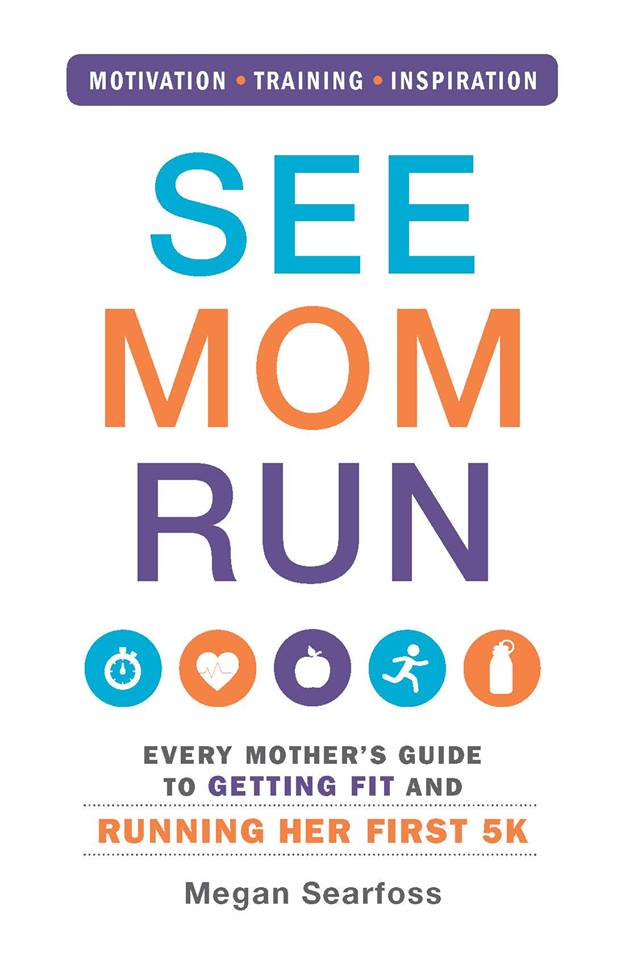
The next is that I’m proud to announce my good friend and cycling partner, Megan Searfoss, has published a book on running, called See Mom Run!

See Mom Run

I helped Megan edit the book and so have had a chance to read an early version of it, and I can say that it’s perfect for anyone who wants to start or improve their running but has time limitations, whether those limitations come from motherhood or some other source. Megan is an amazing person — an incredible athlete, coach, business owner, mother, friend, and now author — and she 0ffers great advice and inspiration in the book. If running interests you, check it out!

The next thing to mention is I celebrated Small Business Saturday by visiting a local bookstore (of course) and got to meet Roz Chast, cartoonist for the New Yorker. I’ve laughed at her cartoons for ages, and loved asking her to sign my copy of her latest book, Can’t We Talk About Something More Pleasant?, which Hobgoblin is chuckling over at this very moment. Along with her at the bookstore was crime novelist Peter Spiegelman, and so I picked up the first of three books in a series, Black Maps. The only shopping I ever do on the post-Thanksgiving weekend is book shopping (I hardly ever do any other kind, actually), and I love, love, love the newly-born tradition of having authors in bookstores during the weekend to sign books and make recommendations. By the way, I made sure to get recommendations from both authors, and while I felt like I was already spending too much money and so didn’t actually buy these books this time, their recommendations are now on my list: Tipping the Velvet by Sarah Waters from Roz Chast, and Winter’s Bone by Daniel Woodrell from Peter Spiegelman.

And now, since it’s been forever since I’ve written abo0ut my recent reading, here’s the shortest of short round-ups:

  • Joanna Ruocco’s novel Dan: strange with wonderful writing, sort of post-apocalyptic-but-not-really, surreal. It made me start the book over from the beginning once I’d finished.
  • Kathryn Harrison’s The Kiss: not for the faint of heart. A memoir about incest, beautifully written, very disturbing, fascinating.
  • Blake Butler’s 300,000,000: I bailed on this one. It was darker and stranger than I could handle at the moment, but it might be something I return to later.
  • Ian McEwan’s The Children Act: I liked this one — lots to think about, a slow-paced novel that stayed compelling all the way through.
  • Karen Green’s Bough Down: a mix of prose poetry and art. So basically unclassifiable, and absolutely gorgeous. I’ll be reading this one again. A grief memoir about the loss of her husband.
  • Heather Lewis’s Notice: another one not for the faint of heart. Seriously. But if you want to think about the darker side of sexuality, it’s great.
  • Lynne Sharon Schwartz’s Ruined by Reading: A Life in Books. I enjoyed this. It won’t make my best-of list when it comes to books about books, but it was still fun.
  • Attica Locke’s Black Water Rising: a mystery book group pick, and very good. A good story, strong characters, and about themes that are both always important and particularly pertinent right now: power, money, race, labor, oil.
  • E. Lockhart’s We Were Liars: A YA novel, and a lot of fun, with good plot twists and turns.
  • Lee Ki-Ho’s At Least We Can Apologize: part of Dalkey Archive’s series of Korean novels. Darkly comic social satire; I laughed and winced my way through this. It has a great premise and a lot to say about power and violence.

Happy Thanksgiving to my American friends, and happy weekend to everyone else!

2 Comments

Filed under Books

Slaves of Golconda: Time to vote on a new book!

Here is the post I just put up on the Slaves of Golconda site. If you are at all interested, head on over to that blog and vote!

Rohan got the ball rolling on choosing another book, and I volunteered to come up with a list for us to vote on, so here goes! But first, an explanation: this group is open to absolutely anybody who wants to participate. You don’t need to do anything to join us except to read the book and participate in the discussion in whatever way you want to. That could include something as simple as reading along and commenting on the posts here, or perhaps publishing a post on your own blog, or possibly publishing a post on this site. Leave a comment here if you’d like to publish a post on this blog, and we’ll figure out how to get that done.

For this round, I thought about what books I’d like to discuss with you all the most, and for some reason books from the 1950s were coming to mind. So, here’s a list of titles I think we might enjoy. Let’s vote by next Wednesday, November 26th. Perhaps we could discuss the book on or around January 15th? I thought that date was far enough away to give us plenty of time to read and also enough after the holidays that they won’t interfere. If anyone thinks another date would be better, though, just let me know.

So, vote for your choice in the comments!

  • Mary McCarthy’s Memories of a Catholic Girlhood (1957): “Tempering memory with invention, McCarthy describes how, orphaned at six, she spent much of her childhood shuttled between two sets of grandparents and three religions—Catholic, Protestant, and Jewish. One of four children, she suffered abuse at the hands of her great-aunt and uncle until she moved to Seattle to be raised by her maternal grandparents. Early on, McCarthy lets the reader in on her secret: The chapter you just read may not be wholly reliable—facts have been distilled through the hazy lens of time and distance.”
  •  Barbara Comyns, The Vet’s Daughter (1959): “The Vet’s Daughter combines shocking realism with a visionary edge. The vet lives with his bedridden wife and shy daughter Alice in a sinister London suburb. He works constantly, captive to a strange private fury, and treats his family with brutality and contempt. After his wife’s death, the vet takes up with a crass, needling woman who tries to refashion Alice in her own image. And yet as Alice retreats ever deeper into a dream world, she discovers an extraordinary secret power of her own.”
  • James Baldwin, Go Tell It on the Mountain (1953): “First published in 1953 when James Baldwin was nearly 30, Go Tell It on the Mountain is a young man’s novel, as tightly coiled as a new spring, yet tempered by a maturing man’s confidence and empathy. It’s not a long book, and its action spans but a single day–yet the author packs in enough emotion, detail, and intimate revelation to make his story feel like a mid-20th-century epic. Using as a frame the spiritual and moral awakening of 14-year-old John Grimes during a Saturday night service in a Harlem storefront church, Baldwin lays bare the secrets of a tormented black family during the depression.”
  • Yukio Mishima, Temple of the Golden Pavilion (1956): “Because of the boyhood trauma of seeing his mother make love to another man in the presence of his dying father, Mizoguchi becomes a hopeless stutterer. Taunted by his schoolmates, he feels utterly alone until he becomes an acolyte at a famous temple in Kyoto. He quickly becomes obsessed with the beauty of the temple. Even when tempted by a friend into exploring the geisha district, he cannot escape its image. In the novel’s soaring climax, he tries desperately to free himself from his fixation.”
  • Ira Levin, A Kiss Before Dying (1953): “A Kiss Before Dying not only debuted the talent of best-selling novelist Ira Levin to rave reviews and an Edgar Award, it also set a new standard in the art of psychological suspense. It tells the shocking tale of a young man who will stop at nothing—not even murder—to get where he wants to go. For he has dreams, plans. He also has charm, good looks, intelligence. And he has a problem. Her name is Dorothy; she loves him, and she’s pregnant. The solution may demand desperate measures. But, then, he looks like the kind of guy who could get away with murder.”

2 Comments

Filed under Books

Blogger Meet-Up with Michelle Bailat-Jones!

9781494553180 Yesterday I had the great pleasure of finally meeting in person my long-time internet friend Michelle Bailat-Jones, whom you may know from the blog Pieces. She recently published her novel Fog Island Mountains and is traveling in the U.S. to promote the book. She appeared at the Center for Fiction last night to do a reading and reception. The Center for Fiction is a lovely venue, a small bookstore with a cozy, comfortable space for events upstairs. It was my second visit to the center and the first for an event, and I hope to return frequently in the future. Michelle’s reading was great, and in chatting with her afterwards, I realized that we both had been blogging since 2006, which means we’ve been internet friends for a long time now.

I was able to get an ebook version of Michelle’s novel before it actually came out, and so could go to the reading with the novel already finished. And what a great novel it is. I read it avidly and was caught up in the story as well as the beautiful writing. The novel tells the tale of a couple in a small town in Japan and their attempts to deal with terrifying news: that Alec, the husband, has been diagnosed with terminal cancer. Alec’s wife, Kanae, responds by running away — fleeing from the situation in ways both literal and metaphorical. How can one deal with the news that one’s husband will certainly die very soon? Mirroring Alec and Kanae’s emotional turbulence is the arrival of a typhoon that shakes their town and disrupts their attempts to come to terms with their new circumstances. The story is hers and Alec’s, but it’s also their children’s story, and even more so the story of an elderly woman Azami, who is the novel’s narrator. Azami is a mysterious figure who knows everything there is to know about the town (or she seems to at least) and watches over its inhabitants as well as healing hurt animals that come into her area. She hovers over the whole novel, occasionally telling her own story but also slipping into the minds and voices of the other characters to narrate their lives. The movement between Azami’s story and those of the other characters is seamless. There is an incantatory feel to the sentences, which are often made up of phrases piled on phrases, as though casting a spell over the reader. This passage gives you a good sense of the experience of reading the book:

It is evening now in our little town and the winds have settled, for now, for a few hours, while they regroup and gather off shore and over the ocean, preparing for their fury, but for now we are quiet, we can watch the sky and only wonder how it all will come about, and so now Alec is at his home, he has finished his afternoon classes at his little English juku, he has walked through town — past the butcher, past the new supermarket, past the garden shop, and past me where I was standing and waiting at the corner for the light to change; he even waved me a quiet hello.

From this paragraph, you can see how Azami positions herself in relation to the other characters, as a part of things, with intimate knowledge of what is happening, but still at a distance. You can also see how the prose pulls you in with its rhythms, and how this one long sentence quietly captures a full scene.

It’s all beautifully done, and I hope this book finds many readers. It’s off to a good start as the winner of the Center for Fiction’s Christopher Doheny Award. Many congratulations to Michelle!

7 Comments

Filed under Blogging, Books, Fiction

Reading Round-up, 10/1/2014

I’d been meaning to read Nella Larsen for a long time and finally picked up my copy of Passing. What a good novel! Or novella, perhaps I should call it, as it’s very short. It’s about two women, Irene and Clare, although Irene is the one through whom the story is told. They are both of mixed race with light skin, but Clare is passing as white while Irene is not. The story is about Irene’s feelings about Clare, her bitterness towards Clare’s openly racist husband, and her uncertainties about her own marriage. There is so much packed into very few pages — so much about race in America, about friendship, about dealing with one’s life choices, about desire.

I liked Passing so much I went ahead and read Quicksand, Larsen’s other novel, which was bundled in my book with Passing. This novel (novella) is about Helga, a  teacher in the novel’s beginning, who quits in search of a life that’s more suited to her personality and desires. She lives in various places, including Copenhagen where she has some relatives, and among various types of people, always in a quest for the contentment and fulfillment that she has found elusive. With a title like Quicksand, you might be able to make a guess as to where the novel is heading. This one was also good, satisfyingly complex. I wish Larsen had written more novels.

I also read My Brother Michael by Mary Stewart for my mystery book group, which was a disappointment. I was hoping for a fun, cozy mystery/romance, but I found it dull and implausible with characters that seemed too thin and with way too much landscape description that I found myself impatiently skimming. Although opinions on it differed in my book group, it generally was not a success. Our next read is Attica Locke’s Black Water Rising, and perhaps we will have better luck next time.

And now I’m in the middle of two very good nonfiction books, first of all, Rebecca Mead’s My Life in Middlemarch, which makes me want to read the novel again (which, if I were to do it, would be my third time. I am no casual George Eliot fan and take my Eliot reading seriously!). Mead’s book is excellent. She weaves together biographical information on Eliot, her own experiences reading Middlemarch, and thoughts on the novel itself, and makes all these sections equally compelling. I’m also reading Kathryn Schulz’s Being Wrong, a book about … well, wrongness. She explores what it means to be wrong (and whether “rightness” is something we can even settle upon), how people have dealt with the idea of rightness and wrongness historically, the value of making mistakes, what it’s like to experience being wrong and changing one’s mind, and why acknowledging one’s own wrongness is such a hard thing to do. Schulz’s tone is light and always entertaining — this book will make you contemplate your own mistakes but Schulz makes this as painless as such a thing can possibly be.

And one final book: I had the urge to reread something by listening to it on audio, and my library had an audiobook version of Ian McEwan’s Atonement available, so I’ve been listening to that. It’s so good and at the same time so painful that I’m wondering why I wanted to put myself through listening to such a heartbreaking story. But it’s also so good! As it turns out, I won an audiobook version of McEwan’s latest novel from LibraryThing, so I’ll be listening to that one soon as well.

And now it’s time to dive back into my reading … I hope you’ve read some good things lately too!

7 Comments

Filed under Books

The Fever

I unwittingly chose to read (by which I mean listen to on audio) Megan Abbott’s new novel The Fever at just the right time — right after I finished Eula Biss’s excellent book On Immunity. On Immunity takes up controversies over vaccines and explores their cultural meanings and is really, truly great. The Fever is, in part, a fictional exploration of our cultural anxieties about vaccines (among other threats), and it’s also great, although it’s an entirely different book — a thrilling, plot-driven novel about hysteria in a small-town high school. One girl has a seizure and goes into a coma and shortly afterward girl after girl gets struck down with terrifying and inexplicable symptoms. As the bodies of the young girls go out of control, the minds of the adults go bonkers as well; they desperately search for a culprit and one likely source is the HPV vaccine recently administered to the students. This, of course, allows them to freak out not only about vaccines, but about adolescent female sexuality, which, of course, parents are perfectly primed to freak out about.

But this is only one possibility — there is also the polluted lake that everyone was supposed to stop swimming in but that some people swam in anyway. And there are many other dangers and pollutants lurking everywhere, in building materials, in processed food, in the air and the ground and everywhere. No one feels safe and no one knows what to do about it. Abbott is really great at capturing what it’s like to be a teenager today (or at least this strikes me, as one who is very much not a teenager, as true) and makes me feel relieved I’m all grown up. She’s particularly good at describing what it’s like to live with modern technology, and interestingly, the characters seem to find it a burden. Their phones never let them forget about gossip and scandals and what everyone else is doing and tie them to people they would prefer to escape. They interrupt the moment with the promise of new information but more often bring only anxiety. As the characters try to sort out the dangers, if any, of something like the HPV vaccine, information on the internet only confuses the issue further.

Fortunately, Abbott’s protagonists are sympathetic and do their best to stay calm and sane in the midst of the uncertainty around them, and this keeps the tone of the book from becoming too dark. The novel is both entertaining, and a good portrayal of some of our current cultural obsessions. This novel, along with On Immunity, make excellent reading for anyone wanting to understand more about the things — vaccinations included — that scare us.

6 Comments

Filed under Books

Reading Round-Up, 9/14/2014

Lots of interesting reading going on around here these days, including:

  • Elena Ferrante’s The Days of Abandonment. This is my first Ferrante, and probably won’t be my last. It was a strange book, difficult — in the sense of emotionally wrenching — unpleasant, surreal at times. It’s the story of a woman dealing with her husband’s abandonment, and it starts off in what feels like familiar territory but then veers off into unexpected places. I can’t say I enjoyed the book exactly, but I was intrigued by it. The book was unpleasant in a way I’m not entirely sure how I feel about, but this was not entirely bad.
  • Sarah Waters’s The Paying Guests. I may have been spoiled for further Sarah Waters books by Fingersmith, which I liked a whole lot. I’ve also read The Night Watch, which was good but not quite as good, and now The Paying Guests was not quite as good as well. I thought the first half was too slowly paced and the direction the plot was heading in was obvious. The second half picked up the pace a lot, which was good, but I couldn’t shake the feeling that the entire thing needed more shaping and editing. I was reasonably happy reading this — Waters is good at what she does — but I wanted more. I read Waters to get immersed in a good story, and she sometimes delivers that, but this was uneven.
  • Matthew Salesses’s I’m Not Saying, I’m Just Saying. This one was intriguing. It’s a fairly short book, and is described as a novel written in flash fiction, or “short-shorts,” which sounds kind of gimmicky, but it worked really well. There are 115 short chapters, usually only part of a page long, describing a man’s experience as he finds out about and meets his five-year-old son. It’s a first-person narration from this man’s point of view, and he is straightforward about his many affairs and infidelities and all his other character flaws. There’s something about his voice that is compelling in spite of all his unpleasantness. But mostly it’s the writing that makes this book so good. Each chapter is a self-contained unit that’s a little like a poem in its richness. I wanted to slow down and read each piece slowly so as not to miss anything.

8 Comments

Filed under Books

Still Riding

I haven’t posted about cycling here in ages, but I’m still out there riding, off and on. Of course, it’s much trickier to ride now that there is a toddler in the house. Hobgoblin and I go on rides together MUCH less often than we used to. And it’s also tricky to ride when you’re getting ready to move, and then moving, and then recovering from the move, as we did last spring and early summer. I didn’t ride at all from last October until this April, and then I didn’t ride regularly until June. But in the last couple months I’ve ridden at least twice each week and in the last few weeks I’ve ridden four times a week. I’m nearing 1,000 miles for the year, which is pitiful given that my best year was nearly 6,400 miles. But still. Riding is as important to me as ever, even if I don’t do it as much; I always feel better when I’ve ridden and I love getting in shape. The few moments when I feel strong out on the road are wonderful.

About racing, though … I don’t miss racing at all, and I’m not sure if I’ll do it again next year or in whatever year I feel I’m finally in good enough shape. If I don’t like it, I shouldn’t do it, right? Yes, but. It provides great motivation and a goal to work toward, it makes me really, really strong, and my friends do it and pressure me into doing it. I can be hopeless when it comes to certain kinds of peer pressure.

But that’s not a worry for now, as I’m far, far from racing shape. Now I am just happy to be out there riding, watching the seasons change.

6 Comments

Filed under Cycling

The Blazing World

First of all, let me point you to a review I wrote for Necessary Fiction of Tiphanie Yanique’s new novel Land of Love and Drowning. Take a look over there to see what I thought!

I recently finished Siri Hustvedt’s new novel The Blazing World and found it to be thought-provoking. I’m guessing this is the kind of thing that wouldn’t get published if Hustvedt hadn’t had a long track record of novel publications already (although maybe this is unfair….), since it is unabashedly academic and intellectual, a complicated, philosophical story about misogyny in the art world. The main character, Harriet, known as Harry, is an artist who found herself frustrated at the lack of enthusiasm with which her work was greeted. After much time passed, she decided to try an experiment, to launch a project that would test the extent to which her work was ignored because of her gender. Over a series of years she works with three different men, creating art and then having them present it as their own. It probably won’t surprise you to learn how the work was received. She runs into trouble with the third man, though, who claims that the art was really his.

This story is interesting in and of itself, and Harry is a great character, brilliant, determined, and angry at the world. Additionally, though, the structure of the novel is intriguing. We learn that Harry has died, and the novel itself is framed as a collection of various materials — journals, interviews, statements by the characters — meant to explore Harry’s art, her life, and her relationship with the men who pretended her art was theirs. The compiler of all this material is I.V. Hess, a professor who stumbles upon the story and can’t let it go. He interviews various friends and family from Harry’s life, as well as people from the art world, and gets many perspectives on who Harry was, what kind of art she produced, and whether she really created all the work she claimed she did.

I loved the different voices in the novel, which led to a lot of tonal variety. Oddly, Harry’s own journals were sometimes the least compelling sections, perhaps because of her occasionally elusive, mysterious thought process. But this is only sometimes the case, and as a character, she is wonderful. I felt like I learned a lot about the art world and what it was like — and perhaps still is — for a woman trying to make her way in it.

11 Comments

Filed under Books

A Kiss Before Dying

The most recent choice for my mystery book group was Ira Levin’s A Kiss Before Dying (Hobgoblin’s choice, in fact), and what a great book it was to discuss. Levin is an author I would happily read more of. The novel is hard to write about, though, because not only are there fun twists and turns of the plot that I don’t want to describe because it would give too much away, but even to describe the structure of the novel and to talk about issues like point of view risks giving too much away. I’ll just say about the beginning of the novel that it reminded me of The Talented Mr. Ripley in the way it creates a strong sense of dread: we are in the mind of a killer and are so close to him that we can’t help — or I couldn’t help — identifying with him, which is an uncomfortable situation to find oneself in. I found myself rooting for him and then berating myself for doing so, and then feeling horribly anxious about whether he  — and I couldn’t help but feel that it was I — would get away with it.

But there is so much else to think and talk about as well. It was published in 1953, and World War II hangs over it in important ways, as does post-war economic issues and the idea of the American dream. The portrayal of the women characters is fascinating, as is the rather cavalier way Levin treats mystery genre conventions. The book boasts one of the most compelling unconventional detectives I’ve read in a while, but I can’t tell you who it is because that gives away more than I’d like. The very fact that I don’t want to write about who the detective is tells you something about the wonderful strangeness of this novel.

If you decide to read this, I’d recommend picking it up without reading anything about it beforehand. Just plunge in. It’s a real treat.

4 Comments

Filed under Books