Intro to the Arts

So my Intro to the Arts (not its real name, but you get the idea) is almost over. We’ve done all the substantive work we’re going to, and now we’re preparing for the final. I have to say I’m very glad to be almost finished teaching this class for the first time; it went very well and I had a great group of students, but teaching it for the first time required a lot of preparation and was a little nerve-wracking. It will be easier next time around.

My students have been doing presentations on their creative project. They were supposed to create some kind of art work in any medium they wanted to, and then present it to the class and talk about what their creative process was like — where they got their idea, how it developed, wrong turns they took, difficulties they encountered, the number of attempts they made before they got it right, etc. It’s been a huge pleasure to see what the students produced and to hear them talk about it. I don’t think I should describe any of their projects in detail, as that seems like an invasion of privacy, but I got some paintings, some poems, some photography, and some projects that don’t fit any traditional category. Those uncategorizable ones were among the most interesting, as those students seemed to be creating something that related to their lives and came out of their experiences in a very direct and genuine way. I could feel the energy in the room as they talked about their work and as the rest of the class asked them question after question about how they created what they did and where they got the idea from.

It was fun listening to the students talk about what they learned. Many students discovered that creating art isn’t as easy as they thought it was going to be. Many of the students who chose photography had that experience — they thought, what’s so hard about taking pictures? But then they got out and tried it and realized that it’s a more complicated endeavor than they realized.

My students also had to go out and have some kind of arts experience — visit a museum, see a dance, go to a concert, etc.. I was reading their papers about the experience today and noticed that quite a few of them had tried something they had never done before; a few of them mentioned, for example, that they had never gone to an art museum as an adult. It’s a little sad that so many people have so little interaction with the arts, and I’m glad the course requires them to get out and see some art because at least it gives them a taste and they might want to go back and see more. The students wrote very well about how exciting and new their experience was and how much they enjoyed it. (They could, of course, just be trying to make me happy, but what they wrote seemed genuine.) We covered so much about various art forms in such a short period of time, but they seemed to have gained some confidence in their ability to understand and appreciate art. Even if they don’t remember any of the vocabulary we learned, I hope they keep that sense of confidence.
8 Comments

Filed under Teaching

The Zookeeper’s Wife

One of my book groups is reading Diane Ackerman’s The Zookeeper’s Wife: A War Story, and I found it an engrossing read, although I do wonder how much we will find to say about it.  We’ll say things like, “wow, that was a great story” and “wasn’t it well-written?” and “can you believe how brave those people were?” and I’m not sure where we will go from there.  Maybe I’m wrong, we’ll see, but this book seems to find its power in narrative rather than in ideas, and ideas give you more to say in a discussion.

Anyway, it is a very powerful narrative.  The book tells the story of Jan and Antonina Zabinski, the zookeeper and the zookeeper’s wife of the title, who are in charge of the Warsaw zoo during World War II.  They survive the initial attack on Warsaw by the Germans and then witness the atrocities committed against the Jews in the city, first the imprisonment of the Jews in the Warsaw ghetto and then their transportation to the death camps to be murdered.  Jan quickly becomes involved in the Polish resistance movement, taking risks whenever he can to undermine the German forces and to help save people’s lives.  Antonina manages their home, which she turns into a underground way station for escaping Jews and other people whose lives were at risk.  They often had crowds of people in their home, hiding during the day and moving around only at night.  Jan would smuggle people out of the ghetto and bring them to Antonina, who would then hide them and make sure the Germans who frequently patrolled the area never knew they were there.  Jan and Antonina — and many other people Ackerman describes — put their lives at risk countless times to help others.

Ackerman herself stays well in the background through most of the book, discussing herself directly only briefly toward the end to describe meeting some of the people involved in the story.  Rather than intruding herself into the narrative, she keeps the focus on her subjects, letting them take center stage.  This is a wise move, as the story needs no embellishment or authorial commentary and can stand very powerfully on its own.

In addition to telling the story of Jan and Antonina, Ackerman also describes the history of European zoos and the debates that were waged at the time, about, for example, whether animals should be expected to adapt to their new zoo environment as best as they can or whether zookeepers should try to create habitats as close to their natural ones as possible.  Ackerman also recounts the fascinating history of Nazi ideas about animals, in particular their attempts to recover extinct breeds of animals that they believed best represented Aryan culture.  By back-breeding — mating animals who held traits characteristic of extinct breeds in order eventually to recover those breeds — Nazis hoped to create an animal culture that mirrored their ideal human one.  They wanted pure-bred animals, particularly ones like wild horses and bison that demonstrated traits they valued — wildness, ferocity, and courage.  Just as they hoped to strip the world of human diversity, so they were devoted to a natural world that reflected their beliefs about racial and genetic purity.  It’s an ugly, not to mention unscientific, picture.  German scientists took advantage of their access to the Warsaw zoo to help advance their projects, and Jan and Antonina had to see many of their animals killed or carted off to Germany.  The story of human suffering the book tells is intensely moving, but animal suffering has its place too, and Ackerman’s descriptions of terrified, confused animals who didn’t understand what was happening to them were hard to read.

Ackerman’s writing is beautiful; it doesn’t draw undue attention to itself, but it does capture the landscapes and people and emotions of the story wonderfully well.  I have been planning on reading Ackerman’s Natural History of the Senses at some point, and The Zookeeper’s Wife is confirmation that I should do so as soon as possible.

11 Comments

Filed under Books, Nonfiction

Creativity

I was struck by a passage in The Recognitions about art and religion (p. 34 in the Penguin edition).  Can you imagine if you were a child and took your first drawing to your aunt with whom you live and who is doing most of the work to raise you, only to get this response?

Don’t you love your Lord Jesus, after all? … Then why do you try to take His place?  Our Lord is the only true creator, and only sinful people try to emulate Him … Do you remember Lucifer? … Lucifer was the archangel who refused to serve Our Lord.  To sin is to falsify something in the Divine Order, and that is what Lucifer did.  His name means Bringer of Light but he was not satisfied to bring the light of Our Lord to man. He tried to become original … original, to steal Our Lord’s authority, to command his own destiny, to bear his own light!  That is why Satan is the Fallen Angel, for he rebelled when he tried to emulate Our Lord Jesus. And he won his own domain, didn’t he.  Didn’t he!  And his own light is the light of the fires of Hell!  Is that what you want?  Is that what you want?  Is that what you want?

It’s astounding that poor Wyatt went on to draw anything at all ever again, but he did, burying his drawings in the back yard and feeling terrible guilt over it, doing it in spite of terror at his own damnation.

The religious argument is astounding as well (not to mention the level of the aunt’s fury) — that it’s sinful to try to be original and creative because that is the same thing as trying to take God’s place. It puts one on the same level as Lucifer and condemns one to hell.  I have had many quarrels with the religion of my youth, but this, fortunately, wasn’t one of them; I was taught not that creativity is an attempt to take God’s place but that creativity is one of the ways that we are made in the image of God and by exercising our creativity, we are expressing our true natures and following in God’s footsteps, in a respectful, loving way, not a proud, ambitious way.  How much nicer this idea is!

I’m very curious to see just how poor Wyatt, who will grow up to become an artist, is going to deal with this legacy of guilt about the very thing he will spend his life doing.  Surely the words “Is that what you want?” must have been lurking in the back of his mind for years afterwards.

Cross-posted here.

7 Comments

Filed under Books, Fiction

And now for something completely different

It doesn’t have to be all books and bikes all the time around here, does it?  I saw the “Homemaking, A-Z” meme over at Emily’s (who found it here) and thought it looked like fun.

Emily says that when it comes to homemaking, she plays a very important role; she’s the person everyone can compare themselves to in order to make themselves feel better.  She says everyone is cleaner and tidier than she is.  She says:

If newspapers, magazines, and books don’t congregate around your living room chairs, sprawling themselves in every direction; if your feet don’t stick to your kitchen floor; if your vacuum cleaner sees the light of day at least once a week; if things don’t fall on your head when you open cupboard doors; if you can actually see a dining room table, rather than what looks like piles of mail and junk levitating on its own; well, then you need to come to my house and start patting yourself on the back for being so tidy and clean.

Well, I’m guessing that if Emily came over to my house, she would start patting herself on the back for being so tidy and clean.  I’ve seen her house, but she hasn’t seen mine, so I’m in a position to know.  Here goes:

A is for Aprons – yes/no? If yes, what’s your favourite? Aprons?  Those are things you wear when you cook, right?  Don’t know anything about those.

B is for Baking – favourite thing to bake? I don’t cook and don’t own any aprons, but I have baked a loaf or two of bread in my life and have made batches of cookies now and then.  That was all years ago though.  If I had to do something in the kitchen, I’d bake bread — the smell!

C is for Clothesline – do you have one? No, no clothesline, but we do have a drying rack, which is usually covered in cycling shorts, since those aren’t supposed to go in the dryer.  I have work pants on there now and then too.

D is for Donuts – have you ever made them? No, never made donuts.

E is for Every Day – one homemaking task you do every day. I’m not sure I have one.  I do the dishes almost every day, but I’ll skip them if I can get away with it (if there aren’t enough dishes to fill the dishwasher — thank God for dishwashers, by the way!).  I never, ever make the bed.

F is for Freezer – do you have a separate deep freeze? No …

G is for Garbage Disposal Unit – do you have one? I don’t have one — well, unless I can say that Hobgoblin is my garbage disposal unit — he takes the garbage out every week.

H is for Handbook – what’s your favourite homemaking resource? Homemaking resource?  Don’t use those.

I is for Ironing – love or hate it? Hate it.  In fact, I make a point of not wearing clothes that need to be ironed.  I used to iron clothes now and then, but these days, if it needs ironing, I don’t wear it.

J is for Junk Drawer – yes/no? If yes, where is it? No, although it sounds like a very good idea.  All our drawers are already full though.

K is for Kitchen – colour and decorating scheme? The same as when we bought the place, and it will probably stay that way as long as we live here — light grayish blue counters, light blue on the bottom of the walls and white on top.

L is for Love – what’s your favourite part of homemaking? I don’t have one! Or no, getting it done so I don’t have to think about it for another …  long time.

M is for Mop – do you have one? Yes, because otherwise our kitchen and bathroom floors would get so disgusting even I couldn’t stand it.

N is for Nylons – machine or hand wash? Neither.  I don’t wear them.

O is for Oven – do you use a window or open the oven door to check? Open the door — usually to check is my bread is toasted or not, because that’s about all I put in the oven ever.

P is for Pizza – what do you put on yours? I tend to stick to boring old cheese and pepperoni, but I’ll have anything on a pizza except for mushrooms and olives.  Hobgoblin makes wonderful pizzas, by the way.

Q is for quiet – what do you do during the day when you get a quiet moment? Check my email and favorite websites, read.

R is for Recipe Card Box – yes/no? If yes, what does it look like? I used to have one when I was much younger, but the only recipe I remember having in there was a recipe for chocolate chip cookies (which were very good).

S is Style of House – what style is your house? A cape — living room, kitchen, bathroom and master bedroom downstairs (this is only because we couldn’t fit our queen-size bed up the narrow staircase), and two studies upstairs.  Hobgoblin and I can talk back and forth between the two upstairs rooms but still have some solitude and quiet.

T is for Tablecloths – do you use them? No.  Don’t really get the point.

U is for Under The Kitchen Sink – organised or toxic wasteland? It’s not organized, but I don’t think it’s a toxic wasteland either.  Just a jumble of stuff.

V is for Vacuum – how many times a week? I’m with Emily on this one; as she said, “times a week?”  Um … I vacuum when it desperately needs it or shortly before we have visitors over. Most often it’s shortly before we have visitors over.

W is for Wash – how many loads of washing do you do each week? I’m in charge of the laundry and do about 3-4 loads every weekend.  Often half of these loads will be workout gear.

X’s – Do you keep a daily list of things to do that you cross off? I keep a list of things to do for work but not for home (I keep the work list in an email, which I edit and then send back and forth to myself continuously).  Hobgoblin and I don’t write grocery lists either, which is a bad habit, as it means we are always forgetting something or other.

Y is for Yard – who does what? Hobgoblin takes care of the yard and I pitch in and help with things like raking leaves and shoveling snow.  He mows the yard unless he’s just broken a rib (which happens all too often …).  He’s very happy that our yard is only about a tenth of an acre.

Zzzz’s – what’s the last homemaking task you do before bed in the evening? Nothing, really, unless brushing my teeth counts.

9 Comments

Filed under Life

Beginning Gaddis

I am an entire 26 pages into Gaddis’s 950-page novel, and I thought I’d let you know how it’s going so far.  So far, so good.  I can tell it will be a slow read, but that’s okay — slow reading seems to be the thing these days anyway.  The story (as much of it as I’ve gleaned) is interesting, and while the writing can be dense — or maybe I should say that it can shift registers in a way that’s mildly disorienting — it’s enjoyable and entertaining.

I’m especially intrigued by how saturated in religious themes the book is.  You have the Reverend Gwyon who travels with his wife Camilla from America to Europe and poor Camilla dies on the way, leaving very strictly Protestant American relatives outraged that Gwyon is not bringing her body home.  Instead, he comes back with Catholic relics and icons (and also a Barbary ape) after having Camilla buried in a ceremony that would have shocked the relatives more than they could have handled, if they had known about it.  Gaddis’s description of these Christians is delicious:

Anything pleasurable could be counted upon to be, if not categorically evil, then worse, a waste of time.  Sentimental virtues had long been rooted out of their systems.  They did not regard the poor as necessarily God’s friends.  Poor in spirit was quite another thing.  Hard work was the expression of gratitude He wanted, and, as things are arranged, money might be expected to acrue as incidental testimonial.

Yes, that’s one form of American protestantism, all right.  As I understand it, the story is really about Reverend Gwyon’s son Wyatt, who at the age of four is already “finding the Christian system suspect.”  I’m curious to find out how he will respond to these religious roots.

I’m very grateful to Litlove for posting about the annotations to the novel.  Already I have made use of them and found out useful information like the fact that Gaddis doesn’t know how he would pronounce the name “Gwyon”; when asked, he said he doesn’t know because he had never said the name out loud (I find that hard to believe — surely he had to be saying it in his head all the time?).  The annotator says that the name should probably “be pronounced as one syllable, like ‘Gwynne,’ its modern form.”  I was relieved to hear that advice because a two-syllable “Gwy-on” doesn’t work very well.

But more seriously, the site has wonderful notes on all the references and also a plot synopsis that I’m sure will come in handy.  As a matter of fact, I feel a little ambivalent about using the plot synopsis regularly.  On the one hand, I’d prefer just to deal with the text directly and not depend on something like a plot summary to help me through any rough spots (the annotations are another matter — they are just footnotes in a different form).  On the other hand, I’m sure a plot synopsis will come in handy somewhere down the road when I’ve forgotten characters and events from earlier in the novel.  I think I will give up on the idea of having some kind of pure encounter with the text and gratefully use all the help I can get.

Cross-posted at Reading Gaddis.

6 Comments

Filed under Books, Fiction

The Winner of Sorrow

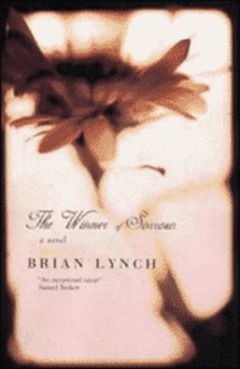
winnerofsorrow Brian Lynch’s novel The Winner of Sorrow (kindly sent to me as an ARC from Dalkey Archive Press) was originally published in 2005 in Ireland, and is now going to be released in the U.S. this coming February. It’s a fictional retelling of the life of William Cowper (pronounced Cooper), an eighteenth-century British poet.  My studies in the field never took me very far into Cowper’s work, so I came to this novel ready to learn more about the poet and his times, which I did, and I also found a very enjoyable novel, all personal interest in the eighteenth century aside.

Cowper doesn’t get read a lot today, but he was influential and popular in his time and afterward (Jane Austen quoted him in several novels) and in a lot of ways he’s a typically Romantic figure — the poetic genius suffering from depression and teetering on the edge of madness.  In other ways, he’s not at all: he was a devout evanglical and wrote many hymns.  He lived from 1731-1800 and so is solidly an eighteenth-century writer, but many of his interests and preoccupations were picked up by later Romantic writers (a love of nature and animals in particular).

Lynch does a good job of squeezing an entire life into a novel that’s around 360 pages; he begins with Cowper as a old man suffering from insanity, and then he shifts back and forth between old Cowper and young Cowper, eventually settling into the story of the younger man and moving us forward in time.  These shifts require some careful attention, and in fact the novel is full of jumps in time of various sorts without a whole lot of connecting material, but these jumps help you see connections among the various episodes in his life.

In Lynch’s telling, Cowper’s life was shaped by a few important events, including the early death of his mother and his sexual impotence.  In 1763 when he was 32, he had a mental breakdown, attempted suicide several times, and was sent to an asylum to recover.  Afterwards, he settled with the Unwin family and spent much of the rest of his life with Mary Unwin, whose husband died early, leaving the two of them to form a socially suspicious alliance that never quite ended in marriage.  Mary Unwin, according to Lynch, was a mix of the long-lost mother figure and the forbidden bride, a version of the cousin Cowper was once engaged to but couldn’t quite marry either.  Unwin was fiercely loyal to Cowper, longing for a more passionate relationship with him but making do with the affection he was able to offer.  She did her best to fend off the other women who were drawn to Cowper, including a Lady Anna Austen and Lady Hesketh, sister of the beloved cousin.  There was clearly something powerfully attractive about Cowper, because in spite of his depressive tendencies and his complex relationships, he was surrounded by people who desperately wanted to be a part of his life.

As you can see, Cowper is a psychoanalyst’s dream, but Lynch never beats you over the head with facile explanations or easy conclusions.  He also recreates a feeling of the time without going overboard with period detail; this is historical fiction, but it doesn’t feel like a lot of the historical novels I’ve read that pack the detail in to make sure you smell every authentic smell.  Rather, you get a sense of the time from the characters themselves — their thoughts and conversations and letters.  You can tell that Lynch is a poet himself from the way the writing is spare and beautiful, capable of communicating so much in a small space.  He leaves room for you to make connections and put ideas together.  The novel tends to work through juxtaposition; its short chapters ask readers to situate themselves in the story again and again, without providing much to ease the transition into a new scene with new characters.  This can be jarring, but it’s also exhilarating — this is a novel that asks something of the reader but has much to offer too.

13 Comments

Filed under Books, Fiction

Notes for a Friday

  • I hope everybody who celebrates Thanksgiving had a great day!  And I hope everyone who doesn’t had a great day too!  Hobgoblin and I stayed home, as we usually do, and celebrated Thanksgiving all on our own, with a little help from Muttboy, who really, really likes the Cornish game hens Hobgoblin cooked up (as did we).  We finished our meal with a brownie sundae, which may not be traditional Thanksgiving food, but was delicious anyway.  I just had another one, in fact.  Even all the riding, running, and swimming I’ve been doing hasn’t made up for all the calories I’ve been taking in …
  • Speaking of riding, running, and swimming, my training has been going well, in spite of lingering hamstring/hip area soreness.  I took a week entirely off from training a couple weeks ago, mostly because that’s what you’re supposed to do in the off season, but also to see if my aches and pains would go away.  They didn’t, but they also seem to be getting better, in spite of the fact that I’ve been training regularly for two weeks now.  I just have to wait it out, I suppose.
  • But in spite of the soreness, I’ve been having fun doing all the training.  I’m especially pleased with my running — I’m not running far, only about 3.25 miles right now, but my foot injury hasn’t returned, and I’m able to build up slowly and it all feels fine.  Yay!  My sister completed a marathon a couple weeks ago, and my brother has run one too, and I really want to follow in their footsteps.
  • This afternoon I went on a group ride with people from my cycling club, followed by a party at the bike shop.  The party was fine (although I’m not a rider who can talk about bikes for hours on end), and the group ride was good too, except that if it’s a large, mixed group (mixed in terms of experience level), I tend to spend too much time worrying about people who have trouble riding in a straight line or who like to ride in the middle of the road.  Why do people like to ride in the middle of the road?
  • I’m about to finish a novel about the 18C poet William Cowper, The Winner of Sorrow by Brian Lynch.  It’s fascinating and is teaching me way more than I ever knew about Cowper.  I think I’d like to read more of his poetry at some point.  More on that later.
  • When I’ve finished the Cowper book, I’m going to pick up my next book club book (not the mystery club this time around), Diane Ackerman’s The Zookeeper’s Wife. According to the publisher, the book is “a true story in which the keepers of the Warsaw zoo saved hundreds of people from Nazi hands.”  I’m also going to be starting William Gaddis’s The Recognitions as part of Litlove’s reading group.  The group website is here; it’s not too late to join if this sounds interesting!  (The reading begins December 1st.)
  • I also found out what my next mystery group book will be: Arthur Conan Doyle’s  “A Study in Scarlet” and “The Sign of the Four.”  I read some Sherlock Holmes mysteries when I was a kid, but not many, and I don’t remember any of them, so I’m going to assume I’ve never read these.  I’m looking forward to reading some early writing in the genre.
  • Okay, now I’m off to finish my Cowper book …

10 Comments

Filed under Books, Cycling, Fiction, Life, Nonfiction, Reading

Overbooked

I’ve felt a little overwhelmed by books and book news lately.  This is not to say that I haven’t wanted to read, but that I feel like I can’t take in any more information about books.  And I’m even reaching a point where I’m not all that interested in buying new books.  I have plenty of excellent books at home after all.  I’m happy to look through bookstores as usual, but that’s not because I want to buy more books or learn about new authors; it’s because it’s fun to be reminded of the authors I already know about.

Have you had this problem before?  The issue is that I have access to SO MUCH information that it’s become too much to handle.  I’m sorry to say it, but I don’t want to know about wonderful new authors or amazing new novels. I haven’t added anything to my wishlist in a long time.  In fact, I’m more likely to look over my wishlist and take books off that no longer sound interesting.

It’s a problem of information overload and also one of time; I’m not sure I would feel this way if I weren’t also feeling overwhelmed by things going on at work and by all the triathlon training I’m doing.  With everything else that is happening, I don’t have time to process information about new books and I don’t have energy for it either.

I do think this is a passing feeling though.  I’ll get my energy back for the book reviews and news again.  But right now I’d rather just tune out all the book buzz and focus on reading instead.

15 Comments

Filed under Books

Ian Rankin’s The Falls

My mystery book club met last night to discuss Ian Rankin’s novel The Falls, and it was very well received; some people had a quibble or two with this or that, but the consensus was that this book is one of the best we have read so far, in competition with Dashiell Hammett’s The Glass Key for the very best.

I had a great time reading the novel.  I often find it to be the case that when I read good mysteries, the mystery itself isn’t the main pleasure.  The novel did offer a very good story, but I liked the world Rankin has created and the characters who live in that world even more.  It’s set in Edinburgh, and the city is like a character itself; it’s a gloomy, slightly depressed place that is haunted by history but is also in the midst of change that leaves the characters unsettled.  The city’s history is rich, but that history is different for each character — it’s like every person is living in a slightly different place.  While the curator and historian Jean sees ghosts of the city’s famous residents, the main character, Rebus, sees a more personal history — that of crimes committed and bodies found.  Each person in the novel seems haunted by something; the more fortunate characters are haunted merely by the ghosts of past residents instead of by somebody or something more personally ominous.

Rebus is a great mystery-novel hero, or anti-hero, perhaps.  In this novel he is getting on in age, seeing old friends retire and realizing that he is not far off from retirement himself.  His demons are only hinted at in this novel (although those stories may be more fully developed in earlier books), but we learn about an ex-wife and a daughter who is out of the picture at the moment.  And we learn a lot about his drinking.  He cannot walk down a city street without thinking about the pubs he could walk into — and probably will walk into, soon enough.  In one particularly low moment, he shows up at a suspect’s house drunk, and gets himself in some serious trouble at work.

Rebus is someone no one in the police force knows quite what to do with; he is an unreliable partner and a perpetual problem for his supervisors.  He doesn’t care enough about the rules to bother following them, and although he does want to solve his cases, he is going to make sure he does it in his own way, on his own time.  He isn’t even all that great at what he does, at least often he’s not; he’s more likely to stumble into discoveries rather than think his way towards them.

But all this doesn’t mean that he’s unlikeable — far from it.  He’s the kind of person you like almost in spite of yourself.  He inspires these same mixed feelings in his colleagues; one of the most important ones, Siobhan, struggles with the degree to which she is following in Rebus’s footsteps.  She admires his independence, but at the same time sees that working like Rebus does is no way to advance in her job.

But does she want to advance in her job?  The book is very much about office politics, as well as murders and personal demons; Rebus’s colleague are richly described, especially the tension they feel between their ambition and their awareness that career advancement comes with a cost.  Success can mean separation from old friends and the pressure to become more careful, more polished, less open than the others.

I suspect that Rebus is even more fun to read about in series form rather than in an individual novel; book group members who had read more than one Rankin novel said that as you read more, Rebus’s world becomes even more richly described.  It’s a good thing I have two more Rankin novels on hand, and that a local used bookstore owner has informed me they have plenty in stock.  I may not get to more Rankin novels soon, but I will make sure to get back to them sooner or later.

7 Comments

Filed under Books

Consider the Lobster

I finished David Foster Wallace’s collection of essays Consider the Lobster last night, and am ready to pick up more of his work soon.  In case you haven’t noticed, I’ve been raving about this book for a while now, which you can read about here, here, and here.

The last essay in the collection is a memorable one.  It’s called “Host,” and is about the conservative talk radio host John Ziegler who, at the time the essay was written, had a show at the Southern California radio station KFI.  The essay describes the environment in which Ziegler works, the ways his show gets put together, the kind of person and talk show personality Ziegler is, the state of contemporary talk radio, and the state of conservativism in America.  The essay does what a great essay should do — it tells a good story, combines personal narrative with larger social/political/cultural issues, and has something smart to say.  One of the points (among many, many others) Wallace makes is that conservatives dominate the radio talk show world because they tend to have a simpler, more straightforward black and white view of the world which is easier to talk about and easier to understand and therefore makes better radio.  Liberals are more inclined to be nuanced and about shades of grey, and that’s just not as exciting.

What makes the essay memorable, though, is the way this liberal nuance and shades-of-grey type of thought is represented in the essay itself.  Instead of using footnotes, which all the other essays in the collection have in abundance, Wallace puts what might be footnote material in boxes that are scattered across the pages, with arrows that point from the word that would normally have a footnote next to it to the appropriate box.  Sometimes there are arrows leading you from one box to another, and sometimes to another one after that.  There isn’t a page in the essay that is laid out in the usual way, with one interrupted block of text; instead, each page has at least one inset box with accompanying arrow.  Many of these boxes begin with labels such as “Editorial material” or “Rather less editorial than it might be” or “Informative + Editorial” or “Just the sort of paralytic dithering that makes the moral clarity of ‘we’re better than they are’ so appealing.”

So as you read, your eye gets drawn across the page in unusual ways, and as you work your way toward the end of a sentence, your progress is interrupted by this box and that box — by a clarification or an elaboration or an objection or a complication — and you find yourself in a jumble of ideas that is as exciting as it can be disorienting.  What is all becomes, I think, is a representation of complicated thought, a picture of a mind working its way through a maze of ideas.  It’s kind of the anti-talk radio.  (I see, interestingly enough, that there is an audio version of this essay collection available, but it’s abridged, and I don’t know if it includes this essay.  I do wonder how anyone would read it and what it would be like to listen to it.)

At first I found this layout distracting and I wasn’t sure I would like it, but as I got further in the essay, I got into the rhythm of moving back and forth from the main text to the boxes.  What reading this essay requires is the ability to hold a bunch of stuff in your head at once, because if you read all the boxes that accompany each sentence, it can take a very long time to get from the beginning to the end of each one.  Sometimes you have to read the equivalent of a page or so of boxed text to get to the end of one single sentence.  This can be mentally taxing, but it’s also exciting.  You could even say it’s stimulating — a word that happens to be very important for John Ziegler and his talk show world.  Ziegler’s goal is to be as stimulating as possible, to get his listeners so riled up they won’t move away from their radios and may even be inspired to call in to the show.  But while Ziegler wants to stimulate your emotions, particularly feelings of anger and outrage, Wallace would much rather stimulate your brain.

Writing an essay like this is dangerous — it’s easy to dismiss as gimicky and contrived.  But I think it works.  It’s clear that Wallace is appalled by much of what he sees in the talk radio world, but the essay doesn’t critique it directly.  Instead, he lets the evidence speak for itself, and he lets the organization of the essay speak for itself too — and what it says is that careful, nuanced, layered thought is a very good thing.

7 Comments

Filed under Books, Nonfiction

Essays in Idleness

I’m sorry to say I was disappointed by Kenko’s Essays in Idleness. I loved the book’s prologue, which I’ve quoted on my sidebar, and I had high hopes that I would enjoy reading Kenko’s “nonsensical thoughts,” but too often I found them inscrutable, dull, or annoying.

I couldn’t help but compare Kenko’s work (from the 14th century) to Sei Shonagon’s earlier (10th century) Pillow Book, and find it lacking.  Everyone else makes this comparison too, or at least the writer of the introduction to my edition did, and Kenko himself had Shonagon in mind when he wrote his work.  The writers are doing something similar — they both record their observations of society, their thoughts about political and religious figures, the interesting gossip they have heard.  But Shonagon is witty in a way that Kenko is not, and her occasional mean spiritedness is highly entertaining, while Kenko is more inclined to be serious and a little stuffy.  Shonagon has her odd moments too, but the rest of the work more than made up for those.

I am glad I read Kenko, however, if only for a glimpse into a society radically different from ours.  Kenko was a Buddhist priest, and many of his essays touch on Buddhist beliefs such as the impermanence of all things and the pain caused by attachment to the material world.  Some of the better essays describe the beauty to be found in impermanence and imperfection:

Are we to look at cherry blossoms only in full bloom, the moon only when it is cloudless?  To long for the moon while looking on the rain, to lower the blinds and be unaware of the passing of the spring — these are even more deeply moving.  Branches about to blossom or gardens strewn with faded flowers are worthier of our admiration.  Are poems written on such themes as “Going to view the cherry blossoms only to find they had scattered” or “On being prevented from visiting the blossoms” inferior to those on “Seeing the blossoms”?  People commonly regret that the cherry blossoms scatter or that the moon sinks in the sky, and this is natural; but only an exceptionally insensitive man would say, “This branch and that branch have lost their blossoms.  There is nothing worth seeing now.”

I would have liked the book more had there been more passages like the above, and fewer about, say, the uselessness of women.  But even harder to deal with than the misogyny, which is part of the culture, after all, is that so many of the essays simply don’t make sense to me.  They too often tell stories the significance of which I don’t grasp, and I’m left shrugging my shoulders and thinking that it must have meant something to people at the time.  Perhaps I could have found an edition with better notes that would fill in some of the information I’m missing, so this could simply be an editorial problem, but I fared better in this respect with The Pillow Book, which also didn’t have extensive notes.

But then there are essays like this one (“essay” isn’t the right word, since the passage is so short, but it will have to do), quoted in full:

A certain hermit once said, “There is one thing that even I, who have no worldly entanglements, would be sorry to give up, the beauty of the sky.”  I can understand why he should have felt that way.

And I can understand this too.  Reading a book that is so far removed from our day and time as to be completely incomprehensible would make no sense, but there is surely a value in reading a book that has its beautiful moments but its bizarre and disorienting ones too.  Even if I sometimes got frustrated at what I wasn’t following, I was aware at getting a glimpse into a world far from mine, and I’m glad I could experience that.  There has to be a reason, after all, that this book remains in print and that people still read it.

9 Comments

Filed under Books, Nonfiction

The blogger meet-up

Yesterday I spent the day with an international group of bloggers, and what fun it was! Okay, most of us were from the U.S., and the majority of us were from Connecticut, but we did have one person from Germany, one from Indiana, and one from Pennsylvania.

It was Charlotte, Cam, Emily, Becky, Marcy, Hobgoblin, and I, and we met at the Hungarian Pastry Shop, right across the street from the magnificent St. John the Divine cathedral.  This was my first meeting with Charlotte and Cam; I’d seen pictures of Charlotte on her blog, so I recognized her right away when I saw her with the group, but none of us knew what Cam looked like, so we had to keep an eye out for someone who looked like she was keeping an eye out for us.  We all felt a little relieved when we found each other and the group was complete.

The pastry shop was cute, cozy, and crowded, and it looked like we might have to stand, but we managed to find some tables to put together and got down to getting to know each other a bit.  I’ve had a few experiences of meeting bloggers in person now, but it continues to feel just a bit strange — in a good, fun way of course.  It takes a little time to adjust the mental image I have of a person with the reality and to settle into a new way of communicating — in real time, with real conversation, instead of the slow pace of blog posting and commenting.  And it’s a little odd trying to keep straight what fellow bloggers know and don’t know about me, what I’ve posted about and what I haven’t, and it’s even odder when I’m with such a mixed group — one person who knows me mainly in real life but gets some information about me from the blog (Hobgoblin); a few people with whom I interact more often online than off, but with whom I do have a face-to-face friendship (Becky, Emily, and Marcy); and two people who up until that moment I had known exclusively through blogging but now had a chance to talk with in real life.  What a mix of histories and relationships!  It’s mildly disorienting (in a good way!).

So, after some time in the pastry shop, we headed off to The Strand (in a cab that made me car sick, which I guess is about right, given what NYC traffic is like and the way cabbies drive), one of the best bookshops around.  Here we lost ourselves in books for an hour or two.  I headed straight for the literary nonfiction section and spent the entire time checking out literary biographies and essay collections.  I loved browsing through the books, but I wasn’t in a mood to buy many — oddly enough; it does happen sometimes though — and found only one I couldn’t resist, Janet Malcolm’s book about Gertrude Stein and Alice Toklas, Two Lives.

Afterward, we all assembled out on the street and shared our finds, and then got lunch, enjoying mimosas and macaroni and cheese while listening to a lot of Depeche Mode (Hobgoblin was able to tell us the year each and every song was released, having a good memory that way).

At that point we were feeling ready for an afternoon nap, and some of us decided to head home and take one, while everybody else hopped on the subway for one final trip, this time to The Mysterious Bookshop.  This is a marvelous store, with a mix of new and used books, and lots of books signed by their authors.  Again I didn’t find anything I couldn’t live without, but I happily looked through the shelves, thinking about all the Ian Rankin, Elizabeth George, Ruth Rendell, Henning Mankell, etc., etc. books I have to look forward to reading.

And then we went our separate ways, tired but happy, having had a great time and collected a lot of books. It’s marvelous to meet fellow book bloggers — you may be very different people but you automatically have a lot in common because of the hobby you share — and I highly recommend it!

15 Comments

Filed under Blogging, Books, Life

Another fun distraction

So as you can see if you check out my sidebar, I’m playing around with a brand new Twitter account. I have no idea how it will go and if I will like it or not, but it’s tempted me for long enough I have to give it a try. So if you are another Twitter user, let me know!

Oh, I’m using my real name for this Twitter experiment. You may or may not know that my name isn’t really Dorothy; if you’re curious about my real name and don’t know if already, just click on the Twitter link and find out! I’m beginning to wonder if I should drop the pseudonym at some point, but I’m not sure I want to blog as myself; I kind of like blogging as Dorothy …

9 Comments

Filed under Life

The Eustace Diamonds

I’m never going to be a huge, huge Trollope fan — George Eliot will probably always remain my favorite Victorian novelist — but I’m very glad there are all those Trollope novels out there for when I’m in the mood for a good long story.  Sometimes I want nothing more than to immerse myself in a novel that will take two or three weeks to read, and it’s just fine that that novel isn’t written by my favorite Victorian novelist.  Too much George Eliot could weigh a person down after a while.

As I think about The Eustace Diamonds, I’m struck by how much it had to say about the darker side of human nature.  There aren’t many characters worthy of admiration, and those who are worthy of admiration are dull.  Lucy Morris is an absolutely angelic character, of the sort you see a lot in eighteenth-century novels where having an angelic heroine was practically a requirement — for respectable novelists at least — but Lucy is by no means the center of attention.  She is a foil for the more complicated female characters and a plot device that highlights the foolishness of her love interest, but she is hardly interesting in and of herself.

The true center of the novel is Lizzy Eustace, a young woman who, the narrator makes clear, should never, ever be trusted.  She is beautiful and charming, but she tells lies and manipulates people and deceives even herself.  Her husband, Sir Florian Eustace, has died, leaving her in possession of the extremely valuable Eustace diamonds.  The Eustace family says that the diamonds belong to the family as an heirloom and they would now like them back, but Lizzy doesn’t want to return them, and so she claims, falsely, that her husband gave them to her as a gift.  When she learns that he bequeathed her everything in his home in Scotland, she claims, again falsely, that he gave them to her while they were in Scotland and so they are part of her inheritance.

And thus begins a struggle between Lizzy and the Eustace family lawyer that will take up the rest of the book.  In one extraordinary scene, Lizzy travels to London carrying the diamonds in a heavy, cumbersome safe.  While she and her traveling party are staying overnight in a hotel, the safe is stolen, but what Lizzy doesn’t tell anybody is that she had taken the diamonds out of the safe and hidden them under her pillow.  At first her reasons for keeping this secret are relatively innocent — she is initially confused and then she feels silly for carrying around an empty safe — but she quickly realizes that she might benefit by making people believe that her diamonds had been stolen.  This might be a way to win the battle with the Eustace family.  So she keeps her secret and her deceptions become worse and worse.

Lizzy’s deceitfulness is only the worst example of flawed humanity in a book that’s full of such examples.  Lizzy’s so-called friends take advantage of her as much as she takes advantage of them.  Lucy Morris’s lover finds himself almost irresistably drawn toward Lizzy and is in danger of betraying the woman he has asked to be his wife.  And in one of the novel’s most interesting subplots, a penniless young woman who would like nothing more than to never marry anyone ever, is pushed and threatened and badgered into an engagement that drives her insane, literally.

In the world of this novel, unless you are an angel like Lucy, you are most likely hopefully foolish, heartlessly mercenary, or stupidly obedient to the dictates of a corrupt society.  There are hardly any happy marriages or true friends in this book.  Lucy Morris’s example only highlights everyone else’s corruption.

I prefer to think that the world is not as Trollope describes it, and that if people like Lucy don’t often exist, as least people like her lover, who does show signs that he can overcome his foolishness and selfishness, are common enough.  But I’m uneasily aware that I can be a little naïve.  I don’t want to become jaded and cynical, but The Eustace Diamonds is a good reminder that there are plenty of reasons to be a little mistrustful now and then.

6 Comments

Filed under Books, Fiction

Campaigns past and present

I may end up writing about a lot of the essays in David Foster Wallace’s collection Consider the Lobster; at the very least, I’ve come across another fabulous essay I want to tell you about.  It’s called “Up, Simba” and is about John McCain’s run for the Republican nomination for president in 2000.  It’s an interesting essay in and of itself, but it takes on a new significance after what happened in this year’s campaign.  Knowing what’s in store for McCain in the future makes reading this essay from 2000 a complicated experience.

Wallace covers a week of McCain’s 2000 campaign, from February 7 – 13, which is the week right after he won the New Hampshire primary and just before he lost South Carolina.  McCain and Bush had promised each other they wouldn’t go negative, but during this week those promises get shot to hell — Bush makes the first negative move, McCain retaliates with something harsher, Bush accuses him of breaking his promise, and pretty soon the campaigns are negative through and through.

Wallace gets to follow along and watch all this happen close up; while McCain and his team ride around in the Straight Talk Express, members of the press travel in buses called Bullshit I and Bullshit 2, and it’s here that Wallace observes the reporters and tech people as they file their reports and keep the press machinery running.  It’s a great story he tells, a fun inside look at just how horrid the campaign trail is, with its repetitiveness, its frequent dullness, and its awful food and few opportunities to sleep.

It was Rolling Stone who asked Wallace to write about the campaign, so Wallace shapes the essay for young people, wondering as he writes why young people are so disengaged from politics.  He argues that it has to do with their anger and sadness at being lied to, compounded by the fact that not only are they lied to by politicians, but are also lied to by the media on a constant basis, and so they see no reason to believe anybody about anything.  There are also no real leaders, people who can inspire them in a genuine way to care about anything beyond their own lives.

The basis of the essay is Wallace’s question about whether McCain might possibly be such an inspirational leader himself.  This question isn’t answered — it’s more of a puzzle Wallace works at through the entire piece and doesn’t quite solve — but it seems like a possibility to him, given McCain’s reputation for forthrightness, and also given his heroic actions in Vietnam, which Wallace recounts in chilling detail.  It’s seems just possible that McCain might be the kind of candidate who can also be an anti-candidate, someone who runs for office but insists on doing it in his own unconventional way and who challenges the basis on which most campaigns are run.  Wallace is tempted to believe in McCain … but he has niggling doubts too, doubts about whether actions that seem honest and even impulsive aren’t really calculating and cold.

So, knowing what we now know about how McCain ran his campaign this time around, you can see how this essay has morphed into an entirely different thing.  Instead of being an essay about possibility (however briefly held — McCain’s 2000 campaign was just about over when Wallace wrote the essay), it becomes something much sadder.  Whatever it was that made McCain decide to run such a nasty campaign this past fall, that campaign seems like a betrayal of the earlier version of McCain who at least could possibly have been an inspirational and transformative figure (I’m setting party politics aside here — obviously he’s not going to be inspiring if you don’t agree with his policies).  It’s hard to imagine the 2008 version of McCain making anybody even a little less cynical about politics.  But maybe after all the 2000 version of McCain was just as capable of running a nasty campaign as he was this past fall, and maybe he tried to take the high road back then for tactical reasons rather than out of conviction.  It’s impossible to tell.

If anybody these days seems capable of taking some of the cynicism out of politics, of course, that would be Obama.  It remains to be seen how Obama’s presidency will work out, but I can’t help but hope that he really will be — will continue to be — the kind of inspirational figure Wallace was looking for.  It makes me wish Wallace had had the chance to follow Obama and write brilliantly about him too.

8 Comments

Filed under Books, Nonfiction

Hot Water

I finished listening to P.G. Wodehouse’s novel Hot Water the other day and became further convinced that listening to a book is fundamentally different than reading it, because while I loved listening to this book, I’m not sure I would have liked it any other way.  Perhaps this is because Hot Water is not Wodehouse’s best — it doesn’t have Wooster and Jeeves — but I suspect that even at his best a little Wodehouse would go a long way for me in book form.  On audio, though, he’s highly entertaining and funny.

I won’t bother to tell you much about the plot, except that it contains two sets of lovers who are woefully mismatched, a group of scoundels and thieves, a group of aristocrats who are scoundrels and thieves, one aristocrat pretending to be a servant, and an assortment of servants, some of whom are not servants at all.  They all eventually descend upon a chateau in France, some in search of jewels to steal, others in search of an incriminating, blackmail-worthy letter, and others simply in search of fun.  It all culminates in a funny scene where some people get what they want, while others slink off in shame, and the lovers get themselves properly sorted out.

It’s all funny and satisfying and completely predictable.  You’ll find lots of clichés — the impossible-to-please father; the greedy social climber who is hiding a secret past; the high-minded, cultured, snooty young woman who is thoroughly dull; the young athletic American who can’t keep himself out of trouble; the hard-drinking brutish French aristocrat; the burgler with principles and delicate scruples.  In book form, all this might have irritated me, and I might have wondered why I was spending my time on it.  When I want light reading, I don’t usually go for this sort.  But it was perfect for listening to in the car.  Everything is funnier when I’m listening as opposed to reading it, and a brisk pace and lots of action is always good.

The quality of an audiobook usually comes down to the quality of the reader, and this reader was excellent — it was Jonathan Cecil, and he did a marvelous job with all the accents, which included not only various sorts of English people and a standard American accent, but also a Brooklyn accent and a number of different faked French accents.  It was fun just listening to him switch from voice to voice (which makes me wonder how exactly these things get put together — do they read it all straight through, do they do bits and pieces and splice them together, do they do one character’s lines at a time?).

I’m not sure if my library has any more Wodehouse, but if they do, I’ll probably be checking them out.

7 Comments

Filed under Books, Fiction

A library celebration

In 2009 my local library will have been in existence for 100 years, and I’ve found myself on the committee that is planning a year’s worth of celebrations of the event.  How I got on this committee is a convoluted story involving Hobgoblin and cycling and people knowing people and things randomly coming up in conversation, but, anyway, we had our first meeting today.  It was interesting.  It was my first governmental meeting of any sort, and the chair took care to explain to me before we began that we had to follow Freedom of Information (FOI) Act rules and Robert’s Rules of Order and that only those who had been voted on and confirmed by the library’s Board of Directors could sit at the special table (which included me — I felt like such a grown-up).  Everybody else who was going to be on the committee but who hadn’t yet been confirmed had to sit in the chairs set aside for the public.  Also we aren’t allowed to have discussions on email because that would mean the public doesn’t have access to them, which violates FOI.  Oh, and we had to say the Pledge of Allegiance at the beginning of the meeting.

The meeting itself was devoted mainly to coming up with ideas of ways to celebrate.  The chair thought we might come up with 100 ways to match the 100 years of the library’s existence; many of these 100 things could be small things or things the library already does, and then some could be larger.  The chair had already listed a few things like signing up 100 new patrons of the library, signing up 100 new newsletter subscribers, have a kids read-a-thon, publishing a monthly article on library history, making posters about the library’s history, giving tours of the library, and picking a book for the entire town to read.  We came up with some more ideas like having a writing contest and soliciting ideas from the local schools on how the library can celebrate and finding a way to integrate things like National Poetry Month.  Now we’re supposed to brainstorm even more ideas.

So — any ideas out there on how a town can celebrate the centennial of its library?  Do you remember events your library has had, of any sort, that might be fun?  Any suggestions of a good book for a mass town reading?

11 Comments

Filed under Life

44

Woo-hoo!

13 Comments

Filed under Books

A funny essay about dictionaries

I never thought I’d laugh so much while reading an essay on dictionaries, but David Foster Wallace’s “Authority and American Usage” is really the funniest thing you’ll find on the subject.  It’s a review of Bryan Garner’s A Dictionary of Modern American Usage, but it’s much more than that — it’s also a personal essay, a discussion of the differences between and merits of prescriptivist and descriptivist approaches to language, a meditation on what it means to try to teach Standard Written English (SWE), a consideration of how we all use dialects and subdialects to negotiate our way around the world, and a bunch of other stuff too.

And Wallace makes it all exciting reading.  Before you even begin the essay itself, you will find a long list (in very small print) of violations of SWE, logic, and aesthetics that, we learn later, Wallace collected in a short period of observing and listening (the list begins: “Save up to 50% and more! Between you and I … The cause was due to numerous factors” and goes on and on).  Then early on in the essay, Wallace writes this wonderful sentence:

But the really salient and ingenious features of A Dictionary of Modern American Usage involve issues of rhetoric and ideology and style, and it is impossible to describe why these issues are important and why Garner’s management of them borders on genius without talking about the historical context in which ADMAU appears, and this context turns out to be a veritable hurricane of controversies involving everything from technical linguistics and public education to political ideology, and these controversies take a certain amount of time to unpack before their relation to what makes Garner’s dictionary so eminently worth your hard-earned reference-book dollar can even be established; and in fact there’s no way even to begin the whole harrowing polymeric discussion without first taking a moment to establish and define the highly colloquial term SNOOT.

I love how the long serious sentence eventually winds its way around to what is a very funny and unexpected word.  Snoots are, in one possible definition, “the sorts of people who feel that special blend of wincing despair and sneering superiority when they see EXPRESS LANE — 10 ITEMS OR LESS.”  If this is you, you might very well love this essay as much as I did.

Wallace tells stories of growing up in a family full of snoots, including the story of how his mother would pretend to have a coughing fit whenever one of her children made a usage error and would keep coughing until that child discovered the error and fixed it.  This is a family that made up songs about being snoots while driving in the car — actually, Wallace admits in a footnote to a footnote that he was the one who made up the song, and the first few lines went like this: “When idiots in this world appear / And fail to be concise or clear / And solecisms rend the ear / The cry goes up both far and near / For Blunderdog ….”

The essay covers a lot of intellectually deep territory — people like Saussure and Derrida and Wittgenstein get discussed — but Wallace’s writing is always charming, witty, and conversational.  The voice is very down-to-earth, very honest and self-revealing.  Wallace is not afraid let you laugh at him. There are a lot of footnotes and many footnotes on the footnotes and several interpolations and a semi-interpolation or two, and I love the way this creates a sense of back-and-forth, a feeling of dialogue, as though Wallace is so excited about the subject and has so much to say that it can’t be contained in the main text.

I think that rather than continuing to try to capture what it is I like about his writing, I’ll just quote a long passage and let you see for yourself:

Take, for example, the Descriptivist claim that so-called correct English usages like brought rather than brung and felt rather than feeled are arbitrary and restrictive and unfair and are supported only by custom and are (like irregular verbs in general) archaic and incommodious and an all-around pain in the ass.  Let us concede for the moment that these claims are 100 percent reasonable.  Then let’s talk about pants.  Trousers, slacks.  I suggest to you that having the so-called correct subthoracic clothing for US males be pants instead of skirts is arbitrary (lots of other cultures let men wear skirts), restrictive and unfair (US females get to wear either skirts or pants), based solely on archaic custom … and in certain ways not only incommodious but illogical (skirts are more comfortable than pants; pants ride up; pants are hot; pants can squish the ‘nads and reduce fertility; over time pants chafe and erode irrregular sections of men’s leg-hair and give older men hidious half-denuded legs; etc, etc).  Let us grant — as a thought experiment if nothing else — that these are all sensible and compelling objections to pants as an androsartorial norm.  Let us, in fact, in our minds and hearts say yes — shout yes — to the skirt, the kilt, the toga, the sarong, the jupe.  Let us dream of or even in our spare time work toward an America where nobody lays any arbitrary sumptuary prescriptions on anyone else and we can all go around as comfortable and aerated and unchafed and motile as we want.

And yet the fact remains that in the broad cultural mainstream of millennial America, men do not wear skirts.  If you, the reader, are a US male, and even if you share my personal objections to pants and dream as I do of a cool and genitally unsquishy American Tomorrow, the odds are still 99.9 percent that in 100 percent of public situations you wear pants/slacks/shorts/trunks.  More to the point, if you are a US male and also have a US male child, and if that child might happen to come to you one evening and announce his desire/intention to wear a skirt rather than pants to school the next day, I am 100 percent confident that you are going ot discourage him from doing so.  Strongly discourage him.  You could be a Molotov-tossing anti-pants radical or a kilt manufacturer or Dr. Steven Pinker himself — you’re going to stand over your kid and be prescriptive about an arbitrary, archaic, uncomfortable, and inconsequentially decorative piece of clothing.

And he goes on to make the point that just as US males will wear pants because society expects them to, in the same way we use a certain form of English because society expects us to, and we are judged by the form of English we use.  Language sends a message about who we are, and if we want to fit in and do well in society, we will send the right message.  So language descriptivists who say that the traditional rules of grammar are nothing more than fashion, “inconsequential decoration,” are completely missing the point.

Ted kindly pointed me to a fabulous profile of Wallace at Rolling Stone that tells the story of his struggle with depression and his suicide.  In a brief comparison of his fiction and nonfiction, it says his essays were “endless charming, they were the best friend you’d ever have, spotting everything, whispering jokes, sweeping you past what was irritating or boring or awful in humane style.”  This strikes me as exactly right.

11 Comments

Filed under Books

Book Notes

Litlove is tempting me to read William Gaddis’s The Recognitions with her and any others who are interested.  I’ve had this book on hand for a while now but have felt a bit too apprehensive about its difficulty to start it.  It’s long, which is not a problem, but when I start hearing about its complexity, I get a little nervous.  I do like to read challenging books, but … sometimes I have to get my courage up to do it.  But what better company can one have than Litlove?  Anybody else want to join in?

I have begun reading David Foster Wallace’s collection of essays Consider the Lobster, and so far I think it’s wonderful, although I haven’t gotten any further than the first three essays.  Speaking of long and difficult books, I am now more curious than ever about his novel Infinite Jest, which is something I will probably read one day but will have to get my courage up to do it.  Anyway, Wallace’s essayistic voice is one I particularly like; it’s very smart and also witty and conversational.

The subject matter isn’t always exactly what I would choose to read, if the author were somebody not quite so interesting — the first essay is about the Annual Adult Video News Awards, the porn industry’s equivalent of the Oscars — but I’m beginning to think that Wallace is someone I will like to read no matter what he’s writing about (and I’m sad there will be no more writing from him).  It seems that some people get all bothered by things like his use of footnotes (and footnotes on those footnotes) and titles such as “Some Remarks on Kafka’s Funniness, from Which Probably Not Enough Has Been Removed,” not liking that kind of playful postmodern style, but it works for me. I like the playful postmodern style as long as it stays playful and doesn’t wander over into pretentious and boring.

In those first three essays, he’s also got a review of an Updike novel, which is pretty scathing, but kindheartedly so, if such a thing is possible; I mean, he doesn’t like the novel, Toward the End of Time, but he would really like to like it, having liked Updike in the past, and his tone exudes a wistfulness for lost talent.  He’s also got the essay on Kafka’s funniness, which talks about how impossible it is to communicate that funniness to students.  He moves from descriptions of teaching into a discussion of what it is about American culture that makes it so hard for us to appreciate Kafka’s kind of humor:

The fact is that Kafka’s humor has almost none of the particular forms and codes of contemporary US amusement.  There’s no recursive wordplay or verbal stunt-pilotry, little in the way of wisecracks or mordant lampoon.  There is no body-function humor in Kafka, nor sexual entendre, nor stylized attempts to rebel by offending convention.  No Pynchonian slapstick with banana peels or rogue adenoids.  No Rothish priapism or Barthish meta-parody or Woody Allen-type kvetching.  There are none of the ba-bing-ba-bang reversals of modern sitcoms; nor are there precocious children or profane grandparents or cynically insurgent coworkers.  Perhaps most alien of all, Kafka’s authority figures are never just hollow buffoons to be ridiculed, but are always absurd and scary and sad all at once …

This gives you a taste of his writing, which is so full of energy you can feel it pouring out of his sentences.  His essayistic style seems similar to what I found in George Sanders’s The Braindead Megaphone, which I liked so much.

And finally, I’m very excited to be receiving an advanced copy of Brian Lynch’s novel The Winner of Sorrow, a historical novel about the 18C poet William Cowper. Here’s a description:

A fictional imagining of the gentle but troubled zealot William Cowper–best known as a precursor to Romantics such as Wordsworth and Burns–Brian Lynch’s The Winner of Sorrow brings to life the mind and times of an eighteenth-century poet … you’ll want to savor every word as Lynch traces Cowper’s tragic descent into madness, which is presented matter-of-factly so that the novel is not sentimental but austere, not precious but serious, and yet, remarkably, lively, sensuous, and blackly comic.

Sadly, I don’t know as much about Cowper as I should, but I’m very excited to read the novel and learn more.

16 Comments

Filed under Books, Fiction, Nonfiction, Reading