A lovely day

Yesterday was a lovely day, the kind of day that does a lot to pull one out of the winter blues, even if it means spending a little more time than is ideal in temperatures in the teens.  Hobgoblin and I spent the day in New Haven with some friends, visiting the Beinecke library and then browsing through bookshops.  It was the first time I’d visited the Beinecke Rare Book and Manuscript Library, and it turned out to be a lovely place to go — it’s a modern building with marble panels that let the light shine through so it feels light even though there aren’t many windows.  There are special exhibits open to the public that wrap around the outer edge of the building with the middle part taken up by stacks and stacks of very old books.  This middle section is behind glass, so you get a view of some of the shelves.

The main exhibit yesterday was about alchemy, so we saw old textbooks on the subject, some of them complete with charts and models and pictures of very early chemistry labs.  I particularly liked seeing books where the reader had taken notes in the margins (writing in books is a good thing!  People in the future will be interested in your marginal notations, maybe!).  My favorite comment was something like this: “There is neither worth nor merit to be found in this chapter.”  Ouch.  There is also a Gutenburg Bible on display, which was marvelous to look at.

After staring at old books for a while, we went off to find old-but-not-quite-so-old books at the Book Trader Cafe, and after a couple hours there (it’s not a huge store, but the selection is great), we spent another hour or so at Atticus Bookstore.  I had a grand time looking through the books and an even better time talking about them, but I was remarkably restrained and bought only two books.  When I came across Janet Malcolm’s Reading Chekhov: A Critical Journey I knew I would be bringing it home, given my developing Janet Malcolm obsession and Zhiv’s intriguing post on the subject.  I also couldn’t say no to the eighteenth-century novel Nature and Art by Elizabeth Inchbald.  I’ve read her novel A Simple Story and found it a very interesting treatment of mother/daughter relationships and problems with women’s education, and I’m looking forward to reading another of hers.

It was so cold yesterday, I really couldn’t help but have a couple lattes to help keep me warm, and those two large chocolate chip cookies I ate went so well with my coffee I couldn’t resist.  And what’s wrong with a little indulgence now and then, right?

12 Comments

Filed under Books, Life

Hmmm …

INTP – The Thinkers

The logical and analytical type. They are especially attuned to difficult creative and intellectual challenges and always look for something more complex to dig into. They are great at finding subtle connections between things and imagine far-reaching implications.

They enjoy working with complex things using a lot of concepts and imaginative models of reality. Since they are not very good at seeing and understanding the needs of other people, they might come across as arrogant, impatient and insensitive to people that need some time to understand what they are talking about.

___________________________________

That’s my result for the “What type is that blog?” test.  I like the idea of being logical and analytical, but am I really arrogant and insensitive?  Perhaps this analysis doesn’t include comments, where I think I’m pretty nice … Thanks to Litlove for the link.

13 Comments

Filed under Blogging

The Assistant

14724782 Many thanks for all the well-wishes offered in response to my existential crisis post — I find your comments very comforting!  True to my nature, I suppose, instead of going to see the upbeat Slumdog Millionaire today, I chose instead to see the much more serious and sad Doubt.  But it was a wonderful movie, and I find myself convinced that while sometimes escapist books and movies are what’s called for, at other times, meaty, serious works can help make a person feel less alone.
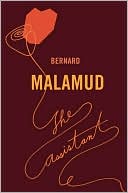
And I am very glad I read Bernard Malamud’s novel The Assistant, even if it is incredibly sad.  It’s a beautiful novel, and a nearly perfect one.  What’s memorable about it is the emotions it evokes in the reader — you come to care about the characters and the hardships they experience and you find yourself unable to put the book down even as you’re ready to cry at what’s happening.  The novel is also important for what it says about America and the immigrant experience in the 1950s (it was published in 1957).  In this book, America is not the land of promise for immigrants; instead, it’s a place where a lifetime’s hard work can land a person with exactly nothing.  The characters spend their entire lives mistrusted and viewed with suspicion, at the mercy of hostile strangers.  They are particularly vulnerable because they are Jewish and are surrounded by anti-semitism.

The novel tells the story of Morris Bober and his family; Morris owns a small grocery in Brooklyn, which he and his wife run, with some financial help from their 23-year-old daughter, who has a secretarial job in Manhattan.  The business has had its ups and downs, but lately business has been particularly bad, especially since a bigger grocery opened just around the corner.  Even the tenant living upstairs from the Bober’s cramped apartment sneaks out now and then to visit the new grocery.  Morris and his wife Ida work incredibly hard, keeping the shop open 16 hours a day, seven days a week.  Only occasionally on Jewish holidays did the family ever take an excursion together, but in recent years, Morris has stayed almost entirely on his small block, and almost entirely in his small store.

It’s a lonely, isolated, narrow life, but Bober sees little choice but to keep on living it.  Ida has been urging him to sell the store, but he despairs of finding a buyer and isn’t sure what he would do with his life if he could find one.  Their hope lies in their daughter, and specifically in their daughter making a good marriage.  She would like to go to college, but can’t afford it, although she has managed a couple night classes.  She is uninterested or uncertain about the few men she knows; she would like to get married and have a family, and she would also like to please her parents, but she also has dreams of finding a relationship based on intellectual equality and respect, and no such prospect has yet offered itself.

Into this situation walks the assistant, a young man named Frank Alpine, who looks as though he has seen some very rough times.  No one knows where he came from, although he has a vague story which later turns out to be a lie.  He starts hanging around the neighborhood looking for odd jobs and eventually Morris takes pity on him, although he soon enough learns that Frank has been stealing bread and milk from him.  But Morris is good-hearted and understands that Frank’s life has been hard, and soon enough, although Ida resists this as strongly as she possibly can, Frank becomes an assistant and works for room and board and very little pay.

From here on out, the novel’s tension builds, as Morris comes to depend more and more on Frank, but Ida never gives up her suspicions of his motives.  She is particularly worried about Frank’s interest in the daughter, Helen — she is terrified that Helen might fall in love with a non-Jewish man, and her fears seem to be confirmed when she catches the two of them spending time together.

I won’t describe the plot any further, except to say that Malamud does a wonderful job with Helen’s character; he describes her complicated feelings very well as she is drawn to Frank but aware of how little she knows about him and how little reason she has to trust him.

The feelings the characters have for each other and the situations they find themselves in are heart-wrenching, but it’s a satisfying kind of emotional roller-coaster, as everything about the book feels vital and true.  Reading this book you can’t help but feel that you’re in the hands of a master storyteller.

8 Comments

Filed under Books, Fiction

Existential crisis reading

I’ve been on a bit of an emotional roller coaster lately; I’ve been going through something like an existential crisis, for reasons there is no need to go into, except to say that I wouldn’t be surprised if a lot of people were experiencing something similar right now, given the state of the world, and this has made me think about how my reading relates to my emotional state. I’ve always thought of myself as someone who has no trouble reading depressing books, someone who can pick up bleak, despairing novels and come away from them filled with sorrow over injustice and sadness at suffering, but still able to put things in perspective and to figure out how to go on. I tend to think of sad books as offering bracing insights into the true nature of things, and I think of myself as someone who wants to know the truth about how things really are.

And I still believe these things about myself.  But my faith in my ability to read sad books has been put to the test lately, as I’ve matched my emotional roller coast experience with some incredibly sad books in such a way that has sent me reeling.  The sad books I’m talking about are Bernard Malamud’s The Assistant and Penelope Fitzgerald’s The Bookshop, both of which I enjoyed (I will write about them in more detail later) and both of which made me despair.  It’s funny the way sometimes your reading matches your mood, and sometimes this works in your favor and sometimes it doesn’t.  I didn’t know what I was getting into with either of these books (I read one because a friend gave it to me for Christmas and the other because it’s been on my shelves for a while and I thought a book about bookshops might be nice), but it turned out they both had something to say about things I’ve been pondering.  I appreciate that chance or fate or whatever is bringing along books that make me think and seem to speak to me personally, but sometimes this kind of convergence can be overwhelming, and this is one of those times.

I’ve always had ambivalent feelings about comfort reading; it’s fairly new, actually, for me to consciously turn to a book for comfort.  I mean, I found comfort in books and retreated to them when other parts of life were overwhelming, but I didn’t tend to pick up specific books that I thought would make me feel better.  I didn’t have the category “comfort reading” in mind when choosing a book.  I would reread books now and then, which is the closest thing to comfort reading I had, but I didn’t tend to think of that rereading in comforting terms — it was just something I did when I felt like it.

This has changed lately, largely due to hearing other people talk about comfort reads, and I’m more aware of choosing books for their comforting qualities and more likely to pick up something light when I feel I need to.  But still, in spite of knowing better, there’s a part of me that feels that if I pick up a comfort read I’m seeking an escape that’s too easy.  It’s one more manifestation of the curse of the puritan work ethic, I suppose, a work ethic I’ve been thoroughly, soundly, completely cursed with.

I have, you will probably be happy to know, recently picked up a comfort read, and many thanks to Musings from the Sofa for lending me a particularly good one — it’s E.F. Benson’s Queen Lucia, and so far it’s been a lot of fun.  It’s probably exactly what I need.  I think I’ll go read a bit of it and see if it makes me feel better.

16 Comments

Filed under Books, Life, Reading

Sherlock Holmes

My mystery book group read two Arthur Conan Doyle novellas for its last meeting: A Study in Scarlet and The Sign of Four.  I think I read some Sherlock Holmes when I was a kid because I remember the volume my father owned, and I remember  pulling it down off the shelves and reading at least some of it.  But I have no memory of the actual stories, so this is essentially a first reading.

It’s interesting to read the books now that I know at least a little something about the Victorian era, because they seem so much of their time.  They are obsessed with rationality and order, with list-making and codification and analysis, which suits a culture undergoing industrialization and running an empire.  But they are also obsessed with all that they feared could undermine these things, most especially with the dangerous, uncertain colonial periphery — a good chunk of A Study in Scarlet is about the Mormons out in the wild west of America (not colonial, obviously, but a threatening boundary area) and The Sign of Four uses the 1857 Indian mutiny as a backdrop.  I was interested in the fact that so much of A Study in Scarlet is given over to the Mormon story; in an abrupt, disorienting shift, you all the sudden find yourself whisked away from London out to the hot desert and suddenly you are reading a romance or what could be the plot of a western movie.  It’s as though the book didn’t quite know what it wanted to be, as though it’s trying to bring in as much material as it possibly can and tame it all and make it all make sense, and it only partially succeeds.

The books also seem very much of their time in terms of their narrative structure — the focus of the books seems to be Sherlock Holmes, but he isn’t the narrator and we don’t have an anonymous third person narrator who focuses closely on him.  Instead we have Watson, who, with the exception of the American section, tells us about Holmes from his own first-person perspective.  There is a distancing effect from what seems to be the main show, so instead of getting Holmes directly, we get him filtered through another character.  This reminds me of the structure of The Great Gatsby, but all the other models for this type of narrative that come to mind are 19th century — Frankenstein, Wuthering Heights, Jekyll and Hyde. This structure puts more emphasis on the relationships among the characters, so what is interesting about the Holmes books becomes the relationship between Watson and Holmes, rather than just Holmes himself.

And without Watson, Holmes would seem even odder and more bizarre than he already does.  He’s a manic-depressive drug addict, after all, and although his drug use was perfectly legal at the time, it still is a striking feature of his character.  He makes it clear that he solves mysteries in order to keep from falling into boredom and depression, and when he doesn’t have a case to keep his mind active, his drugs keep him from despair.  When Watson asks him if he is currently working on a case, this is his answer:

None.  Hence the cocaine.  I cannot live without brainwork.  What else is there to live for?  Stand at the window here.  Was ever such a dreary, dismal, unprofitable world?  See how the yellow fog swirls down the street and drifts across the dun-colored houses.  What could be more hopelessly prosaic and material?  What is the use of having powers, Doctor, when one has no field on which to exert them?  Crime is commonplace, existence is commonplace, and no qualities save those which are commonplace have any function upon earth.

Fortunately, right at that moment, the doorbell rings, and a young woman (a young woman Watson finds most interesting) enters with a new case.

Not only is Holmes someone who today would be on medication and in therapy (or at least someone would strongly encourage it), he has some very peculiar quirks, such as the fact that he is so focused on his work that he blocks out everything else that could possibly distract him from it.  So he knows next to nothing about literature and philosophy, because those won’t help him solve cases, but he knows everything there is to know about chemistry and law and footprints and the various types of cigar ash.

But Watson, who perhaps has his own peculiarities but is someone we can actually imagine knowing, instantly takes a liking to Holmes.  The two of them room happily together and work on cases together, and it’s this relationship that makes Holmes seem a little more approachable.

The more I think about this book, the odder it seems, and now as I’m writing this, I’m realizing that this quality of oddness-that-creeps-up-on-you is one I prize highly.  I turn to Sherlock Holmes expecting to find something that matches the cultural image many of us carry around in our heads, but instead I find something a lot stranger.  Fun.

10 Comments

Filed under Books, Fiction

The Great Mortality

mortality John Kelly’s The Great Mortality: An Intimate History of the Black Death, the Most Devastating Plague of All Time is a very good book in a horrifying kind of way.  I suppose that’s what inspired me to read it — to see just how horrifying a horrifying event can really be.  Much of the interest this book held for me came simply from learning a little more about what life was like during the middle ages.  There’s something disturbingly enjoyable about learning how people in earlier times lived, especially in times as far from ours as the 14th century — to think about the isolated villages, the stinking cities, the primitive homes, the sharing of houses with farm animals, the near-complete absence of bathing, the lack of modern medicine.

But learning about the plague itself was fascinating too.  Kelly gets repetitious at times, but generally he does a good job telling the story of how and where the plague developed (or at least our current theories on the subject) and how it spread through Europe and Asia.  He covers the science of it pretty thoroughly — how the virus works, what it does to bodies (horrifying), how it travels — and then looks at various regions of Europe, telling how the plague affected each place differently and describing the various ways people responded to it.  Often this meant vicious anti-Semitism; Kelly tells of groups of people called Flagellants, for example, who traveled around whipping themselves and killing Jews, in the hope that this would somehow save them.

I was glad for all the information Kelly offered on what life in the 14th century was like, but I found myself particularly fascinated by the larger sweep of history he described.  He told the story of collapse after the fall of the Roman Empire, a period when the population dropped and plague was uncommon because it was harder for the virus to travel when fewer people were around.  This was followed by a period of resurgence, when the population slowly grew, more and more farming took place, more food was grown, and living standards rose.  But by the 14th century, the population was becoming too large for the amount of food people could produce and things began to stagnate.  Not only that, but temperatures began to drop and the climate became unstable.  These developments caused a lot of death and suffering themselves, and then the plague came along to make an awful situation that much worse.  Kelly talks of mortality rates as high as 60-70% in some places.  He says that many areas of Europe lost so much of its population that the numbers didn’t get back to their pre-plague levels until the 19th century.

I found this history of the up and down fortunes of Europe to be so compelling partly because we are living in such uncertain times ourselves and it’s interesting to think about how people in earlier times handled the uncertainty.  It makes me wonder how people will write the history of our times (and it makes me annoyed to realize I’ll never know).  It’s also easy to think of the vast sweep of human history as moving generally in the direction of improvement — the population steadily goes up, science and medicine steadily improve, we gradually become more and more tolerant and enlightened.  But that’s not true, obviously, and something as out of our control as climate (oh, wait — something that used to be out of our control) can easily disrupt our always-tenuous civilization.

I seem to have a knack lately for choosing depressing books — I’m glad I read this one, and I generally have no problem whatsoever with depressing books, but with doom and gloom in the news these days, it’s probably not the best time for them.  I suppose I could be grateful that we’re not experiencing anything as horrible as the mass deaths of the plague, but my mind doesn’t work that way.  Instead, I just get sad at all the suffering out there and the senselessness of it all.  I will never go back to being a believer, but there are times I miss the sense that there’s a God out there watching over everything.  But the idea that there’s a God out there watching over everything makes no sense at all, so I don’t really want to believe it.

Okay, time something light to read, right?

14 Comments

Filed under Books, Nonfiction

Everything Passes

I’m a bit behind on my reviews, which is odd for me, as I don’t usually read enough to have trouble writing about everything I read, in one form or another.  Part of the problem, though, is that I need to write about Gabriel Josipovici’s extremely short novel Everything Passes, and I find myself at a loss for words.  I’m tempted just to link to Litlove’s post on the book and leave it at that — her review does the job wonderfully well and I’m not sure what I can add.

But, I suppose, in addition to linking to Litlove’s post, I can also describe the book a bit.  It’s incredibly short — really short story-length rather than novel or even novella-length.  It’s 60 pages, but there is so much white space that the text itself is quite short.  I read it in maybe half an hour, and that was taking it slowly.  I read it twice in the same evening.  Added to the book’s brevity is the fact that there is a lot of repetition, which means that Josipovici uses even less space to tell his story than is immediately apparent.  The repetition takes the form of a refrain returned to again and again, with some variations:

A room.

He stands at the window.

And a voice says: Everything passes.  The good and the bad.  The joy and the sorrow.

Everything passes.

It’s in between repetitions and variations on this passage that Josipovici finds a way to tell his story.

In spite of its brevity, the book gives you a full picture of the main character, Felix’s, life.  We know something about his children, his wives, his friends, and his work.  Josipovici gives hardly any detail about Felix or his family, but he still creates a sense of fullness, as though we have seen and understood all we need to know about the full sweep of the character’s life.  This book shows that you don’t need a lot of nitty-gritty detail to create that sense of completeness and fullness — you can tell a story that feels rich by using broad brushstrokes and letting readers use their imaginations and their emotions to complete it.

It’s no surprise that a book that departs so radically from general expectations of what a novel or a novella is takes up the issue of the purpose and form of fiction directly.  Felix has thought much about Rabelais and his fictional innovations.  Rabelais, he claims, is the first to realize that the innovations in printing and publication of his time meant that he was no longer writing for an audience he knew, but instead was writing for strangers.  Given the growth of mass publication, he couldn’t know his audience personally as Shakespeare might have or as anybody who wrote for a patron might have.  This meant he wrote in an entirely different way:

Rabelais invented modern prose fiction.  And no one really understood what he was up to for the next four hundred years, except for a few kindred spirits like Cervantes and Sterne.  I want to make our culture aware of what he sensed and how he responded to the crisis of his time, which is also the crisis of our time.  I want to sweep away the popular image of Rabelais as a writer of bawdy stories and nothing else.  I want to make people aware of the issues he faced and so clear the ground for a genuine renewal of fiction writing in our day.

These are Felix’s thoughts, but it seems as though Josipovici is asking his own readers to consider what Rabelais accomplished and how he himself is trying to respond to changing circumstances by creating a new kind of fiction.

Josipovici’s own fiction is quiet and spare — he has pared down a story as far as it can possibly be pared down and yet it still has the power to move and surprise.  He shows how a writer, with the help of sympathetic, willing readers, can do so much with so few words.

7 Comments

Filed under Books, Fiction

Lady Audley’s Secret

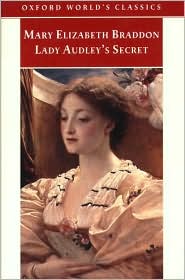
14568278 I finished Mary Elizabeth Braddon’s 1862 novel Lady Audley’s Secret and felt that I had enjoyed every minute of it.  I described it to someone as trashy Victorian fiction, but that description can too easily be misleading — the book is an example of Victorian sensational fiction, dealing with deception, bigamy, madness and a whole bunch of other exciting things, but it’s not a throw-away novel meant merely to titillate.  There are a whole lot of interesting ideas that come out of the book too.

I was surprised at one aspect of the book’s structure — the fact that Lady Audley’s secret isn’t much of a secret and you figure out what it is very early on.  There are some things you don’t find out until the end of the book, but the basics of the plot are no surprise at all.  What makes the book interesting is not what the secret is, but how the characters go about discovering the secret. This sounds like it might be dull, but it’s not at all — the hunt for the truth is exciting in and of itself.

That secret has to do with Lady Audley’s past — before becoming Lady Audley she worked as a governess and before that, nobody knows much at all.  The other part of the plot has to do with George Talboys, a young man without any money who left his wife and child, both of whom he loved dearly, in England to go find his fortune abroad.  This takes him much longer than he expected, but eventually he returns only to find his wife recently dead.  Except the circumstances of this death turn out to be strange.  Putting these stories together, it’s not hard to figure out who is who and what the secret really is.

But the revelation of that secret is so much fun!  It’s George Talboys’ best friend Robert, who just so happens to be Lady Audley’s nephew (by marriage), who becomes the detective.  He’s a fun character — he’s a very lazy man who is a lawyer without ever taking on any cases and who can’t even find the energy within himself to fall in love with the charming, beautiful woman who loves him.  He is so taken with George Talboys, though, that when things go dreadfully wrong and George disappears, he finds himself goaded into action.  Soon enough he is tirelessly searching for clues to George’s fate and desperately fearing the worst.

The characterization is a big part of what made this novel fun for me.  First of all, there is a definite edge of homoeroticism in Robert’s obsession with George.  Nothing else in his life has inspired Robert to exert himself except this friend.  When he does meet the right woman, she turns out to be not so different from George himself, in all kinds of ways.  But Lady Audley is the most fascinating character — I found it interesting the way she was never able to transcend her lower-class roots.  She is captivating and charming, and she has her husband wrapped around her finger, but she betrays herself in her vulgar love of finery and her penchant for spending time talking closely with her maid.  It’s possible to read her as a character who admirably refuses to live up to the Victorian ideal of passive, accepting womanhood — she manages to create a good life for herself out of some very difficult circumstances, after all — or it’s possible to read her as a dangerous, violent, thoroughly-unreliable upstart who needs to be put back in her place.  Of course, she manages to be both of these at once, and by making her both of these Braddon gets to have all kinds of fun — she can create a powerful female character who, as the back cover of my edition puts it, makes “an unabashed bid for freedom from the constraints of Victorian womanhood,” but she can also keep herself out of danger as a writer by making sure the ambitious upstart gets properly punished.

This is the perfect book if you like Victorian novels but are in the mood for something that’s lighter than Eliot or the Brontës.  You can read it for the pleasure of the story and you can also, if you want, read it for the ideas about gender and class.  It’s fun to read a book that allows you to do both.

12 Comments

Filed under Books, Fiction

New Year’s Non-resolutions

I’m writing this New Year’s resolutions post three days late and having just spent the morning sleeping in until 11:00 because I was out late last night at a surprise birthday party eating way too much sugar and having lots of fun.  Is this a good way to start the new year or a bad one?  It looks like a good year in which to make no resolutions whatsoever and instead just go with the flow, have fun, and not worry too much.  Yeah, right — like you’ll ever catch me not worrying.

But this does fit with the anti-resolutions attitude I’ve had for the last year or so.  At the beginning of 2007 I made a long list of books I’d like to read and things I’d like to accomplish, and that was kind of fun, because planning can be fun, but then I spent too much time worrying about not doing the things I said I would, and I haven’t been all that interested in plans and resolutions since.

That said, I was embarrassed at how few books in translation I read last year, and I wished I’d read more books from my favorite century, the 18th.  It would be great if I could read more in those areas.  It would also be great if I could spend less time online.  I’ll try to keep those things in mind, at least for a little while, but I’m not going to make any requirements for myself.  If I do them, I do them, if not, that’s fine.

As far as cycling and triathlon training goes, my main plan (it’s really hard to be anti-resolutions when it comes to training) is to stay healthy and keep from getting injured.  The best thing I can do to avoid injury, as far as I can tell at least, is to make sure I build up my level of training gradually instead of rushing into a difficult training schedule (as I am apt to do) and to make sure I keep working on core strength.  I foresee a lot of sit-ups in my future.  I loathe and despise exercises of all types, but I will do them if it means I can keep from hurting myself.  Other than that, I’ll race when I can, have fun with my training as much as I can, and that’s it.

Who knows what will happen in 2009.  All I can do, really, is recognize how little control I have over what will happen and try not to let that worry me.

12 Comments

Filed under Books, Cycling, Reading, Triathlon

Best reading experiences of 2008

Now for my last post of 2008. Thanks to everyone who visited here through the last year — I’ve greatly appreciated your company! I hope each and every one of you has a great 2009.

So, to my favorite books of the year. To be clear, this list will have nothing to do with the best books published in 2008; I read only five books from the past year, and only one of them is good enough to appear here (The Story of Edgar Sawtelle).  Undoubtedly, it was a great year for nonfiction. Nonfiction accounted for less than 30% of all the books I read, but I could easily justify a best-of list with nothing else on it.  I’ve raved so much about the books I’m about to list, that most of you will be thoroughly bored by them and are probably eager for me to move on to something else.  Still, if I’m going to write about my favorite books, these ones must appear (links are to my posts on the book):

  1. Geoff Dyer, Out of Sheer Rage.  This is a book about trying to write a book about D.H. Lawrence.  I’ve never been a Lawrence fan, but that doesn’t matter — what matters is Dyer’s brilliant, original voice.  The book rages and rambles, and I happily followed Dyer wherever he wanted to go.
  2. George Saunders, The Braindead Megaphone.  A friend gave me this book as a gift, and I’m so glad she did because otherwise I would have missed out on something wonderful.  I loved this book so much I’ve recommended it to tons of people, and in fact, I praised it so highly to Hobgoblin that he assigned it in one of his classes.  I hope the students liked it.
  3. Janet Malcolm, The Silent Woman. Malcolm is a writer I’ll read no matter whom she writes about.  This book is about the reputations of Sylvia Plath and Ted Hughes and the story of her researches into their lives and their biographers.  Malcolm makes fascinating material out of the way reputations are formed and biographies are written.
  4. Jenny Diski, Stranger on a Train and Skating to Antarctica.  I’ve raved about these books plenty already — no need to do it any more.
  5. David Foster Wallace, Consider the Lobster.  Wallace’s essayistic voice is so utterly charming and friendly, you don’t want ever the book to end, and you forgive him for being way, way smarter than you are.  He can make any subject he takes up seem like the most fascinating subject in the world.

Also really great: A.J.A. Symons’s The Quest for Corvo, Hermione Lee’s Virginia Woolf’s Nose, and Joan Didion’s The White Album.  It’s a little absurd to list nine books out of eighteen as being especially great, but the truth is, they all deserve to be there.

But I read more than nonfiction.  Here are some of my favorite novels:

  1. James Hogg, The Private Memoirs and Confessions of a Justified Sinner. This book was incredibly odd, and that’s exactly the kind of book I like.  Even better, it’s oddness has to do with religion, a combination I find irresistable.
  2. Cormac McCarthy, The Road.  I’ll never be a huge McCarthy fan and read everything he’s written, but this one was powerful and haunting and hard to forget.
  3. Elizabeth Gaskell, Cranford.  This is a charming book, plain and simple.  Not a whole lot happens in it, but that doesn’t matter in the least.  It’s a book that will make you happy.
  4. David Wroblewski, The Story of Edgar Sawtelle.  If Cranford makes you happy, this one will make you cry.  But it will awe you at the same time — it’s such a haunting story, so beautifully written, and so moving.
  5. Tom McCarthy, Remainder.  This one won’t make you happy and won’t make you cry — instead, it makes you think.  It’s an experimental, philosophical novel, one that makes you think about happiness, and also authenticity, self-awareness, and existence.  It’s odd and clever and fun.

Also really great: Mary Shelley’s Frankenstein, Sarah Waters’s Fingersmith, and Mary Elizabeth Braddon’s Lady Audley’s Secret (review to come).

Not a bad year, right?

16 Comments

Filed under Books

By the Numbers: 2008

Update: I finished another book and so have adjusted my numbers accordingly.

I’ve enjoyed analyzing my reading using some math in years past, so I can’t resist doing it again:

Books read: 63

Fiction (of any genre or length): 44

Nonfiction: 18

Poetry: 1 (although I’ve been in the middle of a second book for a long time)

Short story collections: 2

Nonfiction books about books and reading: 8

Female authors: 32

Male authors: 30 (including one writing under a female pseudonym)

Multiple authors, men and women: 1

Books in translation: 4

Books by authors from England, Scotland, or Ireland: 34

Books by Americans: 21

Books by Canadians: 3

Books by Japanese: 2

Books from the 11th century: 1 (Sei Shonagon’s The Pillow Book)

Books from the 14th century: 1 (Kenko’s Essays in Idleness)

Books from the 17th century: 1 (Milton’s Paradise Lost)

Books from the 19th century: 10

Books from the 20th century:  22  (first half: 8; second half: 14)

Books from the 21st century: 28

Books re-read: 4 (two of them I re-read for class and probably wouldn’t have otherwise)

Different books from authors I’d read in previous years: 11

The total number of books I read this year is in between the numbers for the last two years, which were 70 last year and 54 the year before (my previous by the numbers posts are here and here).  I think the drop in the total number from last year has mostly to do with the increase in my cycling and triathlon training.

I’m surprised I didn’t manage to read anything from the 18th century, although one of the books, Adeline Mowbray, is usually considered an 18th-century novel, even though it was published in 1804.  I’m embarrassed that I only read four books in translation.  That’s really bad. Maybe I can do better next year?  Compared to the last two years, the gender breakdown has been similar — I tend to read fairly equal numbers of men and women.  I also tend to read similar numbers of older and more recent books — I usually read around 11-12 pre-20th century books — and the same is true for the fiction/nonfiction breakdown.  It’s interesting to me that these numbers are consistent, when I don’t think about them when I’m choosing books and don’t check out how I’m doing during the year.

I don’t intend to make any reading resolutions for next year, but I might think about reading some pre-19th century books and more books in translation.

13 Comments

Filed under Books, Reading

Skating to Antarctica

Skating to Antarctica has confirmed for me that Jenny Diski is a writer I really love, one of those writers I’m incapable of being objective about and whom I will enjoy reading no matter what she writes.  I read Stranger on a Train earlier this year and loved it and this book was great too.  If I had to choose my favorite, I’d choose Stranger on a Train, although this may be for no better reason than that I prefer reading about America to Antarctica.  But both books have a similar structure and accomplish similar things: they are a mix of travel and memoir, and they tease out connections between her difficult childhood and her adult character.

I described this book to a friend, and as I was describing it, I realized that it sounds exactly like the sort of book I wouldn’t like.  I don’t normally go for reading about difficult childhoods.  While I like certain kinds of life writing, personal essays in particular, the word “memoir” makes me think of dull, self-indulgent books that are more about exorcising personal demons than creating art.  So I suppose this makes Diski’s accomplishment that much more impressive — in spite of my biases, I am ready to read about Diski’s difficult childhood in book after book.

What makes the book so good is her voice.  Diski creates a persona I can happily spend time with, no matter what she is writing about.  That voice is of the type I wrote about in an earlier post — brutally honest and not out to please.  She is who she is and you can take her or leave her.  She’s a contrarian, taking pleasure in seeing the world a little differently than everyone else, and this is an attitude I can appreciate, as long as the writer is witty and genuinely insightful, which Diski invariably is.  Done badly, this kind of attitude can be incredibly annoying, but done well, it’s delightful.

Skating to Antarctica is a book about whiteness — Diski’s desire to be surrounded by nothing but shades of white, which to her means a state of nothingness and oblivion.  She wants to get to the point where she has no tasks and obligations, where no one is making any demands on her, where there aren’t even any colors to look at.  I know this feeling, not about whiteness in particular, but about nothingness.  I feel that as long as I have things I need to do I can’t rest, and I want nothing more than days and days ahead of me with absolutely nothing going on.  Never mind that achieving this state would make me miserable (although I’m not sure this is true for Diski) and never mind the more important point that this state of nothingness is really nothing but death — I want rest and this seems like the only way to get it.

Spurred on by this feeling, Diski decides she wants to visit Antarctica, the whitest, most desolate place on earth, the place where she can get closest to her dream of nothingness.  Unfortunately for her, the only feasible way of visiting the continent is on a cruise ship, which means she has to share the experience with dozens of other people.  But since it’s the best she can do, she sets off on the trip, determined to find as much oblivion as she possibly can.

At the same time she is planning and executing her trip, however, life threatens to intrude into her dreams of peace — her daughter has decided she wants to find what happened to Diski’s long-estranged mother.  Diski has spent many years not knowing whether her mother is alive or not — and living in a state of happy ignorance.  In order to explain why it is she really, truly does not care to know whether her mother is alive or not (if you’re thinking it’s impossible not to care at all, Diski has a lot to say to you before admitting you’re right), she tells the story of her childhood, of her horribly mismatched parents, her tumultuous relationships with them, her time in and out of mental institutions, and her knack at getting kicked out of schools.

So Diski moves back and forth between her dream of escape — the whiteness of Antarctica — and the unfortunate fact that the dream is impossible to reach.  The choice is either to commit suicide, which while it was an option earlier in her life is not one now, or to stay enmeshed in the complications and obligations of life, however unwillingly.  I admire Diski for facing this vexing, impossible situation so bravely, and for writing about it so well.

6 Comments

Filed under Books, Nonfiction

Home again, home again

So Hobgoblin, Muttboy, and I are back home after a trip to upstate New York to visit my family.  The trip was fine.  I complain about how hard it is to visit my family, but the truth is that they are totally fine and the problem is all with me.  I just read Litlove’s post about how hard it is to be sociable, especially when you are introverted and sensitive to other people’s feelings, and I recognized myself in everything she wrote.  There is just too much going on when I visit my family — too many people, too many emotions, too many memories, too much conversation, too much uncertainty.  And these days there are new people to meet all the time — new boyfriends and girlfriends (I have six siblings, all of whom are younger than I am), and I have to figure out not only what I think of them but what they think of each other and how they change the family dynamic for better or for worse.  This time around only two of my siblings could make it along with their respective boyfriends, but even though the numbers were relatively small (only eight people, including my parents, out of a possible 15 or 16, depending on whether my littlest brother is dating anyone or not), there was plenty to think about.  I’m tired.

I got a nice stack of Christmas books, though, which is the real point of this post.  First of all, a good friend sent me Bernard Malamud’s novel The Assistant. She said it was the best novel she’d read last year, and as she is one of the most discerning readers I know, I’m sure it’s good.  I read Malamud’s The Fixer quite a few years ago and enjoyed it, but this novel looks to be quite different, as it’s set in Brooklyn rather than in Russia.

On Christmas day I had a few books waiting for me under the tree; first of all, Hobgoblin gave me Claire Tomalin’s biography of Jane Austen.  I love Austen so much it’s a little ridiculous I haven’t read a biography of her yet, and after reading Tomalin’s bio of Samuel Pepys, I know she’s the one to read.  Then I got a copy of Gabriel Josipovici’s Everything Passes, which my sister found on my Book Mooch wishlist (I made sure my family knew about that list, just in case they wanted help choosing books — there are something like 170 books on that list, so there is plenty of room for surprise).  After reading Litlove’s review of the book, I’m thrilled to own a copy.  I also got an eighteenth-century novel: Charlotte Smith’s Emmeline, in a beautiful Broadview edition.  Looking at the Broadview website, I see that there are dozens if not hundreds of books I’d like to order right now.  Finally, I got a copy of Bohumil Hrabal’s Too Loud a Solitude, which I’ve seen highly praised on blogs and which promises to be a good read.

But that’s not quite all.  My dad wanted to go to Barnes and Noble on Friday to use his gift cards, so Hobgoblin and I joined him.  I wasn’t planning on buying anything, but I knew if something struck my fancy, I wouldn’t leave the store without it.  So when I came across David Foster Wallace’s book of essays A Supposedly Fun Thing I’ll Never Do Again, I didn’t resist.  It will make a nice contribution to next year’s nonfiction reading.  It’s clear where I got my book-loving genes from — I was exhausted and ready to leave the store a good half hour before my dad made his choices.  I had to retire to the cafe to rest up while he was still happily browsing.

I’ll be back soon to write a year-end wrapping up post or two …

8 Comments

Filed under Books, Life

I’m off!

Hobgoblin and I are leaving tomorrow to go visit my family in the Rochester, NY, area and will be gone until sometime next weekend.  I agree with what my sister said on the subject: “I’m staying until Friday or Saturday, depending on how sane I feel.”  Just because my family can drive me insane sometimes doesn’t mean I don’t love them, right?  The fun part of the trip will be waiting breathlessly by the phone to hear if my sister-in-law has had her baby yet (and to find out the gender, as she and my brother aren’t telling).  The uncertain part will be meeting my sister’s new boyfriend — he’s probably great, but who knows?  The fun-in-a-rebellious-kind-of-way part will be refusing to go to the Christmas Eve service (rebellion is easy when you come from the right kind of family).  The not-so-fun part will be the snow storm we will inevitably get caught in.  I just hope it isn’t an out-and-out blizzard, but we’ll see.

Enjoy Christmas, if that’s your thing; otherwise, have a great week!

11 Comments

Filed under Life

The White Album

I recently finished Joan Didion’s 1979 essay collection The White Album.  I surely have read some Didion essays before this, but I can’t remember any, and this is definitely the first book-length work of hers I’ve read.  It was one of those books that had been sitting around on my shelves for ages, since before I began blogging even, and I finally decided it was time.

I’m glad I did get around to it, and I’m glad I read it around the time I was reading Jenny Diski, because the two have some similarities in their writing style.  I’ve decided that I haven’t found enough female nonfiction writers like these two; perhaps this is my fault, and I simply haven’t found them, but it seems to me that I don’t often come across women writing nonfiction in their style — aggressive, blunt, prickly, scrupulously honest, and not out to please.  I put Mary McCarthy in this category too.  Virginia Woolf can write like this as well, except that she often does seem like she is out to please, that she could be much harsher if she wanted to, but she chooses to try to woo readers over to her side.  I suppose, though, that all these writers are out to please in one way or another, whether it’s obvious that they are or not.  At any rate, there is something about this style I find immensely appealing, and I have felt this way for a long time.

Does anybody else come to mind who might fit in this category?

The White Album is very much a book about the mood of the 1960s and 70s, particularly in California.  After the lengthy title essay, there are sections called “California Republic,” “Women,” “Sojourns,” and “On the Morning After the Sixties.” The essays in these sections take up a whole range of subjects, from Doris Lessing (Didion doesn’t like her fiction but admires her tenacity as a writer and thinker) to migraines, Hollywood, Los Angeles traffic control, Georgia O’Keefe, the Hoover Dam, and mall construction.  The range of topics is wide, but her style is similar throughout — direct and straightforward with relatively simple and short sentences, and brilliant at creating a mood and setting up a scene.  She tends to work by juxtaposition; in several essays she tells a series of stories not directly related but getting at a similar theme and leaving the reader to piece together all the meanings and implications.  She likes to let her stories do their own work — she lets them speak for themselves rather than rushing in to spell out the meaning herself.

The title essay works in just this way; in it, she tells a range of stories, each one working to capture the feeling of the time.  Among these stories is a personal one of her struggle with depression.  She tells part of the story herself, but she leaves some of the storytelling to a doctor’s report, which she quotes as length.  She introduces it with the words “another flash cut,” and follows it with this commentary:

The patient to whom this psychiatric report refers is me.  The tests mentioned — the Rorschach, the Thematic Apperception Test, the Sentence Completion Test and the Minnesota Multiphasic Personality Index — were administered privately, in the outpatient psychiatric clinic at St. John’s Hospital in Santa Monica, in the summer of 1968, shortly after I suffered the “attack of vertigo and nausea” mentioned in the first sentence and shortly before I was named a Los Angeles Times “Woman of the Year.” By way of comment I offer only that an attack of vertigo and nausea does not now seem to me an inappropriate response to the summer of 1968.

Then she moves on to tell stories about her neighborhood, about the arrest of Huey Newton, about watching The Doors recording an album, about student unrest at San Francisco State.  It’s a powerful picture, but Didion refuses to draw any conclusions about it or to bring the essay to any real closure.  In fact, the essay ends with this phrase, “writing has not yet helped me to see what it means.”  There are no pat answers or easy lessons to be drawn — instead what we have is a series of vignettes that capture a mood but don’t cohere into any overarching idea or argument.  I came away from the book remembering most of all Didion’s distinctive voice.

I recently finished Jenny Diski’s Skating to Antarctica, which is an entirely different book from Didion’s, but which left me with a powerful sense of voice as well.  I’ll write about that book soon.

11 Comments

Filed under Books, Essays, Nonfiction

The Savage Garden

Mark Mills’s novel The Savage Garden is an entertaining comfort read, the sort of book that you don’t have to take seriously and one that can help you while away a cold winter evening (or a hot summer afternoon, or whatever).  I wrote on Litlove’s blog recently that all I ask from comfort reading is that it not annoy me with bad writing, and this one didn’t (okay, there were a couple awkward moments during the love scenes, but nothing unforgivable).

The novel tells the story of Adam Stickland who is beginning to write his thesis at Cambridge and finds himself invited to Italy to study the garden at the Villa Docci, just outside of Florence (all thesis subjects should be that easy to find! and they should all involve Italy!).  Upon arrival, he finds himself introduced to an entire cast of characters — the old Signora Docci, who is ailing but charming and flirtatious; her beautiful granddaughter Antonella, who, of course, is mysterious and captivating; their various relatives; the suspicious servant Maria; the attractive and sexually frustrated innkeeper Signora Fanelli; and assorted townspeople, each with their own uncertain past.

The novel takes place in 1958, and the town and the villa residents are still grappling with the aftermath of World War II, and especially with what happened one disastrous night as the German army retreated and violence unexpectedly broke out at the villa.  Adam learns that Signora Docci’s son Emilio was killed by the Germans under circumstances that are not quite clear.  Although the novel doesn’t read as a traditional mystery (it’s too desultory with the mystery aspects of the plot and it doesn’t have a real detective), there are two secrets at the heart of the story — one of them is the question of what exactly happened to Emilio, and the other concerns the garden Adam is set to research.  It’s a formal garden with statues of classical figures, and Adam finds it strangely unsettling.  It was created in the Renaissance by a grieving husband as a tribute to his dead wife.  Except there is more to the story, and it soon becomes Adam’s job to find out what that is.  He reads Ovid and Dante in an attempt to figure out the message the statues are meant to send, and it’s fun to watch Adam use literature to piece the clues together and solve the puzzle.

These two plots, these mysteries, keep Adam busy — when he’s not already busy pursuing Antonella or glaring at her suspiciously surly uncle or trying to manage his out-of-control artistic brother.  This book is such a fantasy — attractive, smart, insightful but not too bookish protagonist travels to Italy, meets beautiful women, solves mysteries, uncovers material for thesis, and generally has a good time.  What’s wrong with a little fantasy now and then?

8 Comments

Filed under Books, Fiction

Notes on Nothing

  • I’m in the midst of finals grading right now.  I had my last class yesterday, give my last exam tomorrow, and have countless papers to read.  I’ve calculated final grades for 11 of my 70 students.  59 to go!
  • I created a page on the blog for my TBR list (up at the top of the site), which includes both unread books I own and books I wish I owned.  Both lists are rather lengthy.
  • The most recent addition to the list is Wilkie Collins’s Armadale, which many people have recommended highly, and which looks like a very long, wonderfully entertaining read — perfect for winter.
  • I’m about to finish Joan Didion’s collection of essays The White Album, which I have enjoyed very much (more on that soon), and am in the middle of Jenny Diski’s Skating to Antarctica.  I’m very excited about reading her new novel Apology for the Woman Writing, which is about a woman living during Montaigne’s time who becomes obsessed with his writing.  I love Diski and love Montaigne, so surely I’ll love this book, right?
  • I’m taking a break from my triathlon training because I’m injured again.  Sigh.  I’ve had hamstring/hip pain for a while, and was hoping it would go away, but it has refused to.  So I’m seeing a doctor about it and am hoping it will heal up quickly.  At least the weather outside is awful and isn’t tempting me to head outdoors.
  • Once I’m riding again, though, it will be extra fun because I have a new bike!  I was at the bike shop today to get it fit properly, and it looks nice.  It’s white — which isn’t my first choice of color, but we got a great deal on it and part of the deal was taking whatever color they offered.  Actually a white bike would be fine, if it somehow cleaned itself.  As it is, I’ll have to be better about keeping it clean so road grit won’t accumulate and look awful, and I do need to be better about keeping my bike clean, so it’s just as well.  It’s a Cannondale and has the name on the side in red, and it has a black saddle, black wheels, and black handlebar tape.  Nice color scheme, right?

15 Comments

Filed under Books, Cycling, Life

Creativity and Romanticism

Cross-posted here.

In light of all the discussion over at Reading Gaddis about originality and creativity,  I was struck by the passage (on p. 89 in the Penguin) where Wyatt quotes Herr Koppel, his art instructor in Munich:

That romantic disease, originality, all around us we see originality of incompetent idiots, they could draw nothing, paint nothing, just so the mess they make is original … Even two hundred years ago who wanted to be original, to be original was to admit that you could not do a thing the right way, so you could only do it your own way.  When you paint you do not try to be original, only you think about your work, how to make it better, so you copy masters, only masters, for with each copy of a copy the form degenerates … you do not invent shapes, you know them, auswendig wissen Sie, by heart…

Up to this point, I’d been thinking about originality and creativity in religious terms because of Aunt May’s diatribe about how being creative is usurping God’s role.  But Wyatt didn’t just get this lesson from Aunt May — he got it from Herr Koppel as well, who has entirely different reasons for critiquing creativity.  Herr Koppel, it seems, is an anti-Romantic; he looks back to the pre-Romantic era where artists didn’t value originality (at least not in the same way) and instead focused on honing their craft, which was best done by copying the masters.  You tried to internalize the best techniques that others had already mastered; you believed that there IS a set of techniques out there that constitutes the best techniques possible.

What Wyatt thinks of Herr Koppel’s view isn’t entirely clear; shortly before he quotes the passage I gave above, he says, “I felt like him, just for that instant, as though I were old Herr Koppel,” which leaves some room for distance or disagreement between the two.  But it does make clear that Wyatt has heard the message that originality and creativity are dangerous and undesirable from two different people in entirely different contexts, and it offers another reason why Wyatt’s relationship to creativity is so vexed.

It also opens the possibility that Gaddis is critiquing or responding to Romanticism in some way, a thought that became clearer to me when I came across this passage (p. 95, Wyatt is speaking):

Listen, this guilt, this secrecy, he burst out, — it has nothing to do with this … this passion for wanting to meet the latest poet, shake hands with the latest novelist, get hold of the latest painter, devour … what is it?  What is it they want from a man that they didn’t get from his work?  What do they expect?  What is there left of him when he’s done his work?  What’s any artist, but the dregs of his work?  the human shambles that follows it around?  What’s left of the man when the work’s done but a shambles of apology.

The artist doesn’t matter; only the work does — in saying this, he’s critiquing the Romantic cult of the artist as genius.  The artist is really little but a conduit for the art itself — once the art exists, the artist doesn’t matter anymore.  Just two paragraphs later, he says, “There’s only one thing, somehow, he commenced, faltering — that … one dilemma, proving one’s own existence ….”  Not only does the artist not matter much, but apparently everyone has only a tenuous hold on their own existence.

This might help explain why so many things are unfinished in this novel, including sentences and conversations — there is very little that’s certain, very little to hold on to, no real reason to try to complete something and make it whole.

3 Comments

Filed under Books

Time for reading

The Booking Through Thursday question from this past week interested me:

1. Do you get to read as much as you WANT to read?

(I’m guessing #1 is an easy question for everyone?)

2. If you had (magically) more time to read–what would you read? Something educational? Classic? Comfort Reading? Escapism? Magazines?

Actually question #1 isn’t easy for me.  I often wish that I had more time to read, but the truth is that if I had more time to read, I’m not sure I’d use it for reading.  The thing is, I love reading (clearly), but there’s a limit to what I can read before I need to give my mind a break.  I can only absorb so much before I feel overwhelmed.  So as much as I sometimes long for hours and hours in which to read, the reality is that if I had them, I’d find myself getting restless and losing focus.

I think the issue for me is that I need a significant amount of time to process the stories and ideas I’ve read.  I’m similar in the way I deal with people — I love seeing with friends, but I need plenty of time afterward to process what happened, to think it through, maybe to turn it into a little narrative, to figure out how I might recount the day to Hobgoblin or to another friend.  Books are like friends in this way — I need plenty of time with them and plenty of time without them.

Anyway, if I magically had more time to read, and also had more endurance and focus for reading, I’d read more of … well, everything.  More classics, more contemporary fiction, more comfort reading, more nonfiction, more mysteries, more philosophy, more biographies, more essays.  A little bit of everything, please.

8 Comments

Filed under Books, Reading

Book Group

My book group met this afternoon to discuss Diane Ackerman’s The Zookeeper’s Wife, and it turns out we did have some things to discuss, in spite of my suspicions that we’d all say we loved it and then not have anything further to add.  It turns out the other members of my book group didn’t all love it as much as I did.  Some felt that all the attention paid to animals was troubling given what was happening to the humans in the story, and others felt the narrative jumped around in awkward ways and wasn’t as developed in places as it could have been.  The conversation was interesting to me because while I liked the book a lot, what the others said did speak to some doubts that were flickering around in my mind as I read, particularly the point about structure and narration.  As we talked, I was able to think through more clearly what my responses really meant.

Ackerman is doing something complicated in the way she narrates the story.  She has a short explanation at the book’s beginning about how she uses her sources, but after that she disappears completely as a narrator until the very end.  So the book reads something like a novel with a distant third person narrator who only occasionally gives the reader a glimpse into what is happening in the mind of Antonina, the zookeeper’s wife.  Those glimpses come from Antonina’s journal, but it’s easy to forget as you’re reading along that Ackerman was working from sources, since she rarely discusses them in detail.  Some people in my group felt the book would have worked better if it were pushed further in the direction of a novel, with more about the inner lives of the characters.  And I was wondering if it might have worked better if Ackerman had put herself into the narrative more by discussing the sources and the research directly.

But as it is, I think the book captures an important quality.  Without the obvious guiding hand of a narrator, the kind of narrator who gives shape and meaning to the story, it feels jumbled and little chaotic, which is the right kind of feeling to capture, given the book’s subject matter.  Ackerman seems determined to let the story speak for itself and not to become too involved in telling the reader what to make of it.  There’s a lot of room to draw your own conclusions and respond in your own way.  Her largely exterior point of view with only little bits and pieces of interior feeling leaves room for you to imagine what the people were feeling on your own.  The narrator doesn’t fill in the blanks for you.  This strikes me as respectful of the reader, and it also leaves room for some mystery — because it is a kind of mystery, I think, how and why people did what they did when they were risking their lives to save others.

9 Comments

Filed under Books