
Now that summer is here I thought I’d have all the time in the world to blog, but it hasn’t quite worked out that way. This is partly because I’m teaching online, which doesn’t keep me too busy to blog, but it means that often I’ve maxed out on computer time before I sit down to write a post. There’s only a certain amount of time that I can stare at a computer comfortably before my eyes start to hurt and I get restless.
I’ve also kept busy riding my bike: last week I rode nearly 13 hours and almost 220 miles. I’m not sure if that’s a personal record or not, but it’s a lot of miles for me.
And then there are bike races to go to, and … well, unexpected visits to the hospital. Hobgoblin is just fine, but he did crash last night and suffered a concussion. Initially he seemed okay, if shaken up, but then he got dizzy and detached and slow to respond, so I got the car and we zipped off to the hospital. They did a CAT scan and everything looked fine, so they sent him home with some percocet. He’s recovering but still has a headache. As you can imagine, this kind of thing changes our plans pretty drastically. No one ever knows what’s going to happen to them ever, but sometimes this seems particularly true when a person spends hours and hours every week on a bicycle and rides in dangerous bike races …
But on to books. I’m considering participating in Infinite Summer, a website and a group of people dedicated to reading David Foster Wallace’s novel Infinite Jest over the course of the summer, from June 21st to September 22nd. There will be some regular posters at the Infinite Summer blog, and then there will be forums for discussion. They say we need to read only 75 pages a week to finish the book over the summer, and that seems entirely doable. Since I’m a new but ardent Wallace fan, and since Hobgoblin got me a copy of the novel for my birthday, the time seems right to read it.
And now on to Maisie. I finished Among the Mad, the latest Maisie novel recently, and enjoyed it, although with some mixed feelings. I think I’ll continue to read this series and continue to have mixed feelings.
This time around, Maisie seemed just a little bit too perfect. It struck me that she’s always right. The intuitions she has never lead her in the wrong direction and whenever anybody disagrees with her, you know they are going to be wrong. Maisie has a particularly strong and reliable intuitive power, one that borders on the supernatural at times, and that can get … boring.
I suppose this is a potential problem in all detective novels, since the detective does end up solving the case, and we read them partly to get to see our hero outsmarting everyone else. There’s always a danger the outsmarting will get dull. So a detective novelist has to find a way to keep this from getting too predictable, and really interesting heroes need to make mistakes, or at least have some believable flaws that keep them realistic.
And I’m not sure Maisie really has any flaws. She suffers, definitely, but her suffering comes from her experiences in World War I and not through any fault of her own. If anything, her flaws are that she works too hard and won’t allow herself to have a personal life, and this does become one of the recurring storylines, but for me, it’s not enough.
That aside, though, the story was interesting, not so much because of the mystery, but because of the historical context. All the Maisie Dobbs novels deal with the legacy of WWI in one way or another, and the author continues to keep this fresh and intriguing. This novel takes place in the winter of 1931 and tells about people who fought or worked in the medical field during the war and were damaged by it and who now feel that society has abandoned them. It deals with the history of chemical weapons development and animal experimentation, and one of the characters is a potential domestic terrorist, which gives the book a contemporary feel. The novel also makes it clear that World War II is on the way with references to fascists and political unrest.
I like the way the novels allow me to get a sense of the time period, and that’s really why I keep returning to them, besides the simpler motivation of wanting to know what happens to the characters. They aren’t perfect books, but they are really great light reading for when I’m in the mood.
 The Odd Women is the first George Gissing novel I’ve read, and I’m now ready to learn more about him and read more of his work. What an interesting book this turned out to be! I wrote a
 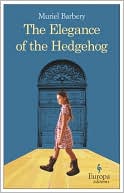 Muriel Barbery’s novel
  Of Books and Bicycles