Category Archives: Books

The Places in Between, Part 2

The Places in Between, part II
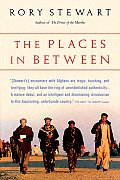
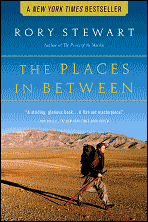
So I’ve been meaning to write about Rory Stewart’s The Places in Between. I thought this was a fantastic book for a lot of reasons — the writing is wonderful, the story of his walk is enthralling, and the information he gives about Afghanistan is of the type you won’t find in most other books about the country.

As I was reading I had a tendency to focus on the adventure parts of it, but I don’t want to neglect the political and historical aspects: I learned a lot about the history of Afghanistan, as Stewart gives descriptions of the towns and villages he passes through and tells a bit of their past. He talks a lot about the complex religious heritage of the place, including the Buddhism practiced in ancient times and the more contemporary Islamic history; he explores the remains of the Bamiyan Buddha sculptures destroyed by the Taliban only 9 months before he arrived there. He also criticizes westerners who lament the lost Buddhas but know very little of what’s happening to the people alive there today.

I was fascinated by the conversations with villagers Stewart recounts, and the very vague and hazy picture of the west many of the people have — not so different from the hazy picture of Afghanistan many westerners have, although it’s easy, particularly for Americans, to think that the whole world knows everything about us. Many of the people he talked to had never traveled farther than a few miles from their villages. There are very few women in the book, as for the most part they keep themselves separate from the groups of men Stewart moves among, although, interestingly, in the remote mountainous area the Hazara people inhabit, women are allowed a little more freedom. Stewart stays away from overt political statements, but he does criticize western politicians for saying ill-informed things about Islam and westerners in general for not understanding or caring much about the region.

And then there’s the adventure:

Daulatyar was only fifteen kilometers away and there were probably two hours of daylight left, but I had forgotten how much deep mud and wet snow slowed my pace. I felt muffled in the snow-fog and imprisoned by the rain hood I was wearing. I threw back the hood. I could hear and see again. The day was very silent and the plain seemed very large. The snow driving into my eyes at a forty-five-degree angle made me feel much freer, but my left foot seemed frozen to a cold iron plate.

Exhaustion and repetition created within the pain a space of exhilaration and control. And at this point, I saw two jeeps, their headlights on, weaving slowly toward us through the fog. They were the first vehicles I’d seen since Chaghcharan. When they reached me, an electric window went down. It was the Special Forces team from the airstrip.

“You,” said the driver, “are a fucking nutter.” Then he smiled and drove on, leaving me in the snow. I had seen these men at work when I was in the army and in the Foreign Office and I couldn’t imagine a better compliment. I walked on in a good mood.

Stewart insists on walking every inch of the way, even though he must walk in freezing temperatures over mountains, making his way through snow drifts, often in wet clothes. He’s sick much of the way, probably having caught a virus in the water and because he doesn’t eat very well. He depends on local hospitality traditions, often very reluctantly kept, for his food and shelter every night. At one point he lay down in the snow exhausted and in despair, and even though I knew he made it out of Afghanistan alive, I was afraid he wouldn’t get up again. His dog Babur rescues him, barking and whining until he gets up and starts walking again.

Babur turns out to be an important part of the story; Stewart picks him up in an Afghan village when a family, who had been mistreating the dog, offers to give him away. He is a huge mastiff of one type or another, and Stewart spends much of the book dragging him reluctantly along. Poor Babur causes a lot of trouble; at every village they pass, a pack of dogs comes chasing after him looking for a fight. Stewart is constantly beating back these wild dogs with his walking stick. But Babur is an excellent companion and his life with Stewart is much better although more physically demanding than his previous one.

And, finally, here is an example of the kind of writing you’ll find in this book:
Almost every morning, regrets and anxieties had run through my mind like a cheap tune — often repeated, revealing nothing. But as I kept moving, no thoughts came. Instead I became aware of the landscape as I once had in the Indian Himalayas. Every element around me seemed sharper, the colors more intense. I stared, expecting the effect to fade, but the objects only continued to develop in reality and presence. I was suddenly afraid, uncertain I could sustain this vision.

This moment was new to me. I had not dreamed or imagined it before. Yet I recognized it. I felt that I was as I was in the place, and that I had known it before. This was the last day of my walk. To feel in these final hours, after months of frustration, an unexplained completion seemed too neat. But the recognition was immediate and incontrovertible. I had no words for it. Now, writing, I am tempted to say that I felt the world had been given as a gift uniquely to me and also equally to each person alone. I had completed walking and could go home.

Leave a comment

Filed under Books, Nonfiction

Walking

I finished Rory Stewart’s The Places in Between and loved it, and I’ll write about it soon, but I’m too tired right now. The book does remind me of how fond I am of walking and particularly of going on epic walks (Rory Stewart walks across Afghanistan in the winter through the mountains).

I just came across this article from the New York Times about how the novelist Will Self walked from Kennedy airport to Manhattan — about 20 miles — rather than taking a cab. He flew to New York from Heathrow and he didn’t take a cab to Heathrow either; he walked there from his home, about 26 miles. He wanted to do the New York walk because:

It would take him through parts of the city that most people never notice while driving in a car: an experience that Mr. Self, a student of psycho-geography, believes has imposed a “windscreen-based virtuality” on travel, cutting us off from experiencing our own topography.

“People don’t know where they are anymore, “he said, adding: “In the post-industrial age, this is the only form of real exploration left. Anyone can go and see the Ituri pygmy, but how many people have walked all the way from the airport to the city?”

I’m not quite sure what “psycho-geography” is, although it sounds interesting. I like his idea a lot — that the best adventures available today are those we can experience in near-by places, if we just get outside and actually experience them.

I’ve written before about how much I liked Rebecca Solnit’s book Wanderlust, a history of walking. Does anybody know of other good books about walking — either theoretical/historical ones, or stories of long walks? I know of Bill Bryson’s book A Walk in the Woods, and Dark Orpheus mentioned Bruce Chatwin’s book Songlines as one that would interest me. Others? I haven’t read enough contemporary travel writing, and this is one form of it that particularly interests me.

More on Rory Stewart tomorrow …

Leave a comment

Filed under Books, Nonfiction

This and that

  • Love eighteenth-century literature? Know someone who does? Check this out then. It’s Mall Flanders, “accessories for reading eighteenth-century British literature.” It’s got Brobdingnag and Lilliput University T-shirts and sweatshirts, two different Tristram Shandy mugs, a Robert Burns mousepad, an Alexander Pope clock, Academy of Lagado tote bags, and a Pamela journal. If I kept a journal anymore, I’d make sure I kept it in a Pamela journal. It’s also got these stickers — I must get my hands on this Tristram Shandy plotline sticker:

  • You’ve probably already seen the Un-suggestor (link via Maud), a Library Thing service which tells you what you don’t need to read. You type in a book you own or have read, and it comes back with un-suggestions. What interested me about it was that when I typed in Mrs. Dalloway, I got back a whole bunch of religious books. I don’t need to read Rick Warren’s The Purpose Driven Church or John R.W. Scott’s The Cross of Christ or Millard J. Erickson’s Christian Theology or Max Lucado’s Just Like Jesus. Thank heavens. Similar books came up when I typed in Swann’s Way, although the Harry Potter books came up too. The religious book results amuse me because I’ve got a brother who reads just those things. How did we end up in the same family? Well, long story.
  • Finally, I was interested to find this article (via Reading Matters) by Genevieve Tucker in The Australian. It’s on book blogging, and it’s pretty good. After a glowing mention of Metaxu Cafe, she says, “it’s the conversation with other readers that is bringing them back again and again to share their considered readings and thoughts, rather than a constantly shifting, shimmering page of book news and snippets of the here and now.” That strikes me as exactly right.

Leave a comment

Filed under Books, Lists

Barbara Noble’s Doreen

I finished Barbara Noble’s 1946 novel Doreen this weekend and found it quite interesting; I’m grateful to my new book club for getting me to read it, as I’d never heard of it before. I can’t say I thought it was a brilliant novel, but it was a fun read and it gave insight into an interesting time period.

It’s set in World War II and is about what happens to children evacuated from London; Doreen is a 9 year old whose mother has decided she has taken her chances keeping Doreen in the city for too long, and when the opportunity arises to place her in a good home in the country, she takes it. Of course, this is difficult for mother and daughter both, but Doreen settles into her new home fairly quickly.

Here is the problem, however, since Doreen’s new family — the childless Geoffrey and Francie Osbourne — quickly fall in love with her, and Doreen’s mother, when she finds out about it, becomes jealous. Doreen is caught between her love of her mother and her affection for the Osbournes and enjoyment of her new life. The novel centers around this conflict; most of the adults are well-meaning, but they find themselves at odds with one another and the unwilling Doreen must try to keep peace.

The novel is interesting because of its depiction of London and the countryside during the war; Noble gives descriptions of bomb shelters and air raids in the city, and the quieter but still unsettled life of the country. Even more so, it’s interesting because of the class dynamics among the characters. Doreen’s mother is working class; she cleans offices and struggles to keep up a respectable life while living in a decaying house turned into apartments on a seedy street. Doreen’s mother and father are separated, which makes things even more complicated. The Osbournes, on the other hand, are comfortably middle class. They live on a hill above a town, a situation meant to indicate their status relative to the town’s working class residents.

So Doreen experiences new comforts with the Osbournes — her own room, a garden, occasional presents — and it becomes harder and harder to imagine her going back to her cramped London life. Her mother is torn between wanting to keep her daughter safe and fearing that she will lose her loyalty and affection. The book showed me a little of the attitudes toward class distinctions at the time — surprisingly strict, I thought — and it probed the psychological effects of the disruptions of war and evacuation very effectively.

It’s a slow-moving novel; I wondered for a long time when something exciting was going to happen. It did, eventually, but this book is more meditative than action-packed. It isn’t a stunning novel, but in its quiet way, it’s quite good.

Leave a comment

Filed under Books, Fiction

Spare language

I keep coming back in my mind to a passage from Nick Hornby’s The Polysyllabic Spree about writing that gets praised for being “spare”:

Anyone and everyone taking a writing class knows that the secret of good writing is to cut it back, pare it down, winnow, chop, hack, prune and trim, remove every superfluous word, compress, compress, compress. What’s that chinking noise? It’s the sound of the assiduous creative-writing student hitting bone.


Hornby uses J.M. Coetzee to illustrate what he means by the “spare tradition” and it turns out that while he admires Coetzee, he’s actually not a fan of super-pared-down language. The passage above comes at the beginning of a long celebration of Dickens, the most un-spare writer there is, and Dickens clearly comes out ahead in the comparison. Here’s what he says about pared-down writing:

There’s some stuff about the whole winnowing process that I just don’t get. Why does it always stop when the work in question has been reduced to sixty or seventy thousand words — entirely coincidentally, I’m sure, the minimum length for a publishable novel? I’m sure you could get it down to twenty or thirty, if you tried hard enough. In fact, why stop at twenty or thirty? Why write at all? Why not just jot the plot and a couple of themes down on the back of an envelope and leave it at that?

As I was typing this passage, I realized that I don’t like it, although I think I share Hornby’s taste for wordy, talkative fiction. Working toward spare, pared-down language doesn’t mean one is working toward nothingness, of course. This is Hornby being churlish and unfair.

But I do love long novels and digressive, wordy prose; while I also admire writers in the “spare tradition,” I tend not to love them. Prose that begins to veer toward poetry begins to feel like work to me, and while I’m often happy to do that work, I’m not going to get absorbed in the story. Here’s what it is — I often read novels with that spare, poetic, pared-down prose and I enjoy the experience, but it’s not quite as visceral or thrilling as a novel that isn’t overtly drawing attention to its own language.

But then Hornby gets even more annoying:

The truth is, there’s nothing very utilitarian about fiction or its creation, and I suspect that people are desperate to make it sound like manly, back-breaking labor because it’s such a wussy thing to do in the first place. The obsession with austerity is an attempt to compensate, to make writing resemble a real job, like farming or logging.

The first line is fine; I agree that fiction isn’t utilitarian in the least. But then we’re back to the gendered language I’ve complained about before. Okay, he’s joking, but still — writing as wussy? My feeling is that people’s desire to write in a simple, pared-down manner has nothing to do with whether writing is a “real job” or not. Hornby seems to be reading his own uncertainties about the seriousness and manliness of writing into other people’s aesthetic tastes.

But I really didn’t mean to turn this into a pick-on-Hornby post. I’m interested in these passages because I’ve felt ambivalently about the “spare tradition,” which leads me to thoughts about what I look for in a novel. Am I looking for a story so absorbing it makes me forget I’m reading, or do I want to be immersed in language itself, aware of the ways an author is using it? Do I want a flood of words on the page, or do I want carefully-measured, crafted prose that suggests more than it actually says? All of these things, obviously, at different times and to suit different moods. But I feel most comfortable with the Dickensian tradition, and I wonder what that says about me as a reader.

1 Comment

Filed under Books, Writing

Books I’ve finished

I finished listening to the audio version of Jacqueline Winspear’s Pardonable Lies: A Maisie Dobbs Novel, and I thought it was a lot of fun — I like Maisie a lot and the story was good. I thought perhaps the ending dragged on a bit long; I could feel things wrapping up for a good two of the nine CDs I was listening to, but that was the only flaw.

One of the things that intriqued me about the novel was its touch –just a touch really — of eastern thought. The implication seems to be that Maisie’s particular insightfulness comes from a mix of her “western” rationality and her “eastern” spirituality and insight. She meditates, she’s gotten training from someone of eastern origin — I have to be vague because I listened to the book and so can’t go back and check my source — she’s acutely aware of other people’s states of mind and how these are reflected in their bodies. She’s not a hard-nosed detective type but finds success through intuition as much as logic. There’s something just a little bit mysterious and mystical about her.

I’m now realizing how gendered this is. Of course she’s not a hard-nosed detective! She combines “masculine” strength and resolve and logic with “feminine” compassion and intuition and that’s what makes her so good at what she does.

I liked this book enough to want to seek out other Maisie Dobbs novels, perhaps also in audio. I must see what my library has.

I’ve also finished Proust’s In the Shadow of Young Girls in Flower. I find myself with little to say about it, although I continue to enjoy reading the novel a lot. It’s so rich I should have much to say about it; I think, though, that I have been letting it wash over me and haven’t tried to back away to get some critical distance in order to write something. Perhaps this is a sign of defeat — maybe I should try to get some critical distance on it — but I don’t really have the energy, and, more importantly, I’m enjoying the experience plenty as it is.

I’ve begun Barbara Noble’s novel Doreen for a book club meeting next week, at which I’ll meet Emily. This will be fun!

Leave a comment

Filed under Books, Fiction

Alice Munro

I finished Runaway last night and have decided, much to nobody’s surprise, that Alice Munro is a genius. I will agree that too much Munro might not be a good thing, but too much of anybody is probably not a good thing.

There are eight stories in this collection, all of them with a woman as their main character, at all different stages of life. Often Munro will cover decades in one story, so we might see a young woman as she meets a man and gets engaged, and then we see her as a widow, and we learn how the marriage turned out. Munro gives long stretches of time and she does it gracefully, the information on what happened in intervening years worked into scenes so that it doesn’t feel like summary.

I particularly liked a sequence of three stories about the same character, Juliet. She’s off to her first teaching job in the first story, in the second, she’s returning home to visit her parents after a long absence, and in the third she’s an older woman and the story is about her relationship with her daughter. Each story is fairly focused in time, but together they give a sense of Juliet’s entire life. I like this scale; the stories show both how much Juliet gets wrapped up in each event in her life and what the events mean in the larger picture. We get the emotions of the moment which we can place in the context of an entire life.

I’ve read criticisms of Munro’s work that claim she’s too narrowly focused on the personal and private and doesn’t let larger world events into her fiction. This may be a valid point, but one important social and political event that does inform her stories is the women’s movement. Juliet, for example, is a graduate student whose male professors do not take her intellect and her job prospects seriously:

Her professors were delighted with her — they were grateful these days for anybody who took up ancient languages, and particularly for someone so gifted — but they were worried, as well. The problem was that she was a girl. If she got married — which might happen, as she was not bad-looking for a scholarship girl, she was not bad-looking at all — she would waste all her hard work and theirs, and if she did not get married she would probably become bleak and isolated, losing out on promotions to men (who needed them more, as they had to support families). She would not be able to defend the oddity of her choice of Classics, to accept what people would see as its irrelevance, or dreariness, to slough that off the way a man could. Odd choices were simply easier to men, most of whom would find women glad to marry them. Not so the other way around.

As she ages, however, and as her society becomes a little more open to ambitious women, she finds ways to take on a public role. The public world — the world outside the family and the self — does have a place in Munro’s fiction; it’s just indirect and muted. It’s not the focus. But this strikes me as realistic, in its own way; many of us deal with significant world events in indirect and muted ways.

I remember somebody calling Munro’s stories “novelistic,” in the sense that are so rich with emotion and complexity that they could fill the space of a novel — this makes sense to me, although I wouldn’t want to sound like I’m denigrating the short story genre by calling excellent stories “novelistic.” Perhaps I should just say that these stories are satisfying in the way they capture whole worlds and lives and minds and emotions.

I enjoyed my experience of reading a book of short stories, which I have rarely done, and I think I would like to read more. The trick, for me, is to read them fairly slowly, meaning only one at a time, and to read them in one sitting if I can. To read a whole series of stories at once would confuse me (just as reading a whole series of poems would), but to sit down and read one an evening or every other evening works well.

This book, as you can see in the sidebar to the left, is my second book in the Winter Stacks challenge — three more to go!

Leave a comment

Filed under Books, Short stories

Thursday thirteen: re-reading

This will be a pooter-ish post, one that might get me soundly mocked. But, in the spirit of Danielle’s post from yesterday and in the spirit of book-blogging solidarity, because many people think lists and reading plans and TBR piles are fun, here we go!

Inspired by another one of Danielle’s posts, I’m going to try my own list of books I’d re-read. I’d like to re-read more than I do because, if the book is a good one, the second time around feels so much richer. I sometimes retain so little of what I read, and I’m afraid it’s because I rush through things and don’t absorb them properly. But there are so many wonderful new books out there … anyway, here’s a list of things I’d likely turn to if I got the urge to re-read.

1. Anything by Jane Austen, even though I’ve already re-read the novels a lot. In fact, I’ve read all her major novels except Northanger Abbey multiple times; I don’t even know how many times. I turn to them when I want something comfortable and familiar and lengthy; they feel like an indulgence. I’ve also been assigned many of her books for various classes. What I haven’t done is read her juvenalia, which I really must do some day.

2. The Moonstone. I’m guessing that many of the books in this list will be ones I’ve already read multiple times. I can be such a creature of habit. The Moonstone is wonderful fun and I never seem to tire of it; I think I’ve read it twice, although it’s possible I’ve read it a third time. At any rate, I’d be happy to read it again. What I really like is the way Collins tells the same story from multiple perspectives.

3. Virginia Woolf’s To the Lighthouse and/or Mrs. Dalloway. To the Lighthouse I’ve read at least twice; I’m not sure about Mrs. Dalloway, but I love them both.

4. A.S. Byatt’s Possession. I’m not being original here — Danielle mentioned this one too — but it was so much fun. This is one I’ve read only once.

5. The Anne of Green Gables books. I’ve read these books who knows how many times, but I’ve never re-read them as an adult. It would be interesting to see if my responses to them would change.

6. Anything by George Eliot. I’ve already read Middlemarch and Daniel Deronda twice and Adam Bede and Silas Marner once. I read The Mill on the Floss in High School, so that’s probably the one I’d choose were I to read Eliot again. What can I say — I love the Victorian novel.

7. Crime and Punishment. I read this book during college, I think, in the summer, and was enthralled. I’d like to go back and see if I have the same intense experience.

8. The Phillip Pullman series. I read this just last spring and tore my way through them; I’d get a kick out of doing it again. This sounds like a wonderful thing to do during the holidays — just hunker down and read fun novels really fast.

9. Philip Lopate’s The Art of the Personal Essay. If I haven’t read all the essays in that book, I’ve read most of them and they are definitely worth returning to.

10. Swann’s Way. Yeah, I read it just last summer, but this is a book that rewards multiple readings and I can already see that I’m going to want to look at parts of In Search of Lost Time again.

11. Flaubert’s Parrot by Julian Barnes. I love this kind of smart, quirky, unconventional novel.

12. Flannery O’Connor’s short stories. She’s so fascinating and odd and she’s such a master of the short story, I can see myself re-reading some or all of them. Maybe her novels too, both of which I’ve read once each.

13. Mary Oliver’s book of poems American Primitive. Poetry is an obvious thing to re-read — it can be so complex and rich and it’s short and so doesn’t require a huge time commitment — and yet I didn’t think of it much as I was making this list.

I could probably think of more, but I was beginning to slow down toward the end of that list; I guess when I re-read I tend to turn to the same very small number of books, mainly Victorian or early 20C novels. I could have put Tolstoy and James on that list too.

Leave a comment

Filed under Books, Lists

How do I read Cortazar’s Hopscotch?

I just got a copy of Julio Cortazar’s novel Hopscotch through Bookmooch, and although the truth of the matter is that I won’t read it for quite a while (not because I don’t want to, but because of all my other reading obligations and desires), I was intrigued by its form — and also set a bit on edge by it.

The novel comes with a “Table of Instructions” (which will make more sense if you know the novel has 155 chapters):

In its own way, this book consists of many books, but two books above all.

The first can be read in a normal fashion and it ends with Chapter 56, at the close of which there are three garish little stars which stand for the words The End. Consequently, the reader may ignore what follows with a clean conscience.

The second should be read by beginning with Chapter 73 and then following the sequence indicated at the end of each chapter. In case of confusion or forgetfulness, one need only consult the following list:

73-1-2-116-3-84-4-71-5 [I won’t give you all the numbers, but they continue on for 10 lines or so of text].

Each chapter has its number at the top of every right-hand page to facilitate the search.


I’m not sure what to make of this, and I don’t know how I’ll read the book when I do get to it. The notion of reading the first 56 out of 155 chapters and then quitting with “a clean conscience” seems highly unrealistic, given my intense desire to finish books — finish them all the way to the end. There’s no way I’d quit after 56 out of 155 chapters with a clean conscience.

But following the jumbled-up sequence of chapters doesn’t seem quite the thing to do either. It upsets my notions of how to read a book.

The other option, of course, is to disregard the Table of Instructions and read the thing from cover to cover in the normal way. But … would that work? Would it make any sense at all?

I’m curious about what the different ways of reading would be like. I suppose there’s another option, which is to read the novel in the two ways the author describes: once through the end of chapter 56, and then once following the jumbled sequence of chapters. That way I’d know what the two experiences are like, and I’d be following instructions like the obedient reader I tend to be. But that would take a lot of time and would require re-reading large chunks of the novel. Maybe even I am not prepared to be that obedient.

I realize that my uneasy feelings must be part of Cortazar’s point; he’s making me aware of my conventionality in reading, my obedience, my feeling that I must complete books, my need to have the experience I think the author wants me to have. He’s making me question the traditional arc of a story, the convention of reading from cover to cover, and my assumptions of what must be included to make a story complete (at least I think he’s doing these things — can’t really say until I read the thing I suppose).

Has anybody read this novel before, and, if so, how did you do it? If not, which reading method would you choose?

2 Comments

Filed under Books, Fiction, Reading

The Places in Between

I’ve begun Rory Stewart’s The Places in Between, a book about his walk across Afghanistan starting in January, 2002. It’s quite absorbing, and it makes me want to go on adventures. Before this trip, he’d spent 16 months walking across Iran, Pakistan, India, and Nepal, but he’d had to skip Afghanistan because the Taliban refused to let him into the country. After the fall of the Taliban, he decided to give it another try. This is how he begins his Preface:

I’m not good at explaining why I walked across Afghanistan. Perhaps I did it because it was an adventure. But it was the most interesting part of my journey across Asia.

I love that attitude, the “I’m not sure why I did it, I just wanted to” attitude. Because why do anything at all, really? In a lot of ways walking across Asia makes as much sense as anything else anybody might choose to do. So he walked across Asia because it was there and he could.

Can I tell you how much this makes me want to go off on some crazy, senseless adventure?

So far the book is very well written, very absorbing, and full of sentences like these:

It was possible that they had simply told Qasim and Abdul Haq to take me outside the city and kill me. No one would notice in the middle of a war. I felt it would be ludicrous to be killed only eight kilometers into my journey and not for the first time worried that when I was killed people would think me foolhardy.

I’ve read story after story of Stewart walking into strange villages with no idea whether he’ll be welcomed or attacked. In his previous walks, people had always taken him in, following customs of hospitality, but in Afghanistan things are not so simple — while the hospitality custom is still strong, so is fear of strangers in a country so unsettled.

Stewart briefly describes what fills his mind while he’s walking day after day. This is the only passage I’ve come across so far that talks about walking in a more theoretical way; I kind of wish he’d do it more often, but that’s not what the book is about (and if you’re interested in that subject, I highly recommend Rebecca Solnit’s Wanderlust):

Before I started, I imagined I could fill my days by composing an epic poem in my head or writing a novel about a Scottish village that would become more rooted in a single place as I kept moving. In Iran I tried earnestly to think through philosophical arguments, learn Persian vocabulary, and memorize poetry. Perhaps this is why I never felt quite at ease walking in Iran.

In Pakistan, having left the desert and entered the lush Doab of the Punjab, I stopped trying to think and instead looked at peacocks in trees and the movement of the canal water. In India, when I was walking from one pilgrimage site to another across the Himalayas, I carried the Bhagavad Gita open in my left hand and read one line at a time. In the center of Nepal, I began to count my breaths and my steps, and to recite phrases to myself, pushing thoughts away. This is the way some people meditate. I could only feel that calm for at most an hour a day. It was, however, a serenity I had not felt before. It was what I valued most about walking.

As an occasional backpacker, I’m interested in what people think about when they spend hours walking (or something similar like running or riding) — for me, sometimes get in the meditative mood Stewart describes and I agree with him that it’s one of the best things about walking.

More on this book later …

Leave a comment

Filed under Books, Nonfiction

A Jane Kenyon poem

After doing the poetry meme yesterday, I’m inspired to give you a Jane Kenyon poem I read recently and really liked. It’s also appropriate for the upcoming season:

Depression in Winter

There comes a little space between the south
side of a boulder
and the snow that fills the woods around it.
Sun heats the stone, reveals
A crescent of bare ground: brown ferns,
and tufts of needles like red hair,
acorns, a patch of moss, bright green ….

I sank with every step up to my knees,
throwing myself forward with a violence
of effort, greedy for unhappiness —
until by accident I found the stone,
with its secret porch of heat and light,
where something small could luxuriate, then
turned back down my path, chastened and calm.

I like this poem because it reminds me of how wonderful it is to walk in the woods in winter — to notice little things like the thawed space near the rock Kenyon is describing, and to see green things here and there, as a reminder that spring will come soon. The Hobgoblin and I have done a lot of winter hiking, sometimes involving laboring our way through several feet of snow and occasionally involving temperatures barely in the double digits. There’s nothing more exhilarating than a tramp through the snow and nothing nicer than coming home again and warming up with a hot shower and some food.

But Kenyon’s not talking about that kind of walk — the poem also reminds me of how well a walk in the woods can transform my mood. I never come home feeling the same as when I left. I think I know what Kenyon means by being “greedy for unhappiness” — I get like that sometimes: mildly depressed and doing my best to stay that way. And a walk will almost always break me out of that rut; whether it’s seeing something beautiful like Kenyon did in the poem, or whether it’s the movement and exercise that does it, I don’t know, but I rarely come home from a walk unhappy.

Leave a comment

Filed under Books, Poetry

Cam’s poetry meme

The Hobgoblin tagged me to do Cam’s poetry meme, so here goes:

1. The first poem I remember reading/hearing/reacting to was…. Surely nursery rhymes were among the earliest. This question makes you think about what a poem is, doesn’t it? I remember nursery rhymes, songs, chants from when I was a kid. I remember reading Tennyson’s “The Charge of the Light Brigade” for school. Oh, yeah, and I remember reading Ogden Nash early on too.

2. I was forced to memorize (name of poem) in school and…….. I wasn’t forced to memorize poems in school until I got to college, and then only one professor required it. That’s quite a shame, really, because there’s no better way to learn about poetry than memorizing it, I think. You get an intimate feel for how a poem works. I memorized W.H. Auden’s poem “Under Sirius.”

3. I read/don’t read poetry because….I read poems because I enjoy it and want to figure out more about how poems work. I only began reading poetry semi-regularly early this year, so I still feel strange calling myself a poetry reader. I read poems when I was in college and shortly after, but then I stopped for a long time. It’s not that I didn’t want to read them, I just never figured out a way to fit them into my life. Now I have a volume I keep on my shelf next to my reading chair, and I read a few poems a week. It’s not much, but it gets me through a book in a couple months.

4. A poem I’m likely to think about when asked about a favorite poem is …….I’d have to name poets rather than poems, as favorite poems don’t come to mind. Favorite poets? Elizabeth Bishop, Mary Oliver, Emily Dickinson.

5. I write/don’t write poetry, but…………..I don’t write poetry, although I can’t say I never will. But I just have no idea how to write one. I mean, what constitutes a poem? What should it be about? I have no idea. And I have little idea, to be honest, about what makes a good poem. As someone who teaches poetry now and then, maybe I shouldn’t admit that, but it’s true. It’s easy to teach older stuff because it’s generally accepted as good, but newer stuff, I have a hard time saying. That’s one reason I’m curious about reading more poems, to get a feel for how they work and what makes a poem great.

6. My experience with reading poetry differs from my experience with reading other types of literature…..I don’t really get poetry. My students sometimes say that and they mean it negatively, but I’m not being negative here. I don’t really think there’s anything to “get” about poetry, actually — that makes it sound like there’s a key or code to understanding it, which there isn’t beyond being familiar with tradition and form. I just mean I find it rather mystifying — and that’s part of what makes it fun.

7. I find poetry….. well, mystifying. In a good way. Sometimes enlightening, often beautiful.

8. The last time I heard poetry….The local coffee shop has an open mic on Wednesday nights and last February they had a day where people could bring their love poetry/erotic poetry to read. A lot of people showed up to read and to listen, and there was a lot of good energy in the room. It was fun.

9. I think poetry is like….Litlove wrote in a comment a while back that a poem is like a dream, and I’ve found that idea useful. I was initially resistant because I generally don’t find dreams and dream interpretations all that interesting, but the analogy does work; a poem often has loosely connected images that fit together in some shadowy half-known way, just as a dream does. A poem can get at truths in that sideways way a dream can.

I tag … whoever wants to do this great meme!

Leave a comment

Filed under Books, Memes, Poetry

More on The Polysyllabic Spree


So I finished Nick Hornby’s The Polysyllabic Spree yesterday, just as I thought I might. The weather never did get nice enough to go on a bike ride, although The Hobgoblin, Muttboy, and I did go on a hour-long walk in the rain at our local woodsy park. After that, it was nice to come home and take a warm shower and stay indoors for most of the rest of the day.

I thought the book was a lot of fun. It’s rather addictive; I’d finish a chapter and consider moving on to something else or drifting off to sleep, but then I’d look at the list of books read and books bought that begins the next chapter, and I’d think, oh, just one more. Next thing I knew, the book was finished. Hornby’s attitude toward books is infectious. I like how he reads all kinds of different stuff; he writes just as well and just as enthusiastically about a collection of Chekhov’s letters as he does about, say, Mystic River.

There were a couple things that bugged me. He has a bit of an attitude about the “literary novel”; he reads them and reads them happily, but he picks on them an awful lot, to the extent that I began to wonder why, and I also began to wonder if it’s really so clear just what the “literary novel” is. Is it really a clearly-defined category? When talking about Chris Coake’s book of short stories We’re in Trouble he says this:

Sometimes, when you’re reading the stories, you forget to breathe, which probably means that you read them with more speed than the writer intended. Are they literary? They’re beautifully written, and they have bottom, but they’re never dull, and they all contain striking and dramatic narrative ideas. And Coake never draws attention to his own art and language; he wants you to look at his people, not listen to his voice. So they’re literary in the sense that they’re serious, and will probably be nominated for prizes, but they’re unliterary in the sense that they could end up mattering to people.

Now this strikes me as unfair. Why should the “literary” be that which doesn’t matter to people? I think he’s got too much invested in this idea of the literary and that he too easily categorizes and dismisses books based on their supposedly “literary” qualities and readers based on their devotion to those qualities, whatever they are. I’m not sure most readers actually read with this category in mind.

Hornby plays around with Hemingwayesque, hyper-masculine posturing about books and writing a little too much for my taste. Books are always in a battle with other books or with other forms of art. This is what’s on the book jacket; it’s quite funny — but also … eh, not my thing:

Books are, let’s face it, better than everything else. If we played cultural Fantasy Boxing League, and made books go fifteen rounds in the ring against the best that any art form had to offer, then books would win pretty much every time. Go on, try it. The Magic Flute vs. Middlemarch? Middlemarch in six. The Last Supper vs. Crime and Punishment? Fyodor on points. See? I mean, I don’t know how scientific this is, but it feels like the novels are walking it. You might get the occasional exception — Blonde on Blonde might mash up The Old Curiosity Shop, say, and I wouldn’t give much for Pale Fire’s chances against Citizen Kane. And every now and then you’d get a shock, because that happens in sport, so Back to the Future III might land a lucky punch on Rabbit, Run; but I’m still backing literature twenty-nine times out of thirty.

This is clever, but after a couple of passages about fights among books and the degree of strength or wussiness it requires to write, I start to feel a little alienated. What saves it for me is that Hornby is not actually taking any of it seriously; he’s mocking himself a bit, pretty much admitting he’s not very good at the Hemingwayesque, hyper-masculine stuff.

I didn’t come away with a lot of new books I want to read, although I did pick up a couple of recommendations. One is Gabriel Zaid’s So Many Books; I remember Jenny D. has an intriguing post on it. The other is Janet Malcolm’s book on Chekhov, Reading Chekhov: A Critical Journey. This seems like a very interesting mix of literary criticism and personal narrative, a combination I like very much.

Leave a comment

Filed under Books, Nonfiction

The Polysyllabic Spree

In addition to Alice Munro’s Runaway, I recently began Nick Hornby’s Polysyllabic Spree, and I’m enjoying it immensely. I remember other bloggers writing about this book enthusiastically, and I couldn’t resist. Apparently books about books are what I need these days; I’m reading this book shortly after Sara Nelson’s So Many Books — although I think I’ll like Hornby’s book better. Books about books are good during times of stress I think — they are usually fairly light reading, they make good company, and they keep me thinking about things I’ll read when I have more time.

Hornby organizes his book into chapters that cover one month’s reading. For each month, he begins with a list of books bought and books read, and then he discusses those books for a few pages, not in a whole lot of depth, but very amusingly. Somehow he manages to say substantive things in very short chapters, so that I don’t feel he’s rushing through his book discussions but I don’t get bogged down in details either. Sara Nelson’s book had a similar format, short chapters covering her reading over a certain period of time, but I finished her book feeling that the tone was too breezy and that she hadn’t really said all that much. Hornby doesn’t go into depth, but somehow he captures the essence of his response to a book in a way that’s both succint and satisfying. I’m not sure how else to account for why I liked one book and not the other except to say that it might just be a personality thing. In these books, personality is everything.

Side note — I feel a little bad picking on Sara Nelson in the way that I have over a few posts now. Just recently, Kimbofo had a post asking people if they review books they don’t like. I do. I believe it’s important to think about what doesn’t work in a book and why, and I think such analysis makes book talk everywhere stronger and more interesting. But I do still feel a little bad.

An excerpt from Hornby on rereading and on forgetting:

I don’t reread books very often; I’m too conscious of both my ignorance and my mortality. (I recently discovered that a friend who was rereading Bleak House had done no other Dickens apart from Barnaby Rudge. That’s just weird. I shamed and nagged him into picking up Great Expectations instead.) But when I tried to recall anything about [Stop-Time by Frank Conroy] other than its excellence, I failed. Maybe there was something about a peculiar stepfather? Or was that This Boy’s Life? And I realized that, as this is true of just about every book I consumed between the ages of, say, fifteen and forty, I haven’t even read the books I think I’ve read. I can’t tell you how depressing this is. What’s the fucking point?

It’s both depressing and it’s true — it’s true for me certainly; my memory of what I’ve read can be so bad. And here’s Hornby doing the numbers on what he’s read:

I read 55 percent of the books I bought this month — five and a half out of ten. Two of the unread books, however, are volumes of poetry, and, to my way of thinking, poetry books work more like books of reference: They go up on the shelves straight away (as opposed to onto the bedside table), to be taken down and dipped into every now and again … And anyway, anyone who is even contemplating ploughing straight through over a thousand pages of [Robert] Lowell’s poetry clearly needs a cable TV subscription, or maybe even some friends, a relationship, and a job. So if it’s OK with you, I’m taking the poetry out, and calling it five and a half out of eight — and the Heller I’ve read before, years ago, so that’s six and a half out of eight. I make that 81 1/4 percent! I am both erudite and financially prudent!

I suppose one reason I’m liking the book is that I often think this way myself — maybe without the humor, but certainly with the obsession.

Leave a comment

Filed under Books, Nonfiction

Short stories


I began Alice Munro’s book of short stories Runaway last night, and I finished the first one, the title story. I haven’t been a big reader of short stories; what Diana said about the effort it takes to get into a story and the fatigue of having to do it again and again with a book of stories really resonated with me. With a novel, you orient yourself once, or maybe a couple of times with new characters and locations, but then you’re set, and you’re in a world for as long as the novel lasts, and you can return again and again to that world every time you pick the book up. I like to live with characters for a while.

But I do want to read more stories, and while A Curious Singularity, the short story discussion group, is helping me, I’m eager to read some collections of stories on my own. Okay, that sounds more planned and organized than I really feel — I got inspired to read stories when I saw the Munro book, and I’m getting the feeling that I should continue to read stories now and then.

So, the Munro story was good [spoilers ahead]. It’s about a young married woman Clara, her husband Clark, and their older neighbor Sylvia; Clara turns to Sylvia for help when she realizes how unhappy she is in her marriage. Munro describes the marriage dynamic extraordinarily well; I can see just why Clark was so difficult, just why Clara would have been attracted to him in the first place, and just why she’d think about leaving him. And why she’d return, as much as I didn’t want her to. Munro can dramatize all this history and all these feelings so effortlessly.

I remember a commenter telling me to look out for the goat in this book — well, the goat appears in this first story and turns out to be the story’s symbolic center. Clara’s goat Flora is missing through most of the story, but she appears at a crucial moment near the conclusion when Clark confronts Sylvia for helping Clara run away. The goat comes walking out of a fog, illuminated by passing headlights, and frightens the two characters, so that Clark grabs Sylvia’s shoulder in a protective move and she lets him do so, although the two had just been fighting. Sylvia writes to Clara later that:

[Flora’s] appearance at that moment did have a profound effect on your husband and me. When two human beings divided by hostility are both, at the same time, mystified — no, frightened — by the same apparition, there is a bond that springs up between then, and they find themselves united in the most unexpected way. United in their humanity — that is the only way I can describe it. We parted almost as friends. So Flora has her place as a good angel in my life and perhaps also in your husband’s life and yours.

And yet — if you’ve read the story, you’ll know this is not what happens at all. Flora comes to stand for something much different — much darker — in their marriage. So the story ends, not with the issues resolved and not with the kind of reconciliation Sylvia hopes they might have had:

All she could hope was that perhaps Clara’s flight and turbulent emotions had brought her true feelings to the surface and perhaps a recognition in her husband of his true feelings as well.

If Clara and Clark have recognized their true feelings by the end of the story, this recognition is not an easy or a rewarding one. Sylvia’s hopes are a dark counterpoint to the reality of the marriage — a marriage in which Clara now seems firmly entrenched.

Okay, now I’m depressed. But, sigh, this seems like real life to me. I suppose part of Munro’s genius is to capture a rich, if dark, emotional world in such a short space. I’m looking forward to the rest of the stories in this collection.

Leave a comment

Filed under Books, Short stories

Marguerite Duras’s The Lover

I finished The Lover over the weekend. It’s a very short novel, more like a novella, really, at 115 pages, and a fascinating read. If you’re interested in the novel, you should check out Litlove’s post on Duras. There she discusses The Lover plus Duras’ life and reputation.

It’s a story about a girl of fifteen who lives in Indochina with a difficult, poor family — her mother and two brothers — and who has an affair with older Chinese man. But the novel doesn’t stay focused solely on the affair; it skips around in time, telling stories of the narrator’s later life in France and of what happens to her family members. We watch her as she realizes she wants to be a writer, and as she struggles with her love/hate relationship with her mother, and we see all this from different perspectives in time. At the beginning of the novel Duras describes the beginning of the affair, and at the novel’s end she describes the lovers’ fate, but in between, Duras takes us to many different years, often abruptly with rapid switches.

The narrator’s voice is simple and spare; the sentences seem empty of feeling, although emotion lurks under the surface, unexpressed but present. Here is a sample (from early in the book — I’m not giving anything away):

My younger brother died in three days, of bronchial pneumonia. His heart gave out. It was then that I left my mother. It was during the Japanese occupation. Everything came to an end that day. I never asked her any more questions about our childhood, about herself. She died, for me, of my younger brother’s death. So did my elder brother. I never got over the horror they inspired in me then. They don’t mean anything to me any more. I don’t know any more about them since that day.

The voice is halting and obviously pained but also detached, as though she’s trying to make sense of her experience but only can repeat sentences about the meaninglessness of it all.

The narrator is isolated; she feels loyalty to her family and yet the family fails her in many ways, she attends school but has few friends, and she quickly gets a bad reputation because of her sexual experience. She travels to and from school in an odd outfit that marks her as the outsider she feels herself to be.

The love affair is described in a similarly matter-of-fact manner; it is all-consuming — the narrator spends all her time with her lover and sneaks home late at night — but it seems emotionless. We learn very little about the lover, except that his father refuses to let him marry the narrator.

This is largely the story: the novel tells how the lovers meet, gives us some stories about the difficult family dynamics, describes the narrator’s desire to be a writer, and moves forward in time now and then to give glimpses of the narrator’s future life. What The Lover excels at is creating a mood; through its shifts in time and its short, simple sentences, it creates a feeling of a writer haunted by her past, exploring it but grazing across the surface of it rather than digging in deep.

Set in Indochina in the 1930s, the novel also gives a sense of what it was like to be a French family far away from their home country. It describes race and class tensions, as well as familial ones.

Although the story is a dark one, I enjoyed the experience of reading it; there’s something compelling in the voice of the narrator, haunted by the past as she is. I don’t usually like prose styles one might call “lyrical,” as one can call the prose in this book, but the blunt honesty and courage of the narrator saves it for me.

The novel is largely aubiographical; I’m curious to find out more about Duras and her life. She seems like a fascinating figure.

This book is part of my “From the Stacks” challenge — one down, four to go. Next up will be Alice Munro’s Runaway.

Leave a comment

Filed under Books, Fiction

So Many Books, So Little Time

I finished Sara Nelson’s book So Many Books, So Little Time last night and although I didn’t like it any better by the end than I was liking it when I wrote this, I did find myself fairly contentedly reading on to the end. I’m not sure why the experience of reading the book was positive when I felt unimpressed by it — perhaps I enjoyed the experience of not liking it or maybe I kept hoping it would get better. Its short chapters certainly kept me feeling that I was breezing my way through it which made it easy to keep going. Perhaps it’s that I enjoy book talk so much I’ll contentedly read it even when it doesn’t impress me.

The things that annoyed me about the book can probably be summed up by Nelson’s comment in one of the book lists at the back; here she is commenting on J.M. Coetzee’s Disgrace. She finds it:

a surprisingly readable novel about racism and family in South Africa, proof positive that prize winners — this won the Booker — are not automatically homework.

Why surprisingly readable? Why assume this book would be dull? And why assume prize winners are homework? There’s something anti-intellectual about the tone here that bugs me.

But I was struck by one thing she said, and I’d like to get your opinion on it. She talks about the “skip-around method”: “the one where you read the end first and then work your way back to the middle, if not the beginning,” and she says that “people skip around in books all the time.” For the first 30 years of her life, she writes, she wouldn’t have considered doing such a thing, but she considers it now because she’s stuck in a book she really wants to finish and she thinks that reading the ending might motivate her. She does a survey of her friends and finds that many of them don’t read in order.

I can’t think of a time when I’ve done this. Do you skip around? I pretty much subscribe to Nelson’s earlier philosophy that:

You have to start at the beginning and get to the end before you’re allowed to comment on what came in between. There’s an order to these things you must respect. Beginnings, middles, and ends are meant to be beginnings, middles, and ends: confuse them at your own peril.

I don’t even read collections of stories or essays or poems out of order, or at least not often. I’m probably too devoted to the “rules” of reading, too worshipful of the text as the author presents it to me. But as far as novels go, I don’t really want to know the ending until I get there.

What do you think — is skipping around common?

Leave a comment

Filed under Books, Nonfiction

Katherine Mansfield’s “At the Bay”

I appreciate A Curious Singularity for introducing me to new authors and stories; I’d never read Katherine Mansfield until now and I’m glad I’ve read “At the Bay.” It’s quite a long short story with a relatively large cast of characters; it’s structured in a series of vignettes that tell the stories of members of the Burnell family. It takes place over the course of one day, opening with a fairly extended scene filled with descriptions of the natural world. We see a shepherd leading a flock of sheep past the bungalows of a summer colony in an unnamed place, although it’s presumably New Zealand where Mansfield was born.

From there we get brief stories about the characters who range in age from the very young, unnamed “boy” and his three older sisters to the mother Linda Burnell, her husband Stanley, and Linda’s sister Beryl. I found these stories unsettling. Stanley seems supremely self-absorbed, expecting the entire family to cater to his every need, and when he returns at the end of the day contrite and apologetic for not having said goodbye to Linda that morning, he only gets irritated when he realizes she has no idea what he is apologizing for. In the section devoted to Linda, she confesses that she doesn’t love her children, and at the story’s end, we read about Beryl’s sinister encounter with the husband of her friend.

The most enjoyable parts of the story were the descriptions of the children. Mansfield captures the feeling of being young very well, but even here the story is jarring as Linda’s daughter Lottie becomes distressed when she can’t figure out how to follow the game the children are playing and screams when she sees a strange face in a window. Another daughter Kezia, in a scene where she is napping with her grandmother, realizes for the first time what death means. She tries desperately to get her grandmother to deny that she will die one day, but she gets no answer and instead her attention is diverted. Instead of answers all we get is distraction.

These unsettling stories are framed by quiet, peaceful nature scenes, a pattern that reminds me of Virginia Woolf’s “Kew Gardens,” where descriptions of nature also predominate. In Woolf’s story, the natural world showed the brevity and relative insignificance of the human lives; her story of the snail trying to get past the leaf seemed just as important as anything happening in the people’s lives. In Mansfield’s story there seems to be more of a contrast between the peaceful natural setting and the discontented humans who populate it. Mansfield highlights the precariousness and uncertainty of human experience by contrasting it with the stability of nature. Here’s the closing section:

A cloud, small, serene, floated across the moon. In that moment of darkness the sea sounded deep, troubled. Then the cloud sailed away, and the sound of the sea was a vague murmur, as though it waked out of a dark dream. All was still.

In contrast to this stillness and serenity, the people seem stuck in a “dark dream.”

I think this story is most effective in the way it creates a mood — it evokes a feeling of dreaminess that begins to shade over into a nightmare at times. It doesn’t have a strong story line, but instead it gives a brief glimpse into a number of characters’ lives and through those glimpses builds its atmosphere.

Leave a comment

Filed under Books, Short stories

An experiment


I tried an experiment last year that didn’t work so well, but now I’m considering trying it again. The experiment was to listen to audiobooks while I rode on the indoor trainer. Stefanie wrote about this recently and inspired me. I’ve listened to music in the past and that worked okay, but I hate the trainer so much that music only makes it better for a little while. The idea with an audiobook is that it might get me really interested in it so that I won’t want to get off the bike — I’ll be operating with the rule that I only listen to the audiobook on the bike or in the car. So maybe I’ll get so wrapped up in it that I’ll stay on the bike to hear what happens next. Maybe.

The trick, I think, is to pick the right book. Last year I chose Benjamin Kunkel’s Indecision, which didn’t really work; I never got all that interested in it. This time around I think I’ve chosen better. This morning I walked down to the local library and picked out Jacqueline Winspear’s Pardonable Lies: A Maisie Dobbs Novel. What could be more engrossing than a mystery? And Danielle has written so eloquently about the Maisie Dobbs novels that this one caught my eye immediately. Pardonable Lies is not the first in the series, which is too bad, but it’s the only one my library had, so it’ll do.

I’ll let you know how this experiment goes; it looks like today might be the first time this season I’ll ride indoors. Yesterday was beautiful — 60s, sunny — a day that makes me think winter might never get here. I rode for two hours and didn’t need more than shorts, a jersey, and arm warmers. But today is supposed to be rainy, and although it’ll be relatively warm, I still won’t want to ride in the rain. So, unless there’s a break in the rain that looks like it’ll last for an hour or so, I’ll be indoors on the trainer. Ugh. Have I said just how much I hate the trainer?

Update: The rain held off long enough so I could ride outdoors today — no trainer for me! Not yet, at least.

Leave a comment

Filed under Books, Cycling, Reading

Reading notes

The less time I have to read, the more I long to do it. I’m really looking forward to things slowing down in a month or so when I’ll finally have some solid chunks of time to read. In the meantime, it helps to read shorter things, or I begin to feel bogged down. So the book I just finished, Hotel du Lac, was perfect, and the one I’m going to begin this weekend, Marguerite Duras’s The Lover, is as well. And it’s part of the From the Stacks Winter Challenge, for an extra bonus.

Am I violating the challenge, which involves reading books that I already own instead of buying new ones, if I admit I just bought two books on Amazon? Oh well, what can I do, since I need the books for two book clubs? The first is The Street of Crocodiles by Bruno Schultz, which I’m reading for the Slaves of Golconda. We won’t be discussing the book until the end of January, so if you like, get a copy and join in.

The other is Doreen by Barbara Noble, which I’m reading for a group Emily just invited the Hobgoblin and I to join. This is a real-live, face-to-face group — did you know Emily and I live practically up the road from one another? Okay, it’s one town away, say 5-10 miles or so. We had no idea our houses were that close until very recently, and I’m very excited about meeting Emily in the flesh — a blogger meet-up! I know nothing about Doreen, and I’m eager to get the book and find out.

I am about 20 pages from finishing Frances Burney’s Journals and Letters, which has been quite a read — it’s pretty long and not uniformly interesting unless you’re a real Burney fan (which I am), but it has a lot of really great sections, including one very exciting episode where Burney, at this point 65 years old, is walking along the coast and gets caught by the incoming tide. She scrambles up a rocky cliff and gets stuck and has to wait as the water rises to see if it will climb high enough to pull her into the sea. I knew as I was reading that she survives — because the journals and letters continue — but it was a suspenseful episode nonetheless.

And Proust is coming along nicely; I’m maybe 100 pages from the end of the second volume. I’m reading along steadily and enjoying it, although I haven’t felt inspired to post about him on the Proust blog. I’m guessing with more time and leisure will come inspiration. Until then, I’ll enjoy the book quietly.

Leave a comment

Filed under Books, Reading