Category Archives: Books

Book by Book

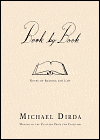
10612367.gifI finished Michael Dirda’s Book by Book yesterday and have mixed feelings about it. When Dirda sticks to discussing specific books and giving book lists, he’s quite interesting and the book is a pleasure to read. When he begins to wax philosophical about life, he becomes banal and cliche.

The book is organized by topics such as “Work and Leisure,” “The Book of Love,” and “Matters of the Spirit,” and within each chapter he discusses his ideas about the topic and books that shed light on it. Typically, he’ll give a book list with a short discussion of each item on it, a lot of quotations on the subject he’s gathered through his reading, his own views and advice on the subject, and maybe a more extended analysis of a few relevant books. The book would have been stronger if he’d either omitted the philosophizing entirely or, well, been a better philosopher. He should have highlighted the books more.

But I did find a few chapters very interesting and full of good recommendations. (For a discussion of one of these lists, see Stefanie’s post from a while back.) “The Interior Library” is especially good — here are some passages I liked; this first one is about reading as a love affair:

The rapport between a reader and his or her book is almost like that between lovers. The relationship grows, envelops a life, lays out new prospects and ways of seeing oneself and the future, is filled with moments of joy and sorrow; when it’s over, even its memory enriches as few experiences can. But just as one cannot psychically afford to fall in love too many times, suffer its gantlet of emotions too often and still remain whole, so the novel-reader cannot read too many books of high purpose and harrowing dimension or do so too often. Burnout, a failure to respond with the intensity literature demands, is the result. As with a love affair, the battered heart needs time to recover from a good work of fiction.

Here’s a passage on poetry:

To read a volume of poetry is to enter the world of the mesmerist. In a serious artist’s collected poems, the single constant is usually his or her distinctive, increasingly hyponotic voice. Without relying on plot, dramatic action, or a cast of characters, lyric poets, especially, must entrance us with their words until we cannot choose but hear. Eager for more, we turn page after page because we find ourselves in thrall to a particular diction.

This makes me wonder if I’m not reading my current book of poems, Jane Kenyon’s Otherwise, in the best way; I’ve been reading through it very slowly, a couple of poems at a time, and reading each one several times, trying to look for poetic elements such as metaphor and alliteration, which I see sometimes, but just as often don’t. I wonder if I shouldn’t read more for the voice — in this instance, not necessarily with every book of poems — and read faster, letting the “poetic” elements strike me or not, but mostly concentrating on the voice, because Kenyon does have a distinctive one that I like. I tend to think that I should read all poetry in the same way — slowly and carefully, letting the words really soak in — and that’s definitely a good way to read poetry, but perhaps some books are better read differently.

Finally, I’ll leave you with one of my favorite lists from the book, a list of creative nonfiction Dirda recommends, “some of which should be better known.” He’s narrowed down the list by focusing on 20C writers in English:

  • Lytton Strachey, Eminent Victorians
  • A.J.A. Symons, The Quest for Corvo
  • Robert Byron, The Road to Oxiana
  • Joseph Mitchell, Up in the Old Hotel
  • Isak Dinesen, Out of Africa
  • M.F.K. Fisher, The Art of Eating
  • Cyril Connolly, The Unquiet Grave
  • Northrop Frye, Anatomy of Criticism
  • Ivan Morris, The World of the Shining Prince
  • S. Schoenbaum, Shakespeare’s Lives
  • Richard Ellmann, James Joyce
  • Alison Lurie, V.R. Lang: A Memoir
  • Bruce Chatwin, In Patagonia
  • Truman Capote, In Cold Blood
  • Guy Davenport, The Geography of the Imagination
  • The Paris Review “Writers at Work” collections

I put the Symons, Byron, and Morris books on my TBR list right away, the Symons because it’s a biography but also about the process of writing biography much like Footsteps was, the Byron because I’d like to read more travel writing, and Morris’s The World of the Shining Prince, because it’s about Japan during the time of The Tale of Genji and would help me understand that book better. On Eminent Victorians, make sure to read Bloglily.  I’ve read only the Dinesen book; the others I will need to look into eventually.
9 Comments

Filed under Books, Lists, Nonfiction

Books in translation

Here are some books I’m considering reading for Kate’s Reading Across Borders challenge:

Lots of good possibilities there, right? The question will be deciding which ones to read. I’ve committed myself to five. And other interesting ones may come along in the meantime …

16 Comments

Filed under Books, Lists

Poetic inspiration

The Hobgoblin posted on what it’s like when his unconscious mind takes over in the writing process, and then I came across this poem by Jane Kenyon, entitled “Who”:

These lines are written
by an animal, an angel,
a stranger sitting in my chair;
by someone who already knows
how to live without trouble
among books, and pots and pans ….

Who is it who asks me to find
language for the sound
a sheep’s hoof makes when it strikes
a stone? And who speaks
the words which are my food?

She’s talking about the same thing the Hobgoblin is, I think — what it’s like when another part of the writer, the unconscious mind perhaps, takes over. Oh, and I just remembered that this same thing happened to the main character Ka from Orhan Pamuk’s novel Snow. Ka is a poet and periodically throughout the novel he’ll feel a poem coming on, like a sneeze, so he’ll stop whatever he’s doing and write. He writes a whole book of poems this way.

4 Comments

Filed under Books, Poetry, Writing

Kate’s challenge and other bookish topics

My new posting schedule may turn out to look suspiciously like my old one …

I got some more books as Christmas gifts today. A friend of mine sends me books most years for Christmas and my birthday, and often they are late, which she apologizes for, but I like getting late presents. Why not spread out the fun a little bit? She sent me Marie Howe’s book of poems What the Living Do, which looks good, and it will do perfectly for when I’ve finished the Jane Kenyon collection I’m working on now. She also sent me Nancy Pearl’s Book Lust, which I’ve heard lots of good things about from bloggers but have never gotten a copy of. It promises to be a lot of fun.

But what I really wanted to post about was Kate’s Reading Across Borders Challenge, which I’d like to do, in some form or fashion. Out of the 56 books I read last year, 45 of them were written by authors born in America, Britain, or Canada. Of the 11 remaining, 3 of them were by people from other countries who write in English, so that leaves 8 books I read in translation, including 5 books translated from French, 1 from Japanese, 1 from Portuguese, and 1 from Turkish.

My reading goal for 2007 was to read more books in translation than I did last year, so that would be at least 9. I’ve listed 13 classics I’d like to read this year and some of them are translations, either 4 or 7 depending on whether I count the 4 volumes of Proust as 1 book or 4. But what I’m really interested in doing for Kate’s challenge is to read books from outside Europe — my classics in translation are all European, including Proust, Mann, Balzac, and Cervantes. So let’s say for Kate’s challenge, in addition to the European books in translation, I’ll read 5 translated books from countries outside Europe.  That will get me up to my goal, no matter how I count Proust.

Which ones will I choose for my 5? I have no idea. I don’t want to specify and lose the chance to choose something spontaneously, so you will have to wait and see.

8 Comments

Filed under Books, Lists, Reading

One last post on Footsteps

I finished Richard Holmes’s book Footsteps a couple days ago and want to write one last post on it; it’s a book that has inspired a number of posts — you can read more here and here.

I wasn’t as taken by the last chapter as I was by the first three — the last chapter discusses Gerard Nerval, who is someone I didn’t know much about, and the chapter didn’t really inspire me to learn more, but it is interesting in the way Holmes uses it to discuss his failure to write Nerval’s biography — or rather, his failure to write a successful one. He wrote a 400-page book on Nerval, but couldn’t get it published (he says “wisely no publisher ever touched it”) and recognized later that it didn’t really work. By this point, Holmes had already written his hugely successful biography of Percy Shelley, so it wasn’t as though he didn’t know what he was doing; rather, he just couldn’t get a handle on the strangeness of Nerval’s life. It’s interesting that some people might not be good subjects for biography no matter how good the biographer. Here is what Holmes says on the subject:

I was thus, in a way, committed to psychoanalysing Nerval for myself; to achieving what even Dr. Blanche had been unable to do. And as my months went by in Paris, I became more and more convinced that was exactly what could not be done, and that I had reached the limits of the biographical form, as a method of investigation. Instead, I found myself slipping further and further into a peculiar and perilous identification with my lunatic subject, as if somehow I could diagnose Nerval by becoming him. As if self-identification — the first crime in biography — had become my last and only resort.

Holmes has very interesting things to say about the process of writing biographies; for example, he describes what he sees as the two main parts of the process: first, the gathering and assembling of facts about the subject and, second, creating

a fictional or imaginary relationship between the biographer and his subject; not merely a “point of view” or an “interpretation”, but a continuous living dialogue between the two as they move over the same historical ground, the same trail of events. There is between them a ceaseless discussion, a reviewing and questioning of motives and actions and consequences, a steady if subliminal exchange of attitudes, judgments and conclusions.

He says the first part of this second stage is “a degree of more or less conscious identification with the subject”; it is “pre-biographic” but essential — it is like falling in love with the subject and without that devotion the biographer won’t be as willing to follow in the subject’s footsteps. But there comes a moment when gaps occur between biographer and subject: “the true biographic process begins precisely at the moment, at the places, where this naive form of love and identification breaks down. The moment of personal disillusion is the moment of impersonal, objective re-creation.”

So the biographer must become the subject, walking in the subject’s footsteps, as Holmes did with Stevenson, and then establish that he or she is not the subject after all, in a process that can be painful, as Holmes recognizes. Holmes goes back and forth between closely identifying with his subjects and being intensely and painfully aware of the gaps between them. He his suspicious of his identification with his subject, as in the case of Nerval, but he revels in it too.

It is this emotional involvement in his research and writing that I find so appealing, I think. Here is Holmes on researching Percy Shelley:

The pursuit became so intense, so demanding of my own emotions that it continuously threatened to get out of hand. When I travelled alone I craved after intimacy with my subject, knowing all the time that I must maintain an objective and judicial stance. I came often to feel excluded, left behind, shut out from the magic circle of his family. I wanted to get in among them, to partake in their daily life, to understand what Shelley called the “deep truth” of their situation. I was often in a peculiar state , like a displaced person, which was obviously touched off by some imbalance, or lack of hardened identity, in my own character.

Thus far in my life I haven’t been terribly interested in Percy Shelley, but this makes me want to read Holmes’s biography of him anyway. Holmes is a writer you can come to feel you trust — someone this self-aware, this willing to discuss his weaknesses and how they affect his writing, has got to be a trustworthy writer. I don’t mean trustworthy in the sense of having his facts straight, although I’m sure he does that, but rather that I trust his interpretations and instincts and choices.

3 Comments

Filed under Books, Nonfiction

Kate’s Calvino meme

Today I think I will do Kate’s delightful Calvino meme, taken from If on a winter’s night a traveler.

The Books You’ve Been Planning To Read For Ages: I have lots of these; in fact, some of them are on my list of 13 classics I want to read in 2007. They include Don Quixote, Boswell’s Life of Johnson and William James’s The Varieties of Religious Experience. I’ve also wanted to read the complete Montaigne (I’ve read bits and pieces from it) for ages, and The Bhagavad Gita.

The Books You’ve Been Hunting For Years Without Success: I don’t have a specific book to name here, but I have been looking for an essay anthology that’s as good as Phillip Lopate’s The Art of the Personal Essay and a book on religion and spirituality from a personal perspective that’s as good as Diana Eck’s Encountering God.

The Books Dealing with Something You’re Working on at the Moment: Joe Friel’s The Cyclist’s Training Bible and Bartholomae and Petrosky’s Ways of Reading, which I’m going to use in a class this spring.

The Books You Want To Own So They’ll Be Handy Just In Case: Anthologies. Any kind of anthologies — of essays, of 18C poetry, of Victorian prose, of contemporary short stories, whatever. I never know when I might want to consult one of these.

The Books You Could Put Aside Maybe To Read This Summer: Long books — really long books. I don’t like reading really long books when I’m busy as they seem to drag on forever even if they are good and I’m enjoying them. So the summer is the time for books like Don Quixote and Nicholas Basbanes A Gentle Madness, which I’ve got on my TBR shelves.

The Books You Need To Go With Other Books On Your Shelves: The last two volumes of Proust. I have up through volume 4, but I still need The Captive and The Fugitive, which are in one volume, and Time Regained. Unfortunately, these aren’t available in America in the particuar translation I’ve been reading, the new Penguin one. So I’ll have to switch to another translation — which I won’t do — or order them from England. Disappointingly, the covers of these last two volumes will be different. They would have looked so nice on my shelves, all 6 volumes with matching spines. Sigh.

The Books That Fill You With Sudden, Inexplicable Curiosity, Not Easily Justified: Biographies of obscure people from earlier centuries that on one level I know would bore me from page 75 or so onward, but that I find intriguing in the moment anyway.

These are the questions from Calvino’s novel, but other bloggers have added more:

The Books That If You Had More Than One Life You Would Certainly Also Read But Unfortunately Your Days Are Numbered: I would find a reading guide such as Clifton Fadiman’s Lifetime Reading Plan and read through his choices — a task that would take forever and would become boring fairly soon but that still sounds appealing to me — if I had more than one life.

Books Read Long Ago That It’s Now Time To Reread: I don’t know if I’ll actually re-read these, but there are some I read in High School or earlier that I’m quite sure I didn’t do justice to, including George Eliot’s The Mill on the Floss, and Tolstoy’s War and Peace.

Anyone else want to play?

12 Comments

Filed under Books, Memes

A new year

I feel uncertain about making resolutions for the new year, not being a resolution-making kind of person and especially having just read Bloglily’s very sane post on the topic. But I do want to think about what I’d like to accomplish this year, if only to try something new. So here are some goals, but I won’t beat myself up if I don’t reach them. Mostly they have to do with reading, although I’ll end with some cycling goals.

First of all, back in October I made a list of 13 classics I’d like to read in 2007, and I’d like to complete that list, with one change. Here’s the list again, with James Boswell’s Life of Johnson substituted for the Burney novel, either Camilla or Cecilia, I’d had on there originally:

1. Marcel Proust, The Guermantes Way, Sodom and Gomorrah, The Captive, The Fugitive, and Time Regained.
2. Anne Bronte, The Tenant of Wildfeld Hall.
3. James Boswell, The Life of Johnson.
4. Miguel de Cervantes, Don Quixote.
5. Virginia Woolf, The Voyage Out.
6. Virginia Woolf, The Years.
7. Thomas Mann, Buddenbrooks.
8. Gertrude Stein’s Three Lives.
9. Elizabeth Gaskell, Cranford and/or Wives and Daughters.
10. Balzac’s Cousin Bette.
11. William James, The Varieties of Religious Experience.
12. Thomas DeQuincy’s Confessions of an Opium Eater.
13. James Hogg, Private Memoirs and Confessions of a Justified Sinner.

I’m determined to finish Don Quixote, Buddenbrooks, the Woolf novels, the William James, and the Proust novels; the others I’d really, really like to read but if I don’t, that’s okay. Considering my reading pace, 50-60 books a year, this list is pretty ambitious.

After that, I really don’t want to get specific about what I want to read, as I like room for spontaneity. But here are a few things I’d like to do:

  • Read more poetry than I did last year. As I read 2 1/2 books last year, this will mean 3 books, plus finishing up the 1/2 I have left in my current book — Jane Kenyon’s Otherwise.
  • Read more plays than I did last year. As I read no plays at all last year, this will meant reading at least one. We have a copy of Angels in America around the house I might pick up. I just realized, however, that I’ll be teaching a play this spring — as yet unidentified — and I suppose that will count. It kind of feels like cheating, though, in a weird way. If I’m reading it for work, it shouldn’t count for my New Year’s resolutions? That’s silly.
  • Read more short stories. I managed one collection (Alice Munro) and some individual stories for A Curious Singularity, so this means I’ll try to read two collections and probably more individual stories for the short story blog.
  • Read more books in translation. Last year I read 8. If I read all the books listed above, that will be 7 (Balzac, Mann, Cervantes, and 4 volumes of Proust). Any other books I read in translation I’d like to be non-European. (I’ll check out Book Traveller’s posts for inspiration.)
  • Read one science book. I love reading science but I haven’t done it lately. I have Brian Greene and Bill Bryson on my shelves; one of those will do nicely.

Okay, I’ll stop there. I could on, but the fewer goals I have, the likelier I am to reach them.

Before I begin all this, however, my first order of business is to decide which blog I want to use, the Blogger one or the WordPress one. I can make the big, life-shaping decisions almost instantly, but the little decisions take me forever.

As for cycling, I’m not sure what goals to set, as I’m really still not sure what I’m capable of. But here’s an attempt:

  • This past year I rode somewhere between 3,656 and 3,700 miles (depending on how far I ride today). For next year, I’d like to ride at least 4,000 miles but preferably as many as 4,500. The 3,656 number counts only outdoor rides on my road bike; I rode a few more miles on the indoor trainer and on my mountain bike, but those I can’t easily count. I’m aware that when it comes to preparing to race, I should probably focus less on the number of miles I ride and more on the level of intensity with which I ride those miles, but one of the things I learned last year is that I don’t have enough of an endurance base, so reaching a certain base level of miles ridden seems valuable.
  • I’d like to ride in more races than I did last year. Last year I did 16 — not all of them were official USCF races, but the non-official ones were just as challenging. I did 13 criteriums and 3 road races. I wimped out on a few races in May and June and then I got burnt out toward the end of the summer and stopped racing, so this coming year I’d like to complete more and stick with it longer.
  • I’d like to stay with the pack longer in each race and not get dropped as often. This goal should be more specific, but I don’t know how to make it so. So I’ll just have to say that I’m going to train harder so I’m stronger and therefore won’t be quite as easy to leave behind.

We’ll see how I do. Chances are I’ll accomplish some of these things, but other, maybe better, things will happen and the year will turn out differently than I expect.

3 Comments

Filed under Books, Cycling, Lists, Reading

More on Footsteps

I love books that deal with an intellectual problem or issue in a personal way — books that are as much about the author grappling with the issue as they are about the issue itself. Richard Holmes’s Footsteps is just such a book; it’s about biography as a genre and about the lives of various writers Holmes has researched, but mostly it’s about Holmes’s process of learning how to write biography and his discoveries about what we can and can’t know about the past and about other people’s lives.

I’ve written about Holmes’s chapter on Robert Louis Stevenson, where he writes about following in Stevenson’s tracks through France; I’ve now read his chapter on William Wordsworth and Mary Wollstonecraft and I’m halfway through his chapter on Percy Shelley. The Wordsworth/Wollstonecraft (mostly Wollstonecraft) chapter is about their experiences of the French Revolution, but Holmes gets at the topic by writing about his own experience of the student uprising in Paris in May 1968. He tells about getting caught up in the action on the streets and how an officer held a rifle to his chest, and when Holmes said he was English to try to get out of the situation, the officer told him to mind his own business and go back home to England. Holmes moves from there to considering what it was like for Wordsworth and Wollstonecraft to be in an analogous situation — foreigners experiencing another country’s revolution. Holmes wants to know what it was these two were seeking in France and what they might have felt.

This leads him to think about the differences between a rational reaction to revolution — a philosophical take on events — and an imaginative and emotional one — its personal impact. Wollstonecraft was capable of being very philosophical about the revolution, in the sense of distant and nonemotional. She could even be a little glib. But when she actually lived through some of the revolution’s most dramatic events, it changed her. Both Wordsworth and Wollstonecraft went through some personally harrowing times while in France, and somehow these personal events (love affairs, babies) and the political ones connect. Holmes speculates that the real effects of revolution aren’t so much political as they are personal — the internal turbulance revolution causes matters just as much as the political turmoil, and the internal revolutions might cause longer-lasting changes. He isn’t quite so despairing about the failure of the May 1968 uprising when he thinks about revolution in this sense — the immediate political goals might have been left unfulfilled, but it did cause changes in the way many people thought and acted.

Perhaps these are the conclusions one might expect from a biographer, one who is focused more on individual lives than on the sweep of history.

At any rate, I like Holmes’s method of placing himself in the middle of his discussions of 18th and 19th century people, and he’s careful not to make too much of the parallels too — the comparison between the French Revolution and May 1968 can only go so far, after all. But it gives him a way of getting inside the experiences of people long dead — a way of imagining what they might have seen and thought and felt.

Holmes has some amazing things to say about what it’s like to write biographies and he makes me want … not to write a biography exactly, but to research a writer deeply. I may write about this more later (I’m by no means through with posting about this book!), but for now I’ll leave you with this quotation:

In daily human affairs notoriously, we all do sometimes act apparently out of character — especially in situations of great stress or temptation or depression. In such situations one could say that a person’s sense of their own identity is diminished, and that they act almost in spite of themselves. Yet the biographer views and witnesses these daily human affairs in a special and privileged perspective. He gains a special kind of intimacy, but quite different from the subjective intimacy that I had first so passionately sought. He sees no act in isolation; nor does he see it from a single viewpoint. Even the familiarity of a close friend or spouse of many years suffers from this limitation. The biographer sees every act as part of a constantly unfolding pattern: he sees the before and the afterwards, both cause and consequence. Above all he sees repetition and the emergence of significant behaviour over an entire lifetime. As a result I have become convinced of the integrity of human character. Even a man’s failings, sudden lapses, contradictory reactions, sudden caprices, seem in the long run to fall within a pattern of character. One could say, paradoxically, that people even act out of character in a certain way; there is always, so to speak, meaning in their madness, provided one has full knowledge of the circumstances.

Leave a comment

Filed under Books, Nonfiction

By the numbers

I thought I’d do one more post about the past year; it occurs to me that looking at some of the numbers might be interesting and might show me something about how I read. I have never kept track of my reading quite so carefully before, so I might as well take advantage of it and analyze the information I’ve got.

  • Books read: 56 (it might possibly go up to 57 by Sunday night, but I’m not sure, so I’ll leave it at that.)
  • Novels: 36
  • Nonfiction: 17
  • Poetry collections: 2 (although I’m now halfway through another one.)
  • Short story collections: 1
  • Journals/diaries (included in the nonfiction number): 2
  • Books written by men: 24
  • Books written by women: 32
  • Books in translation: 8
  • Books from the 11th century: 1 (The Tale of Genji)
  • From the 18th century: 4
  • From the 19th century: 6
  • From the 20th century: 23
  • From the 21st century: 22
  • From the 20th or 21st century but about an earlier century: 6
  • Books read for book groups (online or in-person): 7
  • Nonfiction about books, reading, literature, or literary history: 9
  • Travel books: 2 (Tobias Smollett and Rory Stewart)

I tried to count how many essay collections and memoirs I’d read, but I run into problems with categorization; for example, is Pankaj Mishra’s An End to Suffering a memoir? A history book? A book on religion?

I have no idea what percentage of men vs. women I’ve read in the past; it wouldn’t surprise me, though, if I usually read more men than women. But this time I read more women than men, which makes sense to me, as I felt throughout the year that I was discovering a lot of women writers I really like: Rebecca West, Anita Brookner, Muriel Spark, Elizabeth Taylor.

I see I haven’t read as much from the 19th century or earlier as I thought I might — 11 books. Maybe for next year the classics challenge I’m doing (13 books) will change that. Not all of the 13 are from the 19C or earlier, but with those and others I might increase the number. But if I add in the books I read about earlier centuries, I reach 17, which isn’t too bad.

I’d like to read more books in translation. And more short story collections, and more poetry, and more travel books, and more essays, and more books on religious history, and more books on literary history, etc., etc. It’s the problem Stefanie wrote about: what to do when with every new book one reads (especially history and books about books), one’s to-be-read list grows? I’d like to read in many different areas, and I’d also like to read deeply in a few, but I can’t do both. My list of books I’d like to read now has 167 books on it, which doesn’t include the 90 books I own but haven’t yet read. Yikes!

2 Comments

Filed under Books, Lists, Reading

I’m back!

156478459201_aa240_sclzzzzzzz_v63860474_.jpgThe Hobgoblin and I returned yesterday, and we’re mostly settled back in. It’s nice to get away, but just as nice to return home again. Yes, I know, it’s a very cliched thing to say, but I feel it strongly anyway. I like seeing my family, but unfortunately, it only takes a few days before I begin to return to my irritable, annoying, obnoxious, I-can’t-stand-the-world-and-my-parents-drive-me-crazy 13-year-old self. Will that self ever die away? I’m beginning to doubt it.

I had a very nice trip, all irritability aside. I got to see 4 of my 6 siblings, one brother-in-law, one sister’s boyfriend (or ex-boyfriend? I can’t quite figure it out and didn’t get a chance to ask — to ask my mother, of course, as I wouldn’t have asked my sister. That would be awkward), and some acquaintances at the Christmas Eve service. I was able to keep up my tradition of complaining bitterly about the awfulness of the Christmas Eve service, as it was suitably awful this year. Sometimes it’s awful in a “let’s have a birthday cake for the baby Jesus” kind of way, but this time it was awful in a “let’s draw on as many offensive gender stereotypes as we can, even if they are irrelevant to the sermon” kind of way. I made sure not to ride home from the service with my parents, as I wasn’t feeling irritable enough at that point to want to offend them and hurt their feelings. Traditions are nice, aren’t they?

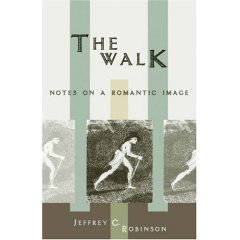
Christmas itself was nice, and I got a lot of cool things — the Hobgoblin gave me a copy of Michael Dirda’s Book by Book, which I’ve now read a little in, and it promises to be interesting. It will feed my current interest in books on books and reading. My mother-in-law gave me a Barnes and Noble gift card, so we went there on Tuesday, and I found Lawrence Weschler’s Vermeer in Bosnia, which has been on my TBR list for a long time, and Jeffrey Robinson’s The Walk: Notes on a Romantic Image, which will feed my other current obsession with books about walking. I was happy to find some good nonfiction books; I love novels, of course, but often the books that get me most excited and fuel multiple long blog posts are nonfiction ones. And Christmas isn’t quite over yet, as I know I have a box coming from a friend who always sends me books. Yay!

The Hobgoblin also got me a new pair of cycling shoes, which are black and very cool looking:

genius_5_womens_lorica_blk.jpg

Oh, and he also got me a sticker with my new “photo” or avatar or whatever you want to call it:

29096105v4_150×150_front.jpg

A couple of people have asked where it comes from — it’s from one of my favorite novels ever, Tristram Shandy; it’s the narrator’s rendering of his story’s plotline — very digressive. I like the picture because I love the novel, of course, and … I like digressions.

I read a little bit, more in Proust and Richard Holmes’s Footsteps, and a little of the Dirda book, but mostly I sat around and did nothing. I needed a few days of that. I sat around and did nothing, and I also watched a lot of episodes of “The Office,” which was great fun; as we don’t have TV, we miss a lot of crap but also some good stuff, and I was happy to catch up on some of the good stuff.

So — I’m happy to be back reading your comments (thanks!) and catching up on blog posts and posting once again myself. I hope to do some goal-setting around here soon, and maybe some more summing up of my year, and definitely some more raving about Footsteps, and I might finally get around to beginning Buddenbrooks.

1 Comment

Filed under Books, Cycling, Life

Orhan Pamuk’s Snow

This is my last post for a while, as the Hobgoblin and I are heading out to my parents’ place in western New York state tomorrow. As they have very slow dial-up, I think I’ll have to do without blogs for a few days. It’ll be hard, but I’m going to try my best not to let it get to me. I’ll be back by the middle or end of next week.

I finished Orhan Pamuk’s Snow last night and was very impressed. It’s a beautiful book and one that taught me a lot about Turkey and Turkish culture. I don’t mean to make it sound didactic, but I do think that reading novels is a good way to get a sense of another country and culture. Snow dealt a lot with the conflict between Eastern and Western Europe — the main character Ka has been in exile in Germany for many years and in the novel returns to the Turkish city of Kars, and throughout, he is faced with questions about what it means to have become westernized but not to be fully western. Connected with this cultural conflict is the religious one — shortly after Ka arrives, the city of Kars undergoes a military coup, meant to keep religious conservatives from winning the upcoming election, and throughout the novel religious differences turn violent. Ka takes part in many philosophical and theological discussions about what it means to have given up his faith and about whether or not he has become an atheist.

Ka wanders the city and gets himself involved in adventures; he isn’t all that interested in all the conflict going on around him — he’d really rather write poems and talk to Ipek, the woman who is the real reason he has journeyed to Kars (the ostensible reason is to investigate a rash of suicides committed by young religiously conservative women who want to keep wearing their head scarves). All this is a way for Pamuk to write about religious and political conflict, but it’s also a way for him to consider the relationship of the artist to the political world. It seems like nearly everybody in the novel has aspirations to be a writer; so many people Ka talked with had poems stashed away somewhere or used Ka to try to find a publisher for their work. The novel’s closing section centers around a play, an incredibly loose adaptation of Thomas Kyd’s The Spanish Tragedy, which brings together all the novel’s themes and works through the conflict the city is experiencing.

One thing I found particularly interesting is the way the narrator becomes a character himself, gradually talking about himself more and more as the story proceeds. The narrator’s name is Orhan, making him a stand-in for the author himself, or perhaps another version of the author. At first I found this narratorial intrusion awkward; I wasn’t sure who the narrator was supposed to be and what his relationship to Ka was. All this cleared up gradually, however, and by the end we know quite a lot about him and his presence in the novel adds a layer of complexity to it. His relationship with Ka reminds me of Richard Holmes’s book Footsteps, which I’m currently in the middle of, and also a little bit of The Places in Between by Rory Stewart; in all these examples, one person is following in the footsteps of another, trying to puzzle together what that person’s life is like and to see what that person saw. And then each person writes a book about it. In the case of Snow, the narrator is doing research on a novel about Ka, walking where Ka walked and talking to the people he knew. He follows the exact route Ka took on a book tour, staying in the places he stayed and asking audiences what they remember about Ka.

All this brings me back to travel metaphors, the subject of an earlier post, because part of the narrator’s writing process is traveling (which is true for Holmes and Stewart as well), but writing about travel is itself also a kind of travel (one could say all writing is a kind of travel), as the writer follows the map of the journey, this time in words. And it’s true for the reader too. Following in someone’s footsteps can be done by crossing a landscape but it can also happen as a book gets written and as it gets read. So the narrator tries to relive Ka’s life twice — once by following his path through western Europe and Turkey and another by writing about the experience.

There’s another sense in which the novel is about writing itself. Pamuk talks about what a novel can and can’t do; in one scene, the novel’s narrator talks with another character, Fazil, who is troubled that the narrator plans to write a novel about him and the other residents of Kars. This is what Fazil says to the narrator:

“But I can tell from your face that you want to tell the people who read your novels how poor we are and how different we are from them. I don’t want you to put me into a novel like that.”

“Why not?”

“Because you don’t even know me, that’s why! Even if you got to know me and described me as I am, your Western readers would be so caught up in pitying me for being poor that they wouldn’t have a chance to see my life. For example, if you said I was writing an Islamist science-fiction novel, they’d just laugh. I don’t want to be described as someone people smile at out of pity and compassion.”

In another scene, the narrator asks Fazil what he would like him to put in his novel, and this is Fazil’s answer:

“If you write a book set in Kars and put me in it, I’d like to tell your readers not to believe anything you say about me, anything you say about any of us. No one could understand us from so far away.”

“But no one believes in that way what he reads in a novel,” I said.

“Oh, yes, they do,” he cried. “If only to see themselves as wise and superior and humanistic, they need to think of us as sweet and funny, and convince themselves that they sympathize with the way we are and even love us. But if you would put in what I’ve just said, at least your readers will keep a little room for doubt in their minds.”

So we come up against the problem of whether a novelist can capture the truth of somebody’s experience so that a reader can really understand it, so that the reader can get beyond expectations and stereotypes and keep from pitying the poor people of Kars, and so that the novel won’t just be another way of reinforcing the separation between east and west. I opened this post talking about what I learned from the novel, so I guess I do believe that reading novels can tell us something true about other people’s experiences and can help people bridge cultures, but I appreciate this warning about what a complicated process it can be.

Leave a comment

Filed under Books, Fiction

Footsteps

I’m taking a break from summing up my year (more on that to come though!) to write about Richard Holmes’s book Footsteps: Adventures of a Romantic Biographer, of which I have now read about 35 pages, and 35 captivating pages they are. I’ve found a new quotation for my blog (see above) and have become convinced I need to read Robert Louis Stevenson’s Travels with a Donkey in the Cevennes. Holmes is following in Stevenson’s footsteps and writing about his travels and also about his devotion to Stevenson and to the genre of biography.

In one scene, Holmes describes how he has become so obsessed with Stevenson, he feels that Stevenson is actually there, and as Holmes walks through towns and looks at faces, he searches for Stevenson’s likeness. But then he experiences a disappointment: although he has tried to follow his footsteps exactly, he realizes that the bridge on which he crossed a river is not the one Stevenson had used; instead, he finds an old crumbling bridge a little further upstream that marks his path. His response is powerful: “The discovery put me in the blackest gloom. It was stupid, but I was almost tearful.”

What he realizes is that he cannot follow in Stevenson’s literal footsteps — the route has changed over the course of the hundred or so years that separate them — but also that he cannot find Stevenson himself; he cannot perfectly follow the traces of his life. A biographer can only approximate the life, can only follow in the subject’s footsteps at a distance; there is always a gap between biographer and subject:

Even in imagination the gap was there. It had to be recognized; it was no good pretending. You could not play-act into the past, you could not turn it into a game of make-believe. There had to be another way. Somehow you had to produce the living effect, while remaining true to the dead fact. The adult distance — the critical distance, the historical distance — had to be maintained. You stood at the end of the broken bridge and looked across carefully, objectively, into the unattainable past on the other side. You brought it alive, brought it back, by other sorts of skills and crafts and sensible magic….

… it was the first time that I caught an inkling of what a process (indeed an entire vocation) called “biography” really means. I had never thought about it before. “Biography” meant a book about someone’s life. Only, for me, it was to become a kind of pursuit, a tracking of the physical trail of someone’s path through the past, a following of footsteps. You would never catch them; no, you would never quite catch them. But maybe, if you were lucky, you might write about the pursuit of that fleeting figure in such a way as to bring it alive in the present.

I’m a sucker for travel metaphors and I like this one — to write a biography is to travel along with the subject, following in that person’s footsteps on his or her life’s journey. Holmes is physically acting out his life’s work, covering the landscape Stevenson had crossed, attempting to see the things Stevenson’s saw, but seeking Stevenson’s mental and emotional landscape as well as his geographical one. And he both succeeds and fails in this attempt — time and change create a space between Holmes and Stevenson that can’t be bridged. I like that it is a journey that teaches him this lesson and that he has turned this lesson into a book; Footsteps is a travel book in two senses (but all travel books are this, aren’t they?), physical travel across a landscape and an intellectual and emotional journey as well.

Leave a comment

Filed under Books, Nonfiction

My year in books continued

When it comes to books, it’s been a year of changes. First of all, of course, this year I began blogging, and this has changed my reading life — my life, period — pretty radically. I used to keep a wimpy list of potential books to read that was about 10 books long and I hardly ever looked at it, and when I was in the store, I’d often have trouble finding something I wanted. No more, let me tell you. Now my list of books I’d like to read is something like 250 books long and growing fast. I’ve found dozens of blogs I read regularly, and I’ve learned so much about books and authors I’d never heard of before from them. I think about books and the publishing world differently now that I blog and read blogs.

And I read differently, knowing that I will write here about everything that I read. I’ve always felt that my reading should have some purpose; with my well-developed Puritan work ethic and sense of guilt, I can’t just read purely for pleasure very easily. Being an English teacher is one way of “doing something” with my reading, but I’ve discovered that blogging is another. My reading doesn’t stop with me; instead I write about the experience and people read me and sometimes write back. Something of my reading experience gets circulated back out into the world in a more direct and immediate fashion than it used to, and I like that a lot.

Blogging has meant that I’m now involved in conversations about books I never was before, and I’m part of books groups — online and in-person — that are new to me. I’ve made some great online blogging friends, and one of them, Emily, turns out to live near me, so we can be — what do you call them, in-person? traditional? regular? — friends too. I’m reading Proust because of blogging, and I’m reading more short stories, and I’m reading new books because of the Slaves of Golconda. As other people have said before, it’s like being in a very fun literature class, or like being part of a literary salon. It’s class without the grading and where I write all the “papers” effortlessly.

My reading habits have changed this year as well. I’m now reading poetry again, which I’m very happy about. I don’t read it very fast, but I do read it regularly. I’m reading multiple books at once, which means I feel able to read more challenging things — if I have only one book at a time, I’m much less likely to pick up something long and difficult because I don’t want to find myself stuck with it and bored. I can tackle something difficult for a while, and then put it down for my fun novel or nonfiction book. This means I’m not finding it difficult to read Proust. Rather than driving myself crazy trying to read it and it alone, I’m reading it along with a lot of other books that provide some variety.

What else … I found Book Mooch, which means I have whole shelves full of books strangers have mailed me, and I mail books out to strangers now and then. Half of the books on this year’s list I might not have read if it weren’t for blogging. I’ve taken to accumulating books at a frightening rate. I never used to do this; I generally bought books at the pace I read them, but no more.

I’ve developed some unexpected obsessions this past year — for books about books and reading, for example. I’ve read 4 of these books this year — by Jane Smiley, Alberto Manguel, Sara Nelson, and Nick Hornby — and I am looking forward to reading more. I had a brief but intense love affair with footnotes after reading The Mezzanine and Dracula (the editor’s footnotes were wonderful). And I’ve recently gotten excited about books on walking, with Rory Stewart’s book and now Footsteps, and with Rebecca Solnit’s A Field Guide to Getting Lost on my shelves, and W.G. Sebald and Bruce Chatwin waiting for me. I also discovered the joys of reading diaries — Virginia Woolf’s and Frances Burney’s in particular.

All this feels like a lot in one year. It makes me wonder what next year will bring.

Leave a comment

Filed under Blogging, Books

My year in books

I suppose I can resist no longer — it’s time to begin summing up my year in books. I think I’ll do a couple posts on the topic and at least one on my year in cycling. But for now, here’s a list of the books from 2006 I liked the best. I only read maybe 2 or 3 books published this year (some of them I’m not sure if they are this year or last), so it’s by no means a guide to this year’s books. It’s just a list of things I liked.

  • Philip Pullman’s His Dark Materials trilogy. I loved these books and flew through them. I haven’t read young adults books in forever, and these books made me think that’s a shame. I’m certain I’ll re-read them at some point when I need something fun. I found the plot absorbing, but the ideas were too.
  • Mary Oliver’s American Primitive. This is the first book of poems I picked up when I decided to try reading poetry again after years of not doing it, and I’m so glad I did. The poems are beautiful and moving, and — if you like poems about nature that aren’t sentimental (in the bad sense) or sappy, give this book a try.
  • Elaine Scarry’s On Beauty and Being Just. This short book inspired me to write about it on this blog so many times, I was afraid you all would get tired of hearing about it. I found it a beautiful book, as befits the title, one that I read through slowly because I wanted to stop and think about its ideas so often.
  • Rebecca West’s The Fountain Overflows. West captures childhood so well in this novel. The narrative voice is irresistable. It’s a portrait of a troubled family, and it seems to me to describe a young girl’s experience of such a family perfectly.
  • Marcel Proust’s Swann’s Way. Many thanks to Stefanie for starting the Proust blog and inspiring me to tackle this book — actually, I’ve tackled all of In Search of Lost Time, which I should be able to finish in 2007. Without the group blog, I may never have read this book, and I’m so glad I did.
  • Nicholson Baker’s The Mezzanine. Another one I posted about often. This novel follows the main character’s thoughts as he travels up an escalator on his way back to work after his lunch hour. And that’s the whole plot. It felt more essayistic to me than novelistic, complete with footnotes as it was. And it got me off on a long string of posts about footnotes.
  • Rory Stewart’s The Places in Between. I was enthralled at Stewart’s sense of adventure and his bravery and his ability to write about his walk across Afghanistan. I finished this one only recently, and it’s inspired me to read more contemporary travel writing, particularly books about long walks.

I could list more, probably, but as I will have read 56 or 57 books by the end of the year, listing 7 favorites seems about right, if I’m trying to focus on the ones I thought were the best. Actually, it’s 9 favorite books because I counted the Pullman books separately in my year’s total. As I was coming up with the list, I didn’t try to pick different genres, but I’m happy to see there was variety, with some poetry and nonfiction on the list, and it makes me think I should make sure to read lots of both next year, along with tons of novels, of course.

1 Comment

Filed under Books, Lists

Books I’ve begun


I began Orhan Pamuk’s Snow a week or so ago and I’m enjoying it. I’ll probably wait to say anything substantive about it until I’ve finished it (I’m maybe 2/3 of the way through), but it’s an interesting follow-up to Rory Stewart’s The Places in Between, since both books deal with Islam, although in very different settings and in different ways. But Snow is very much about the conflict between secularists and fundamentalist Muslims and the changes Islam has undergone and the changes it’s brought about in the last few decades, just as Stewart’s book is. I like the way Pamuk deals with the political issues — largely through his hapless main character Ka who wanders rather aimlessly around the Turkish city of Kars, trying to woo the beautiful Ipek and getting himself into trouble. Political and religious conflict is all through the novel, and we see a lot of it directly, but we also get it filtered through Ka’s experience, which helps balance out the serious tone and subject matter. I will say I find it a tiny bit slow-going. It doesn’t have much narrative drive. But that’s okay, I think, as the ideas and the characters are so interesting and well-done.

Last night I began Richard Holmes’s book Footsteps: Adventures of a Romantic Biographer, and I’m really excited about it. I’ve only read about 5 pages, but I can tell this is going to be just the kind of book I like — it’s a mix of personal narrative, travel book, and biography. It starts off telling the story of Holmes’s journey through part of France, following in Robert Louis Stevenson’s footsteps. Both of them traveled mostly on foot, sleeping outside many nights and getting fed by local villagers. It reminds me once again of Rory Stewart, although again it’s a very different experience. But Stewart was also following someone’s footsteps, in his case, Babur, a 16th century man who founded the Mughal dynasty of India. Both Holmes and Stewart are looking for traces of history as they travel through and write about the modern world.

Holmes will go on to write about Mary Wollstonecraft, Percy Shelley, and Gerard de Nerval — in this book, more exactly, he’ll be writing about the experience of traveling in their footsteps as well as writing about the people themselves. It promises to be a great mix of the historical, the critical, and the personal.

Leave a comment

Filed under Books

Franz Kafka’s “A Hunger Artist”

I have a copy of Kafka’s Complete Stories; it’s been sitting on my shelf for quite a while, and I’m not sure if I’ll ever read all the stories in it, but I would like to read more, as I enjoyed “A Hunger Artist.” I feel like I’ve read a lot of Kafka, but when I think about what, exactly, I’ve read, I realize it’s only The Trial, and that I read over a decade ago. Maybe I’ve read a lot about Kafka and that makes me feel like I’ve actually read a lot of his work. The term “kafka-esque” is very easy to throw around in conversation, and so it’s not hard to begin to think I’ve got him all figured out.

I don’t think I’ve got him all figured out, but “A Hunger Artist” didn’t upset my expectations of what I’d find in a Kafka short story — you could call it “kafka-esque”: it feels like a parable; it deals with ideas as least as much as characters and more so than plot; it’s absurd, and yet the story is told as though it weren’t; it’s about darkness and suffering and yet there’s something fine and admirable about it.

At the center of the story is the paradox of the “hunger artist” himself — how can one be a hunger artist? What’s artistic about not eating? The narrator tells us the hunger artist believes in “the honor of his profession,” and we learn that no one but the hunger artist can know for sure he is not cheating, so “he was therefore bound to be the sole completely satisfied spectator of his own fast.” So there is something mysteriously artistic about fasting, and not only that, but the hunger artist is the only one who really understands it. He also says that although no one else knows it, fasting is easy, further undermining the “artistic” element of it. And there’s the twist at the end where we learn that he fasts because he can’t find food he likes to eat. So in what sense is fasting artistic?

I don’t know, really, but it defines art as a complex give and take between artist and viewer. The artist knows fasting is easy, but the viewers won’t believe it, so they insist that they are witnessing an act in one sense or another — the artist is either “out for publicity or else was some kind of cheat who found it easy to fast because he had discovered a way of making it easy,” i.e., he managed to sneak food into his cage. So part of the “art” is simply doing nothing and then letting viewers make what sense of it they will. The more the artist insists he’s doing nothing, the more “artistic,” partly as in “artifice” and “artificial,” the viewers think it is.

Art in this story is nothing — it’s negation and refusal. It’s about letting the body waste away, until it disappears at the story’s end. And yet the art is nothingness that creates an event. It’s a refusal of the body that’s also a display of that body — a weird denial of and celebration of the body. If art here is about nothing, it’s also about death — the artist makes his living off of dying.

No wonder taste is changing and people pass him by to head for the menagerie, and no wonder they prefer to see the panther, so full of the joy of life. And yet I don’t think the story is leading us to sympathize with this changing taste; the hunger artist seems to be an admirable figure, and the people who refuse to appreciate him are refusing to see something real and true about life. It’s like the hunger artist is the one who can recognize the true nature of things — that everything ends in death and nothingness. He is an artist because of the way, simply by placing himself in a cage and refusing to eat, he can turn nothing into something — he makes some kind of meaning, difficult and distressing though it may be, out of emptiness.

Leave a comment

Filed under Books, Short stories

Books, books, and more books

I’ve written before about not mooching more books, but I haven’t kept that resolution. Surprise, surprise. How can I resist when they are free?? I know I have to mail books to other people in order to mooch books for myself, but it still feels free. I still have four points left, which means four more free books. There are lots of things that look good, but I’m trying to keep the points for books I really, really want, ones I just can’t resist. I was this close to getting a copy of Elizabeth Gilbert’s Eat, Pray, Love, for example, but somebody else mooched it before I could put in my request. Sigh.

But, in addition to Alberto Manguel’s A Reading Diary and Edmund White’s biography of Proust which I mentioned in a previous post, I recently received a Penguin Classic with some of Jane Austen’s lesser-known work: Lady Susan, The Watsons, and Sanditon. Books by Jane Austen that I haven’t read! What’s taken me so long?

I also received just today Rebecca Solnit’s A Field Guide to Getting Lost. Solnit is one of my literary heroes. I was reading her book Wanderlust a year or so ago and took it with me on a plane trip and noticed a woman in the airport watching me reading the book with some curiosity. I realized later that the woman looked suspiciously like the author photo of Solnit. I can’t be sure, but it might have been her, noticing me reading her book. I wish I could have told her how inspiring I thought her book was.

And, thanks to a mention by Litlove, I have Assia Djebar’s Fantasia: An Algerian Cavalcade on the way, which will do very well when I’m looking for something outside of my usual reading pattern, and also Peter Matthiessen’s The Snow Leopard, which will help satisfy my interest in books about walking.

On another topic entirely — I read Franz Kafka’s story “A Hunger Artist” the other day, and I’m planning on posting about it on the short story blog A Curious Singularity, but I haven’t quite had the time — or maybe it’s that I haven’t had the energy and the courage? — to write about it yet. I need to re-read it for one thing. And for another, I’m not sure what I will say. It’s a great story though, wonderfully strange.

And one more random note here — I’ve been trying to decide if I want to do the Winter Classics challenge, but I’m unsure. Part of the problem is time — I want to finish up the From the Stacks challenge, and I’m not sure I’ll have time to do both of these. The other is that I tend to take reading plans and challenges very seriously and if I did it, I’d probably read dutifully through the list, and I think it’s better if I keep some room for spontaneity in my book choices. Challenges are fun and I like being a part of a group and they are so tempting because books plans and reading lists are fun, but I’d probably better stay away.

Leave a comment

Filed under Books, Lists

Reading patterns

Danielle posted a great set of questions recently (I find Danielle’s blog a great source of inspiration — uncertain what to blog about? Go check it out and you’ll find an idea):

Do you read a certain type of book more than others? … Do you choose books mainly for the story? Or do you just try anything at all? Do read outside your comfort zone often?

I’m not sure if I do read a certain type of book more than others. I do have a certain kind of book that’s a comfort read; this year that’s meant authors like Anita Brookner and Elizabeth Taylor and Curtis Sittenfeld — these authors write character-driven books that are fairly introspective, quiet, domestic, and most often about women.

But I don’t know that I read this type of book more often than others. I suppose I’m drawn to contemporary literary fiction of the prize-winning type — think Alan Hollinghurst, Alice Munro, David Mitchell, Kazuo Ishiguro, my recently-bought-and-still-unread Kiran Desai — but obviously these examples don’t really fit neatly in a category.

And if I read too many of this type of author, I start to get a bit restless and begin to long for something different. I’ve been feeling this way lately. My current novel, Orhan Pamuk’s Snow, is providing me with something a little different, as it’s set in Turkey and it’s a novel in translation, but I could easily have listed it in the previous paragraph as contemporary literary fiction of the prize-winning type.

The other kind of book I turn to frequently is the 18C or 19C novel. This year I’ve read Frances Burney and George Sand and Bram Stoker and Jane Austen and Henry Mackenzie, and that’s pretty typical.

All these types of books are easy for me to pick up, and they are what I’m drawn to most naturally. But I do try to read things outside this pattern — most often when I’m consciously picking out something different, it will be a work in translation or something modernist or postmodernist that feels like a challenge, or maybe a classic that isn’t necessarily as easy to read as Dickens — say, The Tale of Genji, which I read earlier this year. I’ve got Samuel Beckett’s Molloy on my list of things to read, which fits into this “stretching myself” category, as does Gertrude Stein’s Three Lives and Cortazar’s Hopscotch. Boccaccio’s Decameron fits in here, as does Boswell’s Life of Johnson. I expect to enjoy these books, but they don’t bring quite the same kind of effortless enjoyment the other kind of book does. But I’m not always in this for effortless enjoyment.

Danielle asks if we choose books mainly for the story, and I don’t, really — I choose them based on what category I think they fit into, and there are tons of categories I use when I’m thinking this way — for example, a 19C novel that’s not as famous as Dickens or Eliot (Elizabeth Gaskell maybe), a lesser-known novel by a famous author such as Virginia Woolf (The Voyage Out), serious contemporary fiction that deals with important social or political issues (Snow or maybe something by Coetzee), not-quite-so-serious contemporary fiction that sounds like a lot of fun (Kate Atkinson?), experimental fiction (Delillo perhaps). The list could go on. When I’m choosing books I don’t usually think about story; rather, I think about what I know about the author, the author’s reputation, and what category I place the author into and whether that category is different enough from the book I just finished. I don’t just try anything at all, as Danielle asks — I generally know something about how to place an author in the literary world, and I use that knowledge to help make a decision.

And all this doesn’t even cover my reading patterns in nonfiction — that’s another issue entirely. Do you have recognizable reading patterns?

Leave a comment

Filed under Books, Reading

The blogger meet-up

My new book club met yesterday – I shouldn’t call it a blogger meet-up, since only three of us were bloggers – and it was a lot of fun. The Hobgoblin and I were there, of course, and Emily from Telecommuter Talk and three other women. Talking about the book, Barbara Noble’s Doreen, was a lot of fun, but one of the best things about it was meeting a fellow blogger and finally putting a face to a name. I haven’t had the experience of meeting a blogger in the flesh I’d known only online, and it’s interesting the way your mental image of a person, shaped by their blogger persona, has to adapt to the real-live person. Well, for those of you wondering, Emily is even cooler in person than she is on her blog — and we all know her blog is pretty cool.

We had a great discussion of the novel; we talked for something like an hour and a half, at first very intensely, and then we slowed down a bit, but it was like we didn’t want to finish up and we kept coming back to the book to make new observations. A couple of the people brought notes and questions and I felt a tiny bit unprepared – I must remember to take notes next time! – but ultimately that didn’t matter, as we all had things to contribute. It felt comfortable and completely non-competitive, and it was the kind of book discussion I like, where people feel free to make personal connections and tell stories from their lives that relate to the book and help to make sense of it.

And I learned more about the book – one of the coolest things about the meeting was that one of the book club members is English and so she could give us some information into the dynamics of class in England, an important part of the novel. We Americans were eating up all her insights into how accurately the book portrayed the class tensions – interestingly, she told us that the two ways of pronouncing Doreen – the accent on the first syllable or the second – was a marker of class difference, a detail I would never have figured out on my own.

So the group is planning on making the trek to the Tenement Museum in New York City in February – they’d read Triangle, a book about a fire in the Triangle Shirtwaist factory in the city and are visiting the museum as a follow-up to that. And I suggested and everyone agreed that we read Anzia Yezierska’s novel Bread Givers about a young Jewish girl growing up on the Lower East Side and struggling with her father and her religious heritage. I’m looking forward to the trip!

Leave a comment

Filed under Blogging, Books, Life

Blogger issues

Not much of a post for you today because I spent too much time switching over to Blogger beta and it’s not working for me. When you switch to the new Blogger, to get the full benefit you have to upgrade your template, and when I did that, I lost a lot of stuff. I could replace everything except Haloscan, which I use for comments; I tried and tried but just couldn’t figure out how to make Haloscan work. And I like Haloscan — I find it easier to keep track of comments that way. So I’m back to the old template and I don’t get to use most of the new features of Blogger. What a waste of time!

I did, however, manage to acquire some new books recently: yesterday Alberto Manguel’s A Reading Diary showed up in my mailbox thanks to Book Mooch, so I can continue my reading about reading pattern. Then last night the Hobgoblin and I were at the bookstore, one of those stores that has a 3-for-2 deal, and since the Hobgoblin needed one of those books for a Christmas gift, we figured we might as well buy one more of them and get one for free. So the Hobgoblin picked out one, and I got Kiran Desai’s The Inheritance of Loss; I had trouble choosing between that one and John Banville’s The Sea, but Desai won out eventually. And just a couple days ago I got Edmund White’s short biography of Proust, courtesy of Book Mooch. I’m looking forward to learning some more about Proust’s life.

Leave a comment

Filed under Blogging, Books