Category Archives: Books

Virginia Woolf’s Nose

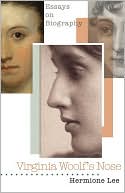
Hermione Lee’s collection of essays on biography, Virginia Woolf’s Nose, has a number of good stories to tell about the disagreements and controversies that crop up when biographers try to piece together people’s lives.  The more I read about biography, the more I realize just how hard it is to write one — not just because of all the painstaking research involved, but because of the many, many decisions a biographer must make about what to emphasize, what to put in and leave out, how to interpret facts that can have multiple meanings, what to do with the legends that crop up about famous people that might have little to do with reality.  Really, accurately telling the story of someone’s life is impossible — accurately telling your own life story is impossible too, I suppose.

Lee’s essays describe controversies that have sprung up about Percy Shelley (with a brief anecdote about Samuel Pepys), Jane Austen, and Virginia Woolf, and she closes the book with a chapter on the ways biographers narrate the story of their subjects’ death.  The stories are fascinating, including various versions of what happened to Shelley’s corpse as it was burned on a beach in Italy (his heart supposedly did not burn; Edward Trelawny plucked it from the flames and it ended up with Mary Shelley who kept it in a glass jar).  The story about Jane Austen concerns uncertainty about whether she fainted when learned she would have to leave her beloved home and move to Bath.  Lee charts the way versions of this story have changed over time and the way they reflect beliefs and biases of each biographer.

The essay on Virginia Woolf was my favorite; it describes what happens to her image and reputation and to her masterpiece Mrs. Dalloway in the hands of Michael Cunningham, who wrote the novel The Hours, and in the movie version of that novel where Nicole Kidman puts on a fake nose to play Woolf.  She charts what happens to the political content of Mrs. Dalloway in the later novel and movie, and also describes the dismay of Woolf’s critics and biographers at the way Woolf and her life and death are portrayed.  Lee expresses her own reservations about the movie, particularly its sentimentalization of Woolf’s death, but she realizes there is little to be done about it:

Does it matter if the film’s version of Virginia Woolf prevails for a time?  There is no one answer.  Yes, because it distorts and to a degree misrepresents her, and for any form of re-creation, of any significant life, in any medium, there is a responsibility to accuracy.  No, because she continues to be reinvented — made up, and made over — with every new adapter, reader, editor, critic, and biographer.  There is no owning her, or the facts of her life.  The Nose is her latest and most popular incarnation, but she won’t stay fixed under it for ever.

The book is short, at 120 pages, but it is rich with ideas about how biographies get written and reputations shaped.  She is particularly good on the ways stories take on a life of their own and become requirements for any biographer to deal with, even if the story has little to do with the facts.  And her closing chapter has a fascinating argument about the way biographers can’t resist becoming novelists at the moment they write the story of their subjects’ death: they find ways of turning the deathbed scene into highly significant and metaphorical moments, moments that sum up the subjects’ life or reflect on the work they have done.  Given a widespread loss of religious belief, we might expect modern-day biographers to take a more practical view and see death as simply another incident that is part of the life, but they persist in seeking out a larger meaning.

As far as books about biography go, I must say that I am more excited about and moved by books that have a more personal element than this one does; Janet Malcolm’s The Silent Woman and Richard Holmes’s Footsteps take up issues similar to Lee’s, but the personal aspect of these books makes them, in my view, richer and more compelling.  As much as I enjoy thinking about biography on an intellectual level, which Lee’s book expertly invites readers to do, I enjoy even more thinking about it on an intellectual and personal level both.  I want to see and feel what it’s like to grapple with the problems of biography rather than just contemplate the finished product.

But I don’t want to accuse this book of not accomplishing something it doesn’t ever claim to do, and it does what it does excellently well.
16 Comments

Filed under Books, Nonfiction

Audiobooks: The Dancer

Those of you who listen to audiobooks, what do you think about multiple readers reading one book?  I finished listening to Colum McCann’s The Dancer recently and had  mixed feelings about the quality of the reading.  I’m not sure about the quality of the novel itself, as it’s hard to tell if I would have liked it if I had read it in the usual way.  But on audio I found it slow and a little dull.  And their choice to have multiple readers reading various parts irritated me.

This is a book where having multiple readers makes sense, in a way, because the novel switches point of view a lot, moving from character to character and place to place, telling the story from a whole range of voices and perspectives.  Having different readers read each part makes it easier to figure out that a new section has begun.  I could remember the reader’s voices, too, and figure out which character the narrative was then following.

And yet I prefer to stay with one reader, no matter how varied the novel’s point of view is.  What I like about audiobooks is the sense that there is one person reading a story to me; that reader becomes kind of like a character him or herself, someone I want to spend time with.  Switching readers feels too jarring.

It didn’t help that several of the readers have irritating voices — too often overly dramatic, with every word over-enunciated.  Some of the readers were really loud and others were really quiet, so I could never get the volume set right.  It seems hard enough to find one reader who can read well; trying to put a book together with half a dozen good readers seems impossible.

The book is about Rudolf Nureyev, covering most of his life, from his very poor childhood in Russia to his international success as a ballet dancer, which brought wealth and fame.  It captures life in the Soviet Union very well, as well as the pressures that are placed on a strong-willed, spirited young man who finds himself with more money and attention than he knows what to do with.  He becomes friends with all sorts of famous people including Andy Warhol and John Lennon, and it was fun to read about the artistic, bohemian circles Nureyev moved in.

But overall, there were only parts of the book that really intrigued me; unfortunately, I spent more time cringing at the readers rather than getting much out of the book itself.  I probably would have stopped listening to it if I listened to books anywhere but in the car, but I have plenty of time there (unfortunately), so it seemed to make sense to keep on with it.

Now I’m listening to Laura Lippman’s What the Dead Know, and it’s working much better for me.  Maybe when it comes to audiobooks I should stick to mystery novels?

14 Comments

Filed under Books, Fiction, Reading

Black and White and Dead All Over

First of all, the Slaves of Golconda reading group is picking its new book for the next go-round, so go take a look and consider joining in!  The group is open to anybody who wants to read along.  You can post about the book on your own blog if you want, or you can participate in the discussion board, or you can do both.  Or just post comments on other people’s blogs — whatever you like.  Litlove has some fabulous choices for the next group reading, so go check them out and cast your vote for what sounds good.

And now, on to John Darnton’s crime novel Black and White and Dead All Over.  In short, this book kind of sucks.  Sorry for the bluntness, but it’s incoherently plotted and badly written.  What saved it for me is that I went into it with low expectations and so appreciated what I could about the story and the context and let the rest wash over me.

The novel is set in New York City and describes a newspaper modeled on the New York Times.  The main character is a reporter, Jude Hurley, who is asked to write the story after a powerful, much-hated editor is murdered.  Working sort of alongside him, sort of against him, is detective Priscilla Bollingsworth.  These two share information when they think they have something to gain from it, and otherwise are involved in a competition/flirtation as they work toward solving the murder.  The murder soon turns into multiple murders, though, as reporter after reporter is killed off, each in a particularly gruesome way.

This sounds like a promising premise, which makes Darnton’s failure to do anything with it particularly disappointing.  But the book’s flaws are numerous.  The main one is that the characters aren’t interesting; most, really all, of them are stereotypes.  Jude is work-obsessed and ambivalent about the future of his relationship with his cardboard cut-out girlfriend, who does nothing but complain that Jude does nothing but work.  Their conversations are painful to read — painful not because there is any emotional pull to them but because they are horribly written.  The detective is similarly work-obsessed but also surprisingly attractive, capable of letting her hair down and belting out a blues tune when the moment is right.  The reporters and editors at the newspaper are a collection of nasty people, from plagiarists to malingerers to gossip-mongers — well, they are all gossip-mongers — and they might be interesting, if they weren’t very hard to distinguish from one another and very hard to care about.

Even the resolution of the mystery fails to be interesting; I was surprised when I learned who the murderer was, not because it was an exciting plot twist, but because I was given no reason to care.  The resolution seemed to come out of no where, and there was no way anyone could have figured it out ahead of time.  The explanation for the motive was full of information readers didn’t have access to ahead of time, and it felt haphazardly pulled together.

I did like reading about the world of newspapers and learning a little about how the process of story-writing and publishing goes on, but when I met with my book group to discuss the book, two of the members who have newspaper experience said even there he didn’t get all the facts right.  Our conversation turned to the mystery of how this book got such good reviews and why an editor didn’t shorten it drastically.  It could have been a much better book if it were shorter, with fewer characters and fewer incidents that didn’t add much to the plot.

It’s frustrating to think that in a time when it’s so hard for good writers to get published this sort of low-quality writing gets attention.  But this is his fifth novel, and he seems to have had success as a novelist, so something he’s doing is appealing to readers.  I just don’t get it, though.

12 Comments

Filed under Books

Too tired for anything but bullet points

  • But it’s a good kind of tired, an “I worked out very hard and now I’m ready for a good night’s sleep” tired.  I rode my bike for two hours this morning and swam for an hour this evening.  Can I just say that I love my teaching schedule this semester that allows me to do this?  Teaching online frees up just enough time to get in some nice long workouts during the day, and it’s wonderful.  I’m so spoiled and I’m going to hate it next semester when I’m back to a more normal routine.
  • But I pay for the long workouts when I have stacks of papers to grade on the weekend that I didn’t have time for during the week.
  • Yesterday I ran in the morning, taught class in the afternoon, and then went to a friend’s poetry reading in the evening.  A nice day, don’t you think?
  • Today I taught music in my Intro to the Arts class, and I didn’t mess it up!  Yay!
  • And now on to books.  I have three books on the way from Book Mooch: Jenny Diski’s Skating to Antarctica; Robert Louis Stevenson’s Travels with a Donkey, which I found out about through the excellent Richard Holmes’s Footsteps; and Elizabeth George’s A Great Deliverance, which was strongly recommended by a friend, and which I’m getting from fellow-blogger Charlotte.  (Thanks Charlotte!)  I also received a book from fellow-blogger Iliana: Brief Gaudy Hour by Margaret Campbell Barnes.  (Thanks Iliana!)  It’s a novel about Anne Boleyn, and it looks perfect for when I want some historical fiction.
  • I just started two new books, Hermione Lee’s Viginia Woolf’s Nose, which looks at the ways biography gets written and particularly the relationship of biography and the body.  It’s short but good.  More on that later.  And I’ve read the first few pages of Tom McCarthy’s novel Remainder, which promises to be odd but good.
  • Today I began listening to Laura Lippman’s What the Dead Know, which so far has been a fast-moving, exciting story, perfect for the car.  I recently finished listening to Colum McCann’s The Dancer, which wasn’t so good for the car.  More on that later.
  • And now I’m off to bed …

10 Comments

Filed under Books, Fiction, Nonfiction, Teaching, Triathlon

Stranger on a Train

I adored Jenny Diski’s book Stranger on a Train.  The book won the Thomas Cook Travel Book Award and the J.R. Ackerley Prize for Autobiography, and this sums up one of the things I liked about it, which is that it resists genre classification.  It’s a travel book, yes, but it’s probably not very much like what you think about when you think about travel books.  Diski, who is British, travels around America on Amtrak (and she also travels across the ocean on a freighter), but she sees no sights and goes to no tourist locations.  She is on the freighter, on the train, in or nearby a train station, and briefly in the house of some friends, but never does she see anything famous, except for the landscape viewed through the train window.

And the book is autobiography, or perhaps it’s better to call it memoir, and yet its focus is on her travel experiences with only some occasional trips back in time to tell stories from her earlier years.

What I loved about the book is summed up in its subtitle: “Daydreaming and Smoking Around America with Interruptions.”  She does an awful lot of daydreaming and even more smoking; in fact, as she says at one point, smoking, or the quest for a good place to smoke, soon becomes the entire point of the whole journey.  Most of the trains she travels on have a room set aside for smokers, and as far as Diski is concerned, the seedier these are the better.  Smoking for Diski is a form of rebellion, a highly satisfying fuck you to all the rule-followers around her, and she glories in the badness of it:

It was not simply a matter of physical addiction — nicotine-replacement products work quite well in that respect — which prevented me from giving up (even on a pragmatically temporary basis) when confronted with the difficulties of smoking in the face of North American puritanism, it was the puritanism itself.  I didn’t want to do as I was told, I didn’t want to be more comfortable by conforming, giving in, as I saw it, to the pressures of an anti-smoking policy that was reinforced by moral imperatives.  Very childish.  Yes, exactly.  I also didn’t want to become an ex-smoker, not if it meant that I became someone who tsked and sighed whenever I caught a whiff of smoke in the air.

So she hangs out in the dirty smoking rooms with her fellow smokers, talking and sharing stories with them, enjoying their company so much that the non-smokers start to get a little jealous.

The “interruptions” in the subtitle mean a number of things — they are the layovers at various train stations and the visits Diski makes with some friends, but they are also the times Diski gets caught up in the stories and lives of the people around her and loses her detachment and solitude.  She struggles –as I would too — with her interest in the stories of the people she meets (which are invariably suprising and bizarre so that she begins to wonder if there is anybody nice and normal and boring out there — which there probably isn’t) and her fatigue with them.  It’s exhausting to interact with people all the time, even if you will never see them again.

Mostly, though, what I loved about the book is the voice.  I fear that Diski is someone who wouldn’t like me if we were to meet (I’m too much of a rule-follower probably), but I enjoyed her company.  She’s a difficult, prickly kind of person, but one who expains herself so well and has such interesting things to say and has such a great degree of self-awareness that she makes a wonderful traveling companion.

She manages to capture something true about America as well, even though (or perhaps because) she doesn’t set out to “see America.”  Instead we learn something about Americans — or least Americans who ride the trains, which is its own distinct subset.  She captures the voices and the mannerisms and the essence of these people in an open, nonjudgmental way that can marvel at people’s oddities without laughing at or condemning them. I suspect this is because she knows she’s a bit of an oddity herself — and, in fact, she knows that we all are.

I got lucky and found a copy of her book Skating to Antarctica on Book Mooch and am hoping to read all her nonfiction at some point.  As much as I love novels and will always read them (Diski has published quite a few novels too), this kind of nonfiction is what I love best — the genre-bending, voice-driven, loose-association-following kind.

12 Comments

Filed under Books

Male Criticism on Ladies Books

My edition of Ruth Hall has a generous selection of Fanny Fern’s newspaper columns, which are exactly the sort of thing her character Ruth Hall becomes famous for.  I haven’t read many of them, but I did skim through them and read the ones that sounded interesting, and I thought I’d share an example.  I found that her journalistic voice is very lively and entertaining and funny; this is the voice I liked best in the novel — the comic rather than the tragic parts.

This is an essay called “Male Criticism on Ladies Books”; it starts off with a quotation from the New York Times (given below) and then proceeds to comment on it:

“Courtship and marriage, servants and children, these are the great objects of a woman’s thoughts, and they necessarily form the staple topics of their writings and their conversation.  We have no right to expect anything else in a woman’s book.” — N.Y. Times

Is it in feminine novels only that courtship, marriage, servants and children are the staple?  Is not this true of all novels? — of Dickens, of Thackery, of Bulwer and a host of others?  Is it peculiar to feminine pens, most astute and liberal of critics?  Would a novel be a novel if it did not treat of courtship and marriage?  And if it could be so recognized, would it find readers?  When I see such a narrow, snarling criticism as the above, I always say to myself, the writer is some unhappy man, who has come up without the refining influence of mother, or sister, or reputable female friends; who has divided his migratory life between boarding-houses, restaurants, and the outskirts of editorial sanctums; and who knows as much about reviewing a woman’s book, as I do about navigating a ship, or engineering an omnibus from the South Ferry, though Broadway, to Union Park.  I think I see him writing that paragraph in a fit of spleen — of male spleen — in his small boarding-house upper chamber, by the cheerful light of a solitary candle, flickering alternately on cobwebbed walls, dusty wash-stand, begrimed bowl and pitcher, refuse cigar stumps, boot-jacks, old hats, buttonless coats, muddy trousers, and all the wretched accompaniments of solitary, selfish male existence, not to speak of his own puckered, unkissable face; perhaps, in addition, his boots hurt, his cravat-bow persists in slipping under his ear for want of a pin, and a wife to pin it (poor wretch!) or he has been refused by some pretty girl, as he deserved to be (narrow-minded old vinegar-cruet!) or snubbed by some lady authoress; or, more trying than all to the male constitution, has had a weak cup of coffee for that morning’s breakfast.

But seriously — we have had quite enough of this shallow criticism (?) on lady-books.  Whether the book which called forth the remark above quoted, was a good book or a bad one, I know not; I should be inclined to think the former from the dispraise of such a pen.  Whether ladies can write novels or not, is a question I do not intend to discuss; but that some of them have no difficulty in finding either publishers or readers is a matter of history; and that gentlemen often write over feminine signatures would seem also to argue that feminine literature is, after all, in good odor with the reading public.  Granted that lady-novels are not all that they should be — is such shallow, unfair, wholesale, sneering criticism (?) the way to reform them?  Would it not be better and more manly to point out a better way kindly, justly, and above all, respectfully? or — what would be a much harder task for such critics — write a better book!

Take that, Mr. Critic!  What a satisfying revenge, and how great to point out that criticism which can seem objective and detached and passionless is often motivated by emotion, sometimes ugly emotions like jealousy and anger.  I love the way she twice puts a question mark after the word “criticism” to show her doubts that this sort of writing really qualifies.

9 Comments

Filed under Books, Nonfiction

Low expectations

Do I watch the debate tonight or not??  Usually I don’t watch and catch up the next day instead, getting what information I need from the newspaper and NPR.  But I might not be able to drag myself away from this Palin/Biden debate tonight, although I’m afraid at the same time it will make me furious and leave me feeling slightly ill.  This whole election has left me feeling slightly ill … I’m desperately afraid Sarah Palin is going to “win” the debate because she will show she’s not a complete idiot.  What a way to win a debate … the magic of low expectations.  It reminds me of those horrible debates between George Bush and Al Gore where Gore was clearly so much smarter and more capable than Bush, but he still couldn’t manage to win the debate because all Bush had to do was not be an idiot (barely) and people seemed to love it.

Anyway, I’ve got low expectations working in my favor when it comes to reading.  I’m in the middle of John Darnton’s Black and White and Dead All Over, which is the latest pick for my mystery book club, and before picking it up I’d heard from a couple book club members that … well, that it’s not so good.  I was dreading reading it.  I’d heard that it’s got a lot of characters that are hard to keep track of, something I’m not particularly good at, and that it’s badly-written with lots of stupid insider jokes.

Now that I’ve read almost 150 pages of the book, I can see that all the criticisms are true, but I expected it to be so horribly awful that I’m pleasant surprised I’m not absolutely hating it.  I’m not hating it at all, actually; I’m just not taking it very seriously and not trying very hard to keep all those characters straight, and it’s going along fine.  If I’d had high hopes for the book, I’d be badly disappointed, but as it is, I’m just grateful it’s not God-awful.

But I do hope people don’t take that attitude toward Palin tonight … even if she’s not God-awful at the debate that still doesn’t mean she should be Vice President.

11 Comments

Filed under Books, Fiction, Life

Ruth Hall

Fanny Fern’s 1855 novel Ruth Hall surprised me a little bit, partly in terms of its plot, but even more so in terms of how it is written.  The plot has a fairly traditional structure to it — a heroine happy but precarious, a heroine in trouble, a heroine in more trouble, a heroine in new kinds of trouble, a heroine saved — although within the traditional structure are some innovations.  The novel begins with a marriage rather than ending with one, which is a twist on the coming-of-age novel so popular at the time.  Fanny Fern actively resists ending the novel with a marriage, in fact, as she could easily have had Ruth accept Mr. Walter’s hand, but instead Ruth insists on staying single and supporting herself.  Also innovative, of course, is the way that Ruth engineers her own salvation, instead of relying on a suitor or a family member to save her.  The very point of the novel is her claim of independence and the success she has at insisting on it.

To me, the novel’s style is most striking, though, particularly the short chapters and the juxtapositions of varied scenes and character sketches.  The style is disjointed, with abrupt transitions from one character to another. Fern’s newspaper writing must have influenced the development of this style, as the chapters are similar in length to the essays Fern published (my book has a sampling of these essays, although I haven’t yet read them), the type of essay her character Ruth Hall became famous for.

This disjointedness works for me because of the way it offers a kaleidoscope view of the story, all the little pieces fitting together to create a sense of the society Ruth moved in.  The style also fits with Fern’s relative lack of interest in extensive detail or psychological depths; instead of long sections of text that delve into the details of a scene or the depths of a character’s mind, we get a quick sketch of a conversation or a dramatic moment, and then we are on to the next one.  Fern is very good with the telling detail and the revealing conversation that informs you of everything you need to know without belaboring the point.  This is not to say that the characters have no depth or that the narrative isn’t fleshed out, but what depth and complexity there is (and really Ruth is the only character that is coming to mind right now that has some psychological substance to her — or am I missing something?) is created through quick flashes of insight.

The book has some odd moments.  I couldn’t quite figure out the point of the phrenology chapter, one of the longest chapters, in fact, except that Fern wanted to make a joke about phrenology, which seems like an odd thing to in the middle of a novel.  And I didn’t understand the characters’ obsession with puns either.  The fact that Hall’s daughter Nettie likes puns makes sense, since this is possibly a way of indicating that she has inherited her mother’s facility with language, but Mrs. Skiddy likes puns as well, and she’s not exactly one of the sympathetic characters.

But I like the book’s oddness; it seems to fit with its comic tone, and it does have some wonderful comic scenes, especially those describing just how horrid Ruth’s family and her in-laws are.  You could not possibly have a worse extended family than Ruth has — they are people you can rely on to behave in as selfish and mercenary a manner possible.  Even though these people cause much of Ruth’s suffering, their ridiculousness is so unbelievable that they provide a kind of comic relief to all the gloom of Ruth’s life.

In a way, Ruth’s story is at odds with the rest of the book — her story is about suffering, hard work, sacrifice, and triumph; it’s very serious and sentimental stuff.  The rest of the book, though, is about the humor and the folly of humanity, with Hyacinth and his narcissistic preening, Mr. and Mrs. Skiddy and their marital battles, and those letter writers who foolishly hope Ruth will write their school compositions for them.  For me, all these disparate parts work together to create a lot of energy; in formal terms, the book is a bit of a mess, I suppose, but it’s a fun mess.

If you like, feel free to follow and contribute to the discussion of Ruth Hall over at the Slaves of Golconda blog and the discussion board at Metaxu Cafe.

8 Comments

Filed under Books, Fiction

The Dogs of Riga

Now that the school year is underway again, I’m back to listening to audiobooks on my drive in.  I started the year off with Henning Mankell’s crime novel The Dogs of Riga, which I snatched up at the library after remembering that Kate from Kate’s Book Blog praised this series highly.  I think Kate was right — I enjoyed the book, both for its plot and for the main character, Kurt Wallender.

Wallender is a police officer in Sweden, and is the kind of character who seems much too nice and normal to get caught up in the kind of violent plots he finds himself enmeshed in.  He comes across as unassuming — he’s not particularly ambitious; he’s competent but doesn’t seem brilliant at what he does, or at least he doesn’t think he’s brilliant at what he does; he can make mistakes and bumble along like any average person.  And yet when he finds himself caught up in a plot involving international politics that could potentially put his life at risk — yes, he hesitates and agonizes over what to do, but ultimately he jumps into the fray.

The story begins with two men out on a ship who see two dead bodies afloat on a life raft; they pull the life raft closer to shore and then abandon it for the police to find.  Wallender is assigned the case.  Initially the case moves slowly, and Wallender has little idea where their few leads will take them.  But then the dead men turn out to be of eastern European origin and are traced to Latvia, at which point the situation becomes an international one and suddenly much more complicated.  Wallender travels to Latvia and has to negotiate a world that is entirely unfamiliar to him — it’s set during the time when the Soviet Union’s grip on eastern European countries is loosening and new forces are beginning to take its place.  The situation is complicated further when Wallender falls in love with the beautiful widow of a Latvian police officer.

The Dogs of Riga offers a satisfying plot, but it also offers much to think about, particularly in Wallender’s musings about the way the world seems to be falling apart around him.  The book has a mournful tone to it — Wallender himself is quietly sad — and much of this sadness comes from Wallender’s feeling that it no longer makes sense to be a police officer and to try to carry out justice in a society that cares about it so little.  He toys with the idea of applying for a job as a security officer and leaving his police work behind because of this loss of confidence in society and because of the toll his job takes on him personally.  He’s drawn back to the fight for order and justice, however; as much as he longs for a life that is simpler, he can’t quite leave his idealism behind. He’s a reluctant romantic — he wants a simpler, less complicated life, but at the same time when the chance comes along to be a hero and help a woman in distress, he can’t say no.

Listening to this book on audio worked particularly well because of the way the reader’s voice helped to create a sense of atmosphere.  I respond more emotionally to a book when I’m listening to it, and this means I get caught up in the character development and the excitement of the plot twists and turns that much more.  Now I’m left hoping that my library as more Mankell books on CD …

8 Comments

Filed under Books

Stupid articles about books

Now and then I love to criticize people who write stupid articles about books in well-known newspapers, and I have another chance today; if you want to scoff a bit, go check out this article fromThe Times on books you shouldn’t bother to read (via).  It’s by Richard Wilson, the author of Can’t Be Arsed: 101 Things Not to Do Before You Die, which is a book I’m pretty sure I don’t need to read before I die.  Yes, the author is trying to be offensive and stupid in his list, but even if you enjoy that sort of thing, it’s not particularly well done — the best he can say about War and Peace is that “it’s way, way too long.”  And he’s got Jane Austen on the list, complaining that he gave up on it after fifty pages because “the characters spoke in a very oblique way and it seemed to be all about hypocrisy and manners and convention.”  Actually, Austen’s dialogue isn’t particularly oblique (you’d think the author would love Hemingway’s relative straightforwardness, but he doesn’t — Hemingway’s on the list too) and hypocrisy and (bad) manners can make for very good reading. Here’s what he says about The Iliad:

The Iliad is one of the most boring books ever written and it’s not just a boring book, it’s a boring epic poem; all repetitive battle scenes with a lot of reproaching and challenging and utterances escaping the barrier of one’s teeth and nostrils filling with dirt and helmet plumes nodding menacingly. There’s a big fight between Achilles and Hector and that’s about it.

Why do people like this get published?  Why?

13 Comments

Filed under Books, Reading

The Story of Edgar Sawtelle

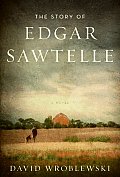
David Wroblewski’s The Story of Edgar Sawtelle is a moving, beautifully written, emotionally taxing, very well-told novel.  It’s the kind of book that’s difficult, not because of the way it’s written, but because of the direction you know the story is headed in — you get caught up in the novel’s world and want to stay in it, and yet you know things are going to go bad at some point and you dread the thought.

The novel is a retelling of Hamlet, a fact that shapes your experience of it one way or another.  If you are familiar with the play, then you have the pleasure of trying to figure out which character in the novel corresponds to which character in the play, and which plot event is a version of the play’s events.  The novel doesn’t follow Hamlet exactly, but it’s close enough that there are plenty of convergences to pick up on. You also have a general sense of the direction the plot will take and it’s satisfying to watch exactly how Wroblewski works everything out.

The risk of retelling a well-known story is that the reader might lose a sense of urgency or feel that what happens is too expected and familiar, and I did feel a laxness now and then when the novel followed the play particularly closely.  But the method offers plenty of other pleasures (although perhaps “pleasure” isn’t quite the right word, since we’re talking about a tragedy here), not least the experience of hoping against hope that things will turn out differently than you are afraid they will.

If the reader isn’t familiar with Hamlet, there is another possible risk, which is that some of the plot events may seem a little strange and out of place.  I read this book for a book group (which hasn’t yet met) and another member who hadn’t realized that it’s a version of Hamlet was a little startled to find that a ghost makes an appearance in a novel that is otherwise very down-to-earth and realistic.  But this friend said it was only a small jarring moment in what was otherwise a good experience.

If you do get the Hamlet reference, there is the intellectual pleasure of seeing just how Wroblewski reshapes a story originally set in a very different time and place.  He does this wonderfully well; with the possible exception of ghosts, there is no awkwardness in having a Hamlet who lives on a farm in Wisconsin in the 20th century and grows up raising dogs.  Wroblewski handles the relationships among the Hamlet, Claudius, and Gertrude characters marvelously well, and his take on Ophelia is astonishing.

But to set the Hamlet issue aside, the world of the novel is remarkably well-realized and his main character an appealing one.  Edgar’s life is simple — he attends school but spends most of his time working with the dogs his family is known for, the Sawtelle dogs, distinguished by their unusually strong ability to communicate with humans.  He and his mother and father raise and train the dogs, pouring their energy into them so that they are among the best-trained dogs available.

Edgar’s life is also shaped by the fact that he was born unable to speak, although he can hear normally.  This is a mystery to the doctors, who conducted test and after test on him but could never figure out the problem.  Something about this inability to speak gives him an unusually close rapport with the dogs, so close that his ability to train them sometimes suffers.  His companion, Almondine, is always by his side; she is trained to keep an eye on him and to alert the others if he is in trouble.  Her devotion to him — and his to her — is almost too moving to bear.

The novel’s point of view is most often focused on Edgar, with some chapters that shift to other characters and now and then even to Almondine, and Wroblewski often tells us what Edgar is thinking and feeling, but he rarely tells us what Edgar thinks of his inability to speak.  This fact is simply a given, something Edgar seems to accept.  (The one exception to this general rule is horrifying, however — all the more horrifying because of this earlier reticence.)  We also don’t learn much about Edgar’s life off the farm.  We know he attends school, but what his experience is like there we have no idea, and we never hear of any friends or outside interests or future plans.  For such a long novel, it’s remarkably focused on just a few people in a constrained setting.  This narrowness of focus intensifies the sense of doom that slowly settles over everybody; if things are going to go wrong, they are going to go spectacularly wrong and it will be a horrifying sight.  The farm is all that Edgar knows — it’s his whole world, and this gives him a strength and a vulnerability that are wrenching to behold.

This is Wroblewski’s first novel, and I’m very curious to see what he will publish next; this is a wonderful debut from a writer I hope gives us many more books in the future.

(If you decide to read the hard cover version of this book, I’d suggest not reading the front flap, as it gives away way too much of the plot.  After all I’ve said about Hamlet, you might think I’ve given away too much too, but the description on the front flap gives many more details than I have here, and I wish I hadn’t known them when I was reading.)

11 Comments

Filed under Books

Starting new books

I’ve just started some lovely new books that I would like to tell you about.  One is Fanny Fern’s Ruth Hall, which starts out at a fast pace, with a quick survey of the heroine’s childhood and then the early years of her marriage.  I am horrified at her struggle with her in-laws, who do their best to make her life as miserable as possible by ordering, manipulating, and guilting her into living as they think she should.  It reminds me of Evelina and the way that character got knocked around and ordered about by nearly everyone.  It’s painful.  But I have a feeling the action hasn’t really gotten going yet, and the book is about to take off in another direction.

Then I started Kenko’s Essays in Idleness, a collection of thoughts from a 14th century Japanese writer.  I picked up this book because of Philip Lopate’s The Art of the Personal Essay, which has a brief selection from Kenko.  I was utterly charmed by the very first entry (it is now on my sidebar):

What a strange, demented feeling it gives me when I realize I have spent whole days before this inkstone, with nothing better to do, jotting down at random whatever nonsensical thoughts have entered my head.

This is such a perfect description of blogging!  Or at least what blogging can be.  It doesn’t really describe my method, as I tend to keep my nonsensical thoughts to myself, but I enjoy reading bloggers who use the medium this way, and I love the idea of spending whole days doing nothing but jotting down thoughts.

While comparing Essays in Idleness and Sei Shonagon’s Pillow Book, the editor of my edition writes that both books:

… belong to the random mode of composition known as zuihitsu (follow the brush) in Japanese.  This form — or lack of form — was most congenial to Japanese writers, who turned to it perhaps because it was less “dishonest” than creating fiction.  The formlessness of the zuihitsu did not impede enjoyment by readers; indeed, they took pleasure not only in moving from one to another of the great variety of subjects treated but in tracing subtle links joining the successive episodes.

Leaving aside the question of the honesty or dishonesty of fiction versus nonfiction (a point we could argue about for days), I’m drawn to this lack of form, the loosely associative kind of writing you find in essays and diaries and blogs.

Thinking of loosely associative kinds of writing brings me to my third book, Jenny Diski’s Stranger on a Train, which I already have fallen in love with.  It’s a travel book, sort of, but also an anti-travel book, meaning that Diski seems to be fighting against the usual approaches to travel every step of the way.  In the book’s first section, she describes riding all day on the London underground’s Circle Line, which, as the name implies, travels in a continuous circle, so she never had to get off.  She would visit the library, find three books to check out, and read them as she rode around in circles underground.  This is a perfect introduction to a book that, so far at least, is about trying to stay still while moving through space, or maybe I should say it’s about the hope that moving through space can offer a novel way of staying still.  The next chapter describes a sea voyage she took that allowed her to spend three weeks doing hardly anything but staring at the sea.  She’s traveling, but really she’s trying to find a section of time where nothing at all happens.  As someone who believes that if only life would slow down and nothing would happen for a while I would be able to think and come to grips with things and finally do something, I find this immensely appealing.  Of course, the attempt is doomed to failure, but I can’t help but admire her for trying.

Diski might be trying to stay still, but her book wanders all over the place, through time and space and from story to philosophical reflection back to story.  It reminds me of Geoff Dyer’s Yoga for People Who Can’t Be Bothered to Do It, another travel book that is about learning to stay still, and which also has a difficult, prickly persona who meanders through places and ideas, trying to make sense of life.  This is another genre I need to read more in — the anti-travel travel book.  I wonder what other examples are out there.

11 Comments

Filed under Books

Used bookstore visit and a reminder

First of all, the reminder: the Slaves of Golconda are reading and discussing their next book soon — it’s Ruth Hall, and posts are due September 30th.  Anyone is free to join the group; just write about the book on your own blog and/or join the discussion at Metaxu Cafe.  It will be fun!

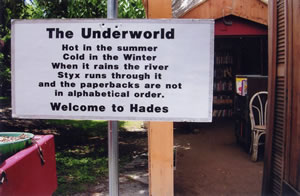
And now for the used bookstore.  I spend a couple hours yesterday afternoon with friends (three of whom have blogs!) browsing in the Book Barn in Niantic, Connecticut.  This is no ordinary used bookstore.  It’s got multiple buildings, first of all, each of which is jam-packed with books, over 350,000, as I learned from the website.  These buildings vary in size and in their holdings; there is the main barn, which is where the store first began and which has all kinds of subjects, from African American studies to women’s studies and woodworking.  There is also an area called Ellis Island, which houses books new to the shop that haven’t yet been sorted.  You can shop here, but nothing is alphabetized.  Then there is the Annex, where the fiction is kept and where I spent most of my time.

There is also Hades, with this sign:

And there is the haunted book shop (horror, mystery, science fiction), the “last page” (travel, sports), and another building about a mile away, with a whole range of subjects.

And that’s not all — there also also sheds and tents and other makeshift spaces that hold books that you can look through on your way from one building to another.  And there were goats!  And cats too, and the shop owners offer coffee and donuts, just in case you tire yourself out from all that browsing.

It was a mix of indoor and outdoor shopping — people sat around on park benches and at tables scattered around the property, and you wandered indoors and out and hardly noticed the difference.  It was lovely!

Of course I came home with some books:

  • Elizabeth Taylor’s A Wreath of Roses.  I love Elizabeth Taylor and want to read as many of her books as I can.  This one is a Penguin edition, but it was also published by Virago.
  • Vivian Gornick’s The End of the Novel of Love.  This is a collection of essays on love in novels by people such as Kate Chopin, Jean Rhys, Willa Cather, and others.
  • Margaret Oliphant’s The Perpetual Curate, a Virago edition.  The store had a lot of Viragos, and I could have come home with a dozen, easily.
  • Rosamund Lehmann’s The Weather in the Streets, another Virago.  This is a sequel to her novel Invitation to the Waltz.

I will certainly be visiting this store again!  After shopping, our group went out to dinner and told stories of bike crashes through much of the meal.  These friends are readers, and they are also cyclists.  Who could ask for a better day, right?

16 Comments

Filed under Books

Frost

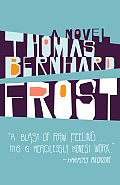
Thomas Bernhard’s novel Frost is a strange and difficult book, and I’m not entirely sure what I want to say about it.  It was a book with very little plot, which I often like, and it wasn’t much like a novel, which I also like, but this one … I wasn’t sure I enjoyed what it had to offer in place of the usual things.  It was bewildering and unsettling.  It’s beautiful in places, dark and despairing much of the way through, with uncomfortable truths about life that I often agreed with but didn’t much want to think about.  It’s the kind of book that’s a challenge — it never lets you get comfortable or lose yourself in it.

In some moments I liked the challenge and was glad to grapple with its difficult ideas, and in other moments I just wanted the book to end.  I thought about quitting with it several times, but the insights I got now and then were enough to keep me going.

The novel centers around two characters, one of whom, the narrator, is a medical student who accepts a mission to travel to the little Austrian village of Weng to observe his mentor’s brother and to report back what he sees.  The mentor’s brother is a painter named Strauch, although he hasn’t actually painted anything in a long time.  Instead, he spends his time taking walks in the forests surrounding the village and talking with the locals.

The two quickly become friends — friends of sorts, at least — and take many walks together; most of the time on these walks the painter talks and the narrator takes it in.  The novel consists mainly of the narrator’s reports of these conversations, jumping back and forth between his own words and long stretches of quotation from the painter.

What the painter talks about is not always clear — sometimes he’s coherent and other times his long ramblings are full of quick, confusing transitions, vague quasi-philosophical musings, and rants against the people in the village and against humanity in general.  I haven’t decided if it’s better or worse that the narrator frequently declares himself confused as well — it makes me realize maybe I’m not meant to understand the painter’s speeches but then I can’t help but wonder what the point of it all is.

The plot, such as it is, concerns the way the narrator becomes more and more drawn into the bizarre world of the painter.  He is both attracted to and repelled by the strange man. He struggles to report back to the painter’s brother as he is supposed to do, but he loses the ability to think objectively about the painter and can barely find the words to describe his experience.  He starts to lose his sense of the boundary between himself and the painter, wondering if his feelings about the situation are his own or are actually the painter’s feelings that he has internalized.

I might have hated this book, but there is some great (though gruesome) writing in it; here are the opening sentences:

A medical internship consists of more than spectating at complicated bowel operations, cutting open stomach linings, bracketing off lungs, and sawing off feet; and it doesn’t just consist of thumbing closed the eyes of the dead, and hauling babies out into the world either.  An internship is not just tossing limbs and parts of limbs over your shoulder into an enamel bucket.  Nor does it just consist of trotting along behind the registrar and the assistant and the assistant’s assistant, a sort of tail-end Charlie.  Nor can an internship be only the putting out of false information; it isn’t just saying: “The pus will dissolve in your bloodstream and you’ll soon be restored to perfect health.”  Or a hundred other such lies.  Not just: “It’ll get better” — when nothing will.  An internship isn’t just an academy of scissors and thread, of tying off and pulling through.  An internship extends to circumstances and possibilities that have nothing to do with the flesh.

The book is fearless in the way it talks about ugliness, despair, and death; it’s bracing in the steadiness of its gaze at the dark side of human experience — or perhaps “the dark side” isn’t the right way to say it, but rather the dark truth of human experience.  I suppose some might see in the book some grisly humor; it isn’t all heaviness and seriousness, although the humor is pretty dark indeed.

I may have picked the wrong Bernhard novel to read; this is his first one, and from what I understand his later novels follow similar formats (one character reporting on the thoughts of another character) but are shorter.  This one could have benefited from some cutting; I would have been much happier (so to speak) reading 150 pages about existential angst and despair than I was reading 300.

I might be open to reading another Bernhard novel if anybody convinced me it would be worthwhile; I have nothing against reading dark, difficult books now and then, and it would be interesting to see what else Bernhard has done with his unusual method and style.  But I think I’ll need a while to recover from this one …

9 Comments

Filed under Books, Fiction

Updates

Triathlon training feels a lot different than training for bike races — it’s not just that I have three sports now instead of one, but that I have more workouts a week.  I used to ride 4 or 5 times a week most weeks, but now I’m riding 3 or 4 times a week plus running 3 times and swimming 3 times, so that’s 9 or 10 workouts instead of the old 4 or 5.  Since many of the workouts are fairly short, I’ve added only maybe 2 or 3 hours a week total to my training, but it feels like more because of the greater number of workouts.  Each workout requires its own preparation time and usually some time for stretching afterward, and getting to the pool takes some driving time.  And then I have to shower more, especially if I work out once before work and then again afterward.  It’s a lot!

But it’s fun, and it’s a great way to deal with work stress.  After my evening workout, I’ve completely forgotten about my day at school, which is a good thing, even if it wasn’t a particularly hard day.

So, about books.  First of all, I’m excited because Tom McCarthy’s novel Remainder appeared in my mailbox the other day, a book I swear I read very good things about over here, but I can’t find the link right now. I also have Nicholson Baker’s The Fermata and David Lodge’s Author, Author on the way from Book Mooch.  Oh, and then I ordered Kenko’s Essays in Idleness when I read and liked an excerpt from Philip Lopate’s Art of the Personal Essay (I’ve still got the essay project going that you can see on my sidebar; I just don’t move very fast because every time I read a new essay I find another writer I like whose work I have to read in more depth).

And then I have a trip to a used book store planned with some friends this weekend, which, of course, will make this a very nice weekend indeed.

I’m now in the middle of David Wroblewski’s The Story of Edgar Sawtelle; this is a book Hobgoblin recommended to me, and while I often ignore his recommendations (and he ignores mine), he chose this one for our book group, and so I was stuck.  But I’m loving it!  (And of course I know that I should follow Hobgoblin’s suggestions more often, but it’s a tradition not to.)  It’s such a good story.  More on that later.

10 Comments

Filed under Books, Triathlon

How Novels Work

I’ve now finished John Mullan’s book How Novels Work, and I enjoyed it, with only a few reservations.  The book is a survey of the various technical aspects of fiction-writing; it has chapters on “Beginning,” “Narrating,” “People,” “Voices,” “Genre,” and so on, and each chapter is broken down into smaller sections on, for example, the various types of point of view, different character types, or various literary techniques such as the use of epigrams and novels-within-novels.  The book is a thorough and systematic introduction to the basics.

As someone who has studied literature for many years and taught it for quite a few as well, there wasn’t much that was new to me here, although some of the vocabulary I’m not sure I could have defined (I can never remember words like “prolepsis” and “ekphrasis”) and I had to look up the term “roman-fleuve” (which, oddly, Mullan doesn’t define).

But I think anyone who wants to know more about how novels work will enjoy this book and learn a lot from it, and for me, much of the pleasure of reading the book came from the way Mullan deploys his examples.  Mullan’s procedure in each chapter is to take one or two contemporary novels and analyze their use of the relevant formal element.  In fact, the book came out of a series of Guardian articles meant to explore contemporary novels that might be popular with book groups.

Mullan doesn’t draw solely on contemporary fiction, however; what I like about the book is the way he makes connections between contemporary novels and older fiction, particularly from the 18C, showing how recent writers are part of a tradition.  For example, in a section on “Addressing the Reader,” Mullan moves from Henry Fielding’s novel Tom Jones to Martin Amis’s Money, showing how each novelist tries to establish a certain kind of relationship with the reader by addressing him or her directly.  He talks about the rather strange continuing reliance on letters as a plot device in fiction, a reliance that made perfect sense in Jane Austen’s day, but not as much in ours.  It’s easy to think that writers are working in entirely new ways these days, and Mullan reminds us of the continuity of forms and techniques.

I did get a little tired of seeing the same books appear again and again as I worked my way through the book.  Mullan has his favorite writers (Ruth Rendell, Michael Cunningham, Mark Haddon and others) who make multiple appearances in different chapters, and while I can see how finding new examples might have been difficult (particularly since Mullan had that material from the Guardian articles already ready to go), the book does get a tad repetitious in places.  This problem may stem from the book’s source in those Guardian articles; the articles were organized around particular novels that Mullan used to elucidate a number of different literary techniques, so in the migration to a book organized by technique, the insights about particular novels necessarily got spread around into different chapters.

Still, I liked this book more than Francine Prose’s Reading like a Writer (which I posted on here and here).  The books both attempt to dissect fiction into its parts in order to help readers understand it better, although Prose’s book is more focused on helping people who want to write, while Mullan’s is aimed more toward an interested, general reader.  Both books are most interesting in the way they use examples and both books offer a useful overview of the basics.  But Prose’s advice-giving tone bothered me at times — she’s clearly trying to get you to read in a particular way — while Mullan’s mode of analysis rather than didacticism suits me better.

Given my last two posts, you can see how obsessed I am with what makes a novel a novel.  It’s part of the reason I love studying the 18C, as it gives you a chance to see how it all began (unless, that is, you think the novel actually began much earlier!).

9 Comments

Filed under Books, Nonfiction

The Novel

I’m working my way slowly through Franco Moretti’s collection of essays The Novel, Volume I: History, Geography, and Culture and am about halfway through it.  It’s the kind of book that’s best for browsing in rather than reading straight through, except that I’m the kind of person who prefers to read straight through if possible, and this book rewards it.  I decided when I picked the book up that I would give up on any essay that wasn’t interesting, but I’ve quit reading only one essay (because it was horribly written, full of the worst kind of academic jargon) and have skimmed my way through only a couple more.  Otherwise, I’ve read and enjoyed each one.

The essays generally take up a time period and a country and give you an overview of what was happening with the novel at that time, so, for example, there are essays on the novel in 19C Japan, premodern China, 19C Russia, ancient Greece, medieval France, and early modern Spain.  There are also essays that take up a particular type of writing that is related to the novel or to narrative more generally and explain that relationship, forms such as midrash, myth, monogatari (a Japanese form), romance, and qissa (an Arabic form).

I just finished a section with some of the most fascinating essays in the book so far.  The essays in the section take up the question of book production and consumption in various locations at various times.  So, for example, the first essay analyzes how many novels were published in Britain from 1750-1830, as well as how many novels were published anonymously, how many publishing companies were involved in producing new novels, how many of the new novels were epistolary in form, and how many translated novels were published and from what languages.  There are similar essays describing the situation in the United States, Italy, Spain, India, Japan, and Nigeria, covering periods from the 19C into the 20th.  Each of these essays has lots of tables and charts, and each one makes an argument about how looking at statistics on book production and consumption can alter the accepted wisdom about each place and time.  Literary critics and historians tend not to be number crunchers, but these essays make the case for looking at the publishing and marketing context within which writers write.

There is so much good information here!  I’ve been tempted to write posts on individual essays as I’ve gone along, but it was the kind of thing that got pushed aside when I had other books to write about.  But if all this sounds interesting to you, the book is worth a look.

It is written by various people, though, which means the quality of writing varies, as well as the level of difficulty and the use of jargon.  My biggest complaint about the quality of writing is that many of the essays seem to presume the reader is already familiar with the field.  This would be fine, as it seems to be marketed toward academics or at least toward very knowledgeable general readers, except that the book covers so many fields that even an expert can’t be an expert in all of it.  With my academic background I’m pretty well equipped to read this book, and yet I still found some of the essays disorienting and difficult to follow because I lack a background in, say, narrative forms in ancient Greece.  I sometimes wanted a little more explanation, a little more by way of introduction to each piece.

But not all essays have this problem, and some of the best have made me think about time periods I’m familiar with in new ways.  One of the best essays is by Franco Moretti himself, and it explores, among other things, the role of “fillers” in fiction — those sections of a narrative where no major plot events, no turning points in the narrative, occur.  One of the main innovations of the 19C novel is the way it draws on this filler more and more; whereas 18C novels often have one major plot event after another in quick succession (unless you’re Samuel Richardson, I suppose), Jane Austen in Pride and Prejudice gives us three major plot events and the rest of the novel is made up of smaller moments:

Narration: but of the everyday.  This is the secret of fillers,  Narration, because these episodes always contain a certain dose of uncertainty (how will Elizabeth react to Darcy’s words?  will he accept to talk with the Gardiners?); but the uncertainty remains local, circumscribed, without long-term consequences “for the development of the story,” as Barthes would say.  In this respect, fillers function very much like the good manners so important in Austen: they are both mechanisms designed to keep the “narrativity” of life under control – to give a regularity, a “style” to existence.

He then goes on to talk about the role of the everyday in the 19C novel — why it all the sudden became so important and what this has to do with the social and economic conditions of the time.

I’m only about halfway through the book, so I’m looking forward to what’s coming up, although at the rate I’m reading, it might be another half a year before I finish.

7 Comments

Filed under Books

The Explosionist

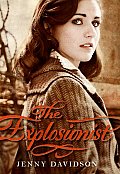
I really loved fellow blogger Jenny Davidson’s young adult novel The Explosionist; it was a good story with an appealing heroine and an interesting concept — what would the world be like if Napoleon had won the Battle of Waterloo?  It’s an alternative history novel where the political configurations are nothing like what we know today — much of Europe is one entity that has taken over England, and Scotland, where the novel is set, is allied with various other northern European countries to form the New Hanseatic League.  These two groups are perilously close to war.

The novel is set in the 1930s and tells the story of Sophie, a teenager in Edinburgh who lives with her great-aunt and has a fairly normal life attending school and spending time with friends.  But her great-aunt has some peculiarities — she is politically well-connected and influential, for one thing, and she also has a strong interest in mediums and the spirit world and holds séances at her house.  In this alternate universe, though, this kind of spiritualist interest is more wide-spread than it is in ours, so the great-aunt’s involvement in it is only mildly unusual and not alarmingly strange.

It does become alarming, however, when Sophie attends a séance conducted by a woman who delivers a frightening prophecy and then ends up dead just a little while afterwards.  Sophie and her friend Mikael investigate the death and find themselves in a much more complicated situation than they ever expected — they run into trouble with the law, investigate suspicious politicians, communicate with the spirit world, and much more.

I loved the novel for a bunch of reasons; one of the main ones was Sophie herself, who is smart and thoughtful, and although she does doubt herself at times, which is what one would expect in a 15-year old who has to deal with some strange situations, she trusts her insights and her intelligence.  She knows that boys and girls, men and women, are equally capable and smart, and she makes sure she holds her own in her adventures with Mikael.  She believes just as strongly that children are basically young versions of adults and are capable of much more than adults usually give them credit for.  Her actions in the novel prove her point.

All the historical and cultural differences between the novel’s world and our own are a lot of fun to discover as well.  Many famous names appear in the novel, but they are famous for different reasons than they are in our world — Sigmund Freud, for example, has a talk show on the radio and blathers on about the Daedalus complex.  Albert Einstein writes poetry and James Joyce is famous for his operas.

And, of course, it’s a good story, too, with a plot that moves along at a steady, satisfying pace.  One of the most chilling parts of the plot has to do with an organization called IRYLNS, the Institute for the Recruitment of Young Ladies for National Security.  The acronym is pronounced “irons,” and its activities, which I won’t describe here, are horrifying.  Sophie learns more about it than she ever wanted to know.

Like all good young adult novels, this one is excellent reading for people of all ages.  If you’re interested, you’ll find an author’s blog here.

9 Comments

Filed under Books, Fiction

Library sales

A while back I mentioned that there were some local library sales coming up, and, of course, I had to check them out (and volunteer at one — this year I volunteered for the second day of the sale, so I wouldn’t miss being able to buy books on the first day, a lesson I learned from last year).  I came back from both sales with quite a stack, and now I’m hoping to be finished with buying books for a while (but we’ll see of course).  Here’s what I found:

  • Barbara Pym’s An Academic Question: The one Pym novel I’ve read I loved, Excellent Women, so I couldn’t resist snapping up another.
  • Matthew Sharpe’s The Sleeping Father: I don’t know anything about this one, but the name was familiar, and I later remembered he wrote Jamestown, which got some blog attention, I believe.  Anyway, it sounded interesting.
  • Ian Rankin’s Dead Souls: I haven’t yet read Rankin, and he definitely should be a part of my reading in the mystery genre.  A couple friends recommended him.
  • Henning Mankell’s Before the Frost: This one is a Linda Wallender mystery; I knew there were Kurt Wallender ones, but not Linda Wallender ones.  I’ve got one of the Kurt mysteries on audiobook, so these two together will make a nice introduction to Mankell.
  • Alan Lightman’s Einstein’s Dreams: This one has been on my wishlist ever since reading Lightman’s book on science, A Sense of the Mysterious.
  • Anthony Trollope, The Eustance Diamonds: It seemed to me like a good idea to have an unread Trollope novel lying around, just in case.
  • Elfriede Jelinek’s The Piano Teacher: I’m not sure I’ll like this book, but I’d like to read Jelinek just to see what I think, controversial figure that she is.
  • Benjamin Black’s Christine Falls: I’ve read the sequel, The Silver Swan, and now it’s time to read the first in the series.
  • Sarah Waters’s The Night Watch: After having a great time reading Fingersmith, I couldn’t resist another Waters novel.
  • James Salter’s Last Night: This is a collection of stories by an author I’ve heard praised by fellow bloggers; I might have preferred to find a novel, but this will give me a chance to read more short stories.
  • Nicholson Baker’s A Box of Matches: Eventually I’ll have read everything Baker’s written.  Well, maybe not — his latest nonfiction doesn’t interest me very much.  But thanks to Book Mooch I have The Fermata on the way to me from Verbivore.
  • Jane Gardam’s The People on Privilege Hill: I’ve heard of Gardam’s novel Old Filth and so was intrigued by this collection of stories.
  • Robert Hughes’s High Wind in Jamaica: I’m always happy to find NYRB books around, and this one looked particularly good.
  • Jane Urquhart’s Away.  Verbivore is the inspiration for this purchase; she sounds like a writer I will like.

There were many more I could have gotten, but that seemed like enough …

15 Comments

Filed under Books

Virginia Woolf

I just got an email advertising an upcoming exhibition in New York City about Virginia Woolf, This Perpetual Fight: Love and Loss in Virginia Woolf’s Intimate Circle, and I’m really excited about it. It features “over 200 items, including books, images, letters and other manuscript materials, some of which have never been exhibited publicly.It’s open September 17 to November 22. I’m sure I could drag Hobgoblin to see this, but he’s not exactly a Virginia Woolf fan (one of his very, very few failings). Is there anyone out there in the NYC area who might like to meet up one day to look through it? It could be a fun book blogger outing, for sure. Let me know.

14 Comments

Filed under Books