Category Archives: Books

Thinking about summer

Here it is, Memorial Day, the beginning of summer, and I’m not entirely sure what I’m going to do with it. I usually have something planned, but this time, I really don’t. There have been some summers when I had to take exams for grad school or when my job extended through the summer or when I had my dissertation to write. Two summers ago I had a couple articles to work on, and last summer I taught online for the first time, which was a lot of work.

This summer I’m teaching online again, and that will take some time, but I’ll be honest and say that it won’t be too terribly hard. I also have some reports to write and some changes to make to my classes for the fall, but those things aren’t that difficult either.

I feel as though I should have some grand plans for the summer — a writing project or redecorating my house, or at the very least, some ambitious reading project. But I’m just not interested in any of that. Maybe some ambition will come to me as I muddle along, but for now, it’s hard to think past the next day or two.

I will be riding my bike a lot, although even there, I’m feeling unambitious. My race yesterday didn’t go well at all — I got freaked out by a crash that happened in front of me, and when I finally got around the crashed riders and discovered just how far behind the main pack I was, I said forget it, I’m through with this, and stopped riding. I’m still loving my training rides and the Wednesday night race series, but I’ve lost interest in any race I’m supposed to take seriously, and my most serious ambition is to ride 5,000 miles this year, which will be the most I’ve ever done. That’s a serious ambition, I suppose, but it only requires that I do just a bit more riding than usual.

I’ll also be attending my sister’s wedding in August, and afterward Hobgoblin and I will spend a week in Maine. We might take some short camping or backpacking trips, but then again, we might not.

So, I guess I’ll just keep muddling along, doing whatever occurs to me and reading whatever books I feel like. That’s something to look forward to, right?

9 Comments

Filed under Books, Cycling, Life, Reading

The Razor’s Edge

Well, as much as I enjoyed the last two Somerset Maugham novels I read — Of Human Bondage and The Painted Veil — my latest one, The Razor’s Edge, just didn’t work for me. I started out surprised and intrigued by it, ready to like whatever it was Maugham was trying to do, but as the book went on, I enjoyed it less and less. It suffered from two major flaws that I couldn’t get past — the pieces of it never came together into a coherent whole, and I came to like the narrator less and less. Unfortunately, the narrator claimed to be Maugham himself, which means that I’m left with some unpleasant feelings directed at Maugham, which should rightly be directed at the narrator. I’m trying to keep the two separate in my head, but it’s difficult.

There are a lot of interesting elements to the book (and in the comments on a previous post, a number of readers said they really liked it, so perhaps you might take their word for it!). There’s Maugham as the narrator; I haven’t looked up information on Maugham’s life to see if it matches the narrator’s life, but the narrator refers to novels he’s written, which are Maugham’s, and he generally seems to be writer-like and Maugham-like. I liked his method of drawing attention to himself in ways you’re more likely to see in eighteenth-century novels, for example, saying that he’s going to give the reader a break by starting a new chapter in the middle of a long scene. He also frequently refers to the decisions he’s making as a story-teller, such as when to embellish a bit and when to stick to his memories closely. I like this kind of self-reflexivity and openness about narrative and found the whole idea of the author writing himself into the story intriguing.

There are also various characters and narrative threads I enjoyed. The story takes place during the 1920s and 30s and has a lot to say about America’s place in the world, specifically about the American national character (full of seemingly endless energy and possibility) and its relationship to Europe. One of the main characters, Larry, is an American who fought in World War I and saw some brutal things that left him psychologically damaged. Or, perhaps it’s possible to say that the violence he saw opened his eyes to what really matters in life and left him completely uninterested in material values and social snobbery. He starts off the novel rather mysteriously refusing to take a plum job that’s been handed to him and slowly, as the novel goes on, starts on a spiritual quest that takes him to unexpected places.

There is also Isabel, the woman Larry plans to marry, although soon enough this relationship fails, as the values Isabel and Larry hold are incompatible. Isabel and her family come to stand for conventional values, as Isabel had the chance for a different life with Larry, but rejected it for a much more socially-acceptable marriage. It’s Isabel’s uncle Elliot, though, who is Maugham’s masterpiece in the novel. Elliot is pure, 100% snob, so calculating and ruthless that the narrator has to keep reminding us that he’s really a very nice man — just a nice man who is determined to climb the social ladder at whatever cost. Elliot has never met a titled person he didn’t like or a person of questionable origin he couldn’t snub in the most effective manner possible.

Between Isabel and Elliot on the one hand, and Larry on the other, Maugham gets to critique the social system in two ways — by satirizing Elliot’s snobbishness and Isabel’s conventionality and by admiringly narrating Larry’s rejection of their values.

All this should be a lot of fun, or, when it comes to Larry’s story, it should be moving and inspiring, but I didn’t think it was. One problem is that the pace of the narrative drags too much. Maugham really takes his time, and even I, generally a very patient reader, got antsy. The various stories seem too loosely linked as well; what holds all the characters together is the fact that they all know the narrator, who wanders in and out of their lives now and then. Maugham’s theme of materialism vs. spirituality also links the various stories, but this doesn’t feel like enough either.

Another problem is that I found the narrator less and less likeable as the novel went on. To clarify, I don’t actually expect to like every narrator I encounter and am fully prepared to enjoy an irritating, unreliable narrator, but I don’t think that’s what Maugham was offering. My dislike stems partly from the fact that I never found out much about him and yet had to spend a lot of time with him and his consciousness, and so eventually got bored. I also thought his attitude toward women was questionable. He has an irritating habit of drawing what I thought was undue attention to their physical flaws, would occasionally come out with a judgment based on stereotypes, and was dismissive of women generally. If I thought this unpleasantness added up to something, I wouldn’t mind it, but I didn’t think it did.

I’m certain I’ll read more Maugham at some point; The Razor’s Edge didn’t work for me, but I liked his other books enough to go back again.

8 Comments

Filed under Books, Fiction

George Gissing’s The Odd Women

51jJQkcy6dL._SL500_AA246_PIkin2,BottomRight,-14,34_AA280_SH20_OU01_ The Odd Women is the first George Gissing novel I’ve read, and I’m now ready to learn more about him and read more of his work. What an interesting book this turned out to be! I wrote a post on the book when I was a third of the way through it, and everything I wrote there about how much I was enjoying it stayed true until the end.

It’s a good story with interesting characters, but for me the best parts were the debates the characters had about what women’s liberation means and how people should go about trying to advance it. What I liked best is that Gissing acknowledges how complicated the “woman question” is all the way through and never descends into preachiness or over-simplification. Two of the main characters, Mary and Rhoda, have long conversations about what approach feminists should take toward marriage: should they encourage young women to stay single because marriage is so often oppressive? Or should they acknowledge that women are going to want to marry anyway and instead focus on making sure they have some education and training so they can support themselves if need be? Should they reject marriage in favor of long-term relationships that don’t have the sanction of church and state?

The book gives a range of types of women with different life experiences, to illustrate some of the most common trajectories for women of the time. There are Mary and Rhoda who, even though they disagree now and then, are united in their revolutionary zeal and who devote their lives to improving women’s lot. There is Monica, who has the chance to receive the benefits of Mary and Rhoda’s education, but who rejects them in favor of marriage with a man she doesn’t love but who offers her a comfortable life. And then there are Virginia and Alice, Monica’s sisters, who never had the opportunity to marry, and when their father dies, find themselves on their own with no way to support themselves. The only skills they have are caring for children, so they take jobs as governesses and companions. They are lucky to find work at all, as there are many, many women in exactly their situation who desperately need work too, but the jobs are awful — ill-paid (if paid at all; sometimes they worked just for room and board) and with families who mistreat them. The other option is to work in a factory or a shop, another miserable life in exploitive conditions. This is what Monica does until the opportunity for marriage saves her — or so she thinks.

The forthright and complex treatment of feminism interested me and I was very much a sympathetic reader, but I found myself reading critically — meaning negatively — as well. For one thing, Gissing has some odd class issues. One bizarre conversation sticks in my mind, where two characters with whom I’m pretty sure we’re supposed to sympathize agree that many women need to be beaten now and then. The idea behind this is that those women of the lower classes who are foolish and uneducated and can’t control themselves need husbands to keep them in line. Their ideal of womanhood — and I think Gissing’s too — is seldom found in real life. Rhoda, in particular, looks down on the vast majority of women, those who can’t or don’t want to live up to her very strict standards of womanly behavior. Because of this, she is capable of harming the very people she claims to want to help. But Rhoda’s extreme views are balanced by Mary’s greater compassion and understanding, and these two characters together show just how difficult it was for women to figure out how to improve their lot in a world so thoroughly dominated by men.

There’s a lot to think about in this book. It’s not a perfect novel by any means, but it is a great way to get a glimpse of what life was like for women at the time and to think through just what it takes to launch a social revolution.

16 Comments

Filed under Books, Fiction

Cover Her Face

My mystery book group met again last Friday to discuss P.D. James’s first Dalgliesh novel Cover Her Face. The meetings are always good, but this time was extra special, as Emily made a surprise visit. And we had a fun novel to discuss. I’ve enjoyed James’s Dalgliesh series before, having read or listened to three other of the novels in the series, and I was glad to go back to the beginning.

As far as there ever is a consensus at these meetings, it was that Cover Her Face is a good first effort, well-written, if a little sketchy in the plotting. My feeling was that while I enjoyed it, it didn’t blow me away — as, truthfully, the other James novels didn’t either, but I don’t always need to be blown away. Sometimes it’s just fine to read a competent but not brilliant book.

I was a little surprised to find out how little the book says about her detective Dalgliesh. The later books aren’t terribly forthcoming either, but here there were maybe two or three facts about the character that James offers, the most important being that his wife and first child died a few years earlier. The other fact I remember is that he likes plain English food. Otherwise, all we know about him we have to infer from his words and actions. This does tell us some important things, though — chiefly, that he’s supremely competent, professional, and dispassionate. Interestingly, the book contains no hint of his future career as a poet. Here, he’s all about work and little else. We get hints that he knows something about art and culture, but they are only hints.

The group couldn’t decide whether James was most likely setting up a series here or whether the idea for the series came later, but all this makes me think the idea came later. Most first mysteries in a series do a lot more to set the character up, at least in my limited mystery reading.

As far as the plot goes, it’s standard mystery fare — it takes place on a family estate in a small town in the English countryside; there is a small group of suspects, each with a plausible motive; much of the book is taken up with transcripts of suspect interviews; and it closes with a drawning-room scene where everything is revealed. Not surprisingly for this sort of setting, class issues are a major factor in the plot. The victim is a housemaid, Sally, who had a child out of wedlock, and has become a kind of charity case; she works for the Maxie family who feel that they have taken a risk by hiring her, and the novel opens with everyone on edge, hoping it will work out. But when Sally appears in the same dress as the Maxie daughter, they know that something is wrong, and when she announces her engagement to the Maxie son, their lives are thrown into disorder. The mystery is as much about Sally herself as it is about who killed her — questions about her motivations and her strange behavior drive the plot as much as the murder does.

I’d like to read more Dalgliesh books, because they are enjoyable, but even more so because I’m curious how the series develops. I think it’s an interesting exercise to see how a writer develops over the course of multiple books with the same character, and James has been writing Dalgliesh books for decades (Cover Her Face came out in 1962), so she’d make an interesting study. And I’m interested in seeing how Dalgliesh develops as well. But I didn’t love this book so much that I’m going to rush out and find the rest of them right away. James is somebody to pick up when I’m in the mood for writing that’s predictably, reliably competent, somebody who may not surprise but who probably won’t disappoint either.

7 Comments

Filed under Books, Fiction

On not reading

This really isn’t a post about not reading, as I do read something every day, if only a few pages before I fall asleep. It’s more about my limits as a reader. As much as I love reading, there are times I just can’t do it, and I also feel like I’m one of the few book lovers out there who feels that way. For me, reading is sort of relaxing, but really, when I’m exhausted and stressed out and trying to unwind, a book doesn’t always help. I wish I were the kind of person who could read all the time, but I’m just not. I have very definite limits on when I can read and for how long.

I’ve been thinking about this lately partly because I’ve been so busy and have had less time and energy for reading, but also because of the recent read-a-thon where people read for 24 hours straight. I admire all you who can read for 24 hours straight, but there’s no way in the world I could ever do that. I couldn’t read for even half that time, and probably not even for a quarter of that time, or maybe even an eighth. I would go stir-crazy. I wouldn’t be able to sit still. I would feel as though I were maxing out on whatever book I was reading. It’s been forever since I read an entire book in a day, and I know I’ve never read two or three. I just don’t like to take in that much at once.

I’m wondering if my tendency to stay away from lighter forms of fiction, generally-speaking, has less to do with my desire to be reading serious stuff all the time, than my habit of reading slowly and wanting books that suit that habit. It’s not worth it to spend an entire week immersed in something forgettable. But I might be willing to read forgettable books if I liked breezing through them in a few hours. Then I might find books better for relaxing, too. If this is true, it would make me feel a little less like a book snob, and more like someone with particular reading habits that just happen to lead to reading particular kinds of books.

I’m not sure if any of that makes sense, but I wanted to say something about how sometimes in the evenings when I have plenty of time to read, I put off picking up a book in favor of staring at the wall or surfing aimlessly online. I feel bad sometimes for not using that time better, but, as with many things I feel bad about, there’s no good reason for it.

18 Comments

Filed under Books, Reading

Currently reading

I’m about a third of the way through George Gissing’s 1893 novel The Odd Women and am enjoying it immensely. I had little idea of what to expect, except what the title might indicate, and the title could mean a whole range of things. But the “odd” of the title turns out to mean “not even,” as in not part of a couple, or in other words, the problem of the many, many women who have no means of support because they haven’t been trained to support themselves and don’t have a husband or father or some other male to take care of them. There are five women at the novel’s center, three of them sisters who unexpectedly lose their father, who was always intending to save money but never did. These three are left to fend for themselves, without any inkling of how to do this.

The other two women are similarly on their own, but are lucky to have enough money to live independently. They make use of their comfortable position to devote all their time to helping women such as the three sisters get the training they need to find jobs or start businesses for themselves. They also have long conversations about whether women should get married or should refuse marriage in favor of complete independence, and are generally at the forefront of the feminist movement of the time.

There are some odd issues with class in the novel, but so far I’m impressed at how forward-thinking and sympathetic Gissing is about “the woman problem.” I love how open, relatively speaking, the book is about sexuality and marriage and gender dynamics, and also about money and work. I’m also pleased that I’m reading this book right after finishing a Barbara Pym novel, since Pym also writes about a version of “the woman problem,” in her case, about the uncertain social role of single and married women after World War II.

As for other books I’m reading, I finally finished The Recognitions! I’m very pleased about this. I feel as though I should write a wrap-up post about the book, and I may do it at some point, but the truth is, I don’t really feel up to it. I’d feel as though I needed to write something smart about it, and I don’t have the energy to try to sound smart right now. At any rate, I’m glad I read the book, and I’m also glad it’s over.

So for now I’m sticking to two books, the Gissing novel, and the complete Montaigne, which I recently picked back up again after ignoring it for a month or two. I’m contemplating starting another nonfiction book, but I’m wary of taking on what might come to feel like too much. I’ve been so busy, and although my schedule is easing up a bit, I’ll still be busy for a while, and I’d prefer to have fewer books on the go, so I can focus what reading time I have a bit better.

But, I may feel tempted … I’ve considered picking up Ann Fadiman’s At Large and At Small, or perhaps one of the several science books I own, or maybe a Richard Holmes biography. We’ll see.

8 Comments

Filed under Books, Fiction

Barbara Pym’s An Academic Question

Barbara Pym’s novel An Academic Question turned out to be an interesting read for unexpected reasons. I didn’t realize this when I first picked up the book, but it’s an unfinished novel, written and abandoned in the early 1970s, that editor Hazel Holt pieced together and published in 1986. It’s not unfinished in the sense that it doesn’t have an ending; rather, Pym never finished revising it to her satisfaction. Holt writes that Pym’s first draft was written in the first person, and she was in the process of changing it into the third person but was unhappy with the results. Here’s how Holt describes her editing process:

In preparing this novel for publication I have amalgamated these two drafts, also making use of some notes that she made and consulting the original handwritten version, trying to ‘smooth’ them (to use Barbara’s word) into a coherent whole.

This is all we know about how this particular version of the novel came into existence; there are no further notes about what changes Holt made or what sections came from which draft. The novel Holt published keeps the first person voice.

I enjoyed reading the book, but I think ultimately it’s best for committed Pym fans, not for someone who is just getting to know her work, because it’s clear it’s a rough draft. There are sections that feel rushed and unpolished, with some abrupt transitions and scenes and characters that seem to come out of nowhere.

But the themes the book explores are interesting and are similar to those of Excellent Women, the other Pym novel I’ve read. The story is about a “graduate wife,” a term which makes me think of a graduate student wife, but refers — I think — to a woman with a college degree who isn’t making use of it because she’s married. The heroine, Helen, has a child but isn’t particularly interested in her and would kind of like to do something more with herself and her education, but at the same time, she isn’t terribly ambitious. She’s adrift, considering taking a part-time job like many other wives she knows, but she’s less than thrilled with the available possibilities. She could help her university professor husband with his research, maybe do some typing, but her husband does his own typing and never seems to want assistance.

She ends up getting involved in her husband’s research anyway, though, in an entirely unexpected manner — while visiting an elderly man in a nursing home, she comes across a stash of papers that would help her husband publish the article that could make his career. How she obtains these papers, what she and her husband do with them, and the intrigues they lead the characters into form the basis of the plot.

What makes the book interesting, though, is the world it describes — the academic world generally and women’s place within it. And — no surprise — it’s very much a man’s world. There are female professors, but their personal lives are complicated and most people have trouble seeing them as fully feminine. Faculty wives spend their time doing their husband’s typing, doing good deeds such as Helen’s visits to the elderly, and working part-time in genteel and not too demanding jobs, such as doing filing in the library.

Nobody seems interested in challenging this status quo, including Helen herself, who feels a vague unhappiness with her life but isn’t ready to do anything about it. She’s no rebellious spirit, and she’s not the type to think methodically and analytically about what she’s experiencing. But while Helen offers no direct critique of this stultifying world, Pym illustrates the consequences indirectly, in Helen’s uneasiness and dissatisfaction with her life and her marriage. Although there’s a whole series of funny scenes and a collection of comic characters, the mood of the book is darker than that; there’s an atmosphere of hopelessness and ennui that never fully dispells. Conflicts may find resolution and relationships may heal, but life is never exciting and nothing really new happens.

I’ve only read two Pym novels so far, one of which is definitely not her best work, but these two books strike me as similar in theme and mood. I’ve got more Pym books on my shelves (No Fond Return of Love and Jane and Prudence), and I’m curious to see if this pattern continues.

9 Comments

Filed under Books, Fiction

Another meme!

This is the semester that will not end, and so, once again, I’m very grateful to come across an interesting meme to make posting a bit easier. I don’t want to go too long without posting here, after all. This is also a thought-provoking meme — it inspired an interesting response from Zhiv, and I’m sure I’ll have some trouble answering the questions as I go along. We’ll see how it goes.

1) What author do you own the most books by?

Virginia Woolf, although I only own 13 of her books, which doesn’t seem like a particularly high number for this question. I don’t tend to collect a lot of books by the same author, largely because I don’t tend to read very deeply into any author’s collection.

2) What book do you own the most copies of?

Frankenstein. I own three or four editions of this book because it’s the book I’ve read and taught most in school. I read it once in college, at least three times in grad school, and I’ve taught it several times as well. I like to have the edition a particular teacher is using, and so with each new class, I’d buy a new edition.

3) Did it bother you that both those questions ended with prepositions?

Not in the slightest. When it comes to grammar, I strongly believe in choosing my battles wisely, and preposition placement is not at the top of the list.

4) What fictional character are you secretly in love with?

I’m not secretly in love with any fictional character, but if you forced me to name somebody I could possibly have a literary crush on, I’m afraid I’d have to be boring and say Mr. Darcy from Pride and Prejudice.

5) What book have you read the most times in your life (excluding picture books read to children)?

Oh, I’m not sure! I haven’t kept track of my reading for most of my life, so that’s a hard question to answer. It’s probably Laurence Sterne’s A Sentimental Journey, which I’ve read countless times for dissertation purposes. Frankenstein is high up there on the list too.

6) What was your favourite book when you were ten years old?

I can’t remember exactly what I was reading when, but it could possibly be Laura Ingalls Wilder’s Little House on the Prairie books, or possibly Louisa May Alcott’s Little Women, or possibly Lucy Maud Montgomery’s Anne of Green Gables.

7) What is the worst book you’ve read in the past year?

Eric Wilson’s Against Happiness, which is a book I picked for one of my book groups, and which was truly, truly awful. It’s pretty much what the title offers, a book arguing against happiness, which sounds like an interesting premise, but it’s written in a style I couldn’t stand.

8 ) What is the best book you’ve read in the past year?

Possibly Muriel Barbery’s The Elegance of the Hedgehog or maybe Jenny Diski’s Stranger on a Train.

9) If you could force everyone you tagged to read one book, what would it be?

Oh, I wouldn’t want to force anybody to read anything! Well, unless you’re taking a class from me. But fellow bloggers I don’t force to read books, even hypothetically. To be honest, if I love a book, it’s really hard when other people don’t feel the same way, so if you’re likely to dislike something I love, I wouldn’t mind at all if you didn’t read it.

10) Who deserves to win the next Nobel Prize for Literature?

And here we get to a bunch of questions I don’t really want to answer. I have no interest in nominating anybody to win the Nobel Prize. The truth is, I can’t keep track of who has won it to nominate somebody who hasn’t.

11) What book would you most like to see made into a movie?

I want to suggest books that would be really hard if not impossible to make into a movie, books like Tristram Shandy (which was sort of made into a movie — sort of) or Nabokov’s Pale Fire. What would they do with that one?

12) What book would you least like to see made into a movie?

Proust’s Remembrance of Things Past has been made into a movie, right? Well, I don’t want to see it.

13) Describe your weirdest dream involving a writer, book, or literary character.

I don’t dream about writers or literary characters. Do you? They mean a lot to me, and I spend a lot of time thinking about them, but they don’t enter my dream world.

14) What is the most lowbrow book you’ve read as an adult?

Hmmm … I listened to Dan Brown’s The Da Vinci Code, and I think that’s my best answer. I don’t read a lot of lowbrow books. The truth is, though, that listening to Brown’s book was kind of fun. If I’d read it in paper I might have felt differently though.

15) What is the most difficult book you’ve ever read?

Literary theory is a great place to go for this question: Jacques Lacan, Jacques Derrida, Gayatri Spivak were all a challenge. As for novels, Joyce’s Ulysses is one of the toughest I’ve read.

16) What is the most obscure Shakespeare play you’ve seen?

The Merry Wives of Windsor.

17) Do you prefer the French or the Russians?

Here we get into these questions with two choices, neither of which I’m actually going to choose. I’ve had a longer history with and a more emotional response to the Russians, but the French are pretty fabulous too, and I’m looking forward to reading some great 19th century novelists such as Balzac and Zola.

18 ) Roth or Updike?

Um … I would pick up Roth if I wanted something searing and raw (I’m thinking of Portnoy’s Complaint here) and Updike for some beautiful writing. The truth is, though, I’ve probably read most of the Roth and Updike I’ll ever read in my life.

19) David Sedaris or Dave Eggers?

Except for sharing first names, I don’t see what these writers have in common that makes them worth comparing. I really love Sedaris, but — even though I know it’s popular to look down on Eggers — I like Eggers too. I really enjoyed reading A Heartbreaking Work of Staggering Genius. If you think less of me for this, that’s your problem.

20) Shakespeare, Milton, or Chaucer?

Oh, goodness. They’re all great.

21) Austen or Eliot?

See Zhiv on this one.

22) What is the biggest or most embarrassing gap in your reading?

Anything pre-18th century I’m a little shaky on, which is really, truly not good. But I started off interested in 20th-century literature and worked my way back to the 18th, and never made it any farther back than that.

23) What is your favorite novel?

Pride and Prejudice.

24) Play?

I’ve never thought about this before! I’ve taught Henrik Ibsen’s A Doll’s House so many times I can’t help but love it. I also love anything by Samuel Beckett.

25) Poem?

Any of Keats’s odes.

26) Essay?

I can’t pick one — it has to be Montaigne’s collected essays.

27) Short story?

Flannery O’Connor’s “A Good Man is Hard to Find.”

28) Work of nonfiction?

I have so many. So a list of my favorite nonfiction writers: Jenny Diski, David Foster Wallace, Geoff Dyer, Virginia Woolf, Janet Malcolm.

29) Who is your favourite writer?

Jane Austen, closely followed by Virginia Woolf.

30) Who is the most overrated writer alive today?

No idea. I’ll let you answer this one.

31) What is your desert island book?

One of those big books that’s really a collection of a bunch of books, in this case, the complete works of Jane Austen in one volume.

32) And… what are you reading right now?

I’m about to finish The Recognitions (yay!), and I just began P.D. James’s Cover Her Face for my mystery book group.

9 Comments

Filed under Books, Memes

The Tenant of Wildfell Hall

Anne Brontë’s The Tenant of Wildfell Hall is an excellent read, and I’m glad I’ve finally read the third Brontë sister, but I also found a few things dissatisfying and puzzling. First the good: I loved that this book deals with some topics I don’t often see treated with such openness in Victorian novels. Certainly there are other novels of the time that are suspicious of marriage and sympathetic toward mistreated wives, but the amount of detail this book devotes to such problems as alcoholism and physical and emotional abuse I found surprising. There is a whole series of harrowing scenes in the middle of the novel that describe the heroine Helen’s sufferings at the hands of her awful husband, who spends his time carousing with friends and openly having affairs. There are other women who suffer because of their husbands’ gambling problems and abuse of alcohol. It’s not that the women are all martyrs, though; they are also capable of their own vice and casual cruelty.

The novel doesn’t entirely despair of marriage, but it does show just how hard it is to find the right kind of partner, and how easily even smart and good-hearted people can make very foolish decisions. There are men who suffer because they are trapped in bad marriages, but the brunt of the suffering falls on the women, who have very little ability to change their lives when they decide they are unhappy with them.

I liked the ideas the book takes up, and I also thought it was a well-constructed story, one that grabbed my attention immediately and kept me avidly reading all the way through. It has a fairly complicated structure involving stories within stories, in a manner similar to Wuthering Heights, although perhaps it’s not as well-done as Emily’s novel. It starts with Gilbert Markham’s letters to a friend, telling the story of the mysteriously attractive new tenant, Helen, with whom he soon develops an infatuation. Helen treats him kindly but remains aloof until Gilbert catches her in a compromising conversation with his neighbor Mr. Lawrence, at which point he completely freaks out, attacks Mr. Lawrence, and confronts Helen. In order to defend herself, she hands him a large packet of papers, which contains her diary. Much of the rest of the novel is made up of this diary, which tells the story of Helen’s earlier life.

All this is satisfying and fun (as much fun as a harrowing novel about domestic abuse can be), but I found Gilbert to be a troubling character. After reading his letters for a while I began to think that while he could sometimes be a sympathetic character, he was also conceited, self-satisfied, and comically pompous. It seemed clear to me that Brontë was presenting him as an unreliable narrator, and we were meant to see him as a good-intentioned but bumbling and foolish man. But as I read on, I began to sense that Brontë wasn’t taking this characterization anywhere, and I began to wonder if I weren’t wrong about reading him as unreliable, at least intentionally so on Brontë’s part. This led to some disappointment when the novel’s characters took him more seriously than I thought he deserved.

Spoiler alert! You may want to stop here if you plan to read the book — I was disappointed that Helen ended up marrying Gilbert. She’s not a perfect person and has made her share of mistakes (the main one being to marry Arthur Huntingdon), but she struck me as a lot smarter and savvier than Gilbert, and I couldn’t see why she fell in love with him. I can see that Gilbert’s kindness and loyalty would look attractive after how awful her first husband was, but that doesn’t seem like a good basis for a marriage.

It’s nearly impossible not to make comparisons among the Brontë sisters, since I’ve now read them all, and I don’t think Tenant is as good as Jane Eyre or Wuthering Heights.  It doesn’t feel as powerful as the other two novels and its structure and characterization aren’t as complex. But there still are plenty of reasons to read the book, particularly for its detailed look at just how much women could suffer from poor marriages and how ill-equiped they are — more because of social conventions than through their own personal failings — to make a wise choice of whom to marry.

15 Comments

Filed under Books, Fiction

Notes on various things

I began Anne Brontë’s novel The Tenant of Wildfell Hall a week or so ago, and so far it’s been great. I do love nineteenth-century novels, and I miss them if I go too long without reading one.  I love their length and the way the best authors can string a story out so it lasts a long time but never feels slow or dull. I’m having an experience with this book that I used to have all the time, which is that it’s the main book I’m reading (I dip into The Recognitions now and then, but mostly it’s Brontë), so I find myself absorbed in it at various points in the day and I feel like I’m immersed in its world. I like reading multiple books at once, but it does diffuse that feeling of absorption.

The story so far is good — it’s got all the typical elements of a 19C novel, a frame narrative, stories within stories, women of uncertain reputation, a marriage plot, intrigues about money. It also has an amusingly unreliable narrator, one who strikes me as silly and petty and foolish but who is absolutely convinced of his own rectitude and wisdom. And now I’m in a section with another narrator entirely, one who strikes me as much more reliable, but about whom I still have some doubts. I like unreliable narrators very much, if only because they offer a reader so much food for thought.

And yes, I’m still plugging away at The Recognitions, at least now and then. I have about 110 pages left to go, and yes, I’m counting. I admire the book and I’ve enjoyed reading at least parts of its, but at this point I have to admit I’m ready for it to be over. I might have fared better with it if I’d read it faster in order to stay immersed in its world, but I’ve put it aside now and then, which has meant I’ve forgotten some of the characters and plot events, and this really isn’t a book where things are easy to keep track of even in the best of circumstances. There’s even a website that offers a plot summary, and yet it’s still hard going. But I will persevere. There’s no way I’m quitting this 950-page book with only a little bit left to go!

And now for a cycling update. Things were going very well right up until about 1 1/2 weeks ago; up until that point, I was riding hard, doing fine in races, and having lots of fun. But then I caught a cold and missed a race because of it. I was hoping to recover quickly, but I spent a week feeling tired and achy. I’m back on the bike now, but I’m not sure how much fitness I’ve lost, and I still haven’t quite shaken the cold.

What interests me about this is how much my feelings shift over time. At the end of March I was completely and utterly enthralled with the riding I was doing. I was determined to find time for it no matter what the cost. After I got sick, that feeling evaporated, and I found myself grateful I couldn’t ride, so I had the chance to get a little more work done. I was grateful I could use the cold as an excuse to sleep in and spend more time lounging around. Now that I’m back on the bike, I’m enjoying riding, but also not quite feeling my former enthrallment. I expect, however, that the enthrallment will return soon enough. Isn’t it odd the way, over the course of a short week and a half, so much can change? I feel like I don’t recognize myself half the time.

9 Comments

Filed under Books, Fiction

Nothing to Be Frightened Of

I recently finished Julian Barnes’s book Nothing to Be Frightened Of, and I thought it was great, although I also couldn’t help but wonder what it was about an aging man’s musings about death that interested me so much. It’s not a subject I’m generally drawn to or a subject that particular intrigues me. It’s only very occasionally that I feel a mild dread at the thought of my own death, and I’m certainly not haunted by it. I’m pretty good at avoiding the whole subject, which I imagine is what most people do (or am I wrong about this? Do most people spend a lot of time fearfully contemplating their own death, and I’m the one who is stupidly oblivious?).

Either I’m terrified of death on an unconscious level and it’s my unconscious that led me to this book, or I read it for the reason my consciousness believes, which is that I’ve been fascinated by Barnes for a while and that I love essayistic nonfiction and so it made perfect sense to see what this book was all about. And I can report that it’s a great read, no matter what your feelings on the subject are.

The book rambles here and there and has no discernible organizational structure, but this matches Barnes’s subject and mood. He’s grappling with one of the biggest, scariest, most mysterious experiences any of us can grapple with, so it makes sense to me that he wouldn’t manage to be organized about it. It strikes me as perfectly appropriate to wander from topic to topic and to return again and again to the same pivotal experiences. I don’t want to imply that the book is repetitious; while Barnes circles around to the same topics again and again, each time he discusses them, they feel fresh.

These topics include his family history, his relationship with his brother, his process of learning what it means to die, his conversations with friends on the subject, what his favorite writers have written about death, and what the deaths of these writers were like. He weaves the biographical and autobiographical material together with passages that look at the subject from philosophical, religious, and artistic points of view, and the whole thing is charmingly and fascinatingly readable.

Barnes comes across as someone terrified of death but doing his best to stay calm, and turning to the thing he knows best to help him out: writing. The book itself comes to seem like a way of staving off death, a fact that Barnes himself acknowledges. It’s hard not to believe that as long as he keeps writing, surely he won’t die. And yet Barnes isn’t deluding himself — he’s well aware that he could die while in the middle of writing, which would leave an artefact entirely different from the one he wanted to leave behind. He also knows that being a famous writer will only buy him a little bit of time before he is forgotten entirely and loses even that shred of immortality — fame. He thinks about the person who will inevitably one day exist: his very last reader.  He is at first grateful to this reader for the attention he or she is paying him, but then he gets angry: if this is his last reader, then that person by definition has failed him by neglecting to convince anyone else to pick up one of his books.

Barnes looks around at the various sources of comfort in the face of death, searching for some reason to keep from despairing, and yet they all fail him. He’s agnostic, pretty well convinced that there is no God out there of the traditional sort, and yet not wanting to take the risk of deciding it for sure. But even if God does exist, he decides that wouldn’t be much comfort, and if God doesn’t exist that’s no comfort either, and who’s to say that if there is a God, that God isn’t cruel and doesn’t take pleasure in torturing us all? Philosophy brings no comfort either. His brother is a philosopher, but Barnes finds his way of thinking foreign to his own more artistic and less strictly logical sensibilities.

As I was reading the book I began to wonder if it would make me start fearing death in a way I hadn’t before. Barnes is pretty convincing after all. It hasn’t, though, which is good. I think it has made me more sympathetic to those who aren’t as oblivious as I am and who do fear death. I think fearing death is a perfectly logical and understandable response, and I’m lucky not to have felt the fear much myself, and I’ll probably fear it more as I get older, as most people probably do. But for now, I’ll just admire Barnes for doing his best to face the subject head on and trying make sense of the thing that is probably the hardest thing possible to make sense of.

14 Comments

Filed under Books, Nonfiction

And the winner is …

BooksPlease! Thanks to everyone who entered, and a special thanks to everyone for helping to create a wonderful reading community!

Now I’m very curious to see what BooksPlease will choose as the prize … just send me an email (ofbooksandbikes at yahoo dot com), and whatever book you choose is yours.

2 Comments

Filed under Books

Book Give-Away

Today I received a lovely package in the mail today from the wonderful blogger Cipriano. It was (of course!) a book: Geraldine Brooks’s novel People of the Book, which I won in a contest he held a couple weeks ago. Thank you, Cipriano!

This made me think about just how wonderful the book blogging community is and how many books I’ve won in similar give-aways over the last couple years. I must have pretty good luck, because I find I win these things pretty often. So thanks to everyone out there who has sent me a book (or several)!

It’s definitely time to return the favor. I missed the obvious occasion for a book give-away because my three-year blogging anniversary was back in March (three years! how have I done it so long?). But who needs a special occasion to have a book give-away?

So here’s the deal: just leave a comment on this post saying you’d like to enter the contest. I’ll collect all the names and pick the winner in a week (on Thursday, April 9th).

And here’s what I’ll give away: I’ll follow Emily’s excellent idea and let the winner pick a book that’s listed in the Books Read section of the blog.  In other words, that person can pick anything I’ve reviewed since 2007. If you win, whatever from those lists your heart desires is yours.

Entries from people outside the U.S. are fine.

This is just a little thank you for making the book blogosphere so wonderful!

24 Comments

Filed under Books

The Post-Office Girl

What stands out most to me about Stefan Zweig’s novel from the 1930s, The Post-Office Girl, is rage. The novel starts off calmly and meticulously, however — extremely so, with careful and precise descriptions of the Austrian post office where the main character Christine has worked for many years. Every item has its proper place and every item, down to every pencil and every sheet of paper, has been accounted for. The governmental bureaucracy knows everything about this place and controls everything. Stuck in the post office for the foreseeable future, Christine feels like an old woman with nothing to look forward to in her life. The tragedy is that she is only 28.

Into this stultifying atmosphere comes a surprise telegram, and it is one that will transform Christine beyond all recognition. It is from her aunt who wants Christine to join her at a posh Swiss hotel for a two-week vacation. Christine is initially reluctant — what’s the point? she thinks — but she goes and what she sees there is a revelation. She has known she is poor — she has spent her life barely scraping by trying to support herself and her sick mother — but she realizes it now in a visceral way. She sees so much money so carelessly spent, and she realizes that just the tiniest fraction of the money swirling around her would have set herself and her mother up comfortably for the rest of their lives. Quickly, she’s caught up in the social whirl, enjoying the attention brought by her youth and beauty, augmented by the fashionable clothes her aunt buys her.

She has become a new being, and it now seems impossible to return to the old life. But, of course, she has to return, and it’s here that the anger starts to seep in. Why should Christine slave her life away? Why should some people have so much money and others so little, for no discernable reason except for luck? What’s the point of working so hard, day after day, for nothing but the chance to keep doing it until the day she dies?

It’s largely the war, World War I, that has caused Christine so much suffering. By the time we meet her in the novel, she has achieved a small amount of stability, but the path that led to this point was very rough. She has had to watch family members die as a direct result of war and has had to push herself to the breaking point just to survive. And now she looks around her and wonders just what the point of it all is.

The second half of the book takes us in new directions that I don’t need to describe here, but it follows the ideas the first half introduces to their logical — and chilling — conclusions. One of the things I admire about the book is the way Zweig takes Christine through some remarkable transformations, and yet they all feel plausible and right. I was willing to believe everything that happened, even the startling conclusion.

The book asks some difficult questions — about inequality, about struggle, and about whether the value we place on hard work and honesty really makes any sense in a world where those who deserve happiness often don’t get it and those who enjoy wealth and comfort often haven’t done anything to earn it. The book also describes the devastation war can bring to people who never wanted war in the first place and who had no say in the matter. There’s a lot of anger here, but every bit of it seems justified.

5 Comments

Filed under Books, Fiction

Winner of Sorrow review

I’m coming out of my blogging break momentarily to send you over to a review of Brian Lynch’s novel The Winner of Sorrow I published over at The Quarterly Conversation. I’ve written about the book here, but I wanted to do a more formal review and The Quarterly Conversation seemed like the perfect place. Check it out!

I hope to be back soon to write about Stefan Zweig’s The Post-Office Girl for the Slaves of Golconda group, but it’s been so busy around here, I may be a little late …

8 Comments

Filed under Books, Fiction

Saturday thoughts

  • I am resolutely ignoring the fact that I will be racing tomorrow, and, even worse, riding in two races. I find that denial is the best way to manage nerves. So — tomorrow will be a quiet day where I sleep in, spend lots of time reading, see some friends, and that’s it. Yes, it is.
  • I am the kind of dork who does homework on Saturday nights. I just spent a good bit of time reading through material for the online class I’m taking on how to teach online classes. It was interesting, although now my head is spinning with educational and technical jargon, including ugly words like “chunking,” which refers to the practice of breaking up text into manageable bits.  Apparently in an online class you are not supposed to simply upload your lecture notes for students to read, but instead are supposed to break the material up into separate shorter pages that are easier to process and then to intersperse activities and assignments and such to help students understand and remember everything. Makes sense to me.
  • I finished the book for my next mystery group meeting, Chester Himes’s The Real Cool Killers. I’ll post more on it later, but in the meantime, I’ll say that I liked it, although it’s very different from the sort of thing I usually like. It’s fast-paced and focused on the action, without a whole lot of character development or analysis. But the style fits the subject it covers — the dark, crime-ridden side of Harlem in the 1950s. What interests me about the book is the fact that Hobgoblin read a chapter or two and declared he couldn’t stand it and thought the writing was horrible. I picked it up thinking I’d probably agree and found I didn’t at all. So now I’m really looking forward to the discussion next week.
  • I couldn’t resist wandering over to the town library the other day and there I found a few nonfiction books I’ve been meaning to read, including Geoff Nicholson’s The Lost Art of Walking and Steven Nadler’s The Best of All Possible Worlds: A Story of Philosophers, God, and Evil. What I brought home, though, is Julian Barnes’s book Nothing to Be Frightened Of, which is sort of a memoir, sort of an extended essay on death. So far (I’ve read maybe 30 pages), it’s rambled around and touched on his family history, his relationship with his brother, his religious history, and his fear of dying. So far, so good — this is exactly the kind of book I like, and Barnes is such a great writer.
  • I’m looking forward to picking up Stefan Zweig’s The Post-Office Girl very soon for the Slaves of Golconda discussion beginning at the end of the month. As usual the group has chosen a book that sounds great and is one I’m happy to read although I probably wouldn’t have gotten to it soon on my own. That’s precisely why I’m so happy to be a part of that group — it gets me reading things I might not otherwise.
  • I’m going to try to finish the William Cowper biography I’ve been working on before I begin the Zweig, though — I don’t want to have too many books underway at once or I might start to feel overwhelmed.
  • And no, I’m not racing tomorrow … no, really …

6 Comments

Filed under Books, Cycling, Fiction, Nonfiction, Reading, Teaching

Elizabeth George’s A Great Deliverance

Well, this one didn’t work out as planned. Several people whose taste I respect recommended Elizabeth George to me, so I was happy to pick up the first installment of her Inspector Lynley series, A Great Deliverance. There are lots and lots of books in this series, and I thought it would be fun to have a series to read that I could turn to whenever the mood struck. I’m not in the habit of reading through a series of mystery novels in an orderly way, and I thought it would be fun to try.

So what am I missing? I’m willing to admit in other circumstances I may have liked this book more, but as it is, I just never got caught up in the story. Those of you in the know, does she get better as she goes along?

The main problem is that I just never really “bought” the characters. I didn’t feel as though I was given enough information to make them come alive. Inspector Lynley struck me as annoyingly perfect. (But really, “annoying” is a word I’ve been using a lot lately, so perhaps I’m not being fair, and I can see that in another mood I might not mind unrealistic perfection at all.) He’s the 8th Earl of Asherton, and not only is he an earl, but he’s smart and charming and handsome and understanding and a great detective, etc., etc. He has some experience of suffering, but rather than making me pity him, this makes him seem even worse — he seems even more annoyingly perfect because his less-than-perfect life means he’s capable of compassion and a deeper understanding of other people. I think if I’d had a chance to get to know him better, his charm might have worked on me, but the novel’s introduction to him seemed too rushed, so I was left feeling distanced and unimpressed.

Given all of this, I might have been drawn to the other main character, Detective Sergeant Barbara Havers, who resents Lynley’s perfections with a passion. She comes from a troubled family and a difficult past, and she is solidly working class. She is also very, very angry at the world, an anger she takes out on nearly everybody, but especially on Lynley. When she is assigned to work with him on a case, she is certain disaster is about to happen.

But I wasn’t particularly taken with Barbara either. Again, I didn’t have enough information about her to be able to care all that much about her pain. Instead, her self-sabotaging behavior just got irritating and her anger seemed excessive. Her psychological problems seemed overly obvious and contrived.

The story seemed fine, but the truth is, I never care all that much about the story; I look, instead, for some interesting people and ideas to think about. I’ll admit, things did start to get interesting right at the very end with the resolution of the mystery, but that’s much too late. The interesting ending makes me wonder if her later books take off in good directions — it seems there’s some potential there — but I’m not sure I want to take the time to find out.

I wonder if this is a matter of a new writer not having everything figured out yet, or perhaps the problem of getting a series underway — surely, if you envision a series based on your characters, it’s not easy to write a book that is complete on its own but also paves the way for future books.

Oh, well — if Elizabeth George isn’t for me, that’s okay! There are surely other mystery series that I will find more satisfying.

15 Comments

Filed under Books, Fiction

On biography

I decided to take Zhiv’s advice and continue reading David Cecil’s The Stricken Deer, a biography of William Cowper (I also wrote about the book here). I am maybe a third of the way through it at this point. It’s been interesting to read so shortly after finishing Claire Tomalin’s biography of Jane Austen because it’s allowed me to compare biographical styles from the 1930s and the 1990s, and they turn out, no surprise, to be very, very different.

Cecil, for example, is much more likely to make blanket statements about what humans are like than Tomalin is.  Tomalin does a little of this too, but Cecil is strikingly willing to tell us just how people in general behave, with a confidence that I don’t think many writers today share or at least would be willing to express. It seems we’ve become (to make my own blanket statement) much more hesitant about our assertions. Cecil says things like this:

Youth can not take a consistently pessimistic view of its lot, for it thinks of its mode of existence, not as real life, but as the preparation for it. So that, however much it may deplore the present, it is hopeful about the future, which must be different, and will probably be pleasanter. But with maturity hope begins to flag. One has grown up and settled to a profession and made one’s friends, and the course one’s life will wend is clear before one. If one is still weighed down the the burdens of youth, it seems likely that one will carry them to the grave.

Now this seems like a very reasonable observation to make, and yet I can’t imagine many modern biographers going on about what happens to “one” quite so long. And there are lots of passages like this, passages that project a calmness and a confidence powerful enough that it makes one wish things really were that simple and obvious.

Cecil also never bothers to tell the reader where he got his information from or to express doubts about whether his interpretation is correct or to acknowledge other possible interpretations or conflicting views out there. This is another manifestation of the confidence that can pronounce on “how things are”; the style implies there’s no need for justification or explanation. Cecil doesn’t include notes or a bibliography either, although he explains in a short preface that he didn’t intend this to be a “definitive and documented” biography, so that exclusion makes some sense. But even so, I would guess that a modern biographer doing something similar to Cecil would mention what sources information came from and would make a point of discussing uncertainties of interpretation, as Tomalin does regularly. Instead what we get is a smooth and uninterrupted narrative, one written as though it were a novel or autobiography where the author had no need to offer verifying background information.

Generally this highly self-confident style would annoy me, but here I like it. It’s fun to listen to a voice of authority now and then, rather than having to grapple with questions and uncertainties all the time. And when the voice of authority is as charming and beguiling as Cecil’s is, that makes it even more enjoyable. In the back of my mind I know, of course, that what Cecil is telling me about Cowper might very well be open to debate, and I do wonder how much is speculation and how much comes from reliable sources, but still, I don’t mind a little simplicity and straightforwardness now and then.

Another difference between Cecil and modern biographers is how they handle issues of sexuality; in fact, I’d like to find a more modern biography of Cowper to see just how that biographer deals with Cowper’s possible impotence. Here is what Cecil says on the subject:

… obscure hints reach us of a more somber cause for Cowper’s youthful sufferings. It is alleged that he suffered from an intimate deformity, and from early years the thought of it preyed on his mind. The whole subject is mysterious. In later life his emotional experience was normal and developed perfectly spontaneously. On the other hand, he never was a passionate man; and there are certain facts in his later life for which such a deformity would offer a convincing explanation. If he was deformed there is no doubt that he must have learned about it early, possibly from the deriding lips of his tormentors. The effect on him must inevitably have been disastrous. Boys dislike above all things to be different from other people; nor was Cowper of an age to estimate coolly the relative importance of his abnormality.

The next paragraph begins, “at any rate,” and continues on with the narrative. Cecil refers to this subject a couple times in later passages, but always obliquely, and as though he’d prefer not to.  Can you imagine a modern biographer discussing impotence without ever using the word itself and without getting precisely anatomical, not to mention psychoanalytic?

I have to rush through the rest of this book to get it back to the library, but the truth is, it’s an enjoyable, quick read, and I’m learning a lot — about Cowper and also about biography itself.

11 Comments

Filed under Books, Nonfiction

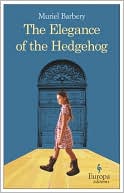
The Elegance of the Hedgehog

33092233 Muriel Barbery’s novel The Elegance of the Hedgehog has me thinking about the ways plausibility and realism aren’t necessarily that important in fiction.  Sometimes, with certain kinds of books, yes, they are important, as some books set up an expectation that the events they describe could possibly happen and the characters in them are ones you could possibly meet. But sometimes all that is just beside the point, and I think that’s true in Barbery’s book.  As I read the first few pages I felt some resistance because the voices were unfamiliar and the feelings the characters described struck me as odd and unbelievable. But as I read on I began to change my mind, and by the time I reached the middle I was entirely won over and stayed won over all the way through.

There are two narrators in this novel, and the book moves back and forth between them. We start with Renée, a woman in her 50s who works as a concierge for a building populated by wealthy families. She looks and behaves exactly as people seem to expect a concierge will look and behave — dumpy, unattractive, slow, uneducated — but secretly she spends her free time reading literature and philosophy and watching art films. She is remarkably intelligent and knowledgeable, but is determined no one will ever find that out. She is lonely, with only one friend who visits her regularly, but she prefers to be lonely than to risk the kind of meaningful interaction with other people that terrifies her. So she puts on a blank face and mangles grammar whenever any of the building’s residents are nearby and labors her way through Edmund Husserl and phenomenology when she is alone.

The other narrator is one of the building’s residents; she is 12 year-old Paloma, also utterly brilliant, who hates her family, hates her prospects in life, and plans to kill herself on her thirteenth birthday. She has thought this through carefully and sees nothing else for it but suicide. She is a much-smarter version of Holden Caulfield — she sees the phoniness of the world around her and loathes the phony adults in her life, most particularly her mother and sister, and refuses to join in. Her narrative sections take two forms; one is made up of her “profound thoughts,” in which she records her best thinking so she can do something valuable with her life before it’s over, and the other is called “The Journal of the Movement of the World,” in which she makes a point of focusing on the body so as not to get too caught up in the mind. Here, she records moments of physical beauty.

Until fairly late in the book, these two characters know of each other only in the vaguest way, and they could hardly be more different in their place in life and their age and appearance, but they turn out to have similar preoccupations and ways of thinking. And here is where we get to the book’s real charm — the ideas these two characters explore and the meaning they try to make out of life. This is really a philosophical novel about the quest to understand how best to live, how to make meaning and find beauty, and how to reconcile the coexistence of beauty and suffering. What makes these ideas so interesting is that you come to care about the people thinking them — over the course of the novel their struggles move from abstract philosophical problems to vital personal ones that you feel you yourself have a stake in solving.

I loved the fact that this novel isn’t afraid to be a novel of ideas — it’s unabashedly philosophical. One of the things that makes it so interesting, I think, is that it combines passages of abstract thought with a focus on the physical world and sections that capture the comedy of bodily life. It never gets so abstract it leaves its real people with their real bodies behind. Renée is particularly amusing in this way; as long as she is caught up in her thoughts, she is comfortable, but as soon as anyone reminds her of her physical being, she is flustered and lost and messes everything up. Both narrators are exquisitely aware of the physical world around them, even if they aren’t always comfortable in it, so the book manages to be both cerebral and down-to-earth at once.

And the book is beautifully-written as well. The only criticism I’ve heard of this book that made me pay any attention at all is that its characters aren’t realistic, but given all the wonderful things to be found in this book, I don’t think that matters one bit.

20 Comments

Filed under Books, Fiction

The 25 influential writers meme

I saw this over at Reassigned Time and thought it would be fun to do here. The instructions are to “name 25 writers who have influenced you. These are not necessarily your favorite writers or those you most admire, but writers who have influenced you. Then you tag 25 people.” I won’t be tagging 25 people, so if you want to do this, please do! I’m going to list names roughly chronologically (following my life).

  1. Authors of the Bible
  2. Laura Ingalls Wilder
  3. Maud Hart Lovelace
  4. Lucy Maud Montgomery
  5. Louisa May Alcott
  6. Jane Austen
  7. Charles Dickens
  8. George Eliot
  9. Virginia Woolf
  10. Mary Shelley
  11. Flannery O’Connor
  12. Michel de Montaigne
  13. Fyodor Dostoyevky
  14. Mary McCarthy
  15. Samuel Richardson
  16. Laurence Sterne
  17. Henry Fielding
  18. Sarah Fielding
  19. Mary Wollstonecraft
  20. Olaudah Equiano
  21. Dorothy Wordsworth
  22. Nicholson Baker
  23. David Foster Wallace
  24. Jenny Diski
  25. Janet Malcolm

#1-5 are about my childhood, pretty clearly, and then I read a lot of #6-8 in high school, which formed my taste for the Victorian novel (and the novel itself — this list is very novel-heavy).  #9-14 were college discoveries, and you can see the turn to the eighteenth-century I took in grad school in #15-21.  I could easily have added more authors here, including Boswell and Johnson. After that, I tried to think of authors I’ve been most excited about over the last few years; these ones I could possibly change up a bit, depending on my mood. The last few reflect my increasing enjoyment of nonfiction, which is why I like their presence there. I could also put Philip Lopate on the list, not because his writing has influenced me, but because the book he edited, The Art of the Personal Essay, has been so important.

It’s a pretty canonical list, isn’t it? But I suppose at heart I’m a pretty canonical kind of reader. Maybe it’s also true that people’s reading is often from the canon when they’re younger (at least English major types) and branches out afterward.  I haven’t read all of the canon, by any means, but I’ve read enough to feel that I’m ready to branch out more.

Anyone else want to try this?

13 Comments

Filed under Books, Lists, Memes, Reading