Reading and riding notes

First about cycling: yesterday I went on a wonderful, epic bike ride with Hobgoblin and eight or so other people, up north into an area with all the hills and dirt roads you could want. All the hills and dirt roads you could want if you happen to be looking for those things, which, amazingly enough, I sort of am. Just to be clear — this wasn’t a mountain bike ride; instead, we were seeking out dirt roads to ride our road bikes on. I heard one person yell out “road bikes?!” in an amazed voice as he passed us in his car on a particularly nasty stretch.

The reason we were looking for such a course to ride on is this, the Tour of the Battenkill, a fairly well-known Pro/Am race that people travel from all over to compete in. It’s famous for being a brutal course — hilly, and with long sections of dirt roads. The race is this Saturday, and I’m a little frightened.

The ride yesterday was tons of fun, though; I love how after going over a horrifyingly frightening stretch with deep gullies and large chunks of gravel that send my wheels sliding all over the place, the regular sections of dirt roads with just plain old dirt come to seem easy. I was zipping down the hills at 20 mph or more, flying over potholes and feeling okay.

BUT, the forecast for the race this weekend calls for rain, both the day before and the day of the race. What will it be like to ride in mud? I’m frightened, as I said. Very frightened. I’ll let you know how it goes. Secretly, I’m hoping to come down with the flu or something between now and Saturday.

Now on to books: I’m happily in the middle of Jane Gardam’s 2004 novel Old Filth. A look at Wikipedia tells me this is her 23rd novel, after publishing her first in 1971, and she also has eleven collections of short stories. She is someone I wouldn’t have known about if it weren’t for blogging, though; I can add her to the long list of writers I’ve learned about that way. The term “Old Filth” refers to the main character, Sir Edward Feathers, who made up the acronym FILTH, which stands for “Failed in London, Try Hong Kong.” The novel is set in contemporary times, when Filth (as people consistently call him) is an old man. The present-day setting becomes a kind of frame narrative, as the novel takes us back in time to tell of Filth’s childhood and adulthood, spent partly in England and partly in Hong Kong. So far the story is interesting and well-told, and the writing is sharp and funny.

I picked this up after setting aside Rebecca Goldstein’s book 36 Arguments for the Existence of God: A Work of Fiction, which sounded very interesting as an idea-driven, philosophical novel. The chapters are each named after an argument for the existence of God, and the story is about a psychology professor who unexpectedly finds himself famous after publishing a book on religion that hit a cultural nerve. All this sounded good, but after reading the first chapter, I wasn’t hugely impressed. The story and the main character didn’t captivate me, and I got a little worried looking at the 400 or so pages left to read. So back to the library it went. I do want to read some of Goldstein’s nonfiction, though; she has a book on the philosopher Spinoza that sounds interesting.
15 Comments

Filed under Books, Cycling, Fiction

W.G. Sebald’s Vertigo

I’m not entirely sure what to make of this book. Vertigo is my second book by W.G. Sebald; I wrote about The Rings of Saturn here, and I liked that book quite a lot, even though it left me feeling a little bewildered. Now that I have read Vertigo, which is written in a style similar to The Rings of Saturn, I’m less sure what I think of Sebald. Both books are very smart and very thought-provoking, but in both books there’s an emotional distance that leaves me a little cold. This seems less true in The Rings of Saturn, but in Vertigo I found it hard to remember what was going on and to keep track of my place in the various stories; this has a lot to do with the fact that Sebald moves quickly and seamlessly from narrative to narrative in a way that is disorienting at times, but I think it also has to do with the emotional distance of the narrator(s). There wasn’t enough drawing me into the stories and making me care about what was going on.

Now, I love idea-driven books, whether fiction or nonfiction, so I feel like Sebald should be a favorite writer of mine. But Vertigo makes me realize that an idea-driven book needs to be emotionally compelling as well, because it’s when my emotions are involved that I’m most inspired to take time to consider the ideas the writer is working with.

But to back up a bit, Vertigo has four sections, each one telling a different story, or, more accurately, a different series of interconnected stories. Each section is different, but they all deal with memory, sadness, and feelings of disorientation and uncertainty — the kind of vertigo created by feeling all the sudden alienated from oneself and the surrounding world. The first section describes Stendhal’s life, touching on his experiences in war and in love (Sebald never uses the name “Stendhal,” though, calling him by his real name, Marie Henri Beyle, and it wasn’t until I had finished the section and finally got around to reading the book’s back cover that I realized who I had just read about). As a young boy, Beyle marched with Napolean and his army, and as an older man, he tried to remember details of that march. Sebald describes the difficulties Beyle encountered reconciling his memory with the landscape he sees as an older man, thus setting up his theme of the unreliability of memory.

From there the book moves to the story of an unnamed narrator (most likely Sebald himself) who travels around Italy, exploring history (we learn about Casanova, among others) and trying to manage his feelings of uneasiness and uncertainty. Then in the third section we follow Franz Kafka for a while (also suffering emotionally), and finally we return to Sebald as narrator as he describes a journey back to his hometown in Germany. Again, as in the Stendhal section, the narrator describes what it’s like to return to formative places as an older person and to confront the difference between reality and memory.

Many of these sections describe powerful emotional experiences — panic, disorientation, sadness, despair — and yet it is all described in a flat, emotionless tone. Perhaps what this does is call upon the reader to do more imaginative work to fill in the blanks and to realize for him or herself just what it is the narrator is going through. Certainly the book asks for the reader’s participation in figuring out how the four sections connect and what the various vignettes within each section contribute to the overall meaning. And yet I didn’t feel inspired to do the work the book seemed to be asking me to do. Perhaps this is my fault, perhaps not, I’m not sure.

At any rate, Sebald is certainly doing interesting things in his writing. I haven’t yet touched on the pictures that he includes — black and white photos that relate to the surrounding text but are without captions, so the reader gets to think about the relationship of narrative and picture. Again, Sebald gives us material and then asks us to do the work of fitting it all together. The project is an interesting and admirable one, and I only wish I had fallen in love with the results.

If you are interested, come check out the discussion here.

11 Comments

Filed under Books

Maisie Dobbs and other reading notes

The Mapping of Love and Death is Jacqueline Winspear’s latest Maisie Dobbs novel. I’ll admit at this point that this series isn’t wowing me, exactly, although I do want to keep reading the latest installments, just to see where it goes. The Maisie Dobbs books are good ones to turn to at this particular point of the year, when I’m tired and busy and ready for the end of the school year, but the end of the school year is still so far away. At this point I need something familiar and absorbing and not terribly challenging, and Maisie Dobbs is just the thing.

The series doesn’t wow me for two reasons, basically, one of which is that the plots have begun to feel lackluster. I’m not one to read much for plot, though, so this is okay. The historical context and the character development are more interesting, so that’s good. The other problem, though, is that I get irritated by the way Maisie uses her unusually strong powers of intuition to figure out who committed the crime. This feels too much like cheating. Yes, Maisie is smart and has the powers of deduction we would expect of a detective, but still she relies too heavily on feelings of foreboding that come over her whenever something significant is about to happen.

But, on the other hand, I do want to know what happens to Maisie, having followed her story this far, and the book is satisfying in that regard. Significant things happen to her, and I’m glad I know about them. For a much better, much more thorough review, read Danielle’s thoughts here.

On to other bookish things: I finished Balzac’s novel Cousin Bette and never wrote much about it, and at this point, I’ve forgotten too much about the novel to have much to say. I’ll just say that I didn’t like it much and move on. I’m not ready to give up on Balzac entirely, though, as surely I’m missing something? I’m not one to dismiss a classic author quite so easily just because I failed with him once. So some day perhaps I’ll pick up a shorter novel of his, if there is one, and see if my mind has changed.

I just now finished W.G. Sebald’s Vertigo, but more thoughts on that later, as the Slaves of Golconda are discussing the book this Wednesday. I am also in the middle of David Foster Wallace’s collection of essays A Supposedly Fun Thing I’ll Never Do Again. I am enjoying it immensely. I have read five of the book’s seven essays (many of them quite long), and I think every one of them is great. Wallace is a writer who can make any subject interesting. I just finished an essay on the film director David Lynch and I loved it, even though if I’ve ever seen a Lynch film I don’t remember it. There’s another great essay on the Illinois State Fair and another one on tennis, math, the midwest, and wind. The other two I’ve read are more literary in nature, one of them a pre-Infinite Jest essay that shows Wallace thinking through some of the ideas that made their way into the novel. It’s all excellent, and I haven’t even gotten to the title essay yet, probably his most famous essay of them all. It’s crossing my mind now and then that I might want to reread Infinite Jest soon. I don’t know if I will, but I am tempted. It’s just such a fabulous novel.

12 Comments

Filed under Books, Fiction

Some really excellent nonfiction

I’m not sure at all what I would think of David Shields’s book Reality Hunger, were I to read it. I’m sort of tempted, and sort of feel as though I’ve heard enough about it already. The fact that it’s subtitled “A Manifesto” is a strike against it, as the thought of reading a manifesto makes me yawn. I had only the vaguest idea what the book was about until I read this article by James Wood in The New Yorker, an article that is ostensibly a review of the latest Change-Rae Lee novel, but is really more of a meditation on the novel itself. Wood introduces Shield’s book as an argument “against the traditional novelistic machinery” and includes this quotation from the book:

I love literature, but not because I love stories per se. I find nearly all the moves the traditional novel makes unbelievably predictable, tired, contrived, and essentially purposeless. I can never remember characters’ names, plot developments, lines of dialogue, details of setting. It’s not clear to me what such narratives are supposedly revealing about the human condition. I’m drawn to literature instead as a form of thinking, consciousness, wisdom-seeking. I like work that’s focused not only page by page but line by line on what the writer really cares about rather than hoping that what the writer cares about will somehow mysteriously creep through the cracks of narrative, which is the way I experience most stories and novels. Collage works are nearly always “about what they’re about”—which may sound a tad tautological—but when I read a book that I really love, I’m excited because I can feel the writer’s excitement that in every paragraph he’s manifestly exploring his subject.

I feel two ways about this passage. In some ways I agree, because many of the books I love the most are ones that don’t have traditional plots or traditional novelistic devices. These books I love are forms of thinking and consciousness and deal with ideas directly. I’m also someone who can’t remember charaters’ names or plot details. On the other hand, I love stories too and am far from ready to dismiss “traditional” novels. In fact, writing a manifesto dismissing “traditional” novels strikes me as a highly silly and annoying thing to do. Expressing one’s personal preference strongly is fine, but I have a feeling Shields is doing more than that.

Ultimately Wood’s discussion of the book is mixed; he calls it “imprecise and overwrought” but also finds Shields’s skepticism towards traditional narrative useful. (Amusingly, in this interview, Shields says that he hopes Wood will review his book “because he’ll hate it. And it’ll be hilarious.” He got his wish, and I wonder if the review is as hilarious as he expected. It seems that Wood might have pleasantly surprised him.)

So, who knows if I’ll read the book or not. As I read the Wood piece I thought the one really excellent reason for reading it would be to see what books Shields praises, since it sounds like we share similar tastes in some areas at least. And then I came across this list of 26 “shifting nonfictions” Shields recommends. And oh, did this list make me happy. It’s exactly what I wanted. By “shifting nonfictions” Shields means books that explore “our shifting, unstable, multiform, evanescent experience in and of the world.” The only thing that would have made the list better would be if he had dropped the nonfiction label entirely and made a list of books, fiction or non, that are explicitly idea-driven and have things to say about truth and reality.

But as it is, it’s a really awesome list, and I know that because it has a handful of some of my favorite books ever, enough to prove that we have similar tastes, and then it has some books I’ve been meaning to read forever, which confirms my desire to read them, and then it has some books I’ve never heard of. Perfect! The ones that are among my favorite books ever are Nicholson Baker’s “U&I,” Geoff Dyer’s “Out of Sheer Rage,” Mary McCarthy’s “Memories of a Catholic Girlhood,” and David Foster Wallace’s “Consider the Lobster.” I also loved an essay by Joe Wenderoth I read recently, and his book Letters to Wendy’s is on the list. Other books I’ve been meaning to read forever include Blaise Pascal’s Pensees and Fernando Pessoa’s The Book of Disquiet. W.G. Sebald’s The Emigrants is there as well, and although I’m not a huge Sebald fan, I do admire him. And I’m intrigued by a bunch of other names included there. So much to explore!

11 Comments

Filed under Books, Nonfiction

American Wife

I didn’t expect to love Curtis Sittenfeld’s novel American Wife as much as I did. I liked her first book Prep quite a lot, so I know she’s an author whose sensibility speaks to me, but I thought this book was even better than the previous one. Now, I listened to this on audio, and I tend to like books I listen to more readily than those I read, so I’m not sure how reliable my response is, exactly, but still, I spent several weeks looking forward to the time when I could get in the car to listen to a little bit more of the story.

As I wrote about here, reading this book was an odd experience because I never expected to enjoy being in the company of characters who are modeled on George and Laura Bush. But, while the George character was often irritating (though not as much as I would have expected, given how I feel about the real-life person), Alice, the one modeled on Laura, was a fascinating person whom I came to admire.

Alice is a first-person narrator, and she tells her life story up until about 1 1/2 years from the end of Charlie’s (George’s) second term as president. I was talking to a friend recently about how knowing the trajectory a novel will follow — that we will move from Alice’s childhood up through the time she becomes first lady — can get dull, but in this case it wasn’t. As soon as she met Charlie, I knew who he was and that she would marry him, and, of course, I knew that he would be politically successful beyond her wildest dreams. But the story of their journey to the White House was enthralling the entire way, all because of Alice’s thoughtful, careful, measured, and balanced voice. That description doesn’t sound enthralling, I know, but when extraordinary things happen to someone who thinks and talks kind of like I do and whom I feel I could be friends with, I’m drawn in.

The first extraordinary thing that happens to Alice is something tragic: at 17, while driving to a party, she ran a stop sign and hit a car driven by a high school classmate, Andrew Imhof, with whom she was just beginning to realize she couldpossibly fall in love. This tragedy follows her for the rest of her life, not just because she was responsible for someone else’s death, but because she could never know whether their relationship would have blossomed into romance, had he lived. What, she thinks later, if she and Andrew had married and she had become a farmer’s wife? She may never have met Charlie in that case, much less married him and become the first lady.

But marrying Andrew is not what happened, and instead when Alice meets Charlie, the two fall for each other hard. They are engaged in six weeks and married in a few months. In so many ways, Charlie is perfect for Alice — he is funny and gregarious and light-hearted, to balance out her seriousness and thoughtfulness. He is confident and carefree, to balance her worried and insecure nature. She makes him a little more serious, while he helps her loosen up. Their differing traits attract them to each other, but, not surprisingly, they become a source of conflict over time, and eventually Alice comes to question the choice she made.

Or was it even a choice? There is a sense in which Alice was pulled into that relationship by forces beyond her knowledge, or perhaps it was her unconscious that led her there. At any rate, she thinks deeply about why she did what she did, and why people do what they do, and the extent to which any of us have any real say in the course of our lives.

These questions become even more urgent when she finds herself as First Lady and wife of a husband who has taken the country to war, in highly questionable circumstances. How in the world did she end up there? And what is she supposed to do now? What are her responsibilities, given that she’s not entirely sure that the war is right — or that it is wrong? And what exactly does she owe her husband’s administration? Should she hide her true feelings if they conflict with administration talking points?

American Wife covers a lot of ground, moving from small-town middle-class Wisconsin to the upper-class Wisconsin sanctuaries where Charlie’s family resides (Sittenfeld changed some key details — I don’t know how many, in fact, and it would be interesting to know), to the campaign trail, to the Governor’s mansion, to the White House. The wonder of it, to Alice, is that she is the same person through it all. How does an average middle-class midwestern woman who never in her wildest dreams would have thought she could become as powerful and famous as she became end up where she did? This question never ceases to puzzle Alice, and I loved the book’s implication that this is only an extreme version of the question that plagues us all. How in the world did any of us end up in the places we did?

16 Comments

Filed under Books, Fiction

The Racing Season Begins!

Sigh. Spring is just about here, and this week has been particularly warm and beautiful, with temperatures in the 60s and lots of sunshine. Spring is wonderful. I’ve been thinking about how spring is almost as much fun as summer because there is so much possibility ahead of me and so much room for planning and dreaming. When summer, the end of school, and more free time arrive, it’s great, but I start getting anxious about using the time well and about how it will end before I know it. Right now I’m still in the middle of the semester and I’m working hard, but the end is in sight, not quite here yet, but on the horizon. I have much to look forward to and none of it has begun yet.

And then there’s the racing season. I love going to the races. It’s exciting, it’s dramatic, there are people to see, conversations to have, stories to tell. There’s standing out in the warm spring sun, and also in the cold spring rain, the latter of which is not nearly as fun as the former, but which is enjoyable in its own character-building way. I’m not so sure I love the actual racing part, though, as I’ve written about here again and again. It’s stressful in a way I don’t like. I don’t like the competition or the worry about crashes. I don’t like the feeling of not having done well. And yet I’m always there at the line, each and every week, ready for a little more of the stress and competition and danger. I may well give up racing one of these seasons, but apparently I’m not quite there yet.

I’ve raced twice so far and both races have gone well. In the first one there were maybe 25 riders and most of us stayed together the entire time. A few people tried to attack off the front to shake things up a little bit, but they never got anywhere. The race ended in a pack sprint, and I got 13th place. That was fine, but I could do better, I think, if I were better about fighting for position in the pack during the last lap, so I’m in a good position to sprint. But it’s exactly that kind of fight I don’t like.

Last Sunday’s race was an odd one. It was a rainy day, and while it didn’t rain during the race, it rained during my warm-up, so I was wet and cold when the race started. That was no worry, though, because racing always warms me up enough to be comfortable. One woman attacked early on and spent quite a few laps off the front, but the pack caught her eventually and we were together up until the last seven laps (out of 22 total). At that point, three women attacked. I tried to grab their wheels but couldn’t and so fell back with the rest of the group, at which point we spent the last laps arguing about who was going to pull out front and into the wind. Most people were taking their turns out front, but one woman absolutely refused to do her part. Tempers flared, people yelled at the woman, she yelled back, and it got ugly. And then we were at the end. The pack was very small, hardly a pack at all, and so it wasn’t hard to get myself in a good position to head up the final hill. I started sprinting in third position, which is an excellent place to be, and I was able to pass the two riders ahead of me (including the woman who refused to play nice) and win the field sprint, taking fourth overall (and winning a little bit of prize money). It was my best showing at this race, and I was pleased.

I had fun during that sprint, but it wasn’t enough to make me completely enthusiastic about racing. What I am enthusiastic about is regular old riding, of which I have been doing a lot. I’ve ridden over 1,200 miles so far this year, all outdoors, in all kinds of weather, and I don’t think I’ve done a ride I haven’t enjoyed.

9 Comments

Filed under Cycling, Life

The Talented Mr. Ripley

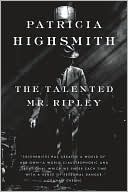
My mystery book group met last night to discuss Patricia Highsmith’s The Talented Mr. Ripley, a book that indicates we are branching out a bit from mystery fiction to crime fiction more generally. Detectives appear in Highsmith’s book, but only briefly, and they aren’t very good. They are pretty foolish, in fact. The real star of the book is Tom Ripley, the murderer.

What a wonderful, difficult, bizarre book this is. I loved it, but it left me feeling anxious and vaguely guilty, as though I’d done something wrong myself. The reason for this is that the story is told from a very close third-person perspective that leaves the reader in Tom’s consciousness the entire time, with no relief. It’s such a disturbing consciousness that I was both fascinated by the person that Tom is, and deeply unsettled.

As the novel opens, Tom finds himself followed by a man who turns out to be the father of an acquaintance. Tom was worried that the man was following him because of the tax fraud Tom had recently committed (he sent out letters to people telling them they owed more in taxes — just for fun and to see what would happen), but it turns out he wants Tom to travel to Europe to try to bring his son Dickie back home to run the family business. Tom soon figures out that even though he doesn’t know Dickie as well as his father thinks he does, this is a great opportunity to live in the lap of luxury for a while.

He meets Dickie in a small, coastal Italian town and quickly becomes a part of his life. He and Dickie’s friend Marge spend their days swimming, sunbathing, and eating long and luxurious meals. Tensions soon develop, though: Tom is devoted to Dickie but jealous of Marge, while Marge decides that Tom is a bad influence on Dickie and treats him coldly and suspiciously. This love triangle of a sort (Marge is in love with Dickie, although he appears not to return the feeling, and Tom is obsessed with Dickie to a degree that is obvious but ambiguous in nature) gets more and more complicated until one day Tom, in a fit of jealousy and worried that Dickie is pushing him away, kills him in horrifically bloody fashion in a boat on the ocean.

What’s so awful about this murder is that it’s so senseless, so horrible, and yet to Tom it’s simply an unfortunate action that he had little control over. Once the idea entered his mind, he knew there was little he could do except follow through. He’s not remorseful at all, just cautious about what to do next. What he does is become Dickie himself, stepping into his shoes, forging his signature to collect his money, and living the life that Dickie might have lived.

Tom not only lacks any moral sense, but he lacks any sense of himself at all; he’s a cipher, an empty shell who is incapable of caring for another person. He is extremely isolated. The people around him are pawns in his personal game or they are nobodies to be gotten rid of if necessary. What Tom has — or what he wants to have — in place of any sense of self or any emotional connection to others is objects and money. Once he has taken Dickie’s place, he enjoys himself extremely well wearing Dickie’s clothes, eating fabulous meals alone in expensive restaurants, and traveling across Europe seeing the sights. As long as he has the objects that make up the right kind of identity, it doesn’t matter to him that the identity is a sham. For him, it’s real, or, at any rate, it’s enough.

He slips into the role of Dickie frighteningly easily, and not only that, but he quickly forgets what it was like to be Tom:

It was a good idea to practice jumping into his own character again, because the time might come when he would need to in a matter of seconds, and it was strangely easy to forget the exact timbre of Tom Ripley’s voice. He conversed with Marge until the sound of his own voice in his ears was exactly the same as he remembered it.

It’s possible to say that this is a psychological exploration of a sociopath, but I think the book resists psychological explanations and is therefore even more chilling. The narrator explains that Tom lost his parents when he was young and that he was raised by an emotionally abusive aunt. But this history is told so quickly, with so few details, that it’s almost as if Highsmith is playing with our need for an explanation, making fun of it by providing us with one so unsatisfactory. There’s no real reason for Tom, no way of explaining him or of avoiding him.

As other members of my book group said, I loved the book, but I don’t necessarily want to read more of the book in the series or even more of Highsmith’s work at all. It’s good — very good — but so disturbing it’s hard to subject oneself to it.

14 Comments

Filed under Books, Fiction

A little more self-help

It is interesting to describe Barbara Fredrickson’s book Positivity to friends to see what they say and to read the comments on my post about the book — interesting for a whole bunch of reasons. One is that I used to be the sort of person who would make fun of the sort of person I am now — one who is vaguely spiritual, a westerner interested in eastern religions, one who reads self-help books and throws around terms like “positivity” without sarcasm. So when people express the same doubts about the concept of positivity that I once would have expressed myself, I remember that version of my self (which was around up until quite recently and still sort of exists) and have to laugh. I have my doubts about the whole thing too. And I agree with those who say that the positive psychology movement has its dangerous side and can be misused or warped into something that’s about repressing negativity in a harmful way.

And yet it doesn’t have to turn dangerous or be harmful, and I think Fredrickson does a good job of staying balanced; she argues that negative feelings are useful and important, and we should pay attention to what they mean. But people also tend to focus on the negative to such an extent that we block out the positive, and she urges people both to dwell on the positive more and to learn to distinguish between negativity that’s useful — the sort that tells us to get out of a bad relationship, for example — and the negativity that isn’t — the sort that keeps me up at night replaying a conversation that made me angry over and over again in my head.

But I also wanted to write about another book I read, this time for work (for discussion amongst faculty), Daniel Pink’s A Whole New Mind: Why Right-Brainers Will Rule the Future. This is not a book I liked a whole lot, although it did overlap a little with Positivity. The argument in Pink’s book is that because of three factors — abundance, Asia, and automation (I find the repeated “a” words obnoxious) — the types of skills that are in demand and will get us jobs in the future are changing. What matters now is right-brain thinking, a kind of creative, artistic, empathetic, and emotional approach, rather than the old left-brain thinking, which is about calculations and logic. Basically, computers and cheap labor from overseas will be able to perform the kind of rote, mechanical mental work that many people in America are doing now (computer-programming, accounting). Instead, skills such as creating new designs or empathizing with people’s problems or being able to create compelling narratives will be in demand. Pink lists six aspects of right-brain thinking that he describes in separate chapters, which include resources for developing that skill: design, story, symphony (making connections, synthesizing ideas), empathy, play, and meaning.

Now Pink’s argument may be entirely true, I don’t know. I can’t really critique the rightness or wrongness of it. But the book seems to be meant to inspire people to develop a facility with “right-brain” thinking, and rather than being inspirational, it’s frightening. It’s like an order to start being creative — now! — or lose your job and become irrelevant. It’s really hard to work on developing a new mindset, especially one that’s about openness and play, when feeling under threat.

Some of the attributes Pink talks about came up in the Positivity book; Fredrickson argues that cultivating positivity can increase our creativity and emotional responsiveness, and that it can be a part of our quest for meaning. I really like the idea that fostering positive emotions can make a person more open to new ideas, more willing to try new things, and more able to see creative possibilities. These are things Pink values as well. But his argument is “change or else,” whereas Fredrickson’s is “give it a try and see what happens.” That’s a much better starting place, don’t you think?

13 Comments

Filed under Books, Nonfiction

Science and self-help

I’ve read a couple books in the last few months that are basically self-help books, each with their own very different audience and with very different tones. One I read for myself, and one I read for work. You can probably guess which one I liked best.

The first is Barbara Fredrickson’s book Positivity, which I decided to pick up after a friend sent me a copy of an interview she’d done for Sun magazine. The interview had so many interesting bits of information of the sort I found myself immediately wanting to share with others, so I thought taking a look at the book would be worthwhile, and it was. Fredrickson is a psychology researcher and professor, and the book is part of the positive psychology movement of recent decades.

The term “positivity” is a better one than happiness, since it contains within it a whole list of positive emotions, including joy, love, curiosity, contentment, gratitude, amusement, hope, inspiration, wonder, and pride. Fredrickson has done lots of studies on the effects of these positive emotions on people, and what makes this book so interesting to me is that the science behind it seems sound (or at least she does a good job presenting it convincingly in the book). The basic argument is that if we think of the number of our positive and negative emotional experiences as a ratio, if we are able to get that ratio up to 3-to-1, meaning we have three positive emotional experiences for every negative one, then that’s a tipping point that can fundamentally change our experience of life. Once we reach that point, we become more open to life, more curious, more imaginative, and more resilient.

By nature I’m uncomfortable with this kind of schematic argument — it seems too simple — but I don’t have any reason to mistrust the research that’s behind it, and there’s much in the book that does ring true to me. Fredrickson describes what life is like for people with low positivity ratios, which includes most of us, and that picture sounded familiar — one of just getting by, of the kind of low-level dissatisfaction many people feel. The key to thriving, she argues, is to make a conscious effort to create positive emotions and to fully experience the ones we already have. A major part of the book is devoted to describing ways of doing this, and her recommendations (which she backs up with descriptions of studies she has done) often fit with things I’ve learned from yoga classes and books about spirituality. Her recommendations include things like making a conscious effort to savor the positive things that happen to us, to practice insight meditation or lovingkindness meditation in order to open the mind and heart, to find distractions that will get us out of negative ways of thinking, and lots of others.

The book is typical of its sort by being way too repetitive and not terribly well-written, but still, I’m glad I read it. The book is part of a series of books I’ve read recently that are loosely about spirituality, psychology, and self-help (including Pema Chodron’s When Things Fall Apart and Judith Lasater’s Living Your Yoga). What’s been interesting to me about reading these books is the cumulative effect of reading them one after another, which has felt almost as important as what the books themselves say. They aren’t all saying the same things, of course, but there are connections among all of them and some of their arguments overlap. I’ve read them slowly, too, which means that I spent weeks or months looking into them now and then and contemplating their ideas. So I feel like I’m slowly absorbing some of the ideas and am able to make them a part of my life. It’s a process that I’ve enjoyed and benefited from.

The other book, the business/self-help book I read recently for work? I’ll have to get back to you on that one.

15 Comments

Filed under Books, Nonfiction

A few thoughts on The Wordy Shipmates

I expressed some mixed feelings about Sarah Vowell’s The Wordy Shipmates in my post from earlier this week, and I thought I’d expand on those a bit. For the most part, I enjoyed reading the book. It’s under 300 pages and is a quick read, so it’s a good way to learn or review a little history, especially if longer, more serious history books aren’t your thing (which they aren’t for me).

Vowell tells the story of the pilgrims who sailed to America in 1630 and founded the Massachusetts Bay Colony. She analyzes what motivated them to leave England, and then describes the problems that faced them once they arrived — the challenge of settling themselves in to a strange and difficult landscape, the internal conflicts and disagreements that inevitably came up, and the wars with Indians that eventually arose. The most interesting parts were her descriptions of the Puritan’s religious beliefs and the legacy they left to America. She argues repeatedly that although we think of ourselves as cultural descendants of the Puritans, our relationship to their legacy is enormously complicated. The evangelicals of today who might seem like the Puritans’ most obvious descendants differ from them in crucial ways. John Winthrop’s famous use of the phrase “city on a hill” to describe the new colony appears again and again in the book, most effectively when Vowell launches a scathing critique of Ronald Reagan’s many uses of it for purposes that would have been quite a surprise to Winthrop.

Vowell makes all of this interesting (although it’s interesting material to begin with, I think) by her sense of humor and her method of moving back and forth in time, making connections between what happened then and has happened since. She has a sarcastic, smart-ass tone that provides some laughs (I don’t have the book anymore, so I can’t give examples. unfortunately) and also keeps the narrative light and fast-moving. At times it’s a little glib for my taste, but the truth is, I don’t know of many history books written in such an amusing manner, so overall, I appreciated it. She also frequently jumps forward in time, sometimes to tell a lengthy story, such as her discussion of Ronald Reagan or her story of visiting Plymouth Plantation with some family members. She also uses contemporary references to help explain her points, such as her description of how American history gets portrayed on The Brady Bunch. It gets silly sometimes, but it’s also fun, and illuminating.

You can tell from my descriptions that I’m not a huge fan of Vowell’s sense of humor. My other complaint is that I would have liked a better sense of the book’s structure. There are no chapters, which means it’s hard to get a sense of the overall structure of the book — what its historical starting and ending points are and how the narrative elements are organized.

However, if you want a quick review of early American history, this is a great place to go, or if you want to know more about the Puritans and their legacy (again, without reading something longer and weightier), this book will suit you.

7 Comments

Filed under Books, Nonfiction

Reading Notes

I had a perfectly fine day today, especially since on Mondays I don’t have class and get to work from home. But even when working from home, colleagues can get aggravating (thanks to email!), so I spent the second part of the day irritated, annoyed, and feeling mentally scattered. It’s more often my colleagues who cause me problems than my students, who, for the most part, are great, or at least fine, or at least … gone at the end of the semester. All is well, but I’m still feeling mentally scattered, which means you get bullet point notes on my reading.

  • I finished Sarah Vowell’s The Wordy Shipmates this past weekend, and I’m not sure what I think of it. Vowell has a light, humorous style, which is entertaining, but her sense of humor isn’t exactly mine. It’s fine, but I don’t love it. The book is about the pilgrims, and Hobgoblin, who is teaching a class on early American literature right now, says that she’s a little shaky on her facts. I think it’s hard to write popular history well, especially in a book as short and fast-moving as this one, so a certain amount of oversimplification is probably inevitable. But I wonder just how much of it is there.
  • I’m in the middle of Balzac’s Cousin Bette right now, and I’m unsure of that one too. Basically everyone in that book is either really and truly awful, or so good they are thoroughly unbelievable. The book is much more about social criticism than about character development and realistic action. Everyone is desperate for money or sex or social advancement, or probably all three, and the world it depicts is a truly frightful place. All that is fine for subject matter as a novel, but for me it gets dull without a stronger sense of character than what I’m getting here.
  • I’m going to pick up Patricia Highsmith’s The Talented Mr. Ripley next for my mystery book group. It’s not a mystery, really, but we decided it’s fine to branch out a bit into crime fiction. Hobgoblin really enjoyed it, and I’m looking forward to it.
  • And now on to some newly acquired books. Book Mooch has been working really well for me lately, and I’ve managed to snag a copy of Mary McCarthy’s The Company She Keeps, which is a collection of linked stories. After my success with Olive Kitteridge, I’m looking forward to reading another example, especially from a writer I love. I also received a copy of Laurie King’s A Monstrous Regiment of Women, the second in her Mary Russell series. I’d like to see if I will like the second book better than the first; many have told me it’s better, and they are probably right. Then just today I received a copy of Cane by Jean Toomer. It looks fascinating; a quick flip through the book shows that it mixes fiction with poetry, and there are also sections of dialogue written as though it were a play. I’m curious how it will all fit together.
  • I have a couple new nonfiction books as well. First is John Hollander’s Rhyme’s Reason: A Guide to English Verse. Ever since reading Nicholson Baker’s book The Anthologist, which is largely about poetry, I’ve been in a mood to read more books about it — as well as to read more poetry. I also received Adam Thirlwell’s book The Delighted States, which is subtitled “A Book of Novels, Romances, & Their Unknown Translators, Containing Ten Languages, Set on Four Continents, & Accompanied by Maps, Portraits, Squiggles, Illustrations, & a Variety of Helpful Indexes.” Now, to be honest, in spite of such a lengthy subtitle, I still don’t have much of an idea what the book is about, but I’m looking forward to finding out.

13 Comments

Filed under Books, Life, Reading

Weirded out by American Wife

I’m not quite halfway through listening to Curtis Sittenfeld’s novel American Wife and I’m enjoying it immensely, but I’m also finding it to be a really odd emotional experience. I’m enjoying it so much I’m tempted to get the audiobook out of the car and listen to it in the house, which is something I never, ever do. I’m caught up in Alice Lindgren’s voice, her thoughtful, careful, smart way of thinking about everything that happens to her.

The weird emotional experience part began when Alice met Charlie Blackwell, whom she has not yet married, but has become engaged to. Remember how this is the book that’s really about Laura Bush, even though the names and some of the circumstances are changed? That makes Charlie Blackwell George Bush, although his family is from Wisconsin, not from Texas. And reading about Charlie Blackwell/George Bush as a romantic lead has been bizarre.

It’s probably no surprise that I’m anything but a George Bush fan — I can’t stand the man, in fact. And yet in the context of this book, he’s … well, obnoxious quite a lot, but also sometimes charming. And every time I think he does something even a little bit charming, I have this moment where I think, ew! That’s George Bush! Ew! He’s awful, not charming in the least!

And yet in the context of the book, it makes sense that Alice is attracted to him. He is a lot of things that she is not — outgoing, confident, determined, at ease with people — and they make a good pair in some ways. And I like Alice a lot. In fact, she is in some ways kind of like me, or at least I feel some kinship with her. Her way of thinking and acting is familiar to me. But … she married George Bush! Ew!

There are lots of moments where Charlie/George does something utterly obnoxious such as order Alice around, get mad at her if she isn’t politically supportive enough, or assume she’s going to drop her career for his sake, and then I have fun getting annoyed and yelling at him for being the jerk that he is. But then they make up, and I understand that Alice is happy once again, and that’s a good thing, because I like Alice, but it means she’s happy with George Bush. Ick! And then there are the sex scenes, which are the weirdest of all …

This book has been an interesting imaginative exercise, as it makes me think about how someone I like could be attracted to someone I most definitely don’t, and how the person I most definitely don’t like can sometimes be likable. And also how a sometimes likable person is capable of doing awful things, like start the Iraq war. I’m very curious to see what Sittenfeld does with the rest of the story; the couple isn’t even married yet and the presidency is way off in the future.

18 Comments

Filed under Books, Fiction

Figuring out audio books

I’ve had a mixed experienced with audio books so far this year; the first one I finished I loved at first and was bored with by the end. I’m in the middle of my second one now and can’t wait to hear more.

I was looking forward to the first one, Jedediah Berry’s The Manual of Detection, having heard excellent things about it. And it might have worked better if I read it rather than listened to it. I’m still not sure which type of book works best on audio; while I’ve enjoyed listening to mystery and detective fiction in the past, in the last six months or so a couple of examples haven’t worked well for me, and I’m beginning to wonder whether the genre is tricky to listen to. The Manual of Detection didn’t work well and Agatha Christie didn’t either, while Maisie Dobbs worked great, as did P.D. James. I’m thinking that perhaps the more plot-driven books are harder to listen to, while the slower-paced ones that focus a lot on character and setting work better.

I started off enjoying The Manual of Detection. It’s opening is dark and atmospheric, with a strange, noirish mood to it. It’s set in an unknown city where it’s always raining, and the main character, Charles Unwin, rides to work on a bicycle complete with an umbrella to keep him dry. He’s a clerk in a large detective agency, and he’s very happy with his job processing the reports of a detective he’s never met Travis Sivart. The detective agency is a cold, mechanistic place where people follow strict rules and focus only on their own specialized tasks, nothing else. We learn nothing about any private life Charles Unwin might have; he’s basically a cipher, and he’s perfectly happy to stay that way. When he finds himself unexpectedly promoted to the rank of detective, the only thing he wants is his old job and his old peaceful life back.

All that was excellent; I loved the mood and the tone of the book. But then as Unwin tries to find Sivart in order to return everything to normal, the plot gets odder and odder, more and more fantastical, and I started to lose interest. I’m not quite sure whether it was the plot that didn’t work for me, the fantastical element, or the fact that I was listening to it, but by the end, I was only half paying attention. It was a disappointment.

Now I’m listening to Curtis Sittenfeld’s novel American Wife, and I’m mesmerized. It’s a loose, fictionalized retelling of the life of Laura Bush, and I’m loving its slow, thoughtful pace and tone. The main character is named Alice, and she’s intriguing, in an odd, dull sort of way — she’s careful, quiet, bookish, and independent, not that exciting of a main character, and yet awful things happen to her and soon enough she will become a really well-known and important person (I haven’t gotten to that part yet). It’s fascinating to watch her respond to everything life throws at her.

So, perhaps I need to give up listening to plot-driven mysteries and focus on slow-paced character-driven novels instead?

9 Comments

Filed under Books, Fiction

Olive Kitteridge

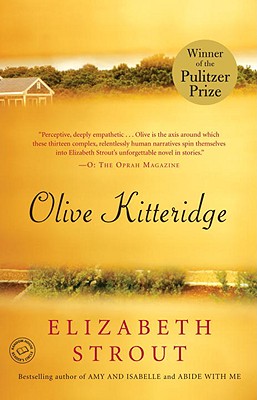
I really loved Elizabeth Strout’s book Olive Kitteridge. This is the first book of linked stories I’ve read, and I liked the genre more than I expected to. I’m not sure whether this is because Strout does a particularly good job with it or because I like the genre for itself, but in this case it worked beautifully. I can be uncertain about reading short story collections because it feels as though they require so much energy: you have to orient yourself to new characters and new situations each and every time. You have to do that with linked stories too, but with Olive Kitteridge there is enough to tie all the stories together that I felt a sense of coherence and wholeness that was satisfying.

Olive herself is the main thread that ties the book together, although there are others; she appears in each chapter, sometimes as the main character and sometimes only briefly, as a minor character in someone else’s story. The first chapter is from the point of view of Olive’s husband, Henry, a man other people in their town feel pity for, because Olive is known for being difficult — moody, unhappy, harsh, critical. But Henry, in spite of longings he feels for other kinds of relationships, loves her, a love that is a source of mystery for other characters and for the reader, too.

Olive lives in the town of Crosby, on the coast of Maine, which is the kind of place where everyone knows everyone else and secrets are hard to keep. She was a junior high math teacher — retired now — of the sort who terrified her students with her prickly teaching persona. She and Henry have one son, Christopher, whom they both love deeply, but not necessarily in a healthy way; he feels that she has smothered him and it’s no surprise when his new wife whisks him off to California, to get as far away from the in-laws as possible.

One of the things that is so wonderful about the book and about how Strout uses the linked story structure is that we get a satisfyingly complex view of the characters. In one story — one of my favorites — we see into Olive’s mind on her son’s wedding day and watch her as she struggles with having to let her son go to a woman she does not like and listen to that woman mock the dress she is proud of. In other stories, though, we see what other characters think of her — the way they dismiss or fear or marvel at her — and we can compare what it’s like to be someone with a rich and complicated interior life and to see that person from the outside, understanding some things and being bewildered by others. We can see what Olive means to a whole range of people — that she can be a figure of fun, a tragic figure, an overbearing and frightening woman one wants to run away from. And we can also see that she frequently has no idea of all those perceptions people have of her. Other people have no idea what she thinks and feels and suffers, except for glimpses now and then.

Many of the stories are sad, although in a way that is recognizable and true, not overdone. They are about longing, love, relationships gone bad, new relationships attempted, relationships that survive, remarkably; in some cases they are about violence, death, and loss — about a whole range of things that can and do happen to people living together in one place.

The place itself is another thread that holds the book together. Olive and Henry have built their house together and have also built a house for their son, and it is no surprise that they are deeply shaken when their son escapes to California. It’s no surprise that he needs to escape, either. That house was intended as an act of love, but it couldn’t help but appear to Christopher as a prison, Olive’s attempt to keep him at her side, following in her footsteps. Other characters come and go, figuring out who they are as they define themselves against the town that has shaped them. The town changes, but it remains an isolated place that’s beautiful and distinctive, and that is hard to really leave behind.

So yes, I loved this book. It’s beautifully written, emotionally complex, full of nuanced characters, and moving in the stories it tells.

18 Comments

Filed under Books, Fiction

An absurdly good day

If I ever start to feel bad about my life in any way, I need to remember that now and then I’m able to have days like the one I had today. I’m almost embarrassed to describe it, it was so decadent.

I don’t have classes on Fridays (most faculty members don’t at my school), and I usually spend it working on grading and preparing for classes. But since I’m willing to work (from home) on Saturday and Sunday — and often I have to to get everything done — I can sometimes not do any work at all on Friday. And that was the case today.

I woke up at 8:00 — and right there I realize I’m admitting something that might make people jealous, although the truth is that my teaching schedule is an evening one, so I tend to stay up late and wake up late — and got ready to go on a bike ride. Hobgoblin and I had plans to ride with my cycling BFF (that’s how she referred to me today). We were out the door at 9:00, and although it was only 24 degrees at the time, the temperature was on the way up (to the mid-30s). We rode the beach loop, which, as Emily noted once, sounds like an easy, short spin, although it’s actually a 50-mile loop, largely downhill the way there and largely uphill the way back, three hours total.

Although it was chilly, the day was lovely — perfectly sunny and clear. We dodged a few patches of ice, but mostly the roads were dry. The highlight of the trip, as always, was a stop at Crumbs bakery for a cupcake, and I got my favorite, a very boring but yummy vanilla one, even though Hobgoblin told me it has something like 700 calories. Oh, well — I burned way more calories than that. I think we made a little bit of a scene in the cupcake shop, with our silly-looking clothing and our loud laughter. But it’s so easy to laugh when we’re pumped full of adrenaline, and that’s one of my favorite things about cycling — when I’m with other people and we’re all feeling good, everything everybody says is funny.

After the ride and after a shower and a quick lunch, I was off to the masseuse. Hobgoblin bought me a gift certificate for an hour-long massage for my birthday, and I’d made an appointment for this afternoon. I know massage is a great thing to help my muscles recover from the stress of training, but I’m reluctant to spend the money on it because it seems so self-indulgent. So I’m happy to have someone else spend the money on it for me. It was lovely.

And then it was late afternoon and time for my chiropractic appointment. I know not everyone likes going to the chiropractor, but I love it. It’s a chance to have someone massage my shoulders (again), crack my neck, ask me how I’m doing, give me some attention, and generally indulge me for a while. I’ve been seeing my chiropractor for a few years now, and she’s become a little bit like a friend.

And then it was off to the local drive-in burger joint, the Sycamore, a 50s diner that’s not just 50s-themed, but actually from the 50s. I had a bacon cheeseburger. Yum.

And then I had my weekly Friday evening yoga class. It’s a fairly slow-moving, stretchy class, not at all like power yoga, and it’s the kind of class I can do fine in even if I’ve ridden my bike for 50 miles already that day. The teacher is great and many of the students know each other and are very friendly, so it has an upbeat, light atmosphere. We’re all serious yoga students, but we don’t take the whole thing too, too seriously.

And now I’m home, doing a bit of blogging and planning to pick up some books. Now is that not an absurdly good day, or what?

17 Comments

Filed under Cycling, Life

Poetry: Ted Hughes

I’ve been reading my collection of Ted Hughes poetry very, very slowly, and in spite of the slowness enjoying it very much. My edition is one of the lovely Faber anniversary editions, and although I don’t like the lack of dates or any other acompanying contextual information, the book looks great and the poems themselves are wonderful. I’ve read Hughes before, for a grad class or two, but it’s been a while, and this is the first time I’m reading much beyond the usual anthology inclusions.

Although I’ve read only the first 35 pages out of 140 or so, it’s clear that Hughes’s main topic is nature and often animals. Among the titles of poems I’ve read so far are these: “The Thought-Fox,” “The Jaguar,” “The Horses,” “Hawk Roosting,” “The Bull Moses,” “View of a Pig,” “Second Glance at a Jaguar.” Other poems have animals in them even if the title doesn’t mention it, and of the poems without any animals in them, most are about nature. Other titles include “Wind,” “October Dawn,” “Mayday on Holderness,” “February,” “November,” “Snowdrop,” “Pike,” “Thistles,” “Fern,” and “Full Moon and Little Frieda.”

What’s striking about the poems is the way animals and nature are not sentimentalized or romanticized. The poems have a dark, almost harsh tone to them, and while they are beautiful, it’s a stark kind of beauty. Often we get a purely exterior view of the animal in question, such as the haunting “Second Glance at a Jaguar,” which describes a jaguar pacing relentlessly in a zoo. “View of a Pig” is about a dead pig in a wheelbarrow that the speaker thumps “without feeling remorse” because “it was too dead. Just so much / A poundage of lard and pork. / Its last dignity had entirely gone. / It was not a figure of fun.” The poem is about the changes that death brings, the way it transforms a being with dignity — because even a pig can have it — into a lump of flesh. It’s a harsh reality, but that’s exactly what these poems are about.

When we get an imagined interior view, as in the poem “Hawk Roosting,” which is written in first person from the hawk’s point of view, the voice is remote. The poem ends this way: “The sun is behind me. / Nothing has changed since I began. / My eye has permitted no change. / I am going to keep things like this.”  The hawk rejoices in its ability to kill: “I kill where I please because it is all mine. / There is no sophistry in my body: / My manners are tearing off heads.” The voice is otherworldly, speaking from a place and perspective that feels entirely different from the one we know. Humans don’t exist in that world.

In “The Bull Moses,” Hughes tries to imagine what goes on in the bull’s mind, and he does it by imagining what’s not there: “He would raise / His streaming muzzle and look out over the meadows, / But the grasses whispered nothing awake, the fetch / Of the distance drew nothing to momentum / In the locked black of his powers.” The calmness, the complete disinterest in the natural world that is moving all around him is mysterious and haunting, and there’s nothing to do but watch it and marvel.

While the animal poems describe the otherness of creatures and captures their least “human” moments, the poem “Thistles” personifies the plant, describing the thistles as men fighting feuds. However, while the thistles may be like people, they are like people at their harshest, ugliest, and most frightening. I’ll close with this poem in its entirely, to give you a fuller taste of Hughes’s voice:

Against the rubber tongues of cows and the hoeing hands of men

Thistles spike the summer air

Or crackle open under a blue-black pressure.

Every one a revengeful burst

Of resurrection, a grasped fistful

Of splintered weapons and Icelandic frost thrust up

From the underground stain of a decayed Viking.

They are like pale hair and the gutturals of dialects.

Every one manages a plume of blood.

Then they grow grey, like men.

Mown down, it is a feud. Their sons appear,

Stiff with weapons, fighting back over the same ground.

16 Comments

Filed under Books, Poetry

Essays, essays, essays

I’ve finished The Best American Essays 2008 and it’s confirmed how much I like the series. I haven’t loved every essay in every volume, but I am reminded as I read them what I like about the genre — a good essay writer can make any subject interesting. I’m continually surprised at the subjects I like reading about, in the hands of someone who knows what they are doing.

I suppose you can say the same thing about any type of writing: a good novelist can make any subject interesting too. But there’s something about an essay’s quick exploration of a topic that doesn’t happen in the same way in a novel. A novel requires a greater time commitment, and it’s much harder to make unusual subject matter work, whereas an essay can delight and surprise in the course of a half hour or so, and I find myself thinking, wow, I never thought I’d love an essay on … strip clubs.

I can’t even tell you how uninterested I am in reading about strip clubs, but Joe Wenderoth’s essay “Where God is Glad” is an essay on a strip club and I loved it. He starts off on the right note: “I hate strip clubs,” but then he goes on to say that his new book’s cover has a picture of him standing in front of his favorite strip club, and I’m full of doubts. As the essay goes on, though, and he describes what his favorite strip club is like, which is to say, unlike any other strip club out there, I’m brought back around. It turns out that this place, unintentially as far as I can tell, undermines the whole notion of the strip club:

Now that I have stopped to describe the place in more depth, it seems clear to me that Tony’s is not really a strip club at all. I hate strip clubs, as I said, and people who like strip clubs hate Tony’s. Folks who like strip clubs seek something that Tony’s decisively does not offer. Tony’s is not “nice,” does not feel like a risqué Applebee’s. It doesn’t attempt to dignify the goings-on it shelters.

I’ll leave some mystery about what Tony’s is actually like in case you want to read the essay for yourself, but I will say that Wenderoth manages to make the subject profound and moving.

Something similar happened when I read Rick Moody’s essay “On Celestial Music.” I got a little worried when I saw the essay was long and read the title of its first section, “Otis Redding as Purveyor of Celestial Music.” I didn’t really want to read an essay on Otis Redding and the whole thing threatened to be pretentious and dull. But the essay was magical and I loved it. Moody won me over.

Not all the essays here did that — John Updike’s essay on dinosaurs was just okay and Lee Zacharias’s on buzzards (mixed in with some autobiography) gave me way more information on buzzards than I could handle.

But still, the shortness of essays makes it easier to take a risk and read something I’m afraid I won’t like, and sometimes I’m wonderfully surprised at how wrong I was.

9 Comments

Filed under Books, Essays

New Books

Did I ever seriously comtemplate not buying more books for a while? Yeah, that didn’t happen. I am doing well with the reading part of Emily’s TBR challenge, even if I’ve forsaken the not buying more books part. I’ve finished five of the twenty books on my list (which you can see on the sidebar to the right) and I’m in the middle of a sixth one (Olive Kitteridge). Considering that the challenge goes on through the rest of the year, that’s not a bad start.

So what are the new books I’ve been acquiring? I got a small stack last Friday when Hobgoblin and I spent the day in New Haven. We visited the Yale Center for British Art first, which was great — they have a strong permanent collection of 18th and 19th-century British art and had a great exhibit on Romantic-era drawings from around the world. And then we toured some of the local bookshops. It was our first visit to Labyrinth Books, which was a really great, really smart shop with dozens of books I could have brought home. We also visited old favorites The Book Trader Cafe and Atticus books. I found:

  • Lydia Davis’s Varities of Disturbance. I want to read more short story collections this year, and this one has been on my list for a long time. The stories are very short and I hear are as much like poems as stories. I’m curious how I will like this.
  • Alicia Gimenez-Bartlett’s Dog Day. Gimenez-Bartlett is a crime writer (perhaps a future choice for my mystery book group), and the book is one of those lovely Europa editions I always notice in bookstores.
  • Mary Oliver’s Rules for the Dance. This one is a guide book to reading and writing rhyming poetry. I like Oliver’s poetry a lot, and something appealed to me about looking a little more deeply into the structure of poetry. I’m not at all interested in writing rhyming poetry (or poetry of any sort), but I do like learning about it. And I feel inspired by reading The Anthologist to think about poetry more.
  • Gabriel Josipovici’s Writing and the Body. The book is made up of four lectures Josipovici gave in 1981. The first one is entitled “The Body in the Library.” Hard to resist, right?

And then there are books I’ve gotten in other ways:

  • I won a copy of Nick Harkaway’s The Gone-Away World from Musings, which is tremendously fun and exciting. I don’t know much about the book, but I do know that Ms. Musings liked it a lot and other friends enjoyed it as well,
  • From Book Mooch I got An Ethiopian Romance by Heliodorus. I love learning about the history of the novel, so this “novel” or “romance” or whatever you want to call it from the third century sounds interesting.
  • Joan Didion’s The Year of Magical Thinking also came from Book Mooch. I realized the other day that I really loved her essay collection The White Album, so it only makes sense to have more of her writing on hand. I have a feeling I’ll end up with a fairly large Didion collection eventually.
  • Finally, Marge Piercy’s The Moon is Always Female. Since I have new books that are about poetry I figured I should get some of the thing itself.

That’s all for now, although I’ve had luck with Book Mooch lately and may find some more books I can’t resist.

11 Comments

Filed under Books, Reading

Stevie Smith’s Novel on Yellow Paper

Stevie Smith’s Novel on Yellow Paper was an enjoyable book in moments and a puzzling book in others; it’s one of those books I can’t quite figure out how to respond to, and I’m not sure another reading would help. There’s a lot I liked in the book, but what puzzles me about it is that given the books that appeal to me most, I should love this one, and it turns out I don’t, quite.

I admire its form and structure most; it’s the kind of novel where not much happens and instead we have someone sharing her thoughts with us the entire way through. The main character is called Pompey, and she writes in a way that seems spontaneous, telling us whatever is on her mind at the moment. We hear about her job — she works as a secretary for a certain Sir Phoebus —  her love affairs, her friends, her family — especially her aunt, the “Lion of Hull” — and her thoughts about society, literature, and politics.

Basically, there is no form or structure (as far as I can tell), and instead it’s a loose-flowing stream-of-consciousness monologue. Novel on Yellow Paper reminds me most of Nicholson Baker’s novel The Anthologist, where there is a structure and plot, but these are so basic they hardly count and the real point of the book is the voice. The pleasure of the book comes from listening to the main character share his thoughts. That’s what we’re offered in Smith’s book — a chance to get inside the main character’s head a little bit.

However, now that I think about it a little more, I’m not sure how much we do get inside Pompey’s head. It’s feels a little more like she uses words to charm and entertain us and to tell us about herself, but in such a way that she hides as much as she reveals. Words are as much a shield for her true self, or a cloud in which to hide, as a way to reveal herself.

She certainly is amusing and charming, and she has funny quirks that make her voice very distinctive. This passage illustrates her use of repetition and rhythm and also shows how frank and open she can be (or appear to be):

Oh how I enjoy sex and oh how I enjoy it. There have been many funny things about sex in my life that have made me laugh and so now I will tell you.

There was once a woman called Miss Hogmanimy. That was certainly a queer name. That was a name you would certainly want to get married out of. But this woman was very queer and wrought up over babies and the way babies are born, and she gave up her whole life going round giving free lectures on how babies are born. And it certainly was queer how ecstatic she got about this way how babies are born, and always she was giving lectures to young girls of school or school-leaving age. And all the time it was mixed up in a way I don’t just remember with not drinking, not drinking alcohol, but just carrying on ginger beer, kola and popgass. And so well this Miss Hogmanimy she got up in our school, now I think it was our school, chapel and so there she was in this school chapel, giving a lecture with illustrating slides to young girls on how babies are born …

…to listen to Miss Hogmanimy you’d think just knowing straight out how babies was born was to solve all the problems of adolescence right off. You’d come out straight and simple and full of hearty fellowship and right thinking if you just got it clear once and for all how babies are born. There’d be no more coming out in spots and getting self-conscious about the senior prefect, nor getting a crush on the English mistress, nor feeling proud and miserable like you do at that time, before you get grown up. There’d be none of this at all if you just knew how babies are born. So there she was.

Pompey is great at this kind of amusing light satire. There is a wonderful section on women’s fiction where she describes the typical “Fiction for the Married Woman,” which is all about learning to be happy with housewifely duties. The section is funny, but there is anger underneath the light surface. She decides that describing fiction for the unmarried woman is just too painful:

I cannot tell you about the stories for unmarried girls, the ones that are so cleverly and coyly oh. And they are so bright and smiling and full of pretty ideas that are all the time leading up to washing-up. You will know how they go but I cannot tell you. I am already feeling: No, I should not have said all this. It is the ugliest thing that could ever have been conceived, because it is also so trivial, so full of the negation of human intelligence, that should be so quick and so swift and so glancing, and so proud. And you Reader, whom I have held by the wrist and forced to listen, I am full of regret for you, because I have forced you to listen to this.

As I type out these passages, I’m thinking about how much I like them and how much I liked quite a few sections of the book. The phrase “so full of the negation of human intelligence” is just great, as is the apology to the reader (I wrote about another great section here).

The problem is that in between these sections I felt impatient and occasionally irritated. I couldn’t follow the way her mind worked very well, and the picture of who Pompey is and what her life is like remained hazy. I wanted a more coherent picture to come together, even if that took a while. I love voice-driven novels where plot is not the focus, but I think I need just a bit more coherence, direction, and forward-movement than I got here.

I also just don’t know anybody who talks like Pompey does or who thinks like she does, and I found her a little hard to believe. I suspect, to be really simple and non-literary-critical about things, that Pompey and I probably wouldn’t be friends. With this kind of novel, I want to be able to imagine having a conversation with the main character, and I’m having trouble imagining it here.

So, to sum up, it’s an original, puzzling, strange, frustratingly quirky book I would have loved to love.

You can read other posts on the novel here and join in the discussion at the forums here.

4 Comments

Filed under Books, Fiction

A bookshelves meme!

Box of Books has a great meme I can’t resist: what do your bookscases say about you?

  • “I think I read much faster than I really do!” I have been collecting books at a fast and frantic pace lately, and somehow I still think that each one I buy, borrow, or mooch I will get to before very long.
  • “I went to graduate school!” I have my share of literary theory and criticism — Foucault, Derrida, Irigaray, Freud, etc., etc. Some of these books have even been marked up and written in.
  • “My husband went to graduate school too!” Although some of our books are on separate shelves, we combine much of our fiction and some poetry, which we keep in our living room. Here you will find not just one, but multiple copies of books like Ulysses and William Wordsworth’s The Prelude, in the big Norton Critical Edition. You will also find multiple copies of obscure eighteenth-century novels that almost no one reads unless they went to grad school.
  • “I studied eighteenth-century British literature!” I have books like Augustan Critical Writing, Critical Essays on Laurence Sterne, Adam Smith’s Theory of Moral Sentiments, Burke’s A Philosophical Enquiry, Women in the Eighteenth-Century, and a copy of Richardson’s Clarissa with lots of cracks in the binding.
  • “I’m mildly obsessive!” But only mildly. I keep our fiction downstairs alphabetized, and the books in my study are arranged by subject. But these books arranged by subject aren’t alphabetized. I only go so far.
  • “I love long novels!” I have lots of long Victorian novels, including tons of Dickens, Eliot, and Austen, as well as some Trollope. And I also have long, long books by Richardson, Burney, Dostoevsky, Thackery, Tolstoy, Lady Murasaki, and Cervantes.
  • “I have traditional tastes!” I’d like to read more widely than I do — from more cultures and from lesser-known authors — but the truth is I spent many years being trained in the canon, and although I do read outside of it, the results of that training are still there.
  • “I can’t get enough of essays!” I have a couple shelves devoted to essays, although I’d have more if I added all my unread collections, which I currently keep separately. I have a row of large collections lined up in a row, and the site is a beautiful one.

Anybody else want to say what your shelves say about you?

18 Comments

Filed under Books, Memes