Favorite books, 2010

It’s time to make my list of favorite books from 2010 before we get too far into 2011. This time I will use categories rather than simply a top ten list, since my favorite books are all so different.

  • Book I enjoyed most of any genre: David Foster Wallace’s  A Supposedly Fun Thing I’ll Never Do Again. I love his essayistic style.Love it.
  • Favorite fiction: Nicholson Baker’s The Anthologist. Yes, this book was on my favorites list from last year, but I liked the book so much I read it again, and the second time was in 2010. Yay! Also, Paul Murray’s Skippy Dies, Joshua Ferris’s Then We Came to the End, Rosamund Lehmann’s Invitation to the Waltz, Elizabeth Strout’s Olive Kitteridge, May Sarton’s A Small Room, and Jennifer Egan’s A Visit From the Goon Squad.
  • Favorite mystery/crime novels: Patricia Highsmith’sThe Talented Mr. Ripley. That book is still freaking me out. Also, Raymond Chandler’s Farewell, My Lovely, not for the plot (at all!) but for the writing. Best funny mystery novels: Sarah Caudwell’s Thus was Adonis Murdered and David Markson’s Epitaph for a Tramp and Epitaph for a Dead Beat.
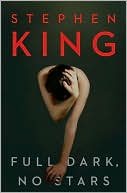
  • Biggest surprises in fiction: I didn’t expect to love Agatha Christie’s The Murder of Roger Ackroyd as much as I did, but I really did love it. And Stephen King’s Full Dark, No Stars was good in a thoughtful way I didn’t expect.
  • Favorite classics: My reread of Emma was awesome, of course, and I really enjoyed The Perpetual Curate by Margaret Oliphant. It was great to finally read Kafka’s The Metamorphosis as well.
  • Best nonfiction: For biography, Richard Holmes’s Coleridge: Darker Reflections. I missed Coleridge when I finished reading. For essays, finishing Montaigne was great, of course, and Lawrence Weschler’s Vermeer in Bosnia was wonderful. I enjoyed Emily Fox Gordon’s Book of Days: Personal Essays greatly as well. Also in nonfiction, Jenny Diski’s book The Sixties was really good.
  • Poetry: I read only two volumes of poetry this year, but they were both memorable: Faber’s 80th anniversary edition of Ted Hughes, and the poems of T’ao Ch’ien.
  • Other books I liked: Samuel Beckett’s novel Molloy, I Too Am Here: Selections from the Letters of Jane Welsh Carlyle, Virginia Woolf’s Jacob’s Room, and John Williams’s Stoner.
  • Biggest challenge: Pynchon’s Gravity’s Rainbow. A challenge indeed.
  • Biggest disappointments: I didn’t enjoy Balzac’s novel Cousin Bette at all, and I thought I would. Also, Alicia Gimenez-Bartlett’s Death Rites was a disappointment. I didn’t dislike it as much as my book group did, but still, I hoped to like it better.

I like doing my favorites this way, because I can name lots more books!

Now for a word about my year in cycling. I rode a grand total of 6,597 miles during 2010 and a total of 409 hours (more than an hour a day!). All those miles were outdoors. My mileage in 2009, which was a record at that time, was 5,097. The funny thing about this year is that I didn’t set out to ride a lot of miles. I would have been perfectly happy riding fewer than I did in 2009. I wanted to ride exactly what I felt like riding. That’s just what I did, but apparently what I wanted to do was to ride an awful, awful lot. It was training with my Ironman friend that made the difference; she needed to go on 3,4,5,6-hour rides, and I was happy to go along. She’s not training for an Ironman in the upcoming year, so I may ride less, although I do have two other friends who will be training for an Ironman, so maybe I need to do some rides with them!
13 Comments

Filed under Books, Cycling, Lists

2010 Wrap-up

It’s time to start wrapping up the year, now that I’ve made it to the very last day. Every year I like to write up my reading stats for the year, so here they are, first the total number and genre:

  • Books read: 72 (not counting 9 audiobooks, not included in the stats below)
  • Fiction (of any genre or length): 45
  • Nonfiction: 22
  • Poetry: 2
  • Drama: 3
  • Essay collections: 7
  • Biography/autobiography/memoir/letters: 6
  • Mysteries: 10

And now the gender breakdown:

  • Books by women: 35
  • Books by men: 36
  • Books by men and women: 1

Nationalities and books in translation:

  • Authors from America: 32
  • Authors from England: 21 and Scotland: 1
  • Books in translation: 13. Chinese: 1, French: 2, German: 3, Hungarian: 1, Sanskrit: 1, Norwegian: 1, Russian: 3, Spanish: 1
  • Authors from Ireland: 2
  • Canadian: 1 (L.M. Montgomery)
  • Nigerian, written in English : 1 (Chinua Achebe)

Year of publication:

  • From the 5th century: 1 (poems of T’ao Ch’ien)
  • 16th century: 1 (Montaigne)
  • 17th century: 1 (Francis Bacon)
  • 19th century: 8
  • First half of 20th century: 14
  • Second half of 20th century: 20
  • 2000s: 16
  • 2010: 9

And a couple more:

  • 12 rereads (a lot for me; these come partly from rereading for class)
  • Books by authors I had never read before: 34

Not a bad year. Some of the rereads and books in translation come from preparing for my World Literature class, and many but not all of the mysteries were for my mystery book group. Quite a lot of nonfiction. I hope to be back soon for a list of my favorite books!

13 Comments

Filed under Books

Miss Pym Disposes

One more review before I write some wrap-up posts about the year. I’ve owned a copy of Josephine Tey’s book Miss Pym Disposes for quite a while and finally got around to pulling it off the shelves. I very much enjoyed the book, but I spent much of my time reading it wondering why it’s called a mystery novel. By the end, it began to make a little more sense, but it’s best to think of this book as a regular old novel with some crime in it. Those of you who have read other Josephine Tey novels, is she always like this?

But that’s not to say I didn’t like it. The setting is very interesting, first of all: it takes place in a women’s physical training college. The young women learn dance, gymnastics, and various types of sports, as well as anatomy and the basics of medical training. They keep to a very rigorous schedule of physical and mental training, of the sort that, athletic as I can be, would wear me out in no time. They will leave the school ready to teach physical education and to work in medical clinics. It’s a close-knit school, where the smallness and the rigors of the training bring the students and teachers close together.

Miss Pym is friends with the school’s headmistress, and she has been invited to give a lecture on psychology. Lucy Pym became an expert in psychology largely by having enough leisure to read everything published on the subject (Tey’s novel was published in 1946, so perhaps the field hadn’t grown that much by then?), to have an idea of her own, and to turn that idea into a best-selling book. The best-seller part was a complete surprise to her; she had merely wanted to express her opinions. But now she is an expert, and in demand for lectures, and so she finds herself at the college, rudely awakened by the 5:30 wake-up bell.

She is so horrified by that 5:30 bell that all she want to do is to get home immediately, but the students beg her to stay, and when she does, she finds herself more and more caught up in the life of the school. She’s fascinated by the question of what type of young woman would thrive in such a school and how each one keeps up the energy and spirits to make it through the program.

The early parts of the book explore college life and Lucy’s increasing attachment to it, and they do so at a leisurely pace, although never one that is dull. The excitement begins to build, however, when Lucy observes one student attempt to cheat during an exam she is proctoring. Around the same time, everyone learns that a post will be available at the prestigious school of Arlinghurst, the girls’ equivalent of Eton. These events quickly destroy the school’s peace, and Lucy finds herself in the middle of it all.

Lucy’s status as an expert in psychology becomes a way for Tey to explore the value of the discipline; in this close-knit community where the tensions are rising, Lucy is perfectly situated to observe the mental and emotional turmoil around her. And yet, as it turns out, people are much more mysterious and unknowable than the discipline allows for. And here is where the real mystery of the book lies: not so much in the question of who committed the crime — although that is a very interesting question — but in the question of how much it’s possible to know about another person.

10 Comments

Filed under Books, Fiction

The Lost Art of Reading

I happened upon David Ulin’s book The Lost Art of Reading in the library last week and checked it out on a whim. It turns out that Stefanie has been reading the book as well, and she decided she liked the book very much. I have to admit that I began the book feeling very resistant to it and prepared to dislike it intensely. I also have to admit that as I sat down to read it, I was prepared to enjoy not liking it. I don’t like books that make sweeping generalizations about the way things are now, and that lament a lost glorious past and tell us our world is steadily getting worse. And surely a book with the title The Lost Art of Reading would do those things?

It did those things in places, but it turns out the book is much better than I thought. It steadily won me over, and by the end, I decided that I like Ulin’s way of thinking about things very much. He does worry about where our culture is headed, and he laments how much harder it is for him personally and for the culture at large to focus on reading in a deep, thoughtful way. We are too easily distracted by our laptops and our gadgets, too easily sidetracked by blogs and twitter, to be willing to sit down with a book for a lengthy stretch of time and to lose ourselves in it. He thinks there is something valuable about deep reading and how it encourages us to think carefully, to get to know ourselves better, to develop empathy for others, to bring us back to a sense of time and our place in it.

But at the same time, Ulin is not anti-technology. This gets at how the book won me over, because his argument is more complex than a simple dismissal of the internet. He sees the value in being able to look things up on Google; he has a Blackberry and loves it. He discusses Jennifer Egan’s new book A Visit From the Goon Squad (which I’m in the middle of right now and am enjoying it very much) and the cool things she does with multimedia in the book and on her website. He’s fascinated by the Facebook page for The Great Gatsby. He sees that technology can add to our experience of literature rather than merely spiriting us away from it. He wants to preserve the experience of reading but at the same time is willing to acknowledge that our ways of reading can change, and that this isn’t necessarily a bad thing.

I also liked how he hinted at a spiritual element to reading, something I’ve been thinking about lately. He says that reading can be like meditation, a way to practice focus and calm and to get out of our own minds for a while:

What does it mean, this notion of slow reading? Most fundamentally, it returns us to a reckoning with time. In the midst of a book, we have no choice but to be patient, to take each thing in its moment, to let the narrative prevail. Even more, we are reminded of the need to savor — this instant, this scene, this line.

I’ve often felt that if I don’t get the chance to read, at least a little bit, every day or almost every day, that I start to lose a sense of myself. I feel scattered. Taking the time to read helps me pull myself back together again, somehow. It’s partly the simple act of sitting quietly that does it, but also the discipline of following someone else’s thought, focusing on someone else’s experiences or arguments. I’m not sure what kind of person I would be without reading, so in spite of all my doubts, it was a pleasure to read Ulin contemplate what reading has done for him.

10 Comments

Filed under Books, Nonfiction

The Old Religion

I recently finished David Mamet’s novel The Old Religion, published in 1997. As you might expect if you know Mamet’s films, the novel is dark. It is a reimagining of the true story of Leo Frank, a factory owner who lived in Georgia in the early twentieth century and who was falsely accused of rape and murder. He was sentenced to life in prison, but during a hospital stay was abducted by a mob and lynched. He was a victim of an anti-semitic culture looking for an outlet for its rage.

The point of the novel isn’t what happens, which is a good thing since the book’s publishers tell you everything (as I have done here) on the back cover. The point is to explore what goes on in the mind of the main character, Leo Frank, and to capture from that perspective what it might feel like to be falsely accused. The book is made up of very short chapters that explore scenes of Frank’s life and give you his thoughts on whatever is occurring, serious or mundane. The book begins before the accusation and trial, so we see Frank among his friends, relaxing, talking, pondering philosophical and political questions. He is a very thoughtful, sensitive, analytical person, and when we finally learn about the rape and murder charges and the trial begins, it’s a shock to see him so badly misunderstood and villainized.

This is the point: to show the humanity of a man whom the world had turned into a monster. Mamet makes this point well, and what’s so effective about it is that he stays inside Frank’s mind with very little narration. We learn about what is happening only indirectly, as a result of Frank’s attempts to process it. As Frank’s world is falling apart around him, he remains the same thoughtful, analytical person, but now his analytical bent becomes a way to try to handle the insanity he is experiencing, a way to stay sane himself. As time goes on, he has to try harder and harder to find ways to occupy his mind, until he ends up looking for meaning in the manufacturers’ names stamped on the bars of his prison cell. Right up until the end, his thoughts are calm and rational, in contrast to the virulence of the people who want to see him dead.

The Old Religion is an intensely uncomfortable book: it’s hard to read about Frank’s downfall and the extremity of the hatred he experienced, and it’s also hard to read Mamet’s portrayal of Frank’s accusers, which is ugly. But Mamet’s stream-of-consciousness style works effectively to capture Frank’s experience. It’s a good thing the book is short, and I say that not because I didn’t like it, but because brevity works well both with Mamet’s subject matter and with his style: he can capture so much in so few words, and that kind of intensity needs to be short-lived.

10 Comments

Filed under Books, Fiction

Christmas books

I hope everyone is having a great weekend, whether you celebrate Christmas or not. I’ve had a wonderful time lazing around, reading, eating, and watching The Thin Man (lots of fun, and After the Thin Man is up next). I got a short bike ride in yesterday, but now the ground is covered with snow, and tons more is on the way. Sigh. I love riding outdoors, even in winter, but deep snow is the one thing that keeps me inside. I’m eagerly awaiting the 40-degree temperatures promised for next weekend.

Now, of course I have to tell you about my Christmas books, of which I got a nice stack:

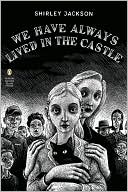
  1. Shirley Jackson’s We Have Always Lived in the Castle, sent to me by a friend. I’ve been hearing about Shirley Jackson on various blogs for a long time, but the only thing of hers I’ve read is her famous story “The Lottery.” I’m excited to read a novel of hers, and I’ve heard this one is great.
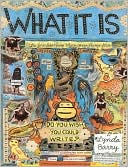
  2. Lynda Barry’s What It Is, also sent to me by a friend. I had never heard of this book before, and it looks fabulous, full of drawings and pictures, as well as text. The book’s pages are a lot like what you see on the cover. It’s about writing and creativity, and has some exercises that might be useful for my creativity class.
  3. From my parents, I got a copy of Orhan Pamuk’s The Naive and Sentimental Novelist. I wondered how they did such a great job picking out the perfect book for me, until I learned they found it on my Book Mooch wishlist. Oh, yeah. It’s useful having that list up!
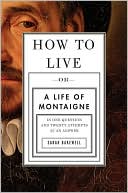
  4. The rest of the list comes from Hobgoblin. Sarah Bakewell’s How to Live: or A Life of Montaigne in One Question and Twenty Attempts at an Answer is the book for me this year, because shortly before Christmas, I found out I would be getting a copy to review, and then the gift-giving friend above told me she had a copy for me, and then Hobgoblin got me one. Clearly, I am destined to read this book.
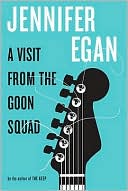
  5. Jennifer Egan’s A Visit From the Goon Squad. I checked this one out from the library a while back but didn’t have time to read it, and so I’m glad to have it now to read at my leisure. I’ve heard such great things about it, and I just read a brief discussion of it in David Ulin’s The Lost Art of Reading, so I think I need to pick it up soon.
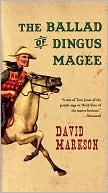
  6. David Markson’s The Ballad of Dingus Magee. I enjoyed Markson’s mystery novels so much that Hobgoblin thought I might like his other venture into genre fiction. This one is a western. Perhaps after this, I will have to try another of his experimental novels. What a range this guy has!
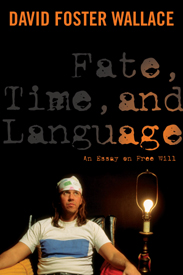
  7. David Foster Wallace’s Fate, Time, and Language: An Essay on Free Will. This is one of Wallace’s undergraduate theses, and along with the thesis itself is included a number of essays by various philosophers on free will and a memoir about Wallace as a student. This is a great addition to my growing collection of Wallace’s work.

And now to get reading!

9 Comments

Filed under Books, Lists

Full Dark, No Stars

After seeing Stephen King a few weeks ago, Hobgoblin suggested that I read one of his books. This thought hadn’t occurred to me because horror is not my genre at all, but Hobgoblin and other people have assured me that King writes more than just horror and that a lot of his books are more about psychology than anything else. So I picked up his latest book Full Dark, No Stars (although not one of the two copies we got signed!). I ended up liking it quite a bit. The book has three novellas and one short story, and yes, there was violence in each one, but the stories were more about character and psychology, just as people had promised.

The first novella was good — gripping and hard to put down. But it was a complicated reading experience that reminded me of Patricia Highsmith’s The Talented Mr. Ripley in the way both books have psychotic narrators who commit atrocious crimes. In King’s story, it’s a first-person narrator, and in Highsmith’s it’s a third person narrator who stays so close to Tom Ripley’s consciousness that I keep forgetting it’s not actually in first person. In both cases, I got so wrapped up in the stories and identified with the narrators to such an extent that I started feeling obscurely guilty, as though I were the one who had committed the crimes. I had to remind myself that no, there was nothing I needed to worry about, no fear that anyone would come and arrest me for the horrible thing I did.

I started the second novella relieved that the mood was lighter, at least initially. That story is about a semi-famous cozy mystery writer who is asked to do a reading for a literary society when Janet Evanovich cancels on them. But then on her way home she gets attacked and raped, and I began to worry about what I’d gotten myself into by reading this book. The first story was about a man murdering his wife, and then here was another story about violence toward women, and I wasn’t sure I wanted to read about it anymore. But I kept on and realized that King wasn’t simply using violence toward women as a plot device, but was making a point of exploring its cultural meaning. The cozy mystery writer, Tess, spends a long time thinking about how she is going to deal with the attack, and a big part of her worry concerns what the public will make of it, since inevitably the press will seize on the story. She is a bit of a public figure, after all. She imagines someone insinuating that she invited the attack somehow, and she delays calling the police. She is agonizingly alone, a victim another time over, since she knows how hostile the world can be toward rape victims. I won’t give away the rest of the story, but I’ll just say it’s satisfying and Tess ends up with a little bit of the support she deserves.

Next was the short story, which was good but didn’t quite fit with the rest of the book. And finally, the third novella once again takes up violence toward women and once again handles it well. Reading about the violence in all four pieces was uncomfortable at times, but once I figured out that King was exploring violence as an idea, I began to enjoy the reading more. I have to say this is not what I expected, to read Stephen King for the ideas. But I think I’ve been unfair to him. I can’t say I’ll read him again very soon, since even with the psychological focus, violence and horror really aren’t my things. But I’m much more interested in him than I was before, and that’s a good thing.

12 Comments

Filed under Books, Fiction

The TBR Challenge

Well, congrats to me on (mostly) finishing Emily’s TBR Challenge! The challenge was to read or attempt to read 20 books from your TBR pile and to post on each one. There was something about not buying new books in the challenge, but I think everyone involved quickly forgot about that. I finished 19 of the books and made a serious attempt to finish the 20th, Rosalind Belbin’s Our Horses in Egypt, but I wasn’t enjoying it, so I set it aside. I didn’t quite write on every book, but I wrote about most of them, and I’ll bet each book got at least a brief mention, if not a full review. Here’s the post with the list of books. I was surprised to find that the challenge wasn’t really all that challenging; I didn’t feel constrained or limited by it and was happy picking up each book when the right time came.

So, I thought I would make another list for next year. These books are ones I’ve had on my shelves for a while, some of them for a long time, such as the William James and the Yukio Mishima. Some authors I’ve been saying forever that I want to read (Atwood, Colette). Others just caught my eye when I was reading through my list of unread books. I have seven novels and five nonfiction books, one for each month, or something like that. I’m looking forward to it!

  1. Ivan Goncharov, Oblomov
  2. Yukio Mishima,  The Temple of the Golden Pavilion
  3. Margaret Atwood, Alias Grace
  4. Colette, Cheri and The Last of Cheri
  5. Scarlett Thomas, PopCo
  6. Sybille Bedford, A Legacy
  7. G.K. Chesterton, The Man Who Was Thursday
  8. William James, The Varieties of Religious Experience
  9. Cynthia Ozick, Quarrel and Quandary
  10. Janet Malcolm, Two Lives
  11. Mary McCarthy, On the Contrary
  12. Francis Wilson, The Ballad of Dorothy Wordsworth

21 Comments

Filed under Books

The Essay

One of the things I liked about Emily Fox Gordon’s Book of Days is simply that I feel that I’m a lot like her. I recognized myself in a lot of what she had to say. I liked Gordon’s passages on feeling ambivalent about her femininity and feeling like an outsider in social situations, and I appreciated her discomfort with the role of faculty wife and her pleasure at critiquing the faculty wives she found herself surrounded by. Her sense of humor is one I share. I also felt a moment of recognition when I read this:

The signal [that she should become a writer] was embedded in Phillip Lopate’s newly published anthology, The Art of the Personal Essay. The contents of this book were a revelation to me. I read Orwell’s “Such, Such Were the Joys,” Natalia Ginszburg’s “He and I,” Hazlitt’s “On the Pleasure of Hating,” Lopate’s own “Against Joie de Vivre” with delight, as well as with a growing conviction that I had found my genre.

I had known there was something wrong with the stories and novels I had been producing in spurts for decades … I was never very good at, or interested in, creating fictional worlds whose parts were set in motion by the force of psychological motivation. I never understood plot. Characterization, though it interested me, put me into a state of panicky agnosticism. I’d never had much confidence in my intuitions about how — as Eudora Welty put it — “some folks would do.” It seemed to me that folks might do any number of ways.

I’m not a personal essayist and don’t have any stories or novels of my own, but I share her uncertainty about fiction writing and bafflement in the face of plot. I can’t really comprehend writing a novel of my own, unless it were in the  plotless, essayistic Nicholson Baker style. I also share her experience of being inspired by Lopate’s anthology. I have that book to thank for my adoration of the essay genre, and if I were ever to want to write something besides the blog and the occasional book review, I would write personal essays. (I think I’m too lazy for that, though — another trait I share with Gordon, except she got over it long enough to write quite a lot!)

Gordon wrote two memoirs, but in this book’s title essay, she claims she was never comfortable with them. She did her best to tell the truth about her life, but she believes that the contemporary memoir requires you to fit your life into a preset mold where the writer suffers, often at the hands of parents, and seeks and eventually finds redemption or transcendence or some kind of healing. She shaped her story to fit this model but was aware of the distortions this created. The essay form does a better job of capturing the truth of a life:

I learned that the memoir and the personal essay are crucially different forms. The memoir tempts the memoirist to grandiose self-representation. The essay, with its essential modesty, discourages the impulse. The memoir tends to deindividuate its protagonist, enlisting him to serve as a slightly larger-than-life representative of the sufferings of a group or community, while the essay calls attention to the quirks and fallibilities we take as marks of our essential separateness. The erratic zigzag of essayistic thinking — the process that E.M. Cioran calls “thinking against oneself” — makes the essay proof against the triumphalism of memoir by slowing the gathering of narrative momentum. The essayist transects the past, slicing through it first from one angle, then from another, until — though it can never be captured — some fugitive truth has been defensively cornered.

She comes to regret having written her memoir at all, except for the feeling of accomplishment it gave her, and, presumably, because it made publishing a collection of essays easier (and also provided material for one of them). I imagine there’s an argument to be made that the memoir is capable of more than Gordon acknowledges here, but I’m sympathetic to her point. It’s the sense of incompleteness, exploration, and provisionality that I like most about the essay form.

14 Comments

Filed under Books, Essays

Book of Days

I happened upon Emily Fox Gordon’s Book of Days by chance at the library, and when I saw it contained a collection of personal essays, that it was introduced by Phillip Lopate, and that several of the essays were about academic matters, I snapped it up. I read the first few essays unsure of what I thought, but eventually she won me over, as good personal essayists do. By the end of the book, I was enjoying her company. Gordon has published two memoirs, but in this book she talks about falling in love with personal essays first and only publishing memoirs later because that’s what publishers want. With this book, she finally got her wish to publish an essay collection.

Gordon mines some of her childhood experiences for this book: she grew up as a faculty brat who had a difficult relationship with her parents, and she spent many years in therapy, including three years after high school in a psychiatric hospital. As a grown-up, she spent a lot of time thinking about the dangers of psychotherapy, what it’s like to be a faculty wife, and what it’s like to be an outsider, a lazy person, and someone who finds her profession late in life. I found these preoccupations appealing; she makes her tendency to be negative, suspicious, and doubtful interesting. She spent years essentially passive and directionless, unhappy at times in her marriage and uncertain what to do with her time, but these were years of preparation for the writing that would come later in life. Here is how she describes herself:

I am a passive woman. I am a gormless woman. My life has been characterized by an extreme and pervasive failure of agency. When I look back at my fifty-four years, I’m appalled at the proportion of my time I’ve passed lying on couches, smoking, dreaming, sometimes reading.

Disinclined to plan, incapable of self-advancement, I’ve spent much of my life like a child waiting to be given a gift. My deepest wish has never been to achieve, attain to, or possess any particular object or state; instead it has been to receive something. To tell the truth, I find it hard to believe people when they claim to have a goal. Do they really want to become pharmacists, learn languages, play instruments, start small businesses? Privately, I suspect they’re being disingenuous and what they really want is to be surprised.

Now that I type out this passage, I realize Gordon sounds like another nonfiction writer I admire: Jenny Diski. Both writers take pleasure in resisting our culture’s call to work hard, produce, and be cheerful about it. It’s an attitude I admire.

One of the book’s preoccupations is Gordon’s mistrust of therapy, which is hardly surprising, considering the kind she experienced. She spent countless hours in therapy rooms with a silent therapist who would wait until she spoke, and from this she learned to play the therapy “game” — becoming the troubled person the therapist expected her to be. Her years in the psychiatric hospital were basically a disaster. She and the other residents learned to be passive and manipulative, and rather than improving, they just became sicker. In Gordon’s case, she was a troubled youth, but not one who needed hospitalization. She might have thrived in college, turning to the outside world to find interests and meaning there, but instead, she just retreated to an inner life that felt increasingly empty.

Other essays focus on her adult life — her writing, her marriage, her ambivalent feelings about being a “faculty wife.” I didn’t always agree with her ideas, but arguing with her in my head was part of the fun. I sympathized with her feelings of isolation and of being on the outside looking in, but sometimes she seemed so busy making a point about being an outsider that she oversimplified what other people experience. I didn’t recognize her portrayal of feminism, for example, which is a picture of feminine solidarity at the expense of all individuality, a “cavalry, rumbling at full gallop.” To be a feminist, she says, is to swear absolute loyalty to the cause. I suspect that this is a generational difference; the feminism she experienced was very different from the individualistic, enjoy yourself and do whatever you want attitude of today. But I wanted her to recognize that there is more than one form of feminism, and that identifying as a feminist does not mean giving up her own ideas.

But still, I don’t need to agree with everything a writer says to enjoy their writing. In fact, it’s more fun if I don’t. What I do need is for a person to be interesting and to have new ideas and experiences to share and to be willing to look at his or her life honestly, and all this Gordon does very well. She makes good company, which is what I always hope for when I pick up an essay.

8 Comments

Filed under Books, Essays, Nonfiction

The Thin Man

My book group met today to discuss Dashiell Hammett’s The Thin Man. I just counted, and this is the twenty-fourth book we have discussed. I’m happy to say that our discussion was as much fun as they always are, and also that the new members we welcomed to the group fit right in. The Thin Man is the second Hammett book we have read; the first was The Glass Key, the book our group started with almost three years ago.

I enjoyed reading The Thin Man, but I liked The Glass Key better. There was something a little flat about the writing in The Thin Man. It’s written in a similar style as The Glass Key, but in that book, the style matched the bleakness of the world Hammett described, and there were moments when Hammett seemed to be reaching toward some larger meaning, if only to make a point about the meaninglessness of existence. It’s a very pared down, economical style without much attention given to the interior worlds of the characters, and in The Glass Key it hinted at the hopelessness and darkness of life. In The Thin Man the general tone is lighter and the main character, Nick Charles is not alone – he has his wife, the charming, witty Nora. But to me, at least, the pared-down, economical style came across as lacking in this new context. I wanted a little more liveliness, a little more about the main character, and also a little more in the way of ideas. The Glass Key gave me more to think about.

But, still, The Thin Man is an interesting book, particularly because of the relationship between Nick and Nora. My book group talked a lot about how it’s unusual to find such a strong female character in noir and how satisfying it was to see that she is Nick’s equal. He is clearly the “detective” in the novel (he officially gave up detecting six years ago, but he is still the expert at it), but she has insights that are valuable, as well as wisecracks and jokes.

I think, ultimately, that the world described in The Thin Man is just as dark as the world of The Glass Key, but rather than describing someone suffering from that darkness as Ned Beaumont does in The Glass Key, in The Thin Man we get a picture of a couple trying to escape it. Nick and Nora spend the whole book drinking. In fact, it’s amazing that Nick is able to think about the murder at all because he spends just about the whole book drunk. He and Nora are always staying up into the early hours of the morning drinking and they barely drag themselves out of bed by noon, when the first thing Nick does is make himself another drink. They have money because of an inheritance from Nora’s father, so they can spend their lives doing whatever they want, along with devoting a little bit of time to making sure their investments stay solid. Everyone else in the book, though, is thoroughly messed up. At the center of the novel’s mystery is the Wyant family, every member of which is eccentric at best and abusive at worst. They do terrible things to each other, as do the book’s other couple, the Quinn’s. The only happy relationship is the one between Nick and Nora. And it’s easy to wonder just how happy they would be if they didn’t have their money and their alcohol.

So the message seems to be that life sucks, and if you’re lucky, you’ll have the means to ignore it. If not, you’re stuck. I wanted the book to confront that reality more directly, however, which is something The Glass Key did very well.

I haven’t watched the movie yet, but it’s coming from Netflix soon. From what people said today, it sounds like it’s lighter and funnier than the book was, and I’m eager to make the comparison myself.

13 Comments

Filed under Books

Finishing Gravity’s Rainbow

I’m not planning on writing a review of Thomas Pynchon’s Gravity’s Rainbow, which might drive me insane, but I did want to write a bit on the experience of reading it. I have two main responses to the book, one of which is to admire Pynchon’s obvious brilliance and to wonder what kind of mind it takes to write such a book. The other is to admit that I didn’t really enjoy it. I liked isolated scenes here and there, found parts of it funny, parts insightful, but these moments of enjoyment weren’t enough to make me like it as a whole.

I just couldn’t quite make sense of what was going on enough of the time to satisfy me. I don’t mind dealing with a certain amount of uncertainty and confusion — I happily read Infinite Jest not getting everything that was happening — but there was too much here. I felt as though I understood what was happening in the book in very broad terms, and also I remember small scenes, but too often as I was reading, I couldn’t figure out the relationship of one scene to another, couldn’t quite remember where I’d seen a particular character before, wasn’t sure where we were in time, and wasn’t sure what the characters were doing. I did “cheat” a little bit and looked up discussions of the book online, but these only helped a little bit.

I know that the book is confusing to other readers as well, and that part of the point is to be difficult, but that didn’t change my experience of reading it much.

So, what is the novel about, exactly? It does have a main character, Tyrone Slothrop, an American who is on a quest for information about the V-2 rocket and who was the victim of some bizarre Pavlovian research as a child. There is also Captain Blicero, who creates and fires the V-2 rocket. The novel takes place during and shortly after World War II, with flashbacks to earlier times. It’s about wartime intelligence, psychological research, paranoia, fear, obsession with death, and obsession with connections between sex and death. And there’s so much more — lots of characters, lots of silly songs, lots of sex, especially of the more perverse kinds. It’s all about violence on a mass scale, and how this messes with people’s minds. It’s dark, as one would expect a book about World War II to be. It’s also emotionally cold, which is an important reason I didn’t enjoy it. It’s very much an intellectual book, detached and analytical. It is funny in places, and it’s also sad, but mostly it’s grim.

I can see that this is an important book, and that it’s an appropriate response to a horrifying war and a world that has become insanely insanely self-destructive. But, alas, it was also a bit of a slog.

11 Comments

Filed under Books

Skippy Dies

Lately I’ve been in a mood to read more contemporary fiction than I usually do (a mood that’s probably fleeting and influenced by people raving about new books on Twitter), and so I picked up Paul Murray’s Skippy Dies. I’m grateful to the people on Twitter because I enjoyed this one quite a lot.

The novel tells the story of Seabrook, a boys’ school in Dublin where Skippy is a student. In the opening pages, we witness Skippy dying a horrible death in a doughnut shop, and then the narrative backs up in time to tell about his life. The novel tells his story, and the story of his friends, classmates, and teachers. Skippy is a quiet, seemingly-normal kind of kid, the kind whose friends are much more colorful and memorable. Ruprecht, for example, is Skippy’s roommate (there are a few boarders at Seabrook, although most students commute) and is considered a scientific genius. Mario can think of one and only one thing, sex, and is capable of talking about it only in the crudest of ways. But Skippy is thoughtful and sensitive, and also in love with Lori, a student at the nearby girls’ school. Unfortunately for Skippy, Lori is way out of Skippy’s league, or everyone thinks so, and she has become involved with Carl, a drug-using, manipulative, thuggish bully.

The novel also tells the stories of the adults, most notably Seabrook’s history teacher Howard, who is unhappy in his current relationship and attracted to the beautiful substitute geography teacher (who is the only teacher who can really capture the boys’ attention in a school with very few women in it). Howard graduated from Seabrook and never thought he would end up there again, but his life has gone in unexpected directions. There is also Tom, another teacher and former Seabrook student whose relationship with Howard is long and complicated. And then there is the acting principle, whose devotion to Seabrook and its reputation is extreme to the point of being frightening.

Murray moves back and forth between these various stories, and in doing so, captures the feeling and mood of the place. The novel a reminder of just how hard it is to be a teenager — and how hard it is to teach teenagers. The kids aren’t in the least interested in learning anything, with the exception of Ruprecht, and only want to be free to hang out with each other and to dream about meeting girls, or, in some cases, to actually meet them. There’s a lot of longing, a lot of angst, and a quite a lot of drug use.

And, actually, the lives of the teachers aren’t so different. Howard can’t figure out what he wants out of a relationship and what he wants to do with his life, and he spends his time obsessed with the geography teacher, to the extent that he keeps teaching World War I beyond its allotted length of time because she expressed an interest in Robert Graves, a World War I poet. The novel is largely about dissatisfaction and longing, and this takes many forms: Howard’s obsession with a woman whom he hopes will transform his staid, boring life, for one. It’s also about Skippy’s hope that Lori — the beautiful girl who seems so far out of reach and whom he falls in love with while gazing at her from afar — will notice him. And it’s also about Ruprecht’s obsession with the possibility that other universes exist and that he might be able to make contact with aliens. Everyone hopes for something from outside them to transform their lives, when reality is boring at best and quite possibly very painful.

The story is an absorbing one, especially once it’s clear that the novel is going to tell how Skippy got to the horrible death scene in the doughnut shop. I found it hard to believe that Skippy really was going to die, and I kept rooting for him. Murray does some interesting things with narration, beginning many of the chapters about Skippy with a description of the video game he is playing, so that we are thrown into the world of the game and only eventually return to the story once again, mimicking the way Skippy loses himself in an alternate world and is reluctantly forced back into reality. Murray does a good job making us feel as though we know these characters and how their minds work and that we have something at stake in their decisions. The world he portrays is dark; he makes being a teenager seem like a curse and being an adult not a whole lot better. But the energy, compassion, and humor with which the story is told keeps some hope alive.

8 Comments

Filed under Books, Fiction

Seeing Stephen King

There has been no end to the bookish expeditions around here lately. Our latest one was a big one: a trip to Portsmouth, New Hampshire, to see Stephen King. I heard about the one and only book signing he agreed to do for his new book Full Dark, No Stars from Michele Filgate on Twitter, who works at RiverRun bookstore in Portsmouth. I also had heard that Portsmouth is a cute city, so I suggested to Hobgoblin that we go, and he happily said yes. He is the real Stephen King fan in the house; I’ve read only one novel of King’s, The Girl Who Loved Tom Gordon, and that one only because it features hiking and the Appalachian Trail. I liked it, but mostly I’m not a fan of horror, as I scare too easily and don’t find being scared fun. But Hobgoblin has been a fan for years, is a member of the Stephen King Library, which automatically sends him a copy of his King’s books, and has collected every book he’s published.

So this past Thursday we headed up the highway through Massachusetts and into New Hampshire. The city of Portsmouth, it turns out, is incredibly charming, full of interesting stores, historic neighborhoods, and parks along the water. RiverRun bookstore is small but good, with a great selection, and there is a used bookstore, Second Run Books, owned by the same person, not too far away. Hobgoblin and I explored the shops for a while, had dinner at the Portsmouth Brewery, and then made our way back to RiverRun to see what was going on. And there was Stephen King in the window of the shop signing books for people, with a crowd outside gazing in and taking pictures. We found our place in the line and took pictures ourselves. Here’s one of me with King in the background:

And here’s one of Hobgoblin shaking King’s hand:

I know that was a special moment for Hobgoblin. For me, I always like meeting authors, and it was great to meet one who is so famous and successful. From what I hear, King is one of the nicest famous authors out there as well. He seemed to be enjoying meeting his fans and to have limitless energy, although he signed something like 450 books, and that’s a lot. He seems to know that people are really excited to meet him and to want to make sure they have a good experience.

Afterward, we went to a cafe two doors down the street to eat chocolate cake and gloat over our books. Everybody else in the cafe had copies of King’s book as well, as did everybody walking down the street. A man sitting at a nearby table struck up a conversation with us about King and all the signings he’s been to and his room devoted mostly to King’s books. The atmosphere was celebratory, and it was fun.

We stayed in Portsmouth until the next morning when we drove back home. I realized for something like the hundredth time how much I enjoy living in a place with so many interesting cities and towns and with tons of bookish destinations. And I thought about how much I hope I make it back to Portsmouth again before too long.

17 Comments

Filed under Books

The Common Reader

As part of my very slow read-though of Virginia Woolf’s major works, I’m am now reading The Common Reader, her collection of literary essays. And oh my goodness, have I made it clear how much I love Virginia Woolf? Because these essays are wonderful. This is my second time through the book, and I’m loving it. I just read her essay on Montaigne, and I marveled at the way she moves back and forth between writing about him in the usual way one writes about someone else and actually embodying him, taking on his persona. She will write something like “It is life that emerges more and more clearly as these essays reach not their end, but their suspension in full career” that is clearly evaluating Montaigne from an exterior perspective, but then in the same paragraph she will start describing his ideas as though she were Montaigne herself:

In short, the soul is all laced about with nerves and sympathies which affect her every action, and yet, even now in 1580, no one has any clear knowledge — such cowards we are, such lovers of the smooth conventional ways — how she works or what she is except that of all things she is the most mysterious, and one’s self the greatest monster and miracle in the world …

By slipping into his voice, she creates a strong sense of who Montaigne was; she brings him to life, and her affection for him shines through.

But then her own voice is incredibly convincing. Woolf writes with such assurance and poise — without coming across as arrogant — that I’m ready to believe whatever she says. I love this passage from the essay “Notes on an Elizabethan Play,” which compares plays and novels:

The play is poetry, we say, and the novel prose. Let us attempt to obliterate detail, and place the two before us side by side, feeling, so far as we can, the angles and edges of each, recalling each, so far as we are able, as a whole. Then, at once, the prime differences emerge; the long leisurely accumulated novel; the little contracted play; the emotion all split up, dissipated and then woven together, slowly and gradually massed into a whole in the novel; the emotions concentrated, generalised, heightened in the play. What moments of intensity, what phrases of astonishing beauty the play shot at us!

She makes everything clear — of course that’s how plays and novels work!

She also can conjure up the feeling of a place and time beautifully. Consider this passage about medieval England from her essay “The Pastons and Chaucer”:

For let us imagine, in the most desolate part of England known to us at the present moment, a raw, new-built house without telephone, bathroom or drains, arms-chairs or newspapers, and one shelf perhaps of books, unwieldy to hold, expensive to come by. The windows look out upon a few cultivated fields and a dozen hovels, and beyond them there is the sea on one side, on the other a vast fen. A single road crosses the fen, but there is a hole in it, which, one of the farm hands reports, is big enough to swallow a carriage. And, the man adds, Tom Topcroft, the mad bricklayer, has broken loose again and ranges the country half-naked, threatening to kill any one who approaches him. That is what they talk about at dinner in the desolate house, while the chimney smokes horribly, and the draught lifts the carpets on the floor. Orders are given to lock all gates at sunset, and, when the long dismal evening has worn itself away, simply and solemnly, girt about with dangers as they are, these isolated men and women fall upon their knees in prayer.

The essay is about Chaucer and how his writing springs from his time and place, but she takes a while to get to him, lingering instead on the landscape and the people who lived in his time and read his work. I finished the essay feeling as though I had  not just learned something about Chaucer but saw and heard and felt something about him too.

11 Comments

Filed under Books, Essays

Updates

First an update on cycling, with both good and bad news. The good news is that I’ve been riding a ton and have now passed 6,000 miles since January 1st. That’s a record that smashes last year’s total of just over 5,000 miles, and it’s not even December yet. It’s getting colder here, but that just means adding more layers before I head out.

The bad news is that my thyroid has become hyperactive again, so I probably shouldn’t be riding at all, although my doctor didn’t say to back off (and I didn’t ask). The back story here is that my thyroid went bad a little over three years ago; I had a hard month or two, and since then have felt pretty much normal. About a month ago, I started feeling badly again, although nothing as extreme as when I first became sick. But it’s discouraging to be feeling badly at all, when all I want to do is to ride a lot and ride fast. So I ride, but I take it easy and go slowly. Eventually medication will get everything back in line, and then I’ll ride fast again.

As for books, well, I bought a few more the other day. I wasn’t planning on it, but I found myself in two bookstores, and what else could I do? Hobgoblin and I drove to Winchester, Virginia, to visit family for Thanksgiving, and on Friday, to entertain ourselves, we all explored the city, including the Winchester Book Gallery, where I found a copy of Tove Jansson’s The Summer Book for the next Slaves of Golconda discussion. The store was small, but had a great selection for its size. After that, we found Blue Plate Books, a nice used bookstore, where I bought Somerset Maugham’s Cakes and Ale, Sherman Alexie’s The Lone Ranger and Tonto Fistfight in Heaven (short stories), Lauren Slater’s Lying (a memoir), and Jonathan Franzen’s Freedom, which I wasn’t planning on buying, but I found it for $11 and thought why not?

I’ve been buying books like crazy lately, but have had time to read too; right now I’m immersed in Paul Murray’s Skippy Dies, a novel about a boarding school in Dublin. It’s absorbing, and I’ve been glad to have a little more time than usual to focus on it. I’ve also begun reading Virginia Woolf’s The Common Reader, or rather, re-reading it. It’s fabulous, just as I remembered. I’m about 150 pages from the end of Gravity’s Rainbow, which I’ve decided is not so fabulous. Or rather, it’s genius, brilliant, amazing, etc., but I don’t like the experience of reading it. I’m sticking with it, though, because I’m not going to let that thing beat me!

15 Comments

Filed under Books, Cycling

Very Short Reviews

I would love to write something longer, but I don’t have it in me these days. So here are brief thoughts on some of the books I’ve read lately.

  • Sylvia Townsend Warner’s Summer Will Show. I wanted to love this one, but I didn’t. It started off strong with a main character who thought very unconventional thoughts, but as I read along, I felt more and more detached from the story. I wasn’t quite believing it and got bored. It deals with some very interesting subjects — revolution in 1848 Paris, artists and rebels, unconventional love and wild adventures — but the experience of reading it wasn’t fun. I like the idea of the book more than the book itself.
  • David Markson’s Epitaph for a Tramp and Epitaph for a Dead Beat. I loved these books, which I read for my mystery book group. Why aren’t these more widely known? They take place in Greenwich Village in the early 1960s and tell the story of detective Harry Fannin, one of those detectives who keeps getting beaten up and who is amazingly able to keep going. The books are funny and very literary — Fannin is surely one of the best-read detectives out there. Some in my book group thought the plots were a bit weak, and this may well be true, but the writing made these books memorable for me.
  • Muriel Spark’s The Public Image. Spark won’t be a favorite novelist of mine because I prefer an interior, psychological style, which hers really isn’t, but I did enjoy this novel, my third by Spark. The plot moves quickly and the characters are painted in broad strokes, but the style and wit with which Spark writes is immensely fun. This novel tells the story of a married couple, both of whom are actors and both of whom are worried about the relationship of their public image and the private reality. Their attempts to maintain their public image (or fail to maintain it) take them in some unexpected directions.
  • L.P. Hartley’s The Go-Between. Another one I wanted to love, but I only liked it okay. I enjoyed the story, but ultimately I felt the narrator didn’t quite work for me. He was just a bit too self-important, too serious, too preoccupied with his own world, too … mildly irritating. It feels strange to call a first-person narrator too self-absorbed, because if he’s telling his own story, why shouldn’t he be? But I felt like he assumed his story was worth reading in detail rather than proving it for us. The first sentence is sort of famous, I guess: “The past is a different country; they do things differently there.” That’s true, I suppose, but to me it hints at the pretentiousness to come. On the other hand, the novel captures class uncertainty very well and also what it’s like to be a young person trying to figure out the adult world and generally failing. And I seem to be in the mood only for funny, witty things these days, so maybe I didn’t do it justice.

7 Comments

Filed under Books

Brattleboro Book Crawl

Today Hobgoblin and I joined two our wonderful friends and fellow-bloggers Suitcase of Courage and She Knits by the Seashore to explore bookstores in Brattleboro, Vermont. Living in Connecticut, I tend to think that Vermont is way far away, the kind of place I would drive to only if I were going to stay for a while. But it turns out that Brattleboro is only about 2 1/2 hours from where I live, which isn’t far at all, definitely drivable in a day. So when Suitcase and She Knits invited us to join them, we agreed. Brattleboro is a cute small city, really a large town, snuggled right up next to mountains. It has lots of interesting shops, but we focused mostly on the bookstores, of which there are at least five, all within easy walking distance. First was a used bookstore that I think is Baskets Paperback Palace Book Store, although I’m not entirely sure. Then we went to the Book Cellar, then Mystery on Main Street, then Everyone’s Books (“For Social Justice and the Earth,” as their website says), and finally Brattleboro Books, a used bookstore.

I came home with five books, which seems like not very many at all, considering how great the stores were and how long we spent in them. Hobgoblin came home with eleven, which seems about right. Here’s what I found:

  • Sarah Caudwell’s The Shortest Way to Hades, the follow-up to Thus Was Adonis Murdered, which I read earlier this year and enjoyed tremendously.
  • Elaine Dundy’s The Dud Avocado, a book I’ve considered getting many times now and finally felt that the time was right.
  • Zadie Smith’s Changing My Mind, a collection of essays I’ve been waiting to come out in paper.
  • May Sarton’s The Education of Harriet Hatfield. I’m glad to have something else by Sarton on my shelves as I enjoyed her novel A Small Room so much.
  • David Foster Wallace’s Brief Interviews with Hideous Men. I’m collecting all of Wallace’s work, because he is awesome.

I love taking road trips in search of cute towns and interesting bookstores, and I’m already look forward to the next one!

12 Comments

Filed under Books

The Small Room

May Sarton’s The Small Room was a satisfying, thought-provoking read. I’m a sucker for academic novels, so I was delighted to find out that this book is about a young woman who travels to small-town New England to begin her first college teaching job. Lucy Winter is fresh out of grad school, although she wasn’t your typical grad student: she went through her Ph.D. program merely because she wanted a reason to stay near her fiance who was in medical school. But now the engagement is over and she unexpectedly finds herself with a job. As the novel opens, she is on the train heading north to Appleton, a women’s college.

What she finds is a small, close-knit community that appears to be sleepy and peaceful. She goes to a beginning of semester cocktail party to meet fellow faculty and teaches her classes for the first time, all the while trying to figure out her role in this new place. She opens her first class with a long account of her educational life, hoping to make an impression on the students, but she immediately doubts herself afterward. She wants to do a good job and is willing to take risks in the classroom, but she knows she is not entirely sure what she is doing.

Of course, she can’t stay on the outside of this community for long, and, of course, it’s not nearly as sleepy and peaceful as it seems. She gets pulled into its dramas and intrigues through one of her students, a star pupil of the campus star professor. When she discovers this student has plagiarized, she immediately reveals it to a colleague, an act that sets a whole train of events in motion, events that not only cause controversy, but that make the college think hard about what it is and what it stands for.

The novel is fundamentally about teaching — what it means to be a teacher and a student and the ways the two can interact. Lucy struggles with the question of how much of herself she should share with her students. Her opening speech about her education starts things off on a personal note, but she is reluctant to respond warmly when a student shares her private troubles. She feels there should be boundaries between teachers and students, and she also knows that allowing those boundaries to drop away can be exhausting. Teaching demands a great deal of energy, and teachers need to protect themselves from giving up too much of themselves to others.

And yet strict boundaries are impossible to maintain: students are persistent in their efforts to get a personal response from Lucy, and once she stumbles into the plagiarism scandal, she is drawn even further into their lives.

The novel is also about what it means to be a woman who teaches. Early on one of the characters says, “Is there a life more riddled with self-doubt than that of a woman professor, I wonder?” The novel was published in 1961, and the question of whether it’s worth while to educate women who will just get married and raise children lingers in the air. The faculty at Appleton take a strong stand on this: as one character claims, “We don’t teach domestic science; we are not interested especially in producing marriageable young ladies.” Lucy wonders, though, what her own commitment to the intellectual life is, and what it would mean for her to stay on at Appleton. She wants a family, but with her engagement over and her life established in a quiet town full of married couples, she is not sure that will be possible. She considered her Ph.D. program as a joke, after all; does she really want to devote her life to scholarship and teaching, at the possible expense of other relationships? As I read this, I kept thinking about Dorothy Sayers’s novel Gaudy Night, which is also about women intellectuals struggling with the sacrifices the intellectual life can demand. In a culture that expects women to be wives and mothers or, if they want to take work seriously, to give up those roles, what is a smart woman supposed to do?

The novel is short and is a quick read, but it takes up a lot of great questions and offers some interesting answers. It’s satisfying to watch Lucy figure out who she is as a teacher and what she wants her place in the Appleton community to be. It’s also interesting to think about teaching generally — what really helps students learn and what roles a teacher can and can’t play. The novel shows well what a complicated job it is to try to inspire other people with the love of learning and at the same time to remain a satisfied, whole person oneself.

13 Comments

Filed under Books, Fiction

Firmin

Posting will most likely be light around here for the next few weeks, as I get myself through what feels like the busiest part of the semester. Once I reach Thanksgiving, things begin to wind down a bit. For now, I need quiet evenings for reading more than I need to keep up-to-date with the blog.

But I did want to write at least a little bit about what I’ve read over the last month or so. That includes Sam Savage’s novel Firmin. I’m not entirely sure what to think about this book. I want to say I’ve been in a little bit of a fiction slump and haven’t liked things much for that reason, but I just picked up May Sarton’s A Small Room and am loving it, so I wonder whether it’s my own reading that’s at fault or whether I just haven’t found books that work for me.

The short version is that I hoped to love this book, and I only ended up responding to it in a vague and not particularly enthusiastic way. It should be a book I enjoy, since it’s all about reading and loving books. That it’s about a rat who can read should have made the book quirky and charming. I think it’s the voice that didn’t quite work — it’s jaded and slightly bitter, worldly-wise but also able to remember youthful enthusiasm fondly. That all is fine, but it’s also a bit pompous and affected in a way I don’t like. Even though I liked the first sections of the book and it took me a while before I began to sour on it a bit, it’s passages such as this one, near the beginning when he is describing difficulties writing his life story, that capture what I mean by tone:

This is the saddest story I have ever heard. It begins, like all true stories, who knows where. Looking for the beginning is like trying to discover the source of a river. You paddle upstream for months under a burning sun, between towering green walls of dripping jungle, soggy maps disintegrating in your hands. You are driven half mad by false hopes, malicious swarms of biting insects, and the tricks of memory, and all you reach at the end — the ultima Thule of the whole ridiculous quest — is a damp spot in the jungle or, in the case of a story, some perfectly meaningless word or gesture. And yet, at some more or less arbitrary place along the way between the damp spot and the sea the cartographer inserts the point of his compass, and there the Amazon begins.

Somehow, and this is a vague thought, it doesn’t feel like the narrator has earned the right to get all poetical and metaphorical on us in this way. There’s a self-dramatizing quality and a self-consciousness about it that began to grate a little.

But the narrator — Firmin himself speaking in the first person — can certainly claim to have a very sad story to tell. He is the runt of the litter and takes to reading books in consolation for losing the battle with his siblings for food. Somehow by eating the pages, he learns to read them, and soon becomes a voracious reader. He lives in a building that houses a bookstore and spends his time gazing down at the books, the people browsing through them, and most especially the store owner. He feels he has found a kindred spirit in this man who loves books so much too. Alas, when the store owner spots Firmin staring down at him from a hole in the ceiling, all he does is put poison out. It is extremely difficult, if not impossible, for Firmin to communicate his intelligence and sympathy to the people around him. His reading fills his mind with longings and romantic images, but then he glimpses his rat face in a window and despairs. He seems doomed to loneliness.

The story should be touching, and it sometimes is, but the narrator’s tone kept me feeling distanced from it. I do like its exploration of the dangers of reading — that reading can cause unhappiness and dissatisfaction as well as pleasure is an old, old story, and this is a potentially interesting twist on the idea that reading and education can lead to isolation. And yet I’m not sure that making the main character a rat really takes us in a new direction with the theme. It simply makes the isolation deeper and the barriers to communication higher. So he pours his energies into communicating with readers in the form of the book itself. It’s an understandable move, and yet, sadly, his self-portrait failed to win me over.

13 Comments

Filed under Books, Fiction