
 I’m entirely uncertain what to think of Kate Atkinson’s Case Histories. There were moments I enjoyed it and moments it left me deeply troubled. The troubling moments were partly aesthetic — there were times, especially near the end, when I found what happened to the characters so unconvincing I laughed — and partly about subject matter I didn’t like. I’m not sure if I can hold this against the book or not, although I would like to.
The subject matter I didn’t like had to do with the way women in the book are constantly under threat and are victims of violence, and the way the men freak out about this to such an extent that one has fantasies of sending his daughter away to a convent. Now, a book that takes up the theme of violence against women sounds interesting to me, but in this case, the picture Atkinson creates is one that is so dark, it felt less like an exploration of the subject and more like a warning — a warning I don’t particularly want to hear.
Okay, but to back up a bit, this book is a mystery, although it’s marketed as literary fiction with mystery elements in it — a ridiculous distinction, really. It has an interesting structure, and Atkinson handles the plotting well. My uncertainties about this book aside, I found the story compelling the whole way through. It starts off with three different “case histories”: descriptions of crimes including kidnapping and murder. Then we are introduced to the detective, Jackson, a private investigator who spends a good deal of his professional time looking for lost cats. As is typical in mystery novels, Jackson has a troubled personal life; his wife has just left him for another man and he tries to spend as much time as he can with his daughter, but he worries he is losing influence over her.
Eventually he finds himself caught up in the three cases. All of the crimes happened years in the past, but in each case something has happened to inspire the survivors to want to look into it again. The police were unable to solve the crime in all three cases and Jackson has serious doubts he will be able to solve them himself, but he has been hired to do a job, and so he tries.
In the course of following Jackson’s investigations, the novel switches point of view frequently, moving from Jackson’s perspective to that of the various survivors. At first this rapid switching from story to story was distracting, but eventually it’s possible to settle into each of the plot lines and begin to enjoy each one. Atkinson does a good job of giving each story its due, and they all feel equally well developed. This doesn’t strike me as an easy feat, and I admire Atkinson for pulling it off, except for those moments where, as I mentioned above, events seemed contrived and I found myself jolted out of the story by some development that didn’t strike me as true.
Jackson is an entertaining detective, but I couldn’t help but feel that he is a rather pale imitation of Rebus from the Ian Rankin novels and of other detectives in other mysteries. The usual elements are there — the troubled love life, the complicated past, the tendency to get beat up regularly, the sardonic view of the world. Jackson spends a lot of time listening to female country music singers — Emmy Lou Harris, Gillian Welch — and this felt like an overly-easy shorthand method of characterization.
So, again, I don’t quite know what to think. At times I was entertained, at times I was irritated, and at times I thought the world Atkinson was painting was a much darker one than what I am willing to accept. I generally don’t have a problem with darkness at all, but here it didn’t seem genuine. It’s not as though all the men are aggressors and the women victims — in fact, one of the cases is about a woman who murders her husband. It’s more that we are reminded again and again that although women can commit acts of violence just as men can, they are still and always uniquely vulnerable and need to be eternally vigilant (and need men to be eternally vigilant in protection of them). That’s not an idea I’m willing to accept.
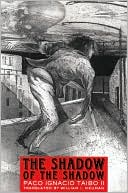 My mystery book group met this past Saturday to discuss Paco Ignacio Taibo II’s novel The Shadow of the Shadow, which was published in 1986 in Mexico. The discussion was lively, as usual, and opinions were mixed. Mine was one of the more positive views of the book; we’ve started rating our books on a scale of 1 to 10 after we finish the discussion, just for the fun of it, and I gave this one a 7 (and a couple others agreed). To me that meant that the book was a very enjoyable read, but that it didn’t blow me away or leave me determined to read lots of books by this author.
 I’ll admit I’m a newbie when it comes to ghost stories. I’ve read some, I’m sure, but it was a long, long time ago, and I don’t remember any details. So I don’t have much of a basis of comparison to work with here. What this book taught me, though, is that the circumstances in which one reads a ghost story matter a lot. Susan Hill’s The Woman in Black is only 150 pages long and probably should be read in as close to one sitting as possible. When I had the chance to sit down with this book for more than a few minutes at a time, I got caught up in the atmosphere and enjoyed myself. When I read only small pieces of it before putting it down again to go on to something else, I became too distanced from the story to feel much of the spookiness and suspense.
 I finished this book about a week ago and have thought of it off and on since then, and I’m still not entirely sure what I want to say about it. There were times when I thought it was incredibly moving and insightful, times when I thought it dragged a bit, times when I loved what it had to say about families, and times when I got annoyed because I couldn’t keep the minor characters straight. I suppose ultimately I don’t think this is a perfect book, but it offered a lot ot think about.
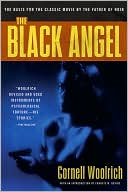 So my mystery book group met this past Saturday to discuss Cornell Woolrich’s The Black Angel, and, as usual, it was a great discussion. It was the kind of discussion where many if not all of us left the meeting with different ideas about the book than those we had originally — not necessarily that we liked the book any better, but that we understood new things about it. Or perhaps I should just speak for myself — my understanding of the book is different now than it was before. I still have mixed feelings about it, but they are mixed in a different way.
 Of Books and Bicycles