
I published a review over at Necessary Fiction of Tiphanie Yanique’s collection of stories, How to Escape from a Leper Colony. The review is here. It was a very good collection and I enjoyed reading it and writing about it. Check it out!
Category Archives: Fiction
Le Carre: Call for the Dead
My mystery group chose John Le Carre’s 1961 novel Call for the Dead to discuss at our last meeting. It was my first Le Carre novel, and my first spy novel in a long, long time (I may have read one or two when I was a teenager). As we discussed in our group, though, this one isn’t really a spy novel, but more of a mystery/spy hybrid, or actually just a mystery that happens to have some spies in it. Even so, I think I can safely say that spy novels are not my thing, because whenever this book veered off into spy territory, I was alternately confused, irritated, antsy, and bored. There was one point when I got confused about names and wanted to tell Le Carre there is no need to give two different characters the name Dieter.
But there were other moments when I was enjoying myself, particularly when reading about the main character, George Smiley. The opening chapter is an odd one, basically giving us Smiley’s life story in summary form before anything interesting happens at all. No jumping straight into the action for this book. Smiley is a sad sort of protagonist: he’s getting on up in age, looking a little decayed and overweight; he’s in a career he didn’t really want — instead of working in intelligence, he wanted to be a scholar of 17C German literature; and his wife, who affectionately calls him “toad” has just left him. No one was really sure why such a beautiful woman married such a sad sack anyway.
The plot begins when Smiley interviews government worker Samuel Fennan because someone sent an anonymous letter accusing him of harboring communist sympathies. The interview seems amicable, but the next day, it appears that Fennan has committed suicide as a result of the interview. Smiley’s boss accuses him of mishandling things, and Smiley suspects Fennan’s death may not have been a suicide after all. While interviewing Fennan’s wife Elsa, their phone rings. It appears to be a wake-up call, but Elsa Fennan is surprised and lies about it. Smiley knows he needs to figure out why.
It’s Smiley and his relationships that are the most interesting; he strikes up an immediate friendship with a man named Mendel, a police officer helping him work on the case. The two of them have a rapport that’s a pleasure to witness. Smiley also has to confront an old friend-turned-antagonist, Dieter Frey, a man Smiley recruited as a spy in World War II. Dieter’s life has take a very different turn since then, and Smiley has to decide just how much their old relationship matters in a world that has changed dramatically since they first knew each other.
The post-World War II political climate is also interesting (although my patience with this sort of thing is limited); Smiley is a staunch individualist in a world beginning to grapple with the growing power of socialism:
He hated the Press as he hated advertising and television, he hated mass media, the relentless persuasion of the twentieth-century. Everything he admired and loved had been the product of intense individualism. That was why he hated Dieter now, hated what he stood for more strongly than ever before; it was the fabulous impertinence of renouncing the individual in favor of the mass. When had mass philosophies ever brought benefit or wisdom?
As my book group decided, the book captures well the uncertainties of the time when friends turned into enemies, former allies turned into foes. Smiley tries to navigate his way through this tricky maze, but he feels past his prime and out of place. It’s the quintessential outsider position that many, many mystery heroes find themselves in, willingly or not.
Slaves of Golconda: The Summer Book
I enjoyed Tove Jansson’s novel The Summer Book very much and flipping it through it just now to prepare to write this post, I realized how much I would like to read it again. It’s a book that works quietly, and I think it’s easy to miss some of its effects on a first read. On a basic level the book is about a young girl Sophia and her grandmother, who live, along with Sophia’s father, on an isolated island in Finland. The fact that I noticed but didn’t ponder enough during the first reading is that Sophia’s mother has recently died. This is obviously hugely important, but the book is so quiet about it:
One time in April there was a full moon, and the sea was covered with ice. Sophia woke up and remembered that they had come back to the island and that she had a bed to herself because her mother was dead. The fire was still burning in the stove, and the flames flickered on the ceiling, where the boots were hung up to dry.
And that’s about all the book has to say on the subject, at least directly. But the signs of the mother’s death are everywhere. One of the first things Sophia says to her grandmother is “When are you going to die?” The grandmother says, “Soon. But that is not the least concern of yours.” Except that it is, because the grandmother is the most important figure in Sophia’s life. Her father lives with them doing some kind of work — the introduction to the book tells me it’s sculpture although I didn’t figure this out on my own — but he’s not much of a presence. A little later Sophia finds a skull, and she and her grandmother hang on to it until at the end of the day, they place it in the forest where the evening light catches it. Suddenly, Sophia starts screaming. There’s no explanation about why she does this, but something about the skull must finally have spoken to her about death.
The whole book works in this understated way. There are beautiful descriptions of the island and the ocean, but we learn about the characters almost solely through their words and actions. Sophia and her grandmother spend much of their days playing, and they take this very seriously. With Sophia, this is what one would expect, but the grandmother is just as serious. In one chapter, the grandmother starts carving animals out of driftwood, and Sophia is curious:
“What is it you’re doing?” Sophia asked.
“I’m playing,” Grandmother said.
Sophia crawled into the magic forest and saw everything her grandmother had done.
“Is it an exhibit?” she asked.
But Grandmother said it had nothing to do with sculpture, sculpture was another thing completely. They started gather bones together along the shore.
Later in the book Sophia and her grandmother explore a nearby island where someone has built a new house and posted a “No Trespassing” sign, an act the grandmother believes is rude and ill-bred. So the two of them trespass and end up getting caught: they flee into the woods behind the house but the owner’s dog finds them, and they are forced to show themselves. Fortunately for them, the owner never asks what they were doing there; instead they all behave as though nothing had happened.
It’s an odd scene, but the whole book is like that: it’s as though the family lives in another world entirely where things are slightly different than they are in this one. It’s not a fantasy world, though. The grandmother is aging and has trouble moving about, Sophia is sometimes bored and lonely, occasionally flying into rages, and the father seems the loneliest and most isolated of them all. When other people enter their world, it rarely goes well. Sophia invites a friend, Berenice, to visit the island, but she hates it there, and nobody is sorry when she leaves.
Nature becomes a character in its own right; the descriptions of landscape and plant life are beautiful, but nature can be threatening as well as scenic. There are swarming insects, dangerous gullies, droughts, and storms. One of the most dramatic chapters tells of the family getting stuck away from home during one of the worst storms anyone can remember. Sophia learns about her place in the world: she had asked for a storm and was pleased to have gotten it, until she realizes that people might die. Her grandmother tells her it’s not her fault, but she doesn’t do it in a reassuring way:
“God and you,” Grandmother repeated angrily. “Why should He listen to you, especially, when maybe ten other people prayed for nice weather? And they did, you can count on that.”
“But I prayed first,” Sophia said. “And you can see for yourself they didn’t get nice weather!”
“God,” Grandmother said. “God has so much to do, He doesn’t have time to listen …”
It’s this relationship I loved best about the book: Sophia and her grandmother obviously love each other, but in a way that is honest, real, and sometimes difficult. The grandmother never talks down to or patronizes Sophia, and Sophia uses her relationship with her grandmother to try to understand what has happened to her and to figure out her place in the world. This relationship and the sharp, clear, direct style of Jansson’s writing make the book memorable.
Molly Fox’s Birthday
Becky mentioned a while back that she enjoyed Molly Fox’s Birthday by Dierdre Madden, so I picked it up from the library and gave it a try myself and found that I enjoyed it very much too. The novel has a structure that I like: it takes place over the course of one day, with frequent jumps back in time to describe scenes from the past. The title character, Molly Fox, doesn’t appear at all, except in a phone conversation. Instead, the novel is narrated by her friend, an unnamed woman who is a playwright. Molly is an actress, and the two met while preparing to stage a production of the narrator’s first play with Molly in the starring role. It’s a play that will make both their reputations and send them off into successful careers.
But all that happens far back in the novel’s past; in the present tense, the two women are a older (it’s Molly’s 40th birthday, or at least we presume so; she is secretive about her age, as she believes actresses need to be). The narrator is living temporarily in Molly’s house in Dublin while Molly is traveling, and she is trying to write her next play. Over the course of the day, she struggles with her writing, takes a walk into town, and unexpectedly meets an old friend for dinner. It seems like a quiet day on the outside, but all the drama is of the interior sort: the narrator spends her day thinking about her art and her friendships and also about how she and others have been shaped by their pasts.
The third main character is Andrew, the unexpected dinner guest, and a man the narrator has known since their university days when they used to take study breaks together. Andrew and Molly both have difficult relationships with their families. Andrew is passionately devoted to the arts but comes from a family indifferent to them, and his brother died a violent death at a young age. Molly’s mother abandoned her while Molly was still a child, and her brother has struggled with severe depression his entire life.
As the narrator tells these stories and thinks about her two friends, she wonders just how well she really knows them. Both of them can be secretive and reserved, but this doesn’t diminish her love or her sense of closeness to them. The book is very much about the mystery of friendship, how experience can bring people together in deeply loyal relationships, even when there is much about each other they don’t know, and also how friendships can arise unexpectedly. When Molly develops a close friendship with the narrator’s brother, Tom, the narrator has to reevaluate her understanding of both of them, as well as deal with feelings of jealousy.
The novel is also about art, its mystery and its transformative capability. The narrator spends a lot of time thinking about Molly’s acting; she is shy in regular life, but on stage, she becomes a different person entirely. There is something about the artificial quality of the theater that allows her to capture the feeling of reality, and something about the fleetingness of a play that makes seeing her act a particularly intense experience. And then there’s Andrew, whose entire life is shaped by art; he is an art historian who has begun to host successful television programs where he explains the meaning of art to his audience. There is something about his personality that works well in this medium; he is able to communicate a genuine passion for his subject. To the narrator, Andrew is all about artifice — he doesn’t seem to care about nature at all, and would prefer to look at paintings of a landscape than the landscape itself. But the “artificial” world of art is his world, and he lives comfortably in it. It’s sometimes unclear, the book argues, what is artifice and what’s real, but somehow they are inextricably combined.
This is, obviously, a thoughtful book, slow-paced but absorbing. If you like thinking about relationships and about the meaning of art, and if you like following the train of someone else’s thoughts as they try to sum up a life, then I think you will enjoy this book.
Too Loud a Solitude
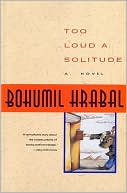 It’s been a while since I finished Bohumil Hrabal’s novel Too Loud a Solitude, but I want to write something about it because it was such an odd, wonderful little book (98 pages). It took me a while to warm up to it, actually; I wasn’t in the mood for something as spare and quirky as this book is, but it ended up winning me over.
It’s about a man, Hanta, who lives in Prague and works as a trash compactor, specifically a wastepaper compactor, and he rescues books from the trash to take home and read. He has towering stacks of books at home, and he sleeps in fear that they will fall and crush him. His education has been reading these books, and what an education it’s been: he finds all kinds of wonderful things, books by Seneca, Kant, Erasmus, Goethe, and Nietzsche, reproductions of Van Gogh and Gauguin paintings, and lots of other treasures.
Hanta is a quiet and isolated man; most of his time is spent at work, and he works overtime in order to make up for his slowness: he doesn’t hurry through his job, but instead takes his time to appreciate the books that come his way. He’s so absorbed in his work, in fact, that he dreams about retiring only to buy a paper crusher so he can do his work at home. He occasionally wanders the streets of Prague and he sometimes gets visitors, most often his boss who is forever furious at him for not working fast enough, but most of his time he spends in the dim, enclosed setting cooped up with his machine. Early on in his career, he would get upset when people threw away good books and was particularly furious over the destruction of the Royal Prussian Library after World War II, but as time goes on, he becomes resigned, or perhaps numb, to the destruction, and just does what he can to save as many books as possible.
The novel (or novella, really) is written in first person, and the voice is memorable. It’s simple and poetic; at times the voice makes you think Hanta is foolish and naive, and at other times, he surprises you with something beautiful and profound. He keeps repeating himself, almost in a sing-song way; many chapters open with the same words:
For thirty-five years now I’ve been in wastepaper, and it’s my love story. For thirty-five years I’ve been compacting wastepaper and books, smearing myself with letters until I’ve come to look like my encyclopedias — and a good three tons of them I’ve compacted over the years. I am a jug filled with water both magic and plain; I have only to learn over and a stream of beautiful thoughts flows out of me.
Hanta’s absolute devotion to his work makes his visit to a new Socialist-run wastepaper compacting business utterly shocking. Here, instead of lovingly observing every book that comes through the machine and rescuing them when possible, the workers are perfectly efficient; not a movement or thought is wasted, and it doesn’t occur to any of the workers to care about a book. The workers there are turned into machines themselves, no more than extensions of the hydraulic press they operate. Hanta knows that his days are numbered; his method of working carefully, lovingly, and, yes, slowly, has never pleased his boss or made him a success, but now it might disappear entirely.
By the end of the novel, Hrabal made me care very much about this strange man so devoted to his work, but even more so to books and the pleasure and wisdom they bring.
Currently reading and a giveaway
I have two books on my shelves that I don’t need and would like to give away to anyone who is interested:
 Sarah Bakewell’s How to Live: Or, A Life of Montaigne in One Question and Twenty Attempts at an Answer. It turns out I have two copies of this book and only need one.
 Peter Carey’s Parrot and Olivier in America. A copy of this book randomly showed up at my house last summer, and I’ve been thinking about whether I want to read it since then, and it turns out I don’t. But someone else might.
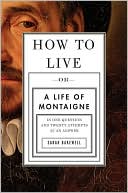
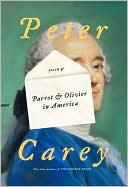
If you are interested in either of these books, just leave a comment telling me which one. If there is more than one person interested, I’ll do a drawing. Deadline is Tuesday of next week, midnight. I’m happy to send the books anywhere, so overseas people are welcome to participate.
As for what I’m currently reading, How to Live is one of the books. I’ve read a chapter so far, and it’s good — a little on Montaigne’s life and the purpose of the essays, and a vignette about how Montaigne almost died as a young man and how this changed his thinking about life and death. It’s a biography, but, it seems, not the sort that tells the subject’s story from beginning to end, and I like that.
Also, Joyce Carol Oates’s A Widow’s Story. I read an excerpt of this in The New Yorker and thought it was very good, so now I’m reading the whole thing. It continues to be good, but harrowing, as you might expect.
I’m also slowly reading “Religio Medici” by Sir Thomas Browne as part of my long-term essay project. Browne isn’t an essayist, exactly, but he appears on John D’Agata’s The Lost Origins of the Essay, and writes in a very interesting personal voice, so it’s appropriate. I’m not particularly interested in learning about the religious conflicts Browne writes about, but his overall attitude and tone are enjoyable. “Hydriotaphia” will be next.
Also Marge Piercy’s poems from The Moon is Always Female, which is good so far, and I hope to start Tove Jannson’s The Summer Book for the Slaves of Golconda soon.
I hope you have an enjoyable bookish weekend!
Filed under Books, Fiction, Nonfiction
PopCo
I think Scarlett Thomas’s novel PopCo is deeply flawed, but I enjoyed it greatly nonetheless. I think it’s perfectly possible for that to be the case; while I occasionally shook my head at the book’s awkwardness, I stayed interested and engaged the whole time and found the ideas it takes up fascinating. Hobgoblin has told me many times how much he liked Thomas’s most recent novel Our Tragic Universe, and I’m looking forward to reading that one too.
Some of the awkwardness of PopCo is the kind of awkwardness that appeals to me: it spends too much time explaining too many things, it’s obsessed with ideas and technical details at the expense of narrative momentum, and it takes its sweet time getting the plot going. It lurches back and forth between background information and mini-lectures on the one hand and present action on the other.
But, fortunately for me, I found the background information and the mini-lectures interesting. They are about a lot of things, but chiefly about math, codes, and code-breaking. The main character is a youngish woman, Alice, who works for the company PopCo, which makes games and toys for children and teenagers. Alice’s job is to make kits for children on spying, detective work, and code-breaking. She has learned all about codes from her cryptanalyst grandfather, and she has a good grasp of math, gained from her mathematician grandmother. Codes aren’t purely cerebral puzzles for Alice, though; her grandfather gave her a necklace when she was young that contains a code her grandparents expect that will she one day crack.
The novel takes place during a company retreat, one of those team-building affairs intended to energize and inspire workers, although surely they more often do the opposite. Alice enjoys her job, but she doesn’t enjoy the intensity of being in such close contact with her colleagues; she has work friends and makes new ones during the course of the novel, but she’s always been a bit of an outsider. This outsider stance comes partly from her uncertainty about the purpose and value of the company; their marketing practices, in particular, seem suspicious to her. She wonders whether they are doing anything that has any value, and whether she is using her knowledge and creativity for a positive purpose. It’s not just her company she’s uncertain about; she wonders about a society that seems to care only for making money at the expense of honesty and integrity. She’s particularly disturbed by PopCo’s practice of making toys that they sell under a fake brand name, not connected with PopCo at all, to appeal to people wanting to be a little different and to buy from small companies, instead of supporting the big corporations all the time. People have no way of knowing the small company they think they are supporting is really just PopCo under another name.
The book takes us through the work retreat; things happen, but they happen slowly, and the narrative frequently jumps back in time to describe Alice’s childhood. It also stops to explain in depth about mathematical concepts, particularly prime numbers, and to describe various types of codes and how to crack them. I found all this interesting, being a bit of a math person myself, but if you’re not, this might be slow going. It’s the kind of book where characters explain things to each other in long stretches of completely unrealistic dialogue; as far as I know, people don’t really talk to each other that way. I have to say I found the ending pretty unrealistic and awkward as well.
But, I’m still fond of the book. Alice is a great character, and I liked the fact that she knows tons of cool stuff, not just about math and codes, but about a whole range of other things. She’s confident in her knowledge in a way that’s appealing. The book’s discussion of consumerism, marketing, and also the pervasiveness of technology, is interesting as well. At 500 pages, the book is too long for the story it has to tell, but still, they were a fun 500 pages.
A Visit from the Goon Squad
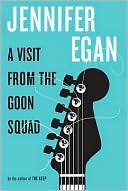 I listened to Jennifer Egan’s novel The Keep a couple years ago, and didn’t like it much; I didn’t believe in the characters or the plot, and therefore the whole thing got irritating. I’m glad I gave Jennifer Egan another chance, though, because I loved A Visit from the Goon Squad. This time, I believed in both the characters and plot, and I loved the book’s structure and its narrative energy. It’s one of those books that both tells a good story and leaves you feeling like you understand the world just a bit better.
The story is fairly complicated, not because it has a complex plot, but because it tells the stories of a lot of different people. We start with one of the main characters, Sasha, in a therapy session where she discusses her habit of stealing things, and then the next chapter introduces us to Bennie, a music industry executive who is visiting a band to see if his company should still represent them. Sasha is Bennie’s assistant and has been for many years. At one point, Bennie makes a pass at Sasha, but she wisely turns him down, and their relationship stays close in the way you can be close to someone you work with without really knowing much about that person at all.
From there, the chapters skip around in time and shift focus on to the people important in Sasha’s and Bennie’s lives. The two main characters never disappear, but they are sometimes on the sidelines as we learn about, say, the people Bennie went to high school with, Bennie’s wife and her life story, the story of the woman Bennie’s wife worked for, the story of the man Bennie’s high school friend ran away with, the story of a man Sasha had a brief fling with, and others. The point of view shifts from chapter to chapter, sometimes in third person, sometimes in first, and once in second. One chapter consists of a article draft written by one of the characters, and one long chapter consists of a journal created by one of the characters using PowerPoint.
If you had asked me before reading this book what I thought about the fictional possibilities of PowerPoint, I would have laughed in your face (politely, of course!). But Egan pulls it off, and this is one of the book’s most moving sections. There’s something about the small number of words on each page and the way those words are strategically arranged that makes some of the pages feel poetic and causes the emotions expressed to come through powerfully.
What it all adds up to is a picture of interlocking worlds, that of the music business in New York City, teenage life in California, suburban enclaves in Westchester, a safari in Africa, teenage prostitutes in Naples, Italy, all connected by people who know each other or have affected each other’s lives in some way. There is a lot going on in the book, but Egan keeps control of the material, partly through the connections amongst all the characters, but also through the energy and insight of the book as a whole. The moods of the different sections vary — there is humor, absurdity, darkness, hope, sadness — but there is a compassion for the characters and an excitement about life that runs through the whole. Egan manages to strike the right notes right up until the end.
I’m not sure what I think about the book’s title, though. We find out in the book that “the goon squad” refers to time, as in “time’s a goon,” which makes sense and fits the book exactly right. But I didn’t know what “goon squad” meant until I read the book, and up until that point I thought it was pretty silly. I hope the title doesn’t push anybody away from reading what really is a great book.
Gryphon, by Charles Baxter
A while ago I read and enjoyed a collection of essays on fiction by Charles Baxter, Burning Down the House, so when the publisher offered me a copy of his latest collection of short stories, Gryphon, I was happy to say yes. I don’t remember a whole lot about the essay collection, except that Baxter argued against the kind of short story that ends in an epiphany where the main character learns a lesson or changes dramatically. He wanted stories that were more true to life and to the way things actually happen to real people. The stories in Gryphon are good examples of what Baxter was calling for; they are quiet stories about people you or I might know who are in familiar situations and go through recognizable experiences. The characters experience change, and perhaps they learn something, if only because something new has happened to them, but the changes are small. The stories capture a quiet kind of reality, which is matched by Baxter’s calmly straightforward, carefully detailed writing.
The stories cover a lot of emotional territory, describing, for example, a woman visiting her husband in a nursing home on their fifty-second anniversary, a man driving drunk through a snow storm to rescue his estranged fiancée when her car breaks down, a Swedish man visiting Detroit and learning the hard way what to expect from dangerous American cities. Other stories tell about a substitute teacher surprising her class with her very strange lesson plans (the title story), a man finding a drawing of a building with the caption “The next building I plan to bomb,” and a boy who follows his brother and his brother’s girlfriend out onto a frozen lake to see the car in the water under the clear ice.
The characters, situations, and experiences are varied, but in each case, Baxter captures the thoughts and feelings of the characters perfectly. His portraits of his characters are so accurate and convincing that he creates the sense of a world much larger than the one contained in the story. It’s like he describes one small slice of his fictional world so well that we can strongly sense the presence of the rest. The narrative voice is consistently understanding and compassionate throughout; there is no sense of anyone judging the characters who are frequently, although not always, troubled, uncertain, and confused. Baxter seems to want to help us understand these characters in order to understand humanity a little better.
These are “new and selected stories,” which means they date from the publication of Baxter’s first story collection in 1984 up to the present. Remarkably, the narrative voice remains much the same over that span of time, and that is the book’s major weakness: the collection contains 23 stories, and by the time I finished all of them, I was longing for something a little different. I would have welcomed a little more drama or a punchier narrative voice. The final story starts to head into different territory; here, a man travels to the wilds of northern Minnesota to interview a wealthy businessman and, feeling alienated and angry in the vast mansion, acts out in interesting ways. But this story comes a little too late to vary the mood of the book much.
Still, the stories need not be read all at once, and, taken in isolation, each one is a pleasure to read.
Miss Pym Disposes
One more review before I write some wrap-up posts about the year. I’ve owned a copy of Josephine Tey’s book Miss Pym Disposes for quite a while and finally got around to pulling it off the shelves. I very much enjoyed the book, but I spent much of my time reading it wondering why it’s called a mystery novel. By the end, it began to make a little more sense, but it’s best to think of this book as a regular old novel with some crime in it. Those of you who have read other Josephine Tey novels, is she always like this?
But that’s not to say I didn’t like it. The setting is very interesting, first of all: it takes place in a women’s physical training college. The young women learn dance, gymnastics, and various types of sports, as well as anatomy and the basics of medical training. They keep to a very rigorous schedule of physical and mental training, of the sort that, athletic as I can be, would wear me out in no time. They will leave the school ready to teach physical education and to work in medical clinics. It’s a close-knit school, where the smallness and the rigors of the training bring the students and teachers close together.
Miss Pym is friends with the school’s headmistress, and she has been invited to give a lecture on psychology. Lucy Pym became an expert in psychology largely by having enough leisure to read everything published on the subject (Tey’s novel was published in 1946, so perhaps the field hadn’t grown that much by then?), to have an idea of her own, and to turn that idea into a best-selling book. The best-seller part was a complete surprise to her; she had merely wanted to express her opinions. But now she is an expert, and in demand for lectures, and so she finds herself at the college, rudely awakened by the 5:30 wake-up bell.
She is so horrified by that 5:30 bell that all she want to do is to get home immediately, but the students beg her to stay, and when she does, she finds herself more and more caught up in the life of the school. She’s fascinated by the question of what type of young woman would thrive in such a school and how each one keeps up the energy and spirits to make it through the program.
The early parts of the book explore college life and Lucy’s increasing attachment to it, and they do so at a leisurely pace, although never one that is dull. The excitement begins to build, however, when Lucy observes one student attempt to cheat during an exam she is proctoring. Around the same time, everyone learns that a post will be available at the prestigious school of Arlinghurst, the girls’ equivalent of Eton. These events quickly destroy the school’s peace, and Lucy finds herself in the middle of it all.
Lucy’s status as an expert in psychology becomes a way for Tey to explore the value of the discipline; in this close-knit community where the tensions are rising, Lucy is perfectly situated to observe the mental and emotional turmoil around her. And yet, as it turns out, people are much more mysterious and unknowable than the discipline allows for. And here is where the real mystery of the book lies: not so much in the question of who committed the crime — although that is a very interesting question — but in the question of how much it’s possible to know about another person.
The Old Religion
I recently finished David Mamet’s novel The Old Religion, published in 1997. As you might expect if you know Mamet’s films, the novel is dark. It is a reimagining of the true story of Leo Frank, a factory owner who lived in Georgia in the early twentieth century and who was falsely accused of rape and murder. He was sentenced to life in prison, but during a hospital stay was abducted by a mob and lynched. He was a victim of an anti-semitic culture looking for an outlet for its rage.
The point of the novel isn’t what happens, which is a good thing since the book’s publishers tell you everything (as I have done here) on the back cover. The point is to explore what goes on in the mind of the main character, Leo Frank, and to capture from that perspective what it might feel like to be falsely accused. The book is made up of very short chapters that explore scenes of Frank’s life and give you his thoughts on whatever is occurring, serious or mundane. The book begins before the accusation and trial, so we see Frank among his friends, relaxing, talking, pondering philosophical and political questions. He is a very thoughtful, sensitive, analytical person, and when we finally learn about the rape and murder charges and the trial begins, it’s a shock to see him so badly misunderstood and villainized.
This is the point: to show the humanity of a man whom the world had turned into a monster. Mamet makes this point well, and what’s so effective about it is that he stays inside Frank’s mind with very little narration. We learn about what is happening only indirectly, as a result of Frank’s attempts to process it. As Frank’s world is falling apart around him, he remains the same thoughtful, analytical person, but now his analytical bent becomes a way to try to handle the insanity he is experiencing, a way to stay sane himself. As time goes on, he has to try harder and harder to find ways to occupy his mind, until he ends up looking for meaning in the manufacturers’ names stamped on the bars of his prison cell. Right up until the end, his thoughts are calm and rational, in contrast to the virulence of the people who want to see him dead.
The Old Religion is an intensely uncomfortable book: it’s hard to read about Frank’s downfall and the extremity of the hatred he experienced, and it’s also hard to read Mamet’s portrayal of Frank’s accusers, which is ugly. But Mamet’s stream-of-consciousness style works effectively to capture Frank’s experience. It’s a good thing the book is short, and I say that not because I didn’t like it, but because brevity works well both with Mamet’s subject matter and with his style: he can capture so much in so few words, and that kind of intensity needs to be short-lived.
Full Dark, No Stars
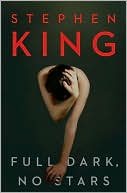 After seeing Stephen King a few weeks ago, Hobgoblin suggested that I read one of his books. This thought hadn’t occurred to me because horror is not my genre at all, but Hobgoblin and other people have assured me that King writes more than just horror and that a lot of his books are more about psychology than anything else. So I picked up his latest book Full Dark, No Stars (although not one of the two copies we got signed!). I ended up liking it quite a bit. The book has three novellas and one short story, and yes, there was violence in each one, but the stories were more about character and psychology, just as people had promised.
The first novella was good — gripping and hard to put down. But it was a complicated reading experience that reminded me of Patricia Highsmith’s The Talented Mr. Ripley in the way both books have psychotic narrators who commit atrocious crimes. In King’s story, it’s a first-person narrator, and in Highsmith’s it’s a third person narrator who stays so close to Tom Ripley’s consciousness that I keep forgetting it’s not actually in first person. In both cases, I got so wrapped up in the stories and identified with the narrators to such an extent that I started feeling obscurely guilty, as though I were the one who had committed the crimes. I had to remind myself that no, there was nothing I needed to worry about, no fear that anyone would come and arrest me for the horrible thing I did.
I started the second novella relieved that the mood was lighter, at least initially. That story is about a semi-famous cozy mystery writer who is asked to do a reading for a literary society when Janet Evanovich cancels on them. But then on her way home she gets attacked and raped, and I began to worry about what I’d gotten myself into by reading this book. The first story was about a man murdering his wife, and then here was another story about violence toward women, and I wasn’t sure I wanted to read about it anymore. But I kept on and realized that King wasn’t simply using violence toward women as a plot device, but was making a point of exploring its cultural meaning. The cozy mystery writer, Tess, spends a long time thinking about how she is going to deal with the attack, and a big part of her worry concerns what the public will make of it, since inevitably the press will seize on the story. She is a bit of a public figure, after all. She imagines someone insinuating that she invited the attack somehow, and she delays calling the police. She is agonizingly alone, a victim another time over, since she knows how hostile the world can be toward rape victims. I won’t give away the rest of the story, but I’ll just say it’s satisfying and Tess ends up with a little bit of the support she deserves.
Next was the short story, which was good but didn’t quite fit with the rest of the book. And finally, the third novella once again takes up violence toward women and once again handles it well. Reading about the violence in all four pieces was uncomfortable at times, but once I figured out that King was exploring violence as an idea, I began to enjoy the reading more. I have to say this is not what I expected, to read Stephen King for the ideas. But I think I’ve been unfair to him. I can’t say I’ll read him again very soon, since even with the psychological focus, violence and horror really aren’t my things. But I’m much more interested in him than I was before, and that’s a good thing.
Skippy Dies
Lately I’ve been in a mood to read more contemporary fiction than I usually do (a mood that’s probably fleeting and influenced by people raving about new books on Twitter), and so I picked up Paul Murray’s Skippy Dies. I’m grateful to the people on Twitter because I enjoyed this one quite a lot.
The novel tells the story of Seabrook, a boys’ school in Dublin where Skippy is a student. In the opening pages, we witness Skippy dying a horrible death in a doughnut shop, and then the narrative backs up in time to tell about his life. The novel tells his story, and the story of his friends, classmates, and teachers. Skippy is a quiet, seemingly-normal kind of kid, the kind whose friends are much more colorful and memorable. Ruprecht, for example, is Skippy’s roommate (there are a few boarders at Seabrook, although most students commute) and is considered a scientific genius. Mario can think of one and only one thing, sex, and is capable of talking about it only in the crudest of ways. But Skippy is thoughtful and sensitive, and also in love with Lori, a student at the nearby girls’ school. Unfortunately for Skippy, Lori is way out of Skippy’s league, or everyone thinks so, and she has become involved with Carl, a drug-using, manipulative, thuggish bully.
The novel also tells the stories of the adults, most notably Seabrook’s history teacher Howard, who is unhappy in his current relationship and attracted to the beautiful substitute geography teacher (who is the only teacher who can really capture the boys’ attention in a school with very few women in it). Howard graduated from Seabrook and never thought he would end up there again, but his life has gone in unexpected directions. There is also Tom, another teacher and former Seabrook student whose relationship with Howard is long and complicated. And then there is the acting principle, whose devotion to Seabrook and its reputation is extreme to the point of being frightening.
Murray moves back and forth between these various stories, and in doing so, captures the feeling and mood of the place. The novel a reminder of just how hard it is to be a teenager — and how hard it is to teach teenagers. The kids aren’t in the least interested in learning anything, with the exception of Ruprecht, and only want to be free to hang out with each other and to dream about meeting girls, or, in some cases, to actually meet them. There’s a lot of longing, a lot of angst, and a quite a lot of drug use.
And, actually, the lives of the teachers aren’t so different. Howard can’t figure out what he wants out of a relationship and what he wants to do with his life, and he spends his time obsessed with the geography teacher, to the extent that he keeps teaching World War I beyond its allotted length of time because she expressed an interest in Robert Graves, a World War I poet. The novel is largely about dissatisfaction and longing, and this takes many forms: Howard’s obsession with a woman whom he hopes will transform his staid, boring life, for one. It’s also about Skippy’s hope that Lori — the beautiful girl who seems so far out of reach and whom he falls in love with while gazing at her from afar — will notice him. And it’s also about Ruprecht’s obsession with the possibility that other universes exist and that he might be able to make contact with aliens. Everyone hopes for something from outside them to transform their lives, when reality is boring at best and quite possibly very painful.
The story is an absorbing one, especially once it’s clear that the novel is going to tell how Skippy got to the horrible death scene in the doughnut shop. I found it hard to believe that Skippy really was going to die, and I kept rooting for him. Murray does some interesting things with narration, beginning many of the chapters about Skippy with a description of the video game he is playing, so that we are thrown into the world of the game and only eventually return to the story once again, mimicking the way Skippy loses himself in an alternate world and is reluctantly forced back into reality. Murray does a good job making us feel as though we know these characters and how their minds work and that we have something at stake in their decisions. The world he portrays is dark; he makes being a teenager seem like a curse and being an adult not a whole lot better. But the energy, compassion, and humor with which the story is told keeps some hope alive.
The Small Room
May Sarton’s The Small Room was a satisfying, thought-provoking read. I’m a sucker for academic novels, so I was delighted to find out that this book is about a young woman who travels to small-town New England to begin her first college teaching job. Lucy Winter is fresh out of grad school, although she wasn’t your typical grad student: she went through her Ph.D. program merely because she wanted a reason to stay near her fiance who was in medical school. But now the engagement is over and she unexpectedly finds herself with a job. As the novel opens, she is on the train heading north to Appleton, a women’s college.
What she finds is a small, close-knit community that appears to be sleepy and peaceful. She goes to a beginning of semester cocktail party to meet fellow faculty and teaches her classes for the first time, all the while trying to figure out her role in this new place. She opens her first class with a long account of her educational life, hoping to make an impression on the students, but she immediately doubts herself afterward. She wants to do a good job and is willing to take risks in the classroom, but she knows she is not entirely sure what she is doing.
Of course, she can’t stay on the outside of this community for long, and, of course, it’s not nearly as sleepy and peaceful as it seems. She gets pulled into its dramas and intrigues through one of her students, a star pupil of the campus star professor. When she discovers this student has plagiarized, she immediately reveals it to a colleague, an act that sets a whole train of events in motion, events that not only cause controversy, but that make the college think hard about what it is and what it stands for.
The novel is fundamentally about teaching — what it means to be a teacher and a student and the ways the two can interact. Lucy struggles with the question of how much of herself she should share with her students. Her opening speech about her education starts things off on a personal note, but she is reluctant to respond warmly when a student shares her private troubles. She feels there should be boundaries between teachers and students, and she also knows that allowing those boundaries to drop away can be exhausting. Teaching demands a great deal of energy, and teachers need to protect themselves from giving up too much of themselves to others.
And yet strict boundaries are impossible to maintain: students are persistent in their efforts to get a personal response from Lucy, and once she stumbles into the plagiarism scandal, she is drawn even further into their lives.
The novel is also about what it means to be a woman who teaches. Early on one of the characters says, “Is there a life more riddled with self-doubt than that of a woman professor, I wonder?” The novel was published in 1961, and the question of whether it’s worth while to educate women who will just get married and raise children lingers in the air. The faculty at Appleton take a strong stand on this: as one character claims, “We don’t teach domestic science; we are not interested especially in producing marriageable young ladies.” Lucy wonders, though, what her own commitment to the intellectual life is, and what it would mean for her to stay on at Appleton. She wants a family, but with her engagement over and her life established in a quiet town full of married couples, she is not sure that will be possible. She considered her Ph.D. program as a joke, after all; does she really want to devote her life to scholarship and teaching, at the possible expense of other relationships? As I read this, I kept thinking about Dorothy Sayers’s novel Gaudy Night, which is also about women intellectuals struggling with the sacrifices the intellectual life can demand. In a culture that expects women to be wives and mothers or, if they want to take work seriously, to give up those roles, what is a smart woman supposed to do?
The novel is short and is a quick read, but it takes up a lot of great questions and offers some interesting answers. It’s satisfying to watch Lucy figure out who she is as a teacher and what she wants her place in the Appleton community to be. It’s also interesting to think about teaching generally — what really helps students learn and what roles a teacher can and can’t play. The novel shows well what a complicated job it is to try to inspire other people with the love of learning and at the same time to remain a satisfied, whole person oneself.
Firmin
Posting will most likely be light around here for the next few weeks, as I get myself through what feels like the busiest part of the semester. Once I reach Thanksgiving, things begin to wind down a bit. For now, I need quiet evenings for reading more than I need to keep up-to-date with the blog.
But I did want to write at least a little bit about what I’ve read over the last month or so. That includes Sam Savage’s novel Firmin. I’m not entirely sure what to think about this book. I want to say I’ve been in a little bit of a fiction slump and haven’t liked things much for that reason, but I just picked up May Sarton’s A Small Room and am loving it, so I wonder whether it’s my own reading that’s at fault or whether I just haven’t found books that work for me.
The short version is that I hoped to love this book, and I only ended up responding to it in a vague and not particularly enthusiastic way. It should be a book I enjoy, since it’s all about reading and loving books. That it’s about a rat who can read should have made the book quirky and charming. I think it’s the voice that didn’t quite work — it’s jaded and slightly bitter, worldly-wise but also able to remember youthful enthusiasm fondly. That all is fine, but it’s also a bit pompous and affected in a way I don’t like. Even though I liked the first sections of the book and it took me a while before I began to sour on it a bit, it’s passages such as this one, near the beginning when he is describing difficulties writing his life story, that capture what I mean by tone:
This is the saddest story I have ever heard. It begins, like all true stories, who knows where. Looking for the beginning is like trying to discover the source of a river. You paddle upstream for months under a burning sun, between towering green walls of dripping jungle, soggy maps disintegrating in your hands. You are driven half mad by false hopes, malicious swarms of biting insects, and the tricks of memory, and all you reach at the end — the ultima Thule of the whole ridiculous quest — is a damp spot in the jungle or, in the case of a story, some perfectly meaningless word or gesture. And yet, at some more or less arbitrary place along the way between the damp spot and the sea the cartographer inserts the point of his compass, and there the Amazon begins.
Somehow, and this is a vague thought, it doesn’t feel like the narrator has earned the right to get all poetical and metaphorical on us in this way. There’s a self-dramatizing quality and a self-consciousness about it that began to grate a little.
But the narrator — Firmin himself speaking in the first person — can certainly claim to have a very sad story to tell. He is the runt of the litter and takes to reading books in consolation for losing the battle with his siblings for food. Somehow by eating the pages, he learns to read them, and soon becomes a voracious reader. He lives in a building that houses a bookstore and spends his time gazing down at the books, the people browsing through them, and most especially the store owner. He feels he has found a kindred spirit in this man who loves books so much too. Alas, when the store owner spots Firmin staring down at him from a hole in the ceiling, all he does is put poison out. It is extremely difficult, if not impossible, for Firmin to communicate his intelligence and sympathy to the people around him. His reading fills his mind with longings and romantic images, but then he glimpses his rat face in a window and despairs. He seems doomed to loneliness.
The story should be touching, and it sometimes is, but the narrator’s tone kept me feeling distanced from it. I do like its exploration of the dangers of reading — that reading can cause unhappiness and dissatisfaction as well as pleasure is an old, old story, and this is a potentially interesting twist on the idea that reading and education can lead to isolation. And yet I’m not sure that making the main character a rat really takes us in a new direction with the theme. It simply makes the isolation deeper and the barriers to communication higher. So he pours his energies into communicating with readers in the form of the book itself. It’s an understandable move, and yet, sadly, his self-portrait failed to win me over.
Death Rites and book groups
Alicia Gimenez-Bartlett’s Death Rites was the book up for discussion at my latest mystery book group meeting, and I am, in spite of having thought about the book before the meeting quite a lot and having spent several hours discussing it with the group, still not quite sure how I feel about it. I liked the book when I first started reading it, but then at some point I began having doubts, and then I enjoyed it again, and then I doubted, and after I finished my reaction wasn’t any clearer. Then I listened to other members of the group explain why they didn’t like it, and it was hard not to be swayed by the general consensus.
I’m not usually so indecisive. The problem seems to be that the book never quite came together for me, so I liked this part of it, didn’t like that part, and could never quite pull everything together to have a real opinion.
Much of the problem for the book group was the translation, or at least the possibility that the translation might be bad made it hard to judge whether the book itself was any good or not. The writing was certainly awkward, with badly constructed sentences and bizarre images (although some of the bizarre images I liked). But there were other problems — a main character who can be intensely unlikeable, a plot that floundered at times, and a resolution that was too predictable.
To say something about the book itself, it’s set in Barcelona and tells the story of Petra Delicado, an inspector who has been working in the documentation department and who gets called upon unexpectedly to investigate a rape case. She is assigned to work with Fermin Garzon, a rather plodding, obedient type who is close to retirement. The two have to figure out not only how to run an investigation, something Petra at least has little experience with, but also how to deal with each other. There is tension between the two of them from the very beginning; Petra isn’t used to being in charge and has to figure out how to exert authority in a world that grants it to women only grudgingly, and Fermin has to figure out how to respond to a boss who knows less about investigating than he does. Plus Fermin has some pretty old-fashioned ideas about women that Petra does not like.
The two do a pretty bad job of investigating, or at least that’s what members of the press accuse them of. They have no good leads for a very long time and spend a surprisingly long period floundering about desperately looking for some kind of breakthrough. I’m not entirely convinced that they are bad investigators, though, or at least that they are bad as people think they are. They do make some mistakes, but they are rookies, after all. But even more so, I wonder whether this portrayal of an investigation isn’t more realistic than investigations often are in novels. What do investigators do when there are no clues? When no clues appear for a very long time? When every trail they follow leads them nowhere? The press accuses them of failing in their job, but I wonder whether other, more experienced investigators would have been able to do it better. In novels, investigators struggle and take time to solve their cases, but I wonder whether they struggle a lot less and take a lot less time than real-life investigators do.
We also talked in my book group about how often Petra and Fermin take breaks from their work and how often they are to be found in restaurants or bars, rather than working on the investigation. This is probably one of their most serious mistakes, but I have to say, I’m entirely in sympathy with their commitment to eating well and resting up. This is illogical of me, I suppose, since with a rapist on the loose, they really do need to be in a hurry. And yet I do get tired of detectives who never seem to sleep and who skip meals all the time and who basically act like their non-working lives don’t matter in the least. Petra has just bought a new house, and she’s trying to settle into it, and I sympathize with her occasional feelings of resentment at a job that’s pulling her away from it.
So these elements I liked, and I also liked Petra’s vocal feminism and the struggles she goes through to figure out how to establish and maintain power, and also how to use that power effectively without abusing it (which she fails at spectacularly a time or two). But at the same time, the narrative did get dull now and then and Petra’s character remains a bit elusive. There was some spark, something lively, missing from the book. And the translation was a problem.
That’s the best I can do with this book, it seems. For other thoughts, you can read Emily’s post.
What are you reading?
The current Booking Through Thursday question is this:
What are you reading right now? What made you choose it? Are you enjoying it? Would you recommend it? (And, by all means, discuss everything, if you’re reading more than one thing!)
The quick way to answer is to direct you to my list of everything I’m reading in the sidebar, but I don’t want to answer the quick way. So here is the long version. Two nights ago I picked up Thomas Pynchon’s Gravity’s Rainbow. Because of busyness over the last couple days, I’m still only 20 pages in, and I’m wondering what I got myself into. There are a lot of pages in that book, with a lot of words on each page, and they are not all quite clear! But I need to give the book more time, of course, and the words aren’t that hard to follow, either. This will most likely be a book I will be reading for quite a while to come, which is fine. I’ll keep an easier novel on the go at the same time.
I’m nearing the end of Lawrence Weschler’s Vermeer in Bosnia, and just read a wonderful essay on the photocollages of David Hockney. There were also some good essays on California and one on Art Spiegelman I really liked. The subjects are varied, but the writing is uniformly good.
And then there are Bacon’s Essays. These are not terribly exciting, I have to say. But I can see that they are important, filled as they are with an attempt to use language carefully and precisely and to break the subject down into clear categories to capture it accurately.
I’m nearing the end of my collection of Ted Hughes’s poetry, which I have enjoyed all the way through. There have only been a few poems I have read quickly and dismissed; most of them I want to linger over to figure out how he’s using language. I first wrote about the poems here; they continue to focus on animals and landscapes, for the most part, and they still have the direct, forceful, unsentimental, colorful style I wrote about earlier.
And finally there is Sharon Salzberg’s book Lovingkindness, which is about lovingkindness meditation and Buddhism. I don’t meditate (I’d like to but haven’t found a way to keep a regular practice), but I’ve learned a lot from this book anyway. It’s full of wisdom about cultivating joy, compassion, and love, and breaking away from harmful habits of mind. I recommend it for anyone interested in spiritual reading.
And that’s it. I will pick up another novel soon, but haven’t decided what it will be.
Filed under Books, Fiction, Nonfiction
The Perpetual Curate
I was in the mood for something Victorian not too long ago, and Margaret Oliphant’s The Perpetual Curate was exactly what I needed. It’s a long (relatively long, 500 not-too-dense pages), absorbing story with interesting characters and an amusing tone. Its mood is light, but it deals with serious situations and genuine problems, so it never felt frivolous.
The story is about Frank Wentworth, the perpetual curate of the title, a young man who loves his work but understands that it doesn’t pay enough for him to marry the woman he loves, Lucy Wodehouse. In order for that to happen, he would have to become a rector. This is actually quite possible, as he has three aunts who will soon have a living to bestow, but, alas, Frank and the aunts do not see eye to eye when it comes to how one should run a church service. The aunts lean toward the evangelical side, while Frank is more solidly, traditionally Anglican. The aunts unexpectedly show up to Frank’s Easter service, and are shocked at the sight of flowers on the alter and are displeased with his sermon. Frank realizes that those pesky flowers, which he is not sure he cares all that much about, may have ruined his chances for married happiness.
Oliphant piles problem after problem on poor Frank’s shoulders. Not only does he have the uptight aunts to deal with, but he is seen in what looks like a compromising situation with a pretty, young shop girl, and rumors begin to fly. The town that has stood behind him for the five years or so he has worked there now starts to have doubts. Then the local rector, newly arrived in the town, gets angry at him for running services for the poor in his district. And then his brother, Gerald, decides that he wants to convert to Catholicism and become a Catholic priest, even if it means abandoning his wife. There is also the strange, unpleasant, badly-dressed man who shows up in Frank’s lodgings, and whom Frank takes in for mysterious reasons, even though his neighbors are none too pleased.
Much of the novel has Frank running around from one disaster to another, trying to figure out how to appease his family, friends, and parishioners while at the same time staying true to his principles. Fortunately, as Oliphant frequently points out, Frank is young and can bounce back from disasters quickly. But still, it’s chilling to read a convincing description of how suddenly, and for no real fault of Frank’s, everything can suddenly go wrong. People misread events and misunderstand conversations, and because Frank can sometimes be a little oblivious, he doesn’t always realize when this happens. Suddenly his world is falling apart around him, and he hardly knows how it happened. This can happen to any of us, the novel implies, at any time, and there is little to be done about it.
The things that could be done to rectify the situation Frank rejects as impossible because of his strong sense of pride and honor. He can’t simply go to his aunts and declare he really didn’t mean it about the flowers because he can’t stoop that low, and he can’t simply explain that he doesn’t care anything about the pretty shop girl because he doesn’t want to dignify the accusations. This sense of pride and honor, which he and Lucy share, becomes so powerful and his and Lucy’s feelings are so delicate, that they threaten to become absurd. In fact, by the end of the novel I was wondering whether Oliphant was having a little fun gently mocking them. This suspicion was reinforced by the way Oliphant frequently draws attention near the novel’s end to the fact that it is a novel that she’s writing, as though she is pulling away from the narrative a bit to evaluate her characters more directly than she ever did before. Endings are tricky, she seems to be saying, and sometimes they can be a little silly or unrealistic, so don’t take it all too seriously.
The Perpetual Curate is part of a series of novels called “The Chronicles of Carlingford,” and this novel is the fourth book of six. I’m pleased to know this, because it means I can return to this world and to these characters five more times if I want to. If I’m able to find the books, that is. I will certainly be on the lookout for more Oliphant in the future.
Sara Paretsky
I’m listening to my first Sara Paretsky novel right now, her 2005 V.I. Warshawski mystery Fire Sale. I’ve been meaning to read Paretsky for a while, ever since reading about her in Maureen Corrigan’s book Leave Me Alone, I’m Reading, where Corrigan has a chapter on mystery novels and praises Paretsky highly. With the caveat in mind that I am more likely to like a book I listen to than one I read on paper, I’m really enjoying the story so far. The novel is set in Chicago, and Warshawski is a private investigator. She has a thriving business, but in this novel, she is involved in a investigation she won’t be paid for: a case of arson and murder that she stumbles upon after agreeing to serve as a substitute basketball coach at her old South Chicago high school. The mother of one of the players asks her to investigate strange happenings at the factory where she works, and the next thing she knows, she’s caught up in a story of big business and corporate intrigue.
The basketball coaching and the investigation force her to spend a lot of time in South Chicago where she is confronted by her past, which was a harsh one. This novel doesn’t give very many details, but we do find out she lost her mother when she was young, and that she grew up to be a tough street fighter. In this novel, she still has that toughness, but also the perspective and experience of a woman who has seen more of the world. She is brave and courageous, although not without fear, and there’s a certain amount of sadness to her character, which, of course, is not at all surprising for someone who makes a living as an investigator.
The plot is overtly political, as Warshawski investigates a big Walmart-like corporation that exploits its workers and is run by a family full of nasty, suspicious, racist tightwads. The fact that they claim to be committed evangelical Christians makes them even worse. I suppose the argument here is a little too easy and too obvious — the religious characters are hypocrites, or at least the rich ones are, and all big business owners care about nothing at all but making money. But still, Paretsky’s picture of how families struggle to make a living working in low-paying jobs and are first exploited so they can barely get by and then condemned for the very fact that they struggle is a powerful one. Paretsky explores the complicated causes of poverty on the south side and why it is so many young people struggle in school and so many teenage girls get pregnant, while the big business owners live in their gated mansions in the suburbs, getting rich through their stinginess. The ideas and issues may be familiar, but Paretsky does a good job bringing them to life.
Lucy
I picked up Jamaica Kincaid’s novel Lucy because I might possibly teach it in a course I’m planning on travel and cross-cultural encounters. The main character, Lucy, a teenager from the West Indies, moves to the United States to work as an au pair, so the book will fit my theme nicely. It’s a first person narrative, and is full of Lucy’s observations about American culture and her attempts to make sense of its strangeness. It’s interesting seeing America through her eyes, and her observations are sharp, critical ones. Things that seem obvious and natural to the American family (and to me) are strange to her:
One morning in early March, Mariah said to me, “You have never seen spring, have you?” And she did not have to await an answer, for she already knew. She said the word “spring” as if spring were a close friend, a friend who had dared to go away for a long time and soon would reappear for their passionate reunion. She said, “Have you ever seen daffodils pushing their way up out of the ground? And when they’re in bloom and all massed together, a breeze comes along and makes them do a curtsy to the lawn stretching out in front of them. Have you ever seen that? When I see that, I feel so glad to be alive.” And I thought, So Mariah is made to feel alive by some flowers bending in the breeze. How does a person get to be that way?
So much about this exchange is typical — Lucy’s bewilderment at what Mariah and her family think and feel and Mariah’s insensitivity. If she knows Lucy hasn’t experienced spring, why does she keep asking if she’s seen it?
The daffodils keep returning: Lucy tells Mariah a story about reciting a poem on daffodils as a young child and receiving great praise for her elocution. She never names what the poem is, but it’s surely William Wordsworth’s “I wandered lonely as a cloud.” She feels so conflicted about all the praise she receives that she vows to forget every word of the poem, and then she dreams that the flowers are chasing her until she collapses from exhaustion and they pile on top of her. She tells the story to Mariah, who doesn’t quite know how to respond.
This is her experience in a nutshell — she is made to confront her racial difference and her origins in a colonized country again and again. She bristles with anger as people talk about their wonderful vacations in “the islands” and watches people get uncomfortable as they don’t know how to respond to some of the stories she tells — some of them told in an attempt to make people uncomfortable, some of them not.
This is also a novel about growing up. Lucy has to figure out her relationship with the family she works for, the extent to which Mariah is a substitute mother or a friend and the amount of freedom she will be allowed. She also explores her sexuality, figuring out what she wants and doesn’t want from the men she meets. Her story is an intense one because she is confronted with so much that’s new, so much that she has to absorb. Not only does she struggle to fit in with her American family, but she has to figure out what to say to her family back home, from whom she begins to feel estranged. She has experienced so much that’s hard to put into words.
This is a short, powerful novel, written in a simple, direct way that captures the intensity of Lucy’s experience. Her voice is one that can be uncomfortable to listen to, but is remarkably compelling.
 Of Books and Bicycles