
 I recently finished the novel Chemistry by Weike Wang, and I liked it so much! It tells the story of a 20-something woman in a chemistry graduate program who is deeply unhappy and figuring out what to do about it. She’s frustrated by her research and her unsupportive advisors. She also doesn’t know what to do about her boyfriend’s marriage proposal. She has been happy with him, more or less, but the idea of marriage really freaks her out, not least because her parents’ marriage was so deeply unhappy. She is also worried about how she will feel if she follows her more-successful boyfriend/husband so he can pursue his career, while her own languishes. Will she end up made miserable by that decision?
The novel is in first person, and I liked the narrator’s voice — it’s thoughtful and quirky, smart and panicked. She brings in scientific concepts to help explain her feelings in a way that’s apt and funny. She’s struggling and only sometimes fully self-aware, and I rooted for her as she took risks and tried out new things, and I admired her stubborn refusal to make decisions when she’s not ready to.
The book gradually reveals what it is in the narrator’s past that makes her so afraid of marriage, and that part is moving, as are her descriptions of what it’s like to be the child of immigrants, trying to make her own way forward while dealing with the weight of her parents’ hopes and expectations.
This is the kind of book where not a whole lot happens, but the interest and enjoyment come from characterization and voice — one of my favorite kinds of fiction.
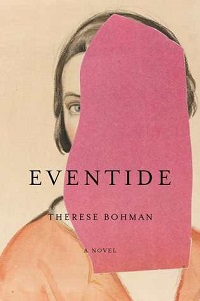 I really loved Eventide by Therese Bohman, translated from the Swedish by Marlaine Delargy. It’s a novel about the academic world, which always appeals to me, and it’s a smart look at life for a newly-single woman in her forties who is struggling to figure out what she wants out of life and what meaning the world has for her. It’s a dark novel — another thing I like — and a philosophical one and one that takes a close look at the experience of being a middle-aged woman.
 As for the book itself, it’s the kind of nonfiction that I approach with trepidation, not because of the topic, but because its ten chapters cover one “unruly” woman each, and I often find that format boring. It’s hard to make the give-the-theory-in-the-intro-and-apply-it-over-and-over-again-in-the-chapters format consistently fresh and interesting. Peterson does a pretty good job with this, though, mostly, I think, because each chapter has not only a different unruly woman to discuss (not interesting enough in and of itself), but it looks at a different type of unruliness in each chapter: too pregnant, too shrill, too queer, too fat, too slutty, too loud, etc., so there’s a wide variety of material.
 Of Books and Bicycles